The market hit USD 11.58 billion in 2024 and is racing toward USD 41.39 billion by 2030. In the UK alone, 28.8 million adults now use AI for budgeting, saving, and investment queries. As chat-first financial tools replace apps and dashboards, the real question is: which AI tools are actually redefining money management in 2026?
Conversational artificial‑intelligence (AI) tools have steadily moved from novelty to essential in the financial‑services sector. The global market for conversational AI reached an estimated USD 11.58 billion in 2024 and is projected to grow to around USD 41.39 billion by 2030, at a compound annual growth rate (CAGR) of approximately 23.7 %.
Within this rising tide, the financial‑services segment (banking, wealth management, payments, customer support) is among the most active adopters. For example, in the UK, more than half of adults (about 28.8 million people) now use AI platforms to seek financial guidance – covering budgeting, savings and even pensions and investments.
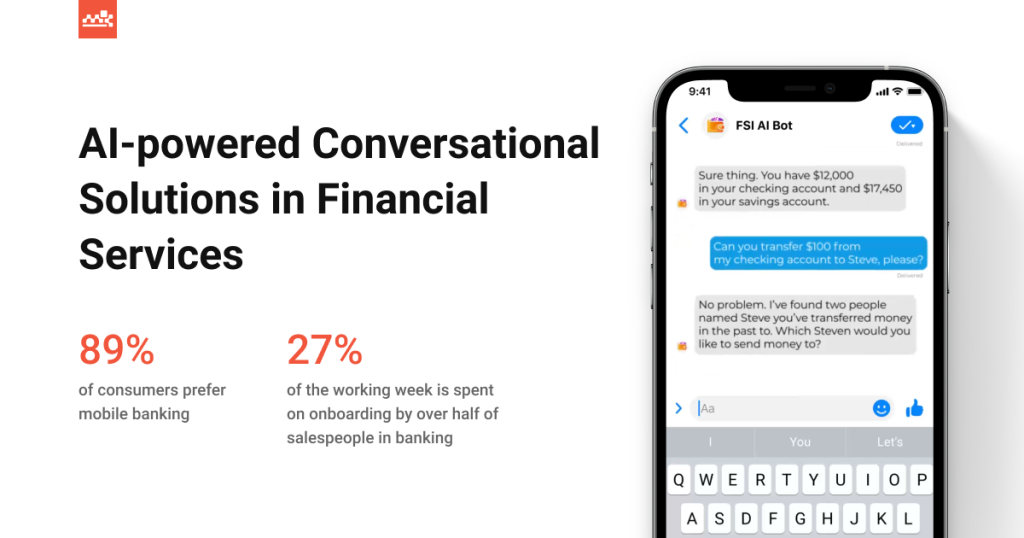
As finance professionals and everyday consumers increasingly interact through chatbots, virtual assistants and AI‑driven conversational agents, the defining characteristic is no longer just data‑access but language‑first interaction: users ask plain‑English questions (“What did I spend last month?”, “How much will I save if I put aside £200 each month?”) and AI responds in kind. The tools covered in this article focus on this paradigm: conversational interfaces applied to finance tasks, from personal budgeting to enterprise analytics.
This introduction sets the stage for a detailed review of ten leading conversational‑finance AI tools — each selected for their distinct approach, target audience, or technical capability. The goal is to give readers clarity on how conversational finance AI is evolving, where scalability lies, and what to look out for when selecting or using such tools.
What makes conversational AI essential in finance?
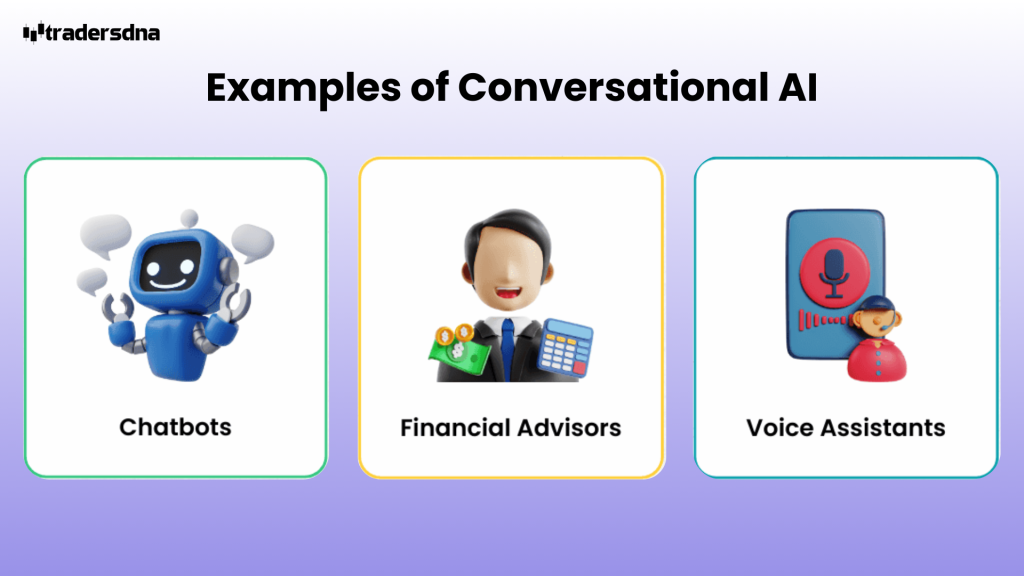
Conversational AI in finance refers to intelligent systems that understand and respond to human language in real-time, handling queries about accounts, investments, or forecasts with context-aware precision. These tools go beyond basic chatbots by incorporating machine learning to learn from interactions, ensuring responses are tailored and secure, which is crucial in an industry where trust and accuracy are paramount.
By automating routine tasks like balance checks or fraud alerts, they free up time for strategic decisions, with projections suggesting they could save the banking sector up to £340 billion annually through efficiency gains.
What sets these tools apart is their ability to integrate seamlessly with banking apps, CRMs, and voice platforms, delivering omnichannel experiences, whether via text, WhatsApp, or phone calls. For users wary of jargon-heavy advice, they simplify concepts like compound interest or risk assessment into digestible chats, fostering financial literacy without the intimidation factor.
As fintech adoption surges, these AIs are not just helpers; they’re proactive partners, spotting spending patterns or market opportunities before you ask.
Top 10 tools shaping finance conversations
1. Tendi: AI-Powered Personal Financial Advisor
Tendi is a conversational AI designed to assist individuals with budgeting, saving, investing, and goal-setting. It uses an AI-powered personal financial advisor that helps users plan, understand, and achieve their financial goals. At the heart of Tendi’s approach is its Financial Health Index (FHI), which measures a user’s overall financial wellbeing. The tool allows users to ask open-ended questions, offering insights into their spending, setting challenges, and tracking their progress over time.
What sets Tendi apart is its emphasis on engagement rather than simply showing charts or static data. Unlike traditional budgeting apps, Tendi’s conversational interface provides coaching and guidance, making financial literacy more accessible, especially to those without a deep financial background. This democratises financial advice, providing non-experts with an easily digestible approach.
However, while Tendi excels as a consumer tool, its institutional use is still limited. Additionally, Tendi’s ability to offer advice raises questions regarding its regulatory status—whether it is providing “advice” or “education,” which could impact its legal framework. Nonetheless, it serves as an excellent example of how AI can lower barriers to financial understanding.
2. FINBUDDY: Multilingual Conversational Finance Assistant
FINBUDDY is a multilingual AI-powered assistant designed to help users better understand financial concepts, market data, and economic news. This tool is focused on improving financial literacy through natural language explanations. It includes a quiz that assesses the user’s knowledge and tailors the conversation style (beginner, intermediate, or advanced) based on their understanding.
FINBUDDY is important because many conversational finance tools focus on transaction management or budgeting, while FINBUDDY goes beyond that, offering educational content and explanation of complex financial concepts. The multilingual aspect makes it particularly beneficial for global and emerging-market contexts, where access to quality financial education may be limited.
However, because FINBUDDY focuses on education, it may not be suitable for those looking for in-depth investment analysis or advice on institutional workflows. Additionally, as a newer tool, its real-world application and use cases are still evolving, which may limit its broader adoption in certain markets.
3. Finshape AI Financial Assistant: Conversational Assistant in Banking Context
Finshape AI offers a conversational assistant specifically built for banking and finance platforms. It allows users to ask natural-language questions such as, “How much did I spend on subscriptions last month?” or “Can I afford a vacation in July?” The tool generates real-time responses using visual data like charts and graphs, offering a more engaging, dynamic experience than traditional static user interfaces.
What makes Finshape notable is its “agentic AI,” where multiple specialised agents work collaboratively to answer a user’s query. This elevates the conversation from basic chatbots to a more integrated system capable of pulling data, visualising trends, and making financial decisions in real-time.
While it offers great potential, Finshape requires rich data integration, linking users’ bank accounts and spending habits, which may not be as straightforward as other plug-and-play apps. Additionally, as with all conversational AI tools, it doesn’t replace human financial advisers in complex cases like tax planning or investments.
4. FinAI Data Assistant: Natural-Language Interface to Financial Databases
FinAI Data Assistant is a powerful conversational tool aimed at finance professionals who need access to large financial databases. Using large language models (LLMs) in combination with function-calling APIs, it enables users to query vast financial datasets with natural language, eliminating the need for manual SQL queries. This provides a conversational interface to financial databases, making it easier to access complex data insights.
The tool represents a significant shift in how financial professionals interact with data, offering conversational access to financial analytics and statistics. It’s ideal for finance teams looking to quickly analyse financial trends, perform financial forecasting, or pull up specific data without manually navigating through spreadsheets or databases.
However, FinAI is more suited to enterprise or professional use rather than casual consumers. Data privacy and accuracy become particularly important here, especially when dealing with sensitive financial data in corporate environments. Its use case might be more specialised, with a steeper learning curve compared to consumer-oriented tools.
5. Fin: AI Agent for Customer-Service in Financial Services
Fin is an AI agent designed for customer-service workflows within financial services. It supports voice, chat, email, and social interactions, focusing on providing customers with efficient support in banking, insurance, and fintech services. The AI agent is designed to manage basic customer service tasks, such as answering queries, resolving issues, and helping with routine financial tasks.
This tool is vital because it enhances the customer experience in financial services, offering fast, conversational interactions rather than traditional phone or email-based support. It provides natural language responses, maintains conversation context, and allows for follow-ups, making the interaction feel more personal and less robotic.
However, Fin is mainly designed for customer support rather than personal finance management. Its primary users are customers contacting financial service providers, not individuals managing their own finances. Moreover, its effectiveness depends on seamless integration with the service provider’s backend systems and the ability to escalate to human agents for more complex inquiries.
6. MindBridge: AI for Finance Teams (Audit/Forecast)
MindBridge is an AI-powered tool designed to support internal finance teams with auditing and forecasting. It integrates AI capabilities to identify anomalies, automate audits, and answer specific financial queries in natural language. MindBridge is not a typical consumer finance tool but rather a professional assistant aimed at teams in accounting or finance departments.
The importance of MindBridge lies in its ability to facilitate internal financial operations with conversational AI. It enables finance teams to ask complex questions like, “What anomalies appeared in this month’s cash flow?” and receive actionable insights that would traditionally require manual review of large datasets.
However, MindBridge is more suited to corporate environments than individual users. Its conversational features are still evolving, and users need to be familiar with finance-specific terminology to make the most of the tool. Additionally, its primary role is in enhancing workflows rather than providing end-user financial advice.
7. DataSnipper: Advanced Finance Workflow AI
DataSnipper is a tool designed to transform finance workflows, especially in audit and reporting. It allows finance professionals to ask natural-language questions, like “Show me discrepancies in account reconciliation,” and receive conversational responses that are intuitive and actionable. DataSnipper is considered one of the top AI tools for professionals looking to streamline their finance-related tasks.
The key benefit of DataSnipper is that it integrates conversational capabilities into professional workflows, saving time on manual tasks like reconciliation and audit checks. It helps accountants and auditors quickly identify issues and take corrective actions without wading through spreadsheets.
However, DataSnipper is not aimed at everyday consumers and may require more training and integration for corporate finance teams. While it provides useful conversational tools, it is primarily designed for audit and financial professionals, limiting its use for general personal finance management.
8. Workiva: AI-Driven Platform for Finance & Reporting
Workiva is an AI-driven platform designed to support finance teams with reporting, regulatory workflows, and compliance documentation. It allows finance professionals to interact conversationally with the system, streamlining the process of creating reports, analysing financial data, and ensuring regulatory compliance.
What makes Workiva valuable is its ability to incorporate AI assistance into the reporting process. Users can request specific financial reports or data points and receive immediate responses, which helps speed up the traditionally slow reporting process.
However, Workiva’s conversational features are more structured than free-flowing natural conversation, making it more suited for professionals rather than casual users. Moreover, the tool requires significant integration and training, making it less ideal for smaller businesses or non-experts in finance.
9. Cube: Modern Finance Platform with AI Assistance
Cube is a modern finance platform designed to help finance teams with budgeting, forecasting, and planning. It integrates AI to offer conversational assistance on financial matters, allowing teams to ask questions about their financial data. For example, finance professionals could ask, “What happens if we increase spend in X by 10%?” and receive an immediate response.
Cube’s conversational capabilities show how finance AI tools are extending beyond budgeting apps into full-scale financial planning tools. This allows for more dynamic financial modelling, helping teams better anticipate future performance.
However, Cube’s focus is more on enterprise use rather than individual consumers. It is tailored for teams managing business budgets and forecasts, and while the conversational AI feature adds value, it may not be relevant for casual users or small businesses.
10. Brex: Corporate Spend & Budget AI Insights
Brex is a tool designed for corporate finance teams to manage spending, budgeting, and expense analysis. It allows teams to ask conversational queries like, “Show me the overspend categories this quarter?” or “What is our budget vs actuals?” to gain valuable insights into corporate finances. Brex is widely used by businesses that manage corporate spending and track financial data in real time.
Brex’s strength lies in its ability to combine budgeting with real-time expense tracking, making it a powerful tool for managing company finances. The conversational AI feature allows finance teams to interact naturally with their financial data, simplifying the process of tracking, forecasting, and budgeting.
However, Brex’s primary user base is businesses, not individual consumers. While its conversational AI adds value to finance teams, it may not be the best fit for individuals looking to manage personal finances. The focus is squarely on smart corporate finance operations.
Why these tools matter in 2026
As economic uncertainties linger, these conversational AI tools are bridging the gap between tech and accessibility, empowering users with insights that were once elite perks. From Cleo’s fun nudges to Kasisto’s enterprise depth, they prioritise security and personalisation, ensuring interactions build trust rather than erode it. Looking ahead, expect deeper integrations with blockchain or voice biometrics, further transforming how we converse about money.
For content creators if you delving into fintech trends, experimenting with these could spark fresh angles on gaming-inspired budgeting apps or AI’s role in Indian financial literacy.
They’re not just tools; they’re the future of finance.

Himani Verma is a seasoned content writer and SEO expert, with experience in digital media. She has held various senior writing positions at enterprises like CloudTDMS (Synthetic Data Factory), Barrownz Group, and ATZA. Himani has also been Editorial Writer at Hindustan Time, a leading Indian English language news platform. She excels in content creation, proofreading, and editing, ensuring that every piece is polished and impactful. Her expertise in crafting SEO-friendly content for multiple verticals of businesses, including technology, healthcare, finance, sports, innovation, and more.