Thinking about getting into trading, but the idea of losing real money makes you nervous? Yeah, I get that. It’s like learning to ride a bike – you don’t just jump on and go down a steep hill, right? You start on flat ground, maybe with training wheels. TradingView paper trading is kind of like that for the stock market. It’s a way to practice buying and selling, test out your ideas, and get a feel for how things work without any of your actual cash on the line. This guide is all about making that practice time count with paper trading by TradingView.
Key Takeaways
- Paper trading by TradingView lets you practice trading with fake money, so you can learn the ropes without financial risk.
- Setting up is simple: create a TradingView account, connect to the paper trading feature, and adjust your starting balance and fees to be realistic.
- The platform’s tools help you track your trades, see how your account is doing, and understand your performance.
- Use paper trading by TradingView to test new strategies, get used to different market conditions, and practice with assets you don’t know well.
- It’s important to trade on the paper account like you would with real money to build good habits and learn to control emotions before going live.
Understanding The Value Of Paper Trading By TradingView
So, you’re thinking about jumping into the trading world, but the thought of losing your hard-earned cash right off the bat makes your palms sweat? Totally normal. It’s like wanting to learn to swim but being scared of the deep end. That’s precisely where paper trading, especially with a platform like TradingView, comes into play. Think of it as your personal, risk-free training pool. You get to splash around, practice your strokes, and get comfortable with the water – all without the fear of sinking.
What Is Paper Trading?
Paper trading, sometimes called simulated trading, is basically a practice run for trading without using real money. Imagine a flight simulator for pilots, but for folks who want to trade stocks, crypto, or other markets. You get to go through all the motions of buying and selling, reacting to market changes, and managing a portfolio, but with fake money. It’s a way to get a feel for how the markets work and how your trading ideas might play out before you put your actual cash on the line. This is super helpful because the real market can be pretty intense, and jumping in blind is often a recipe for disaster.
The Role Of Simulated Trading In Skill Development
Learning to trade is a lot like learning any new skill, say, playing a musical instrument or learning to cook. You wouldn’t expect to play a concert or whip up a gourmet meal after just reading a book, right? You need practice. Simulated trading fills that practice gap. It lets you try out different approaches, see what works and what doesn’t, and learn from your mistakes without any financial pain. You can experiment with various assets, test out complex strategies, and get comfortable with the trading platform itself. It’s a safe space to build your trading muscles.
Here’s how it helps you grow:
- Risk-Free Practice: Make as many trades as you want without losing actual money.
- Realistic Environment: It mimics live market conditions, so your practice is relevant.
- Platform Familiarity: Get comfortable with TradingView’s charting and order tools.
- Strategy Testing: Try out new trading ideas before committing real capital.
When you’re learning to trade, it’s easy to get caught up in the excitement or fear of potential profits and losses. Paper trading helps you focus on the process and the strategy, rather than the immediate emotional response to price movements. This detachment is vital for developing sound trading discipline.
Why TradingView Paper Trading Is Essential
TradingView has become a go-to platform for many traders, and its paper trading feature is a big reason why. It offers a realistic market environment, meaning the prices and conditions you see are pretty much what you’d find in the live market. This realism is key. It helps you develop habits and decision-making processes that will actually be useful when you start trading with real money. Plus, TradingView makes it easy to set up and use, so you can spend less time fiddling with settings and more time actually practicing your trading. It’s a practical tool that bridges the gap between theory and real-world trading.
TradingView’s paper trading lets you practice trading with fake money in real market conditions, making it a safe place to learn.
Setting Up Your TradingView Paper Trading Account
Alright, so you’ve decided to give paper trading a whirl on TradingView. That’s a smart move. Before you can start practicing your trades, you’ve got to get your virtual account set up. It’s pretty straightforward, honestly, and thankfully, it won’t cost you a dime.
Creating Your TradingView Account
First things first, you need a TradingView account. If you don’t have one already, head over to their website and hit the ‘Sign Up’ button. They’ll ask for some basic info – usually just an email, a password, and your first name. No need to give them your social security number or anything like that, which is nice. Once you’re signed up and logged in, you’re ready for the next step.
Connecting to the Paper Trading Feature
Now that you’re in, look towards the bottom of your TradingView screen. You should see a panel labeled ‘Trading Panel’. Click on that. Within this panel, you’ll see a list of different brokers or connection options. For our purposes, you want to find and select ‘Paper Trading’. After you click ‘Connect’ next to it, TradingView will automatically set up a simulated trading account for you. It’s like magic, but without the rabbits.
Customizing Your Simulated Account Balance
When you first connect, TradingView usually gives you a default starting balance, often $100,000. But maybe that’s not quite what you plan to trade with in real life. No worries. You can adjust this. Look for a gear icon, usually near your account name in the ‘Paper Trading’ section of the panel. Clicking this gear will give you options, including ‘Reset Paper Trading Account’. From there, you can set your starting balance to whatever amount you plan to use when you eventually trade with actual money. This helps make your practice sessions feel more realistic.
Adjusting Commission Settings For Realism
To really make your paper trading feel like the real deal, you should also tweak the commission settings. Trading involves fees, and these can add up, affecting your profit and loss. In that same settings menu (where you reset your account balance), you’ll find options to input commission percentages or fixed fees. Try to match these to what your actual broker charges. This small detail makes a big difference in how accurately your simulated trades reflect potential real-world outcomes.
Here’s a quick rundown of the setup steps:
- Sign Up/Log In: Create or access your TradingView account.
- Locate Trading Panel: Find it at the bottom of the TradingView interface.
- Select Paper Trading: Choose ‘Paper Trading’ from the broker list and click ‘Connect’.
- Reset Account: Use the settings to adjust your starting balance to a realistic figure.
- Configure Commissions: Input your expected trading commission fees for accurate simulation.
Setting up your paper trading account accurately is like preparing for a real mission. The more details you get right, the better you’ll understand the challenges and rewards you’ll face when you eventually trade with real capital.
Leveraging TradingView Paper Trading For Strategy Development
So, you’ve got a trading idea, maybe something you read about or a hunch you’ve had. Now what? You don’t want to jump in with your actual money right away, and that’s smart. This is where TradingView’s paper trading really shines. It’s your personal testing ground, a place to see if your strategy actually works before it costs you anything.
Testing New Trading Strategies
This is probably the biggest reason people use paper trading. You can try out all sorts of approaches. Maybe you want to see if a specific indicator combination actually predicts price moves, or if a certain pattern you’ve noticed holds up over time. With paper trading, you can place simulated trades based on your strategy’s rules and then watch what happens. It’s like running a science experiment, but with market data.
Here’s a simple way to think about testing:
- Define your rules: What exactly triggers a buy or sell? Be super specific.
- Execute the trade: Place the order in your paper trading account exactly as your rules dictate.
- Monitor and record: Keep track of the trade’s performance. Did it hit your profit target? Did it hit your stop loss? What was the outcome?
- Analyze results: After a bunch of trades, look at the data. Are you making money overall? What percentage of your trades were winners?
Real-Time Market Simulation
TradingView’s paper trading feature throws you right into the thick of it, mirroring live market conditions. You’re not just guessing; you’re reacting to actual price movements, volume changes, and news that’s happening right now. It’s not a delayed replay; it’s the real deal, just without your actual money on the line. This means you get to see how your strategies hold up when things are actually moving, not just when you imagine them moving.
This realism is key. You get instant feedback as the market shifts, and you experience the ebb and flow of volatility just like in live trading. You can even observe how economic events or company announcements affect prices in real-time.
Access To Historical Data And Indicators
TradingView isn’t just about what’s happening now; it’s also packed with historical data. This means you can look back at past market movements, replay scenarios, and test strategies on different historical periods. You can apply technical indicators and chart studies to potential trades before executing, developing your analytical skills. This ability to backtest and forward-test your ideas using real past data is incredibly powerful for refining your approach.
The more often you review your simulated account, the faster you’ll pick up on mistakes you can fix before risking real cash. Treat your paper trading account with the same seriousness you would a live account. This mindset shift is critical for developing effective trading habits.
Mastering Discipline With TradingView Paper Trading
Okay, so you’ve got your paper trading account humming along on TradingView. Maybe you’re even seeing some virtual profits. That’s great! But here’s the thing: just because it’s not real money doesn’t mean you should treat it like a game. Developing solid habits now is super important for when you eventually trade with actual cash. Discipline is the bedrock of consistent trading success, and paper trading is your training ground for it.
Simulating Real Money Trading Habits
It’s easy to get sloppy when you’re just playing pretend. You might over-trade, chase losses, or ignore your own rules because, well, what’s the big deal? But that’s exactly the trap to avoid. Think of it like practicing for a sport; you wouldn’t just go through the motions, right? You’d practice like you’re in the actual game. Here’s how to build those solid habits:
- Stick to your trading plan: If your plan says only trade specific setups, don’t take trades that don’t fit. No exceptions.
- Manage your risk: Always use stop-losses, even if you think a trade is a sure thing. This is a habit you absolutely need to build.
- Keep a trading journal: Record every trade, why you took it, and how you felt. This is key for understanding your behavior.
- Respect your simulated capital: Don’t risk a huge chunk of your paper account on one trade. Treat it like it’s your rent money.
Avoiding Hindsight Bias In Practice
This is a big one. After a trade is over, it’s easy to look back and say, "Oh, I knew that was going to happen!" This is hindsight bias, and it can really mess with your learning. Paper trading helps you combat this by forcing you to make decisions in real-time, without knowing the future outcome. You have to commit to your entry and exit points based on the information you have at that moment.
When you’re practicing with TradingView’s paper trading, you’re not just playing pretend. You’re using the same charts, the same indicators, and the same real-time data that live traders rely on. This makes the transition to actual trading much smoother because you’re already familiar with the environment and the tools. The key is to treat every simulated trade with the same seriousness you would a real one.
Focusing On Process Over Emotion
Learning to trade is a lot like learning any new skill, say, playing a musical instrument or learning to cook. You wouldn’t expect to play a concert or host a fancy dinner party on your first try, right? Trading is similar. You need practice to get good. Paper trading lets you try out different approaches and see what happens. You can test out strategies, learn how to read charts, and understand how news events might affect prices. It’s where you build the muscle memory for making trading decisions. When you’re learning to trade, it’s easy to get caught up in the excitement or fear of potential profits and losses. Paper trading helps you focus on the process and the strategy, rather than the immediate emotional response to price movements. This detachment is vital for developing sound trading discipline.
Maximizing Your Practice With TradingView Tools
So, you’ve got your paper trading account humming along on TradingView. That’s great! But just making trades is only half the story. To really get the most out of this practice time, you need to dig into the tools TradingView gives you. It’s not just about placing orders; it’s about understanding what’s happening and why.
Instant Trade Tracking and Analysis
Forget scribbling notes or trying to remember every single move you made. TradingView automatically logs your simulated trades. Your trading panel is like your personal dashboard, showing you exactly what you’ve bought, at what price, and your current profit or loss. This detailed record is super helpful for figuring out what’s working and what’s not. You can quickly see your win rate, average profit per trade, and other stats that tell you about your performance. It’s like having a built-in analyst.
Here’s a quick look at what you get:
- Trade Entry: Recorded automatically.
- Exit Price: Logged instantly.
- Profit/Loss: Calculated in real-time.
- Performance Stats: Available for review.
This automatic tracking means you spend less time on admin and more time actually learning from your trades.
Market Scanner Integration
TradingView’s paper trading isn’t isolated. You can connect it with their powerful market scanner. This tool helps you find potential trading opportunities based on criteria you set. Want to find stocks that are breaking out or currencies showing a specific trend? The scanner can do that. When you find a setup that looks promising, you can then jump right into your paper trading account to test it out. It bridges the gap between finding ideas and testing them in a risk-free environment.
Real-Time Analysis With Indicators
This is where things get really interesting. TradingView gives you access to a huge library of technical indicators – think moving averages, RSI, MACD, and tons more. You can apply these directly to your charts, just like a live trader would. When you’re paper trading, you can see how these indicators perform in real-time alongside your simulated trades. Did that RSI crossover signal a good entry? Did the MACD divergence play out as expected? You can test different indicator combinations and settings to see what works best for your strategy, all within the same platform. It’s a complete toolkit for learning and testing.
When you’re practicing with TradingView’s paper trading, you’re not just playing pretend. You’re using the same charts, the same indicators, and the same real-time data that live traders rely on. This makes the transition to actual trading much smoother because you’re already familiar with the environment and the tools.
Using these tools effectively means your practice sessions are much more productive. You’re not just guessing; you’re actively analyzing and refining your approach based on real market data and powerful analytical tools.
Transitioning From Paper Trading To Live Markets
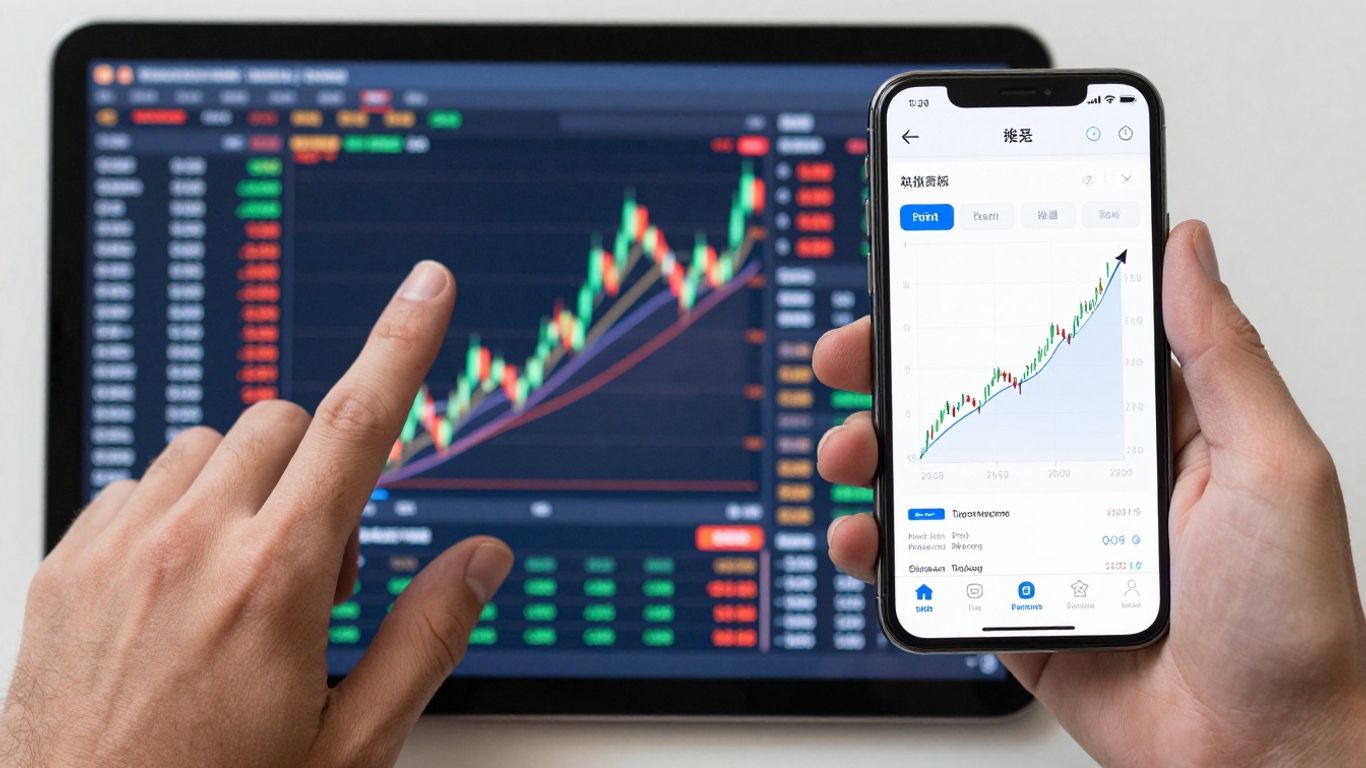
So, you’ve spent a good chunk of time in the simulated world of TradingView paper trading. You’ve tested strategies, learned the interface, and maybe even made a few virtual fortunes. That’s awesome! But eventually, the goal is to take those skills and apply them with real money. Moving from paper to live trading isn’t just flipping a switch; it’s a thoughtful process. It’s about building on what you’ve learned without getting ahead of yourself.
Building Confidence Through Practice
Knowing when you’re ready for the real deal is key. It’s not just about hitting a certain profit target in your paper account, though that’s a good sign. Think about consistency. Are you seeing steady, repeatable results over a decent period, say, a few months? If your simulated trades are mostly positive and you’re not making wild, emotional decisions, that’s a strong indicator. The real test is when your simulated performance starts to feel less like luck and more like a repeatable process. Also, consider your understanding of the market and your chosen assets. Do you feel comfortable with how prices move and why?
Here are a few checkpoints to consider:
- Consistent Profitability: You’re not just having one good week; you’re showing a steady upward trend in your paper account over several weeks or months.
- Emotional Control: You can execute trades according to your plan without getting overly excited by wins or discouraged by losses.
- Strategy Understanding: You deeply understand why your strategy works (or doesn’t) and can adapt it when needed.
- Risk Management: You consistently adhere to your stop-loss and position-sizing rules.
Familiarity With The Trading Platform
Your paper trading journey has given you a treasure trove of data. Don’t just forget about it when you go live! Look back at your performance reports. What worked well? What were your biggest mistakes? Were there specific market conditions where your strategy excelled or faltered? For example, maybe you found that your strategy performed poorly during high-volatility news events. This insight is gold. You can then decide to either avoid trading during such times in your live account or adjust your strategy to account for that increased risk.
Professional trading desks prioritize the underlying architecture that enables a strategy to adapt to evolving market conditions, recognizing that markets are dynamic and not static. This means taking your paper trading findings and actively applying them to refine your live trading approach.
Developing Realistic Trading Habits
It’s easy to take big risks when you know you can’t actually lose anything, but that’s not going to help you when you’re live. Think about the stress, the quick decisions, and the potential for unexpected market moves. Try to factor in things like slippage – that’s when your order doesn’t fill at the exact price you wanted because the market moved. Paper trading platforms don’t always show this perfectly, so try to mentally account for it. The goal here is to build a mental framework that prepares you for the actual trading floor. If you don’t take your paper trades seriously, you’re essentially just playing a game and not learning anything that will stick.
When you review your trades, focus on the decision-making process at the time of the trade, not what you know now. This is how you avoid hindsight bias. The goal is to improve your judgment in real-time, not to feel smart looking back. Also, consider using micro contracts when you first start with real money. Jumping straight into standard-sized contracts can be a shock to the system, even with a solid paper trading background.
Putting Your Practice into Play
So, you’ve learned the ins and outs of paper trading on TradingView. It’s not just about clicking buttons with fake money; it’s about building real skills. Think of it like practicing scales on a piano before a concert. You wouldn’t just jump on stage, right? Paper trading gives you that safe space to try things out, make mistakes without consequence, and really get a feel for the market. TradingView makes this easy with its realistic setup, letting you test strategies and get comfortable with the platform. Remember to treat your paper account seriously – stick to your plan, track your trades, and be honest about your results. When you’re ready, you’ll move to live trading with more confidence and a much better understanding of what you’re doing. Happy practicing!
Frequently Asked Questions
What exactly is paper trading?
Paper trading is like a practice run for trading without using real money. Imagine a pilot using a flight simulator to practice flying. Paper trading lets you do the same with stocks or other markets. You get to make buy and sell decisions and see how the market moves in real-time, but all the money is pretend. It’s a safe way to learn the basics and get a feel for trading before you risk your own cash.
Why is practicing with fake money so important?
Learning to trade is similar to learning any new skill, like playing an instrument or cooking. You need practice to get good! Paper trading lets you try out different trading ideas, learn how to read charts, and understand how market news can affect prices. It helps you build the skills needed for making trading decisions without the stress of losing money. You can make mistakes and learn from them safely.
How do I start paper trading on TradingView?
First, you need a free TradingView account. Once logged in, find the ‘Trading Panel’ at the bottom of the screen. Click on it and select ‘Paper Trading’. TradingView will then set up a simulated account for you. It’s a really simple process that gets you practicing in no time.
Can I make my paper trading account feel more real?
Absolutely! TradingView lets you adjust your starting balance to match the amount of money you plan to trade with later. You can also set up commission fees to match what your real broker charges. These small details make your practice sessions much more like actual trading, helping you prepare better.
What tools does TradingView offer for paper trading?
TradingView gives you access to real-time market data, charting tools, and technical indicators, just like real traders use. You can also use their market scanners to find trading opportunities. Plus, the platform automatically tracks your trades, showing your profit or loss and other performance stats, which helps you analyze your progress easily.
Should I treat paper trading like real trading?
Yes, definitely! It’s super important to act as if you’re trading with real money. Stick to your trading plan, always use stop-losses to manage risk, and keep a trading journal to understand your actions. By building good habits and discipline during paper trading, you’ll be much better prepared and more confident when you start trading with actual cash.