Despite a strong performance across global markets, including record highs for the S&P 500, the rally faces a temporary setback. Nvidia’s disappointing results, particularly regarding sales forecasts for China, have raised concerns about its future dominance in AI technology. Meanwhile, France’s political struggles and a weakening US dollar also contribute to market uncertainties. This article delves into these factors affecting global markets, with a focus on tech, bonds, and currency movements.

Global stock markets have enjoyed a robust performance so far this August, with major US indices leading the charge. The S&P 500 recently reached a new record high, propelled by investor optimism. However, recent developments, chiefly Nvidia’s earnings report and concerns around its exposure to the Chinese market, have caused some tremors, casting doubt on the strength of the tech sector’s momentum. Investors are now recalibrating their expectations as they await key economic data and political developments that could influence market sentiment in the short term.
The market’s pause is not entirely negative, as other sectors begin to show signs of growth, particularly in Europe and Asia. While Nvidia’s weaker-than-expected results have raised red flags for US tech stocks, particularly in relation to the company’s prospects in China, the impact of these results on global equities remains uncertain.
Asian tech stocks, especially those from China, are experiencing a surge, as local chip manufacturers look to capitalise on Nvidia’s challenges. This shift in momentum provides an opportunity for sectors outside of tech to shine, and markets, particularly in Europe, might benefit as a result.
Nvidia faces challenges in China, affecting tech stock sentiment
Nvidia’s Earnings Report and the China Concern
Nvidia’s latest earnings report highlighted a significant 50% year-on-year increase in revenue, confirming the company’s strength in the AI space. However, its inability to forecast sales for its H20 chip in China has raised concerns. While CEO Jensen Huang remains optimistic about the global demand for AI, the lack of clarity regarding Nvidia’s ability to sell chips in China, coupled with ongoing political tension, adds a layer of uncertainty. Analysts are now questioning whether Nvidia can maintain its dominant position in the AI chip market if China accelerates its development of domestic alternatives.
Despite the company’s stellar overall performance, the stock price fell nearly 3% in post-market trading following the earnings report. The absence of a clear outlook for China sales raises the possibility that the chip giant could face increased competition from local players like Cambricon, whose stock surged 7% following Nvidia’s earnings release. While the Chinese market presents a vast opportunity for Nvidia, it also poses a significant risk, especially if delays in chip sales give Chinese firms the time they need to develop competitive alternatives.
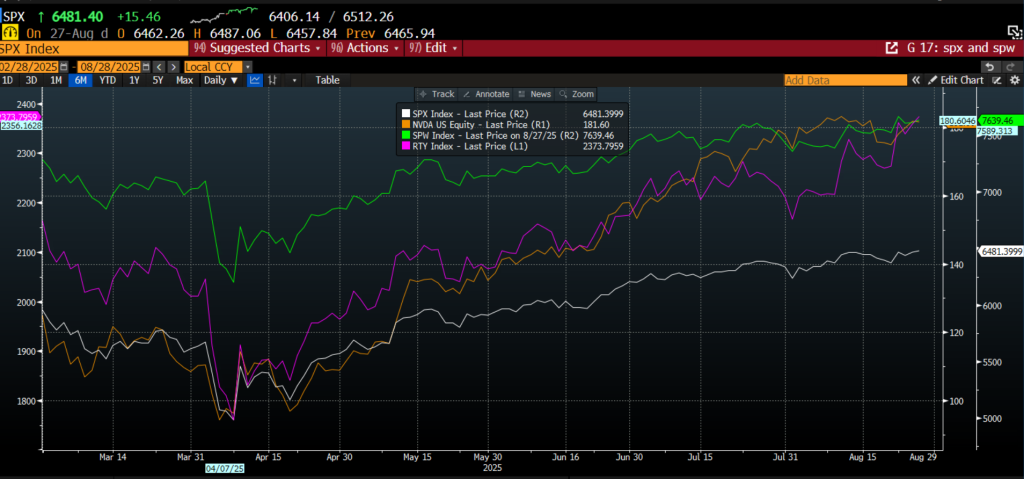
Tech Stocks: US Lagging Behind Asia
The geopolitical tension and supply chain concerns surrounding Nvidia could lead to a shift in the tech stock landscape, with Asian semiconductor stocks potentially outpacing their US counterparts. The recent surge in stocks from Chinese companies, like Cambricon, which reported a staggering 117% increase in stock value over the last month, demonstrates the growing confidence in domestic chipmakers. If US tech companies, particularly Nvidia, face further delays in China, it could pave the way for Asian tech giants to capture a larger market share, further exacerbating the competitive pressures in the global semiconductor industry.
For investors, this situation may present a shift in strategy, where US chip stocks lag while Asian semiconductor stocks potentially benefit from the political and economic backdrop. While Nvidia’s challenges remain a concern for the immediate future, the broader market trend suggests that non-tech sectors may gain traction, especially in the US.
French bond yields remain stable amid political uncertainty
Widening Spread Between French and German Bond Yields
Amid growing political concerns in France, particularly surrounding budget cuts and government stability, the bond market remains vigilant. Recently, the spread between the French and German 10-year bond yields widened to 80 basis points—the highest level since January. This development signals growing concerns about the French government’s ability to implement necessary fiscal reforms, especially with the upcoming confidence vote in the French parliament scheduled for September 8th.
French political leaders, including François Bayrou, have indicated the possibility of needing assistance from the International Monetary Fund (IMF) due to mounting budgetary pressures. Although French bond yields are not yet in critical territory, the uncertainty surrounding the political climate in France is enough to keep investors on edge. In contrast, French yields, particularly the 30-year yield, remain lower than those of the UK, leading some to believe that IMF involvement could be viewed as a stabilising force.
US dollar weakens as key economic data approaches
The US Dollar and Economic Data
The US dollar has been showing weakness recently, making it the poorest performer in the G10 currency space. This comes as traders prepare for upcoming economic data, including US GDP figures and the core PCE price index, which will be released on Friday. Analysts are paying close attention to the core PCE data, as any upside surprise could influence expectations around US interest rates.
Currently, the Federal Reserve’s stance suggests a potential for two interest rate cuts this year, as the futures market indicates. The growing speculation around these rate cuts is influenced in part by recent political developments in the US, including White House interference with the Federal Reserve Board. While the dollar’s recent weakness could continue, it is expected to be a temporary trend as the broader economic outlook and key data releases come into focus.
Interest Rate Expectations and Market Impact
The ongoing debate over US interest rates remains at the forefront of investor sentiment. The Federal Reserve’s policy trajectory is a key factor driving the dollar’s performance, and any shift in interest rate expectations could have a profound impact on financial markets. As markets await key data, the US dollar’s weakness signals a period of uncertainty, but any significant upside surprise in the upcoming economic reports could quickly reverse this trend.
Conclusion: Global markets brace for key data and political developments
While the global stock markets have enjoyed a strong start to August, the latest developments—ranging from Nvidia’s disappointing earnings to French political turmoil and the weakening US dollar—indicate that markets may face a temporary pause. Investors will be watching closely as these issues unfold, particularly with regard to Nvidia’s prospects in China, political risks in Europe, and the potential impact of upcoming US economic data on interest rate expectations.
As global markets navigate these uncertainties, there are opportunities for non-tech sectors to outperform, particularly in Europe and Asia. However, the tech sector remains a key focal point, with Nvidia’s struggles opening doors for Asian chipmakers to capitalise on its challenges. Investors will need to carefully monitor the evolving landscape as they make decisions in this dynamic environment.

Shikha Negi is a Content Writer at ztudium with expertise in writing and proofreading content. Having created more than 500 articles encompassing a diverse range of educational topics, from breaking news to in-depth analysis and long-form content, Shikha has a deep understanding of emerging trends in business, technology (including AI, blockchain, and the metaverse), and societal shifts, As the author at Sarvgyan News, Shikha has demonstrated expertise in crafting engaging and informative content tailored for various audiences, including students, educators, and professionals.