Ever wonder what are bitcoins selling for today? It’s a question a lot of people ask, especially with how much the price can jump around. One day it’s up, the next it’s down, and it can be tough to keep track. We’re going to look at some of the things that make the price move and where you can find the most current numbers. It’s not always simple, but understanding a few basics can really help.
Key Takeaways
- Bitcoin’s price changes a lot, and many things make it move up or down.
- You can check live prices on different websites and apps, but they might not all show the exact same number.
- Rules from governments and new technology can also change what bitcoins are selling for today.
- The fewer bitcoins there are, and the more people want them, the higher the price usually goes.
- Knowing a bit about how the market works helps you understand why the price is what it is.
Understanding Bitcoin’s Volatility: What Are Bitcoins Selling For Today?
Bitcoin, as we all know, can be a wild ride. One day it’s up, the next it’s down. Trying to figure out what bitcoins are selling for can feel like trying to predict the weather. It’s important to understand why these price swings happen.
Factors Influencing Daily Price Swings
So, what makes Bitcoin’s price jump around so much? Well, a few things. First, news plays a big role. If there’s good news, like a big company adopting Bitcoin, the price usually goes up. Bad news, like a government cracking down on crypto, and the price drops. Second, supply and demand are key. If more people want to buy Bitcoin than sell it, the price goes up, and vice versa. Third, big players, sometimes called "whales," can move the market with large trades. It’s a complex mix of factors that all come together to determine the daily price.
Historical Price Trends and Future Outlook
Looking back at Bitcoin’s history, it’s been anything but boring. We’ve seen massive bull runs followed by equally massive crashes. Understanding these past trends can give us some clues about the future, but it’s not a guarantee. Trying to predict the future of Bitcoin is tough, but looking at past patterns can help. Here’s a quick look at some key moments:
- 2017: The big bull run to nearly $20,000.
- 2018: The crash that followed, known as the "crypto winter."
- 2021: Another surge to all-time highs, driven by institutional adoption.
It’s important to remember that past performance is not indicative of future results. The cryptocurrency market is still relatively new and can be influenced by many unpredictable factors. Always do your own research and never invest more than you can afford to lose.
Impact of Global Events on Bitcoin Value
Global events can have a big impact on Bitcoin’s price. Economic uncertainty, political instability, and even things like pandemics can all affect how people view Bitcoin. For example, during times of economic crisis, some people see Bitcoin as a safe haven asset, like gold. This can drive up demand and push the price higher. On the other hand, if a major country bans Bitcoin, that can create fear and cause the price to drop. It’s all connected, and keeping an eye on global events is crucial for understanding Bitcoin’s price movements.
Real-Time Bitcoin Price Tracking: What Are Bitcoins Selling For Today?
Okay, so you want to know what’s up with Bitcoin prices right now. Makes sense. The crypto world moves fast, and what it was selling for five minutes ago might as well be ancient history. Let’s get into how to keep tabs on the ever-changing value of Bitcoin.
Where to Find Accurate Live Prices
Finding reliable, up-to-the-minute Bitcoin prices is key. You don’t want to base your decisions on outdated or inaccurate information. There are a bunch of places to check, but some are definitely better than others. Major cryptocurrency exchanges like Coinbase, Binance, and Kraken are good starting points. They usually have pretty accurate feeds. Also, financial news sites like Yahoo Finance or even Google Finance often display real-time BTC to USD prices. Just be sure to cross-reference a couple of sources to be extra sure.
Interpreting Price Charts and Indicators
Looking at a Bitcoin price chart can feel like staring at a Jackson Pollock painting if you don’t know what you’re doing. But trust me, it’s not as complicated as it looks. You’ll see candlesticks (those red and green bars), which show the opening, closing, high, and low prices for a specific period. Then there are indicators like moving averages, which smooth out the price data to show trends. RSI (Relative Strength Index) can tell you if Bitcoin is overbought or oversold. Don’t try to learn everything at once. Start with the basics and gradually add more tools to your arsenal.
Understanding Bid and Ask Prices
Okay, so bid and ask prices are the bread and butter of any market, including Bitcoin. The "bid" price is the highest price someone is willing to buy Bitcoin for. The "ask" price is the lowest price someone is willing to sell it for. The difference between the two is called the "spread." A smaller spread usually means there’s a lot of liquidity (lots of buyers and sellers), which is a good thing. When you place a market order, you’re essentially accepting the best available bid or ask price. Understanding this helps you get the best possible price when you’re buying or selling.
Keeping an eye on real-time Bitcoin prices is more than just checking a number. It’s about understanding the market dynamics, the factors that influence those prices, and how to interpret the data you’re seeing. It’s a skill that takes time to develop, but it’s well worth the effort if you’re serious about investing in Bitcoin.
Comparing Bitcoin Prices Across Exchanges: What Are Bitcoins Selling For Today?
Why Prices Differ Between Platforms
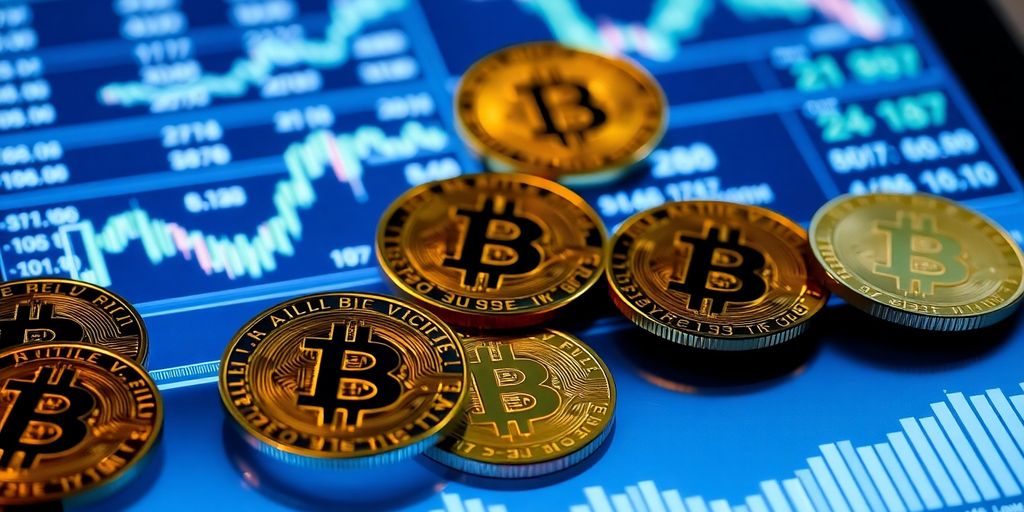
Bitcoin prices aren’t uniform across all exchanges. You might see a slight difference on Coinbase compared to Kraken, or Binance. This is mainly due to supply and demand dynamics that are unique to each platform. Different exchanges have different user bases, trading volumes, and fee structures, all of which contribute to price variations. For example, an exchange with higher trading volume might experience more price stability, while one with lower volume could see more significant fluctuations. Also, the geographic location of an exchange and the regulatory environment it operates under can play a role.
Arbitrage Opportunities and Risks
Price discrepancies between exchanges create arbitrage opportunities. Arbitrage is when you buy Bitcoin on one exchange where it’s cheaper and then quickly sell it on another exchange where it’s more expensive, pocketing the difference. Sounds easy, right? Well, it comes with risks. The price differences are often small and fleeting. Transaction fees, withdrawal limits, and the time it takes to transfer Bitcoin between exchanges can eat into your profits. Plus, the market can move against you while you’re transferring funds, turning a potential profit into a loss. It’s a fast-paced game that requires quick thinking and even quicker execution. You can check crypto prices on Yahoo Finance.
Choosing the Right Exchange for Your Needs
Selecting the right exchange depends on what you’re looking for. Consider these factors:
- Fees: Compare the trading fees, withdrawal fees, and deposit fees. Some exchanges have tiered fee structures based on your trading volume.
- Security: Look for exchanges with strong security measures, such as two-factor authentication, cold storage of funds, and insurance coverage.
- Liquidity: Higher liquidity means it’s easier to buy and sell Bitcoin without significantly impacting the price.
- User Interface: Choose an exchange with a user-friendly interface, especially if you’re a beginner.
- Supported Cryptocurrencies: If you plan to trade other cryptocurrencies besides Bitcoin, make sure the exchange supports them.
It’s a good idea to spread your holdings across multiple reputable exchanges rather than keeping all your eggs in one basket. This reduces your risk if one exchange experiences a security breach or other issues. Also, remember to do your own research and never invest more than you can afford to lose.
The Role of Supply and Demand: What Are Bitcoins Selling For Today?
Bitcoin’s price, like anything else, is heavily influenced by supply and demand. It’s a pretty basic economic principle, but it plays out in interesting ways with crypto. If more people want to buy Bitcoin than there are Bitcoins available, the price goes up. If more people are selling, the price goes down. Simple as that, right? Well, not exactly. Let’s get into the details.
How Scarcity Affects Bitcoin’s Price
Bitcoin was designed to be scarce. There will only ever be 21 million Bitcoins. This limited supply is a key part of its value proposition. As more Bitcoins are mined, the remaining supply gets smaller, potentially driving up the price if demand stays the same or increases. It’s like a rare collectible – the fewer there are, the more people are willing to pay. This inherent scarcity is a major factor in Bitcoin’s long-term value.
Demand Drivers in the Cryptocurrency Market
What makes people want to buy Bitcoin? Lots of things! Here are a few:
- Investment: Some people see Bitcoin as a store of value, like gold. They buy it hoping the price will go up over time.
- Transactions: Others use Bitcoin to send money or make purchases, especially internationally. It can be faster and cheaper than traditional methods.
- Speculation: Some people are just trying to make a quick buck by trading Bitcoin. This can lead to volatility, but it also drives demand.
The demand for Bitcoin is also affected by news, regulations, and overall market sentiment. Positive news can lead to increased demand, while negative news can cause panic selling.
Impact of Mining on Supply
Bitcoin mining is the process of verifying transactions and adding new blocks to the blockchain. Miners are rewarded with new Bitcoins for their efforts. The rate at which new Bitcoins are mined is designed to decrease over time, a process called "halving." This means the supply of new Bitcoins entering the market slows down, which can impact the Bitcoin’s value. The next halving event is expected to occur sometime in 2028. Here’s a simplified look at how the block reward changes over time:
| Halving Event | Block Reward | Approximate Date |
|---|---|---|
| Genesis Block | 50 BTC | 2009 |
| Halving 1 | 25 BTC | 2012 |
| Halving 2 | 12.5 BTC | 2016 |
| Halving 3 | 6.25 BTC | 2020 |
| Halving 4 | 3.125 BTC | 2024 |
This decreasing supply, combined with fluctuating demand, is what makes Bitcoin’s price so dynamic. It’s a constant tug-of-war between buyers and sellers, influenced by a whole range of factors.
Regulatory Landscape and Bitcoin’s Value: What Are Bitcoins Selling For Today?
It’s no secret that Bitcoin’s price can be a rollercoaster. One of the biggest factors influencing its value? Government regulations. What lawmakers decide about crypto can send prices soaring or plummeting faster than you can say "blockchain."
Government Policies and Their Influence
Government policies are a big deal. Think about it: if a major country bans Bitcoin, that’s going to scare a lot of people and drive the price down. On the flip side, if a government embraces Bitcoin and creates clear, friendly regulations, it could boost confidence and push the price up. It’s all about how governments choose to treat digital assets.
Impact of New Regulations on Market Sentiment
New regulations can really shake things up. Even the rumor of new rules can cause a stir. If people think regulations are coming that will make it harder to use or own Bitcoin, they might sell off their holdings, causing a price drop. But if the regulations are seen as positive, like providing more clarity and legitimacy, it can attract new investors and drive the price up. It’s all about sentiment, and regulations play a huge role in shaping that.
Future of Bitcoin Regulation
What does the future hold? That’s the million-dollar question. It’s likely we’ll see more countries developing their own regulatory frameworks for Bitcoin and other cryptocurrencies. The big question is whether these regulations will be coordinated globally or if they’ll be all over the place. A patchwork of different rules could make things complicated and potentially stifle innovation. But clear, consistent regulations could help Bitcoin mature and become more widely accepted.
The future of Bitcoin regulation is uncertain, but it’s clear that governments around the world are paying attention. How they choose to regulate Bitcoin will have a major impact on its price and its long-term viability.
Here’s a quick look at how different regulatory approaches could affect Bitcoin’s price:
| Regulation Type | Potential Impact on Price |
|---|---|
| Strict Bans | Significant Price Drop |
| Heavy Taxation | Moderate Price Decrease |
| Clear Guidelines | Moderate Price Increase |
| Government Adoption | Significant Price Increase |
Ultimately, the regulatory landscape is a constantly evolving factor that every Bitcoin investor needs to keep a close eye on. It’s not just about the technology; it’s about how the world decides to treat it.
Technological Advancements and Bitcoin’s Price: What Are Bitcoins Selling For Today?
Blockchain Upgrades and Their Effect
Bitcoin’s price isn’t just about supply and demand; it’s also heavily influenced by the tech that powers it. When there are upgrades to the blockchain, like SegWit or Taproot, it can have a big impact. These upgrades usually aim to improve transaction speeds, reduce fees, or enhance privacy. Positive upgrades often lead to increased confidence in Bitcoin, which can drive the price up.
For example, let’s look at how Taproot affected things:
| Upgrade | Description | Potential Price Impact | Actual Price Impact (short term) | Actual Price Impact (long term) |
|---|---|---|---|---|
| Taproot | Improved privacy, efficiency, smart contracts | Positive | Mildly Positive | Potentially Positive |
Security Concerns and Price Stability
Security is a huge deal for Bitcoin. Any major security breach or vulnerability discovered in the Bitcoin network can send the price plummeting. People lose faith, and they sell off their holdings. On the flip side, consistent security and successful defenses against attacks can boost investor confidence and stabilize the price. It’s a constant battle between developers patching vulnerabilities and hackers trying to exploit them.
Innovation in the Crypto Ecosystem
Bitcoin doesn’t exist in a vacuum. The broader crypto ecosystem, with all its innovations, also affects Bitcoin’s price. Things like DeFi (Decentralized Finance) and NFTs (Non-Fungible Tokens) can either draw attention and investment away from Bitcoin or, conversely, bring more people into the crypto space, some of whom will eventually invest in Bitcoin. It’s a complex relationship.
The constant evolution of blockchain technology means Bitcoin’s price is always subject to change. New innovations can either strengthen Bitcoin’s position or create new competitors, impacting its value. Staying informed about these developments is key for anyone investing in Bitcoin.
Here are some key areas of innovation to watch:
- Layer-2 scaling solutions (like the Lightning Network)
- Developments in smart contract functionality on Bitcoin
- Integration with other blockchain networks
Wrapping Things Up
So, there you have it. Keeping an eye on Bitcoin’s price is a bit like watching the weather—it changes all the time. One minute it’s up, the next it’s down. It’s pretty wild, honestly. Just remember, what you see today might be totally different tomorrow. It’s always a good idea to check the latest numbers if you’re thinking about doing anything with it. Things move fast in the crypto world, that’s for sure.
Frequently Asked Questions
Why does Bitcoin’s price change so much every day?
Bitcoin’s price changes a lot because many things affect it. Things like how many people want to buy it, how many are selling it, big news about money, and even new rules from governments can make its price go up or down quickly.
Where can I see what Bitcoin is selling for right now?
You can find out Bitcoin’s current price on many websites and apps. Look for places that show ‘live’ or ‘real-time’ prices. These usually have charts that help you see how the price has moved.
Is Bitcoin’s price the same on all trading websites?
Yes, Bitcoin’s price can be a little different on various trading places. This happens because each place has its own buyers and sellers, and sometimes the demand or supply is not exactly the same everywhere at the same time.
How does how many people want Bitcoin affect its price?
Bitcoin’s price goes up when more people want to buy it than sell it. It goes down when more people want to sell it than buy it. It’s like anything else: if lots of people want something, its price usually goes up.
Do government rules change Bitcoin’s price?
New rules from governments can really shake up Bitcoin’s price. If a government makes rules that make it harder to use or own Bitcoin, its price might drop. If they make rules that help it, the price might go up.
How do new technologies affect Bitcoin’s value?
When the technology behind Bitcoin, called blockchain, gets better or new features are added, it can make Bitcoin more useful or secure. This can make more people want it, which can help its price go up.