
Deciding between forex and futures trading can feel like a big step, especially when you’re just starting out. Both markets let you trade on price changes, but they work pretty differently. Think of it like choosing between a bicycle and a motorcycle – both get you places, but the ride and the rules are not the same. This article breaks down the main differences between forex vs futures, so you can get a clearer picture of which one might fit your trading style better.
Key Takeaways
- Forex trading is all about currencies, bought and sold in pairs on an over-the-counter (OTC) market, available 24/5. Futures contracts, on the other hand, are standardized agreements traded on exchanges, covering a wider range of assets like commodities, indices, and currencies, with set expiry dates.
- You can trade forex directly or through futures contracts, often called forwards in the forex world. Forex futures blend aspects of both markets, offering contract-based transparency with currency focus.
- Spot forex trades settle quickly at the current price, while futures contracts settle on a future date. Spot trading can have tighter price differences (spreads) but may involve overnight fees, whereas futures have wider spreads but no overnight fees, making them more suitable for longer-term trades.
- Both forex and futures trading use leverage, which magnifies potential profits and losses. It’s really important to manage your risk carefully when trading with leverage, as you can lose more than your initial deposit.
- The forex market is known for its massive liquidity and constant availability (24/5), while futures markets offer liquidity within their specific trading hours. Understanding these differences helps traders pick the right time to enter and exit trades.
Understanding The Core Differences: Forex vs Futures
When you first start looking into trading, you’ll quickly run into two big players: Forex and Futures. They both involve buying and selling, and they both can be pretty exciting, but they’re actually quite different under the hood. Think of it like comparing a bicycle to a motorcycle – both get you places, but the way they work and what they’re best for is not the same at all.
Defining Forex Trading
Forex, short for foreign exchange, is all about currencies. You’re essentially trading one country’s money for another’s. For example, you might buy Euros with US Dollars, or sell Japanese Yen for British Pounds. This market is huge, with trillions of dollars changing hands every single day. It’s how businesses pay for goods from other countries and how investors move money around the globe. The forex market is a 24/5 operation, meaning it’s pretty much always open for trading from Sunday evening to Friday evening. It’s a global network where banks, institutions, and individual traders connect electronically to exchange currencies.
Defining Futures Trading
Futures, on the other hand, are contracts. These contracts are agreements to buy or sell a specific asset at a set price on a future date. What’s cool about futures is that the asset isn’t just currency; it can be almost anything. We’re talking about things like oil, gold, agricultural products (like corn or wheat), stock market indexes, and yes, even currencies. These contracts are standardized, meaning everyone trading them agrees on the same terms for quantity, quality, and delivery date. They are traded on organized exchanges, which gives them a different kind of structure compared to forex.
Key Distinctions in Market Structure
The biggest difference in how these markets are set up is where and how trades happen. Forex is mostly an "over-the-counter" (OTC) market. This means there isn’t one central place where all the trading occurs. Instead, it’s a network of dealers and banks trading directly with each other, often electronically. This makes it very decentralized.
Futures, however, are traded on regulated exchanges, like the Chicago Mercantile Exchange (CME) or the Intercontinental Exchange (ICE). These exchanges act as central marketplaces. They provide a clear set of rules, ensure transparency, and act as a clearinghouse to guarantee trades. This exchange-based structure is a major difference from the OTC nature of forex.
Here’s a quick look at some of the main differences:
- Market Type: Forex is primarily Over-The-Counter (OTC), while Futures are Exchange-Traded.
- Underlying Assets: Forex focuses solely on currency pairs. Futures can cover a wide range of assets including commodities, indices, and currencies.
- Contract Standardization: Futures contracts are highly standardized. Forex spot trades are not standardized in the same contractual way.
- Trading Hours: Forex operates 24/5. Futures markets have specific trading hours dictated by the exchange.
The way these markets are structured directly impacts how you trade them. Understanding whether you’re dealing with a decentralized network or a regulated exchange is the first step to figuring out which one fits your trading style better. It’s not just about what you trade, but how and where you trade it.
Mechanics Of Trading: How Each Market Operates
Forex Over-The-Counter (OTC) Operations
The forex market operates quite differently from a traditional exchange. Instead of a central trading floor, it’s a global network. Think of it as a massive electronic web connecting banks, financial institutions, brokers, and individual traders worldwide. This setup is called an over-the-counter (OTC) market. What this means is that trades don’t happen in one specific place; they’re done electronically between parties. This decentralized structure is a big reason why forex is so liquid. You can usually get in and out of trades pretty quickly, even with large amounts of money, without drastically moving the price. Currency prices are shown as pairs, like EUR/USD, telling you how much one currency is worth in terms of another. Understanding these quotes is key to figuring out what’s happening in the currency world.
Futures Exchange-Traded Contracts
Futures contracts, on the other hand, are traded on organized exchanges. These exchanges act like marketplaces where buyers and sellers come together. The contracts themselves are standardized. This means that the quantity of the asset, its quality, and the delivery date are all pre-set. You don’t negotiate these terms with each trade; they’re the same for everyone trading that particular contract. This standardization makes futures trading transparent and straightforward. While many people think of commodities like oil or gold when they hear ‘futures,’ the market includes much more, like stock indexes and even currencies.
Standardization In Futures Contracts
One of the defining features of futures contracts is their high degree of standardization. This isn’t just a minor detail; it’s what makes the futures market function so smoothly. Every contract for a specific asset, like a barrel of oil or a specific stock index, has identical terms. This includes:
- Quantity: The exact amount of the underlying asset (e.g., 1,000 barrels of crude oil).
- Quality: The specific grade or standard of the asset (e.g., WTI crude oil).
- Delivery: The date and location for the asset’s exchange.
- Contract Size: The fixed unit of trading.
This uniformity removes the need for individual negotiation on these points for every single trade. It simplifies the process significantly, allowing traders to focus on price movements rather than the specifics of the agreement. It also makes it easier for exchanges to list and manage these contracts, contributing to the overall efficiency of the market.
The way these markets operate directly impacts how you trade them. Forex’s decentralized nature means constant availability, while futures’ exchange-based system offers a structured environment with set contract terms.
Asset Classes And Trading Instruments
Forex: A Focus on Currency Pairs
The forex market is all about currencies. When you trade forex, you’re essentially buying one currency while simultaneously selling another. Think of it like exchanging money when you travel, but on a much larger, more frequent scale. The core of forex trading involves currency pairs, like EUR/USD (Euro versus US Dollar) or GBP/JPY (British Pound versus Japanese Yen). The first currency in the pair is called the base currency, and the second is the quote currency. You’re looking to profit from the fluctuations in the exchange rate between these two. Because it’s the biggest market in the world, it’s incredibly liquid, meaning you can usually buy or sell pretty easily without drastically moving the price.
Futures: Diverse Underlying Assets
Futures contracts, on the other hand, are a bit more varied. While you can trade currency futures (which we’ll get to), the futures market is famous for its commodities. We’re talking about things like crude oil, gold, corn, and wheat. But it doesn’t stop there. You can also find futures contracts based on stock indexes (like the S&P 500), interest rates, and even cryptocurrencies. Each futures contract is a standardized agreement to buy or sell a specific asset at a set price on a future date. This standardization is key – it means everyone trading that contract knows exactly what they’re dealing with, making it easier to trade on exchanges.
Forex Futures: A Hybrid Approach
Now, things get interesting when you combine the two. Forex futures are exactly what they sound like: futures contracts based on currency pairs. So, instead of trading currencies directly on the over-the-counter forex market, you’re trading a standardized contract on an exchange. This means you get the structure and regulation of the futures market applied to currencies. It’s a way to get exposure to currency movements with the familiar mechanics of futures trading. Some traders prefer this because it offers a regulated environment and clear contract specifications, even though the underlying asset is a currency pair.
The choice between trading spot forex or forex futures often comes down to personal preference regarding market structure and regulatory oversight. Both allow you to speculate on currency movements, but they operate through different mechanisms and exchanges.
Trading Strategies And Suitability

Spot Trading Versus Futures Contracts
When you’re looking at trading, you’ve got a couple of main ways to go about it, especially when comparing forex and futures. On the forex side, you’re often dealing with what’s called ‘spot trading.’ This means you’re buying or selling a currency pair right now, at the current market price. It’s pretty straightforward – the deal happens almost instantly. Think of it like buying something at the store; you pay the price on the tag, and you get the item. The forex market is huge and always moving, so these spot trades are happening constantly, 24/7.
Futures contracts, on the other hand, are a bit different. They’re agreements to buy or sell an asset at a specific price on a future date. So, instead of trading ‘now,’ you’re agreeing to a trade that will happen later. This is super useful for things like commodities or stock indexes where you might want to lock in a price for something you’ll need or sell later. It’s a more structured approach compared to the immediate nature of spot forex. For example, a farmer might sell futures on their corn crop to guarantee a price, or an airline might buy futures on jet fuel to protect against rising costs. This forward-looking aspect is a big part of why futures exist.
Day Trading Versus Position Trading
How long you plan to hold a trade is a big deal in deciding which market fits you best. Day trading is all about making quick moves. Day traders get in and out of positions within the same trading day, often making multiple trades. They’re trying to catch small price movements and usually don’t want to be exposed to overnight market news. Both forex and futures can be used for day trading, but the forex market’s 24-hour nature and high liquidity can make it particularly appealing for this style. You can jump in and out whenever you want, without waiting for a specific market open.
Position trading is the opposite. Position traders hold their trades for longer periods – days, weeks, or even months. They’re looking for bigger price trends and are less concerned with the day-to-day noise. This approach often involves more analysis of longer-term economic factors or chart patterns. Futures contracts, with their set expiration dates, can sometimes lend themselves well to position trading, as you might align your trade with the contract’s lifecycle. However, you need to be mindful of those expiration dates, as they can force you out of a position whether you want to be or not. It’s important to understand the risk associated with futures trading before committing to this strategy.
Hedging And Speculation Opportunities
Both forex and futures markets offer chances for both hedging and speculation, but they do it in slightly different ways. Speculation is basically betting on price movements. If you think the euro is going to go up against the dollar, you buy EUR/USD. If you think it’s going to fall, you sell it. You’re trying to profit from the price change. Both markets are popular for speculators because they offer leverage, which can amplify your potential profits (and losses).
Hedging is about reducing risk. For instance, a company that does a lot of business in Europe might use forex to protect itself from currency fluctuations. If they expect to receive a large payment in euros in a few months, they might sell euros forward now to lock in the exchange rate. This way, if the euro falls, they’re protected. Futures contracts are also heavily used for hedging, especially in commodities. A coffee producer might sell coffee futures to guarantee a price for their harvest, protecting them from a price drop. Similarly, a food manufacturer might buy those futures to lock in their cost for coffee beans. It’s about managing uncertainty.
Choosing between forex and futures often comes down to what you’re trying to achieve. Are you looking for quick, frequent trades on currencies, or are you interested in locking in prices for commodities or other assets further down the line? Your goals and how much risk you’re comfortable with will point you in the right direction.
Leverage, Risk, And Reward
Leverage is a big deal in both forex and futures trading. It’s basically a way to control a larger amount of money than you actually have in your account. Think of it like borrowing money from your broker to make a bigger trade. This can really boost your potential profits if the market moves in your favor. But, and this is a huge ‘but’, it works both ways. That same leverage can magnify your losses just as easily if the market goes against you.
Leverage In Forex Trading
Forex brokers often offer some pretty wild leverage ratios. We’re talking 50:1, 100:1, or even more. So, with just a thousand bucks, you could be controlling fifty or a hundred thousand dollars worth of currency. It sounds exciting, especially for new traders, but it’s a serious risk. A tiny price swing can mean a big win or a crushing loss when you’re using that much leverage.
Leverage In Futures Trading
Futures contracts also come with built-in leverage. You don’t need to put up the full value of the contract; just a fraction of it, called margin, is required. The amount of margin can change depending on the contract, how wild the market is, and how easy it is to trade. While it’s not usually as extreme as some forex offerings, it’s still significant enough to make a big difference to your account balance, for better or worse.
Managing Risk In Leveraged Trading
Because leverage can be so powerful, you absolutely have to be smart about managing the risks. First off, know exactly what leverage your broker offers and what the margin requirements are. Don’t just jump in. It’s also super important to have a plan. Using tools like stop-loss orders is a good idea. These automatically close your trade if the price moves too far against you, saving you from potentially huge losses. Treat leverage as a tool, not a magic money-maker, and always have a risk management strategy in place.
When you’re trading with borrowed money, even a small market move can have a large impact on your account. It’s easy to get caught up in the excitement of potential profits, but it’s vital to remember that the downside is just as real. Always trade with money you can afford to lose, and never let your emotions dictate your trading decisions. A clear head and a solid plan are your best defenses against the inherent risks of leveraged trading.
Liquidity And Market Access
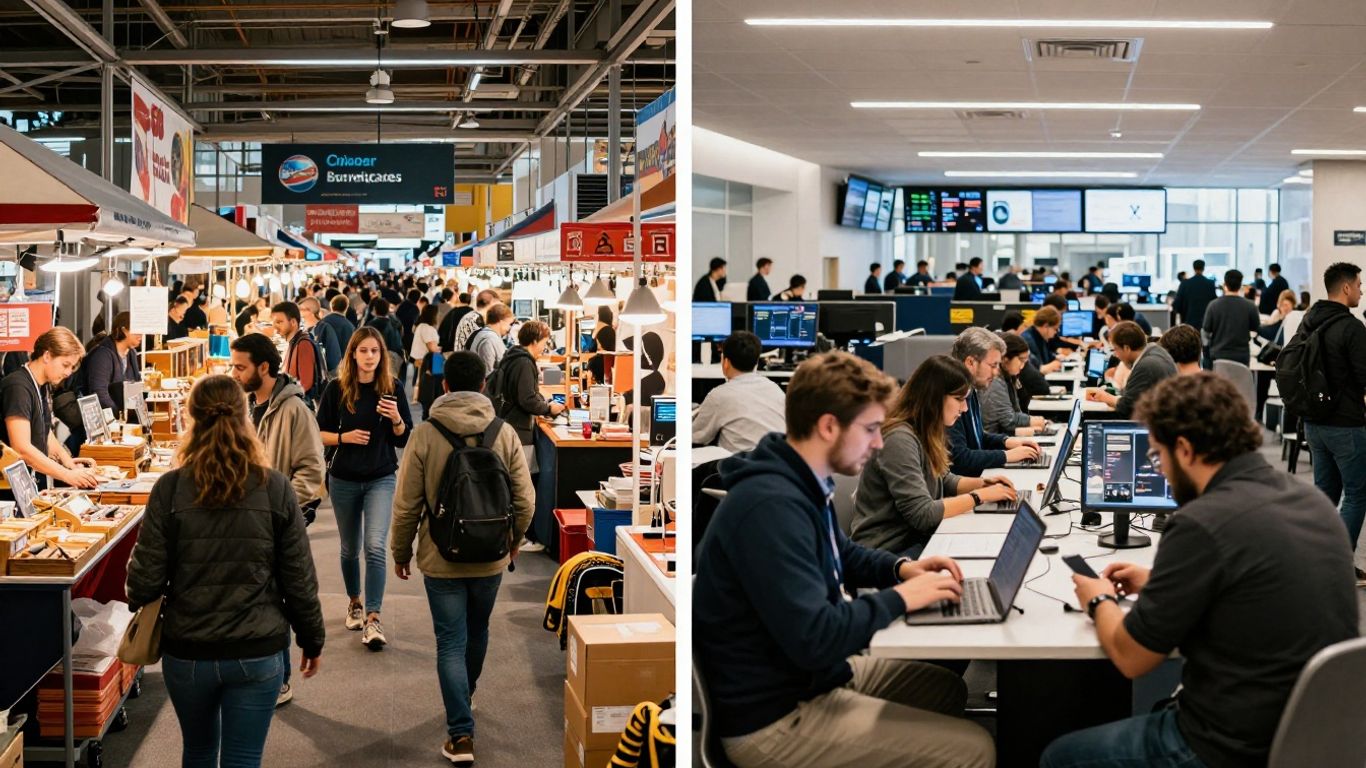
When you’re thinking about trading, how easily you can get in and out of a position, and when you can actually trade, are pretty big deals. Let’s break down how futures and forex stack up in terms of liquidity and access.
The High Liquidity Of The Forex Market
The forex market is basically the biggest financial market on the planet, and because of that, it’s incredibly liquid. Think about it: currencies are traded constantly by banks, businesses, governments, and individuals all over the world. This massive, round-the-clock activity means you can usually buy or sell currency pairs pretty quickly without causing the price to jump all over the place. This constant flow of buyers and sellers is what makes forex so liquid.
Liquidity In Futures Markets
Futures markets are also quite liquid, but it can vary a bit more depending on what you’re trading. Contracts for major commodities like oil or gold, or big stock indexes like the S&P 500, tend to be very liquid, similar to forex. However, if you’re looking at less common futures contracts, say for niche agricultural products, the liquidity might not be as high. This means it could take a bit longer to fill your order, and the price might move against you more noticeably.
Here’s a quick look at how liquidity can differ:
| Market | Typical Liquidity | Factors Affecting Liquidity |
|---|---|---|
| Forex (Spot) | Very High | Global participation, 24-hour trading, major currency pairs |
| Futures (Major) | High | Exchange trading, contract volume, economic events |
| Futures (Minor) | Moderate to Low | Lower trading volume, specific underlying assets |
Trading Hours And Market Access
This is where forex really shines for some traders. Because the forex market is decentralized and operates globally, it’s open 24 hours a day, five days a week. Major financial centers like London, New York, and Tokyo take turns keeping the market active. This means you can trade pretty much whenever you want, which is great if you have a day job or live in a different time zone.
Futures markets, on the other hand, are traded on specific exchanges, and these exchanges have set trading hours. While some futures contracts, especially those tied to global indexes or digital assets, might trade nearly around the clock, many others have more defined sessions. For example, agricultural futures might trade during typical business hours. This means you need to be aware of the specific trading schedule for the futures contract you’re interested in. Missing the window can mean missing an opportunity.
Accessing either market usually involves opening an account with a broker. The process for forex can sometimes be simpler for retail traders, as many brokers cater specifically to this market. Futures brokers, while also accessible, might have slightly different account requirements or platforms, especially if you’re dealing with more complex contracts.
So, if you need to trade at odd hours or want the highest possible liquidity at almost any time, forex has an edge. If you’re okay with specific trading sessions and are interested in a wider range of assets beyond currencies, futures offer plenty of access and liquidity, especially for the most popular contracts.
Wrapping It Up: Forex vs. Futures
So, we’ve gone over the ins and outs of forex and futures trading. It’s pretty clear they’re not exactly the same, even though you can trade currencies in both. Forex is all about those currency pairs, trading 24/5 with massive liquidity, which is great for international business. Futures, on the other hand, are these standardized contracts that can cover a bunch of different stuff – currencies, commodities, you name it – and they trade on exchanges. Your choice really boils down to what you’re trying to do. If you’re into quick trades and need constant access, forex might be your jam. If you prefer the structure of contracts and want to trade more than just currencies, futures could be the way to go. Both have their own risks, especially with leverage, so make sure you know what you’re getting into before you put any money down.
Frequently Asked Questions
What’s the main difference between trading forex and futures?
Think of it like this: forex trading is all about swapping one country’s money for another, like trading US dollars for Euros. Futures trading is a bit broader; it’s like making a deal today to buy or sell something (like oil, gold, or even currencies) at a set price on a future date. So, forex is just about currencies, while futures can be about many different things.
Where do forex and futures trades happen?
Forex trading mostly happens ‘over-the-counter,’ meaning deals are made directly between two parties, often online. Futures trading, on the other hand, usually takes place on organized exchanges, like a big marketplace where everyone can see the prices and trades.
Can I trade forex using futures?
Yes, you absolutely can! When you use futures contracts to trade currencies, they’re often called ‘forex futures’ or ‘forwards.’ It’s a way to use the futures market structure to trade currency pairs.
Are forex and futures trading risky?
Both can be risky, especially because they often use ‘leverage.’ Leverage is like borrowing money to trade more than you have. It can make your profits bigger, but it can also make your losses much bigger, sometimes even more than you first put in. It’s super important to understand and manage this risk.
Which market is more liquid, forex or futures?
The forex market is generally known for being incredibly liquid, meaning there are always lots of buyers and sellers ready to trade, making it easier to get in and out of trades quickly. Futures markets are also very liquid, especially for popular contracts, but the forex market is usually considered the biggest in terms of daily trading volume.
Can I trade forex or futures anytime I want?
Forex trading is available almost 24 hours a day, five days a week, because different parts of the world are always open for trading. Futures markets have specific trading hours set by the exchange they trade on, so you can’t trade them all the time like forex.