Thinking about getting into ai forex trading? It’s a hot topic, and for good reason. AI is changing how people trade currencies, making things faster and potentially more accurate. This article is going to break down what AI in forex trading really means, how you can start using it, and what to watch out for. We’ll cover everything from the tech behind it to managing risks, and what the future might hold. It’s not magic, but it’s definitely a powerful tool for traders in 2026.
Key Takeaways
- AI in forex trading uses machine learning to look at price patterns and make predictions. It can spot unusual market activity and give trading signals.
- AI can analyze news, company reports, and how people feel about the market, which is useful for forex and crypto trading by looking at global economic factors.
- Automated trading systems powered by AI can execute trades much faster and more efficiently than humans.
- Trading with AI requires careful risk management. Even the best systems need constant checking and updating to stay effective.
- The role of human traders is changing. They’ll focus more on setting up AI tasks, watching performance, and making strategic decisions rather than just executing trades.
Understanding The Power Of AI In Forex Trading
Defining Artificial Intelligence In Trading
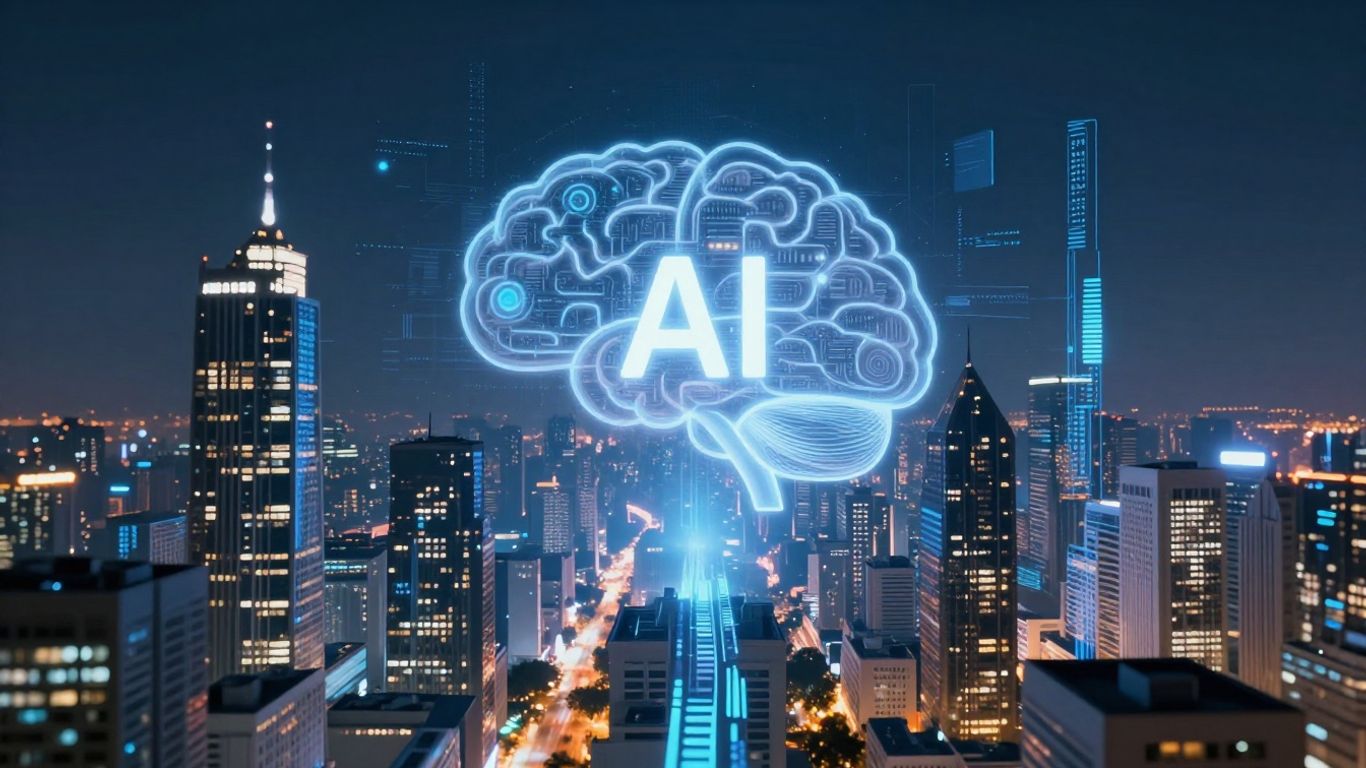
Artificial Intelligence is basically machines doing what humans do with data — but way faster, less emotional, and on a much bigger scale. In the context of trading, AI means computers and algorithms process huge amounts of raw market information to find chances and make trades based on those insights. The true appeal is that AI doesn’t get tired or panic like people do.
- AI doesn’t "guess"; it finds signals in patterns.
- It can run after-hours, analyzing global data while humans sleep.
- Automated decisions are based on tested rules, not gut feelings.
Even beginners can harness AI tools to help them spot trends and avoid costly knee-jerk reactions, making trading less intimidating for everyone.
The Evolution Of AI In Financial Markets
It didn’t all happen overnight. At first, traders used simple scripts for automating orders — think basic “if this, then that” logic. Over time, computers got smarter: algorithms learned to spot repeating patterns, then AI stepped up and started learning from streams of new economic reports and massive tick data in real time. Now in 2026, even small traders have access to tech that was once reserved for top banks and hedge funds. Here’s a quick look at progress:
| Era | Technology Level | Typical Use |
|---|---|---|
| Early 2000s | Rule-based automation | Scheduled orders |
| 2010s | Machine learning, pattern search | Trading signals |
| 2020–2026 | Neural networks, NLP, real-time | Prediction, analysis |
AI is no longer a curiosity—it’s in almost every trading terminal or analysis suite today.
Key AI Technologies Driving Forex Strategies
Several types of AI tech drive today’s smarter forex trading:
- Machine Learning: Models look at historical price moves to make nearly real-time predictions about what might happen next.
- Natural Language Processing (NLP): These systems "read" news, social posts, and central bank statements to gauge trader sentiment and potential events.
- Algorithmic Trading Bots: Pre-built or self-learning bots execute orders around the clock, scaling up positions or stopping losses with no second-guessing.
- Anomaly Detection: Programs catch odd market moves before most people notice them, which can flag possible big news events impacting currencies.
These advanced technologies have taken a lot of the repeat guesswork out of trading — but they still need regular monitoring and fresh data to work well.
All in all, AI has changed forex trading by introducing smarter, data-driven decisions, automating tough analysis, and providing everyday traders with the kind of edge that used to exist only on Wall Street.
Leveraging AI For Enhanced Forex Analysis
AI is really changing how we look at the forex market. It’s not just about crunching numbers anymore; it’s about finding patterns and predicting what might happen next. Think of it like having a super-smart assistant who can sift through mountains of data way faster than any human ever could.
Predictive Analytics And Price Forecasting
This is where AI really shines. By looking at past price movements, trading volumes, and a whole bunch of other factors like interest rates and economic reports, AI models can try to predict where prices might go. It’s not a crystal ball, of course, but it can give you a much better idea of potential future moves. These models learn from history, so the more data they process, the better they get at spotting trends and forecasting.
- Identifying hidden correlations: AI can find links between different currency pairs or economic indicators that might not be obvious to the human eye.
- Forecasting with multiple variables: It doesn’t just look at one thing; it considers inflation, employment figures, central bank policies, and more all at once.
- Adapting to market changes: As market conditions shift, AI models can adjust their predictions, which is pretty neat.
AI-Driven Sentiment Analysis For Market Insights
What are people saying about a currency pair? AI can actually read news articles, social media posts, and financial reports to gauge market sentiment. Is everyone feeling optimistic about the Euro, or is there a lot of worry? This kind of information can be a big clue about how prices might move. It’s like tapping into the collective mood of the market.
Understanding market sentiment can give you an edge. When news breaks, AI can quickly process the reaction and help you decide if it’s a buying or selling opportunity.
Integrating Fundamental And Technical Analysis With AI
AI isn’t just good at one type of analysis; it can combine them. It can look at the big economic picture (fundamental analysis) and the chart patterns (technical analysis) simultaneously. This gives a more rounded view of the market. For example, AI can check if a country’s economic health is improving while also seeing if a currency pair is hitting a resistance level on the charts. This combined approach helps create more solid trading plans.
- Economic Indicators: AI processes GDP, inflation, employment data, and central bank announcements.
- Chart Patterns: It identifies support/resistance levels, moving averages, and other technical signals.
- News Impact: AI assesses how breaking news might affect both fundamental and technical outlooks.
Implementing AI Forex Trading Strategies
So, you’ve got a handle on what AI can do for your trading. Now, let’s talk about actually putting it to work. It’s not just about picking a tool and hoping for the best; it requires a structured approach. Think of it like building something – you need a plan, the right materials, and a way to check your work.
Developing Your AI Trading Plan
Before you even look at a platform, you need to know what you want to achieve. What are your goals? Are you aiming for steady, smaller gains, or are you looking for bigger, albeit riskier, moves? Writing these down helps. It’s also smart to think about how much risk you’re comfortable with. This isn’t just about setting a stop-loss; it’s about your overall capital management style. Your plan should cover:
- Profit Targets: What does success look like in numbers?
- Risk Tolerance: How much can you afford to lose on a single trade or overall?
- Time Horizon: Are you day trading, swing trading, or investing long-term?
- Asset Focus: Which currency pairs will you focus on?
Having a clear plan is the bedrock of any successful trading endeavor, AI-assisted or not. It guides every decision you make.
A common pitfall is jumping into AI trading without a defined strategy. Markets move differently on a 15-minute chart compared to a yearly outlook. Your AI needs direction, and that comes from your plan.
Choosing the Right AI Trading Platforms
This is where things get interesting. The market has a bunch of platforms, each with its own strengths. Some are great for beginners, offering pre-built AI models and simpler interfaces. Others are for the more technically minded, allowing you to build and test your own algorithms. When picking a platform, consider:
- Compatibility: Does it work with Forex, or are you looking at stocks too?
- Customization: Can you tweak the AI models, or are you stuck with what they offer?
- Data Access: How much historical data does it provide for testing?
- User Interface: Is it easy to understand and use daily?
For those just starting, platforms with ready-made AI products and minimal setup might be best. Experienced traders might prefer systems that let them build and train their own neural networks. Tools like FX Replay can be a good starting point for testing strategies.
Essential AI Tools and Features for Traders
Once you’ve got your platform, you’ll want to get familiar with the AI tools available. These are what actually do the heavy lifting. Look for features like:
- Price Forecasting: AI can analyze past price movements to predict future trends.
- Volatility Modeling: Understanding how much a currency pair might move is key for risk management.
- News Impact Assessment: AI can process news feeds to gauge market sentiment and potential price reactions.
- Anomaly Detection: Spotting unusual market behavior that might signal an opportunity or a risk.
Many platforms use Natural Language Processing (NLP) to sift through news and reports. For Forex, you’ll also want to see how well it handles economic calendars and correlations between different currency pairs. Some traders even use general AI assistants like ChatGPT or Copilot to help generate ideas or code snippets for their strategies.
Mastering Risk Management With AI
Even the smartest AI can’t predict the future with 100% certainty, especially in the fast-paced world of forex. That’s where solid risk management comes in. It’s not just about making profits; it’s about protecting your capital when things go sideways. AI can be a huge help here, acting like a vigilant co-pilot.
AI-Powered Risk Mitigation Techniques
AI tools can do more than just spot trading opportunities. They can actively help you manage the risks associated with those trades. Think of it as having a built-in safety net that adjusts on the fly.
- Stop-Loss Orders: AI can dynamically adjust stop-loss levels based on current market volatility and your predefined risk tolerance. Instead of a static number, the AI might widen or tighten the stop based on real-time conditions.
- Position Sizing: AI algorithms can calculate the optimal size for each trade, making sure no single trade wipes out a significant portion of your account. This is based on factors like account balance, risk per trade percentage, and asset volatility.
- Maximum Drawdown Limits: You can set an overall limit for how much you’re willing to lose from your account’s peak value. AI systems can monitor this and automatically halt trading if the limit is approached or breached.
- Diversification Analysis: AI can analyze your portfolio across different currency pairs and timeframes, identifying over-concentration and suggesting adjustments to spread risk more effectively.
The goal isn’t to eliminate risk entirely – that’s impossible in trading. Instead, it’s about controlling it. AI helps by providing data-driven insights and automated actions to keep potential losses within acceptable boundaries, allowing you to trade with more confidence.
The Importance Of Continuous Monitoring And Retraining
Markets change, and so do the patterns AI models learn from. What worked last month might not work today. This means your AI needs constant attention.
- Performance Tracking: Regularly review how your AI trading strategies are performing against their historical backtests and your expectations. Look for any significant deviations.
- Model Retraining: Based on performance reviews and changing market conditions, AI models may need to be retrained with new data. This keeps their predictions relevant and accurate.
- Parameter Adjustment: Even without full retraining, AI parameters might need tweaking. This could involve adjusting sensitivity levels, learning rates, or other settings to better suit the current market environment.
Controlling Input Data Quality For Accuracy
Garbage in, garbage out. This old saying is especially true for AI. If the data fed into the AI is flawed, the AI’s decisions will be flawed too, leading to bad trades and potential losses. This is where AI Forex Trading Assistants can be particularly helpful.
- Data Source Verification: Ensure your AI is pulling data from reputable and reliable sources. Cross-referencing data from multiple sources can help catch errors.
- Real-time Data Feeds: For active trading, using real-time data feeds is critical. Stale data can lead to missed opportunities or trades executed at unfavorable prices.
- Anomaly Detection: AI can be used to detect anomalies or outliers in the input data itself, flagging potential errors before they impact trading decisions. This helps maintain the integrity of the information the AI uses to make its trading decisions.
Consistent monitoring and a focus on data quality are not optional extras; they are fundamental to using AI effectively for risk management in forex trading.
The Future Landscape Of AI Forex Trading
Emerging Trends In AI Trading Platforms
AI in trading isn’t standing still, that’s for sure. We’re seeing platforms get smarter, not just in how they analyze data, but in how they interact with us. Think about platforms that can actually explain their trading decisions in plain English, or ones that let you fine-tune their learning process without needing a computer science degree. The big push is towards more accessible, yet powerful, tools. We’re moving beyond just pre-built bots to systems that feel more like a collaborative partner. Expect to see more integration with everyday financial tools, making AI trading less of a specialized skill and more of a standard part of a trader’s toolkit.
Autonomous Learning And Adaptation In AI Models
This is where things get really interesting. AI models are starting to learn on their own, adapting to market changes in real-time without needing a human to constantly feed them new data or tweak their settings. It’s like they’re developing their own intuition, but based on massive amounts of data. This means strategies that worked yesterday might automatically adjust to work today, even if the market does something completely unexpected.
Here’s a look at what autonomous learning means for trading:
- Real-time Adjustments: Models can change their parameters on the fly as market conditions shift.
- Pattern Recognition: They can identify new, complex patterns that humans might miss.
- Self-Correction: If a strategy starts performing poorly, the AI can try to figure out why and fix it.
The goal is to create trading systems that are not just reactive, but truly proactive and self-sufficient.
The Evolving Role Of Human Traders In An AI-Dominated Market
So, what’s left for us humans in all this AI automation? It’s not about being replaced, but about shifting our focus. Instead of spending hours crunching numbers or staring at charts, our job becomes more about setting the direction, managing the big picture risks, and understanding the ‘why’ behind the AI’s actions. We’ll be the strategists, the supervisors, and the ones who bring in that human element of judgment, especially when dealing with unpredictable events or ethical considerations. Think of it as moving from being the mechanic to being the race car team manager. You still need to know how the car works, but your main job is to win the race.
The future of trading involves a partnership. AI handles the heavy lifting of data analysis and execution, while humans provide the strategic oversight, ethical guidance, and the ability to interpret complex, non-quantifiable market factors. This synergy is what will drive success in the evolving financial landscape.
Wrapping It Up
So, as we look ahead to 2026 and beyond, it’s pretty clear that AI isn’t just a fancy buzzword in Forex trading anymore. It’s become a real tool that can help make sense of all the market noise. While it’s not a magic money-making machine – you still need to know what you’re doing and keep an eye on things – AI can definitely speed up analysis and help you spot opportunities you might have missed. Just remember, like anything powerful, it needs careful handling. Keep learning, stay aware of the risks, and use AI to work smarter, not just harder. The future of trading is here, and it’s looking pretty interesting.
Frequently Asked Questions
Can AI really help me make money trading?
When set up and watched carefully, trading with AI can lead to good results and accurate predictions. It works even better when combined with other ways of looking at the market, like checking company news and charts.
How can I use AI for trading?
You can use AI tools to come up with trading ideas, study market charts and company reports, and even write simple code for trading programs. AI is also great for understanding news, doing boring tasks automatically, and explaining tricky money ideas.
What’s the best AI to use for trading?
Right now, some of the best AI tools include those from the GPT-5 family, Perplexity, DeepSeek, Qwen, and Copilot. Big names like Google DeepMind and OpenAI also have very effective AI that’s used in trading systems and for analyzing market news.
How do I get started trading with AI?
First, figure out what you want to achieve. Then, pick a trading platform. You’ll either need to train an AI model yourself or use one that’s already made. After that, you’ll write instructions for the AI, test your plan, and set up rules to manage your risks and check how things are going.
Can I completely trust AI for trading?
You shouldn’t trust AI completely because it can still make mistakes. But, if you keep an eye on it, test it often, and put limits on what it can do automatically, trading with AI can be a reliable and successful way to trade.
Can AI predict the stock market perfectly?
AI can give you good guesses and show you chances to trade based on lots of information. But, it can’t be 100% right because unexpected things happen that no one can predict, and external events can change everything.