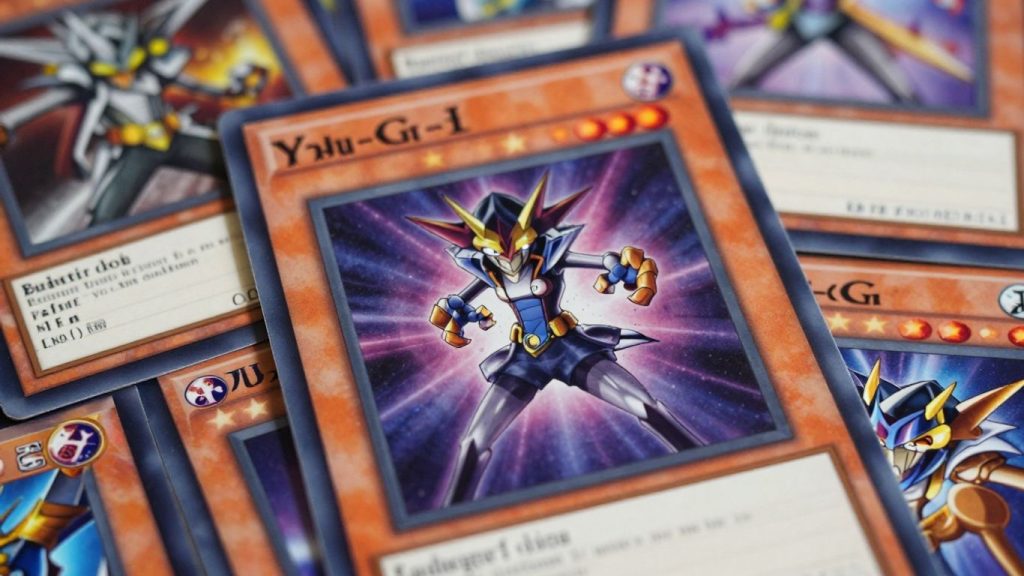
So, you want to get into the Yu-Gi-Oh! trading card game, huh? It can seem a bit much at first, with all the different cards and rules. Back in the day, it felt simpler, right? Just summoning big monsters and smashing. But even the old ways had their own kind of depth. Whether you’re looking to relive those classic duels or jump into the modern scene, understanding the basics is key. This guide will help you get a handle on how the trading card game Yu-Gi-Oh! works, from summoning monsters to using spells and traps, and even looking at different ways people play the game today.
Key Takeaways
- Learn the basic actions: summoning monsters, using spell and trap cards, and aiming to lower your opponent’s life points.
- Explore different ways to play, from modern digital versions like Yu-Gi-Oh! Master Duel to older, classic formats.
- Build your deck by thinking about monster, spell, and trap card balance and when to use your cards.
- Understand different ways to summon monsters, like Fusion, Ritual, Link, and Pendulum, as they change how you play.
- Know what each card type does: monsters attack and defend, spells offer quick effects, and traps can surprise your opponent.
Understanding The Core Trading Card Game Yu-Gi-Oh! Mechanics
Alright, let’s get down to the nitty-gritty of what makes a Yu-Gi-Oh! duel tick. It might seem complicated with all the fancy monsters and effects these days, but at its heart, the game is built on a few key actions. You’ve got your Life Points, your deck, and your opponent’s Life Points. The goal is pretty straightforward: knock those Life Points down to zero before they do the same to you.
Summoning Monsters To The Field
This is probably the most exciting part for most players. You draw cards, and if you’ve got a monster you like, you can play it onto your side of the field. Most monsters can be Normal Summoned once per turn without needing anything special. Some monsters are stronger and require you to Tribute (send to the Graveyard) other monsters you control first. Think of it like paying a cost to bring out a bigger threat. There are also Special Summons, which let you bring out monsters using card effects, often without using your Normal Summon for the turn. Getting the right monster on the field at the right time is a huge part of winning.
Utilizing Spell And Trap Cards
Monsters aren’t the only tools you have. Spell cards are like one-time use abilities that can boost your monsters, destroy your opponent’s cards, or help you draw more cards. They’re usually played during your turn. Trap cards, on the other hand, are a bit more sneaky. You set them face-down on your field, and they can be activated later, often during your opponent’s turn, to surprise them. This could be stopping an attack, destroying a monster they just summoned, or messing with their strategy in some way.
Reducing Opponent’s Life Points
So, you’ve got monsters on the field, and you’ve got Spells and Traps ready. Now what? You attack! When your monsters attack your opponent’s monsters, damage is calculated based on their Attack and Defense Points. If your monster’s Attack Points are higher than the monster it’s attacking’s Defense Points, the difference is dealt as damage to your opponent’s Life Points. If you attack an empty field, all of your monster’s Attack Points are dealt directly to your opponent’s Life Points. It’s a constant back-and-forth, chipping away at their Life Points until one player reaches zero.
Navigating Different Yu-Gi-Oh! Eras And Formats
The world of Yu-Gi-Oh! has seen a lot of changes since it first hit the scene. It’s not just about the new cards that come out; the whole way people play has shifted over the years. Understanding these different periods, or ‘eras,’ can really change how you approach the game.
Mastering Modern Yu-Gi-Oh! Master Duel
If you’re jumping into Yu-Gi-Oh! today, chances are you’ll encounter Master Duel. This digital platform is a great place to learn the current rules and see how the game is played right now. It uses the latest banlists and mechanics, so it’s a good way to get a feel for what competitive play looks like in 2026. It’s pretty accessible, too, letting you build decks and duel from your computer or phone.
Exploring Classic Formats Like GOAT
Remember the days when Fusion Monsters were the big deal and there weren’t a million different types of summons? That’s the vibe of formats like GOAT (Greatest Of All Time). This era, roughly from 2005-2006, is loved for its more straightforward gameplay. It focused on strong monster effects, smart spell/trap usage, and building up card advantage. Playing GOAT feels like a trip back in time, and many players still enjoy it.
Here’s a quick look at what made GOAT special:
- Limited Extra Deck: Primarily Fusion Monsters, no Synchro, Xyz, Pendulum, or Link.
- Staple Cards: Cards like "Pot of Greed," "Graceful Charity," and "Mirror Force" were common.
- Slower Pace: Games often involved more back-and-forth, with fewer explosive turns.
The Appeal Of Edison Format Duels
Edison is another popular throwback format, usually covering the period around 2010. It’s a bit more complex than GOAT, introducing some new mechanics but still feeling simpler than today’s game. It’s a sweet spot for many players who want a more strategic duel without the overwhelming speed of modern Yu-Gi-Oh!.
Playing older formats can be a really fun way to appreciate how far the game has come. It also shows you that good strategy doesn’t always need the newest, flashiest mechanics. Sometimes, a well-timed "Mystical Space Typhoon" is all you need.
Whether you’re into the cutting edge of Master Duel or the nostalgic charm of GOAT and Edison, there’s a way to play Yu-Gi-Oh! that fits what you’re looking for. Each era has its own unique feel and challenges, making the game endlessly interesting.
Deck Building Strategies For The Trading Card Game
Alright, let’s talk about putting together a deck that actually wins. It’s not just about throwing in your favorite monsters; there’s a bit more to it than that. Think of your deck as your army – you want it to be well-rounded and ready for anything.
Focusing On Classic Powerhouses
Sometimes, going back to basics is the best move. In older formats, or even in modern play if you’re feeling nostalgic, certain cards just work. These are often monsters with high attack points, or spells and traps that have been staples for years. They might not have flashy effects, but they get the job done reliably. Building around these can give you a solid foundation, especially if you’re new to deck building or want a straightforward strategy.
Balancing Monster, Spell, And Trap Counts
This is where a lot of people stumble. You can’t just fill your deck with monsters and expect to win. You need spells to boost your monsters, get rid of your opponent’s threats, or draw more cards. And traps? They’re your surprise defense, stopping your opponent in their tracks when they least expect it. A good starting point for a 40-card deck is usually around:
- Monsters: 16-20
- Spells: 12-16
- Traps: 8-12
This is just a guideline, of course. Some decks might run more monsters, others might be spell-heavy. It really depends on the strategy you’re going for.
Leveraging Card Advantage And Timing
This is a big one, and it separates good duelists from great ones. Card advantage means having more cards in hand or on the field than your opponent. If you can draw extra cards or make plays that get rid of multiple of your opponent’s cards with just one of yours, you’re gaining an advantage. Timing is just as important. Playing a powerful trap card at the exact moment your opponent commits to an attack can completely turn the duel around. It’s about knowing when to hold back and when to go all out.
Building a deck isn’t just about picking strong cards; it’s about making those cards work together. Think about how your monsters set up your spells, or how your traps protect your key monsters. Every card should have a purpose, and they should all contribute to your overall game plan. Don’t just add cards because they’re rare or powerful on their own; make sure they fit your deck’s synergy.
Advanced Summoning Techniques In Yu-Gi-Oh!
Beyond just Normal Summons, Yu-Gi-Oh! offers a whole toolbox of ways to get your powerful monsters onto the field. Mastering these advanced methods is key to outplaying your opponent and building a winning board.
Mastering Fusion Summons
Fusion Summoning is one of the oldest special summoning mechanics. It involves sending specific monsters listed on a Fusion Spell card (like the classic ‘Polymerization’) from your hand or field to the Graveyard to summon a Fusion Monster from your Extra Deck. The key here is having the right "materials" ready. Some Fusion Monsters require very specific monsters, while others are more flexible, allowing you to use "any" monster or "any Dragon monster" as part of the cost. Planning your deck around specific Fusion Monsters means ensuring you can consistently gather those required materials.
Understanding Ritual Monster Mechanics
Ritual Monsters are a bit different. They are summoned using a "Ritual Spell" card that specifically names the Ritual Monster you want to summon. To perform the Ritual Summon, you must offer monsters from your hand or field whose total Levels equal or exceed the Level of the Ritual Monster you’re trying to bring out. Unlike Fusion Summons, Ritual Monsters are typically summoned from your hand, not the Extra Deck. This means you need both the Ritual Monster and its corresponding Ritual Spell in your hand to make the play.
Exploring Link Summoning Processes
Link Summoning introduced a new type of monster, Link Monsters, and a new zone, the Extra Monster Zone. Link Monsters don’t have Levels or DEF/ATK in the same way; instead, they have a Link Rating and Link Arrows. To Link Summon, you send monsters from your field to the Graveyard whose total Levels equal or exceed the Link Rating of the Link Monster you want to summon. The monsters used for the summon can be any monsters on your field. Link Monsters point to zones on the field, and monsters placed in those zones gain benefits, like being able to be attacked directly or having their effects activated. The placement of Link Monsters is just as important as the monsters themselves.
The Nuances Of Pendulum Summoning
Pendulum Monsters are unique because they can be used as monsters on the field or as Spell Cards in the new Pendulum Zones. When placed in a Pendulum Zone, they have a Pendulum Effect and a Pendulum Scale. The Pendulum Scale determines the range of Levels of monsters you can Pendulum Summon. If you have two Pendulum Monsters in your Pendulum Zones, you can Pendulum Summon monsters from your hand and face-up from your Extra Deck whose Levels fall between the two Pendulum Scales. This allows for massive swarms of monsters in a single turn, especially if you have high Pendulum Scales.
Essential Card Types And Their Roles
Alright, let’s break down the building blocks of any Yu-Gi-Oh! deck: the cards themselves. Knowing what each type does and how to use it is pretty much half the battle. You’ve got your Monsters, your Spells, and your Traps. Each one has its own job, and putting them together right is what makes a deck win or lose.
The Power Of Effect Monsters
Effect Monsters are the workhorses of most decks these days. They don’t just sit there and attack; they do stuff. This ‘stuff’ can be anything from destroying cards on the field, drawing more cards, searching your deck for specific cards, or even messing with your opponent’s graveyard. The key is to pick Effect Monsters whose abilities work well with your deck’s overall strategy. For example, if your deck wants to swarm the field with monsters, you’ll want Effect Monsters that can special summon themselves or other monsters easily. If you’re playing a control deck, you might want monsters that can negate effects or disrupt your opponent’s plays.
Here’s a quick look at some common monster types and their general roles:
- Normal Monsters: These are your basic attackers. They have no effects, just Attack and Defense points. Good for Tribute Summons or as fodder for Fusion/Synchro/Xyz plays.
- Effect Monsters: As we said, these do things. Their effects can be game-changing, so read them carefully!
- Tuner Monsters: These are special monsters needed for Synchro Summons. They have a "Tuner" attribute.
- XYZ Monsters: Summoned by using monsters of the same Level. They have powerful effects that often require detaching materials.
- Pendulum Monsters: These can be used as monsters on the field or as Spell Cards in the Pendulum Zones. They have two scales and can allow for Pendulum Summons.
- Link Monsters: Summoned using other monsters. They don’t have Levels or DEF, and their main purpose is to provide Link Arrows that point to zones, enabling further summons or boosting monsters.
Strategic Use Of Spell Cards
Spell Cards are your one-shot wonders. You play them, their effect happens, and then they go to the graveyard. They can do a lot of different things, like boosting your monsters’ Attack/Defense, destroying cards, drawing more cards, or even changing the game state in your favor. You can play them anytime you have priority, which means you can often use them to respond to your opponent’s actions. Think of them as your toolbox for solving problems or creating opportunities.
- Normal Spells: Play them on your turn for a one-time effect.
- Quick-Play Spells: These are super flexible. You can play them on your turn or your opponent’s turn, making them great for surprise plays.
- Continuous Spells: Once played, their effect stays active as long as they are on the field.
- Equip Spells: These attach to a monster and give it a stat boost or an additional effect.
- Field Spells: These affect the entire field for both players, usually providing a general buff or altering game rules.
- Ritual Spells: Used specifically to perform Ritual Summons.
Defensive And Offensive Trap Cards
Trap Cards are the surprise element. You can’t play them the turn you set them (usually), but once they’re on the field, they can be activated at almost any time, often in response to your opponent’s moves. This makes them fantastic for disrupting your opponent’s plans or protecting your own field. A well-timed Trap Card can completely turn a duel around. You want to have a few of these ready to go, especially ones that can stop your opponent’s most dangerous plays.
- Normal Traps: Activate for a one-time effect.
- Continuous Traps: Stay on the field and provide ongoing effects.
- Counter Traps: These are the most powerful traps, able to negate the activation of Spells, Traps, or monster effects. They can only be activated when a card or effect is activated.
Understanding the roles of these card types is key. Monsters are your army, Spells are your tactical maneuvers, and Traps are your ambushes and defenses. Building a deck that balances these elements effectively is how you start winning duels consistently.
Tips For Becoming A Better Duelist
So, you’ve been dueling for a while, maybe you’re getting the hang of things, but you want to step up your game. It happens to everyone. You start thinking about how to actually win more, not just play. It’s not always about having the flashiest cards or the most complex combos. Sometimes, it’s the simple stuff that makes the biggest difference. Let’s break down a few ways to sharpen your skills.
Don’t Overthink Your Plays
This might sound counterintuitive, especially when you’re facing a really complex board or a tricky situation. But honestly, sometimes the best move is the most straightforward one. You know, like when you’re trying to assemble a combo and you get lost in all the possibilities? Stop for a second and look at the most obvious path to victory or the best way to protect yourself. Often, your gut feeling is right, and trying to force a super complicated play can lead to mistakes. It’s easy to get caught up in what could happen, but focusing on what is happening right now and making the most solid play is usually the way to go. Think about it like this: if you have a clear shot to win the game, why spend five minutes trying to set up a situation that wins by an even bigger margin but risks you losing if you mess up one step?
Anticipating Opponent’s Key Cards
This is where watching your opponent and knowing the meta really comes into play. You see them set a backrow card. What could it be? Is it a common trap like Infinite Impermanence, or maybe a powerful floodgate? If you’re playing against a popular deck, you probably have a good idea of their main threats. Try to think about what cards would stop you if you were them. Knowing what your opponent is likely to play can help you decide when to commit your resources and when to hold back. It’s like playing chess, but with more dragons and magic.
Keeping Strong Trap Cards Ready
Traps are often the unsung heroes of a duel. They can completely turn the tide when your opponent thinks they’ve got you cornered. Having a couple of well-timed trap cards can save you from a devastating combo or protect your own monsters. Think about cards that offer disruption, like Solemn Judgment to negate a summon, or something that can remove a threat like Torrential Tribute. Even a simple card like Compulsory Evacuation Device can buy you a lot of time. It’s not about having a trap for every single situation, but having a few versatile ones that can handle common threats is a smart move. You don’t want to be caught with your hand empty when they drop their boss monster.
The game is a constant back-and-forth. You need to be able to adapt to what your opponent is doing, but also have a plan for your own turns. Don’t be afraid to play defensively if you need to. Sometimes, surviving the opponent’s turn is the most important play you can make. It gives you the chance to draw into the cards you need to win on your next turn.
Keep Dueling!
So, that’s a wrap on our journey through mastering the Yu-Gi-Oh! TCG. Whether you’re digging out those old cards from the attic or jumping into the digital world with something like Master Duel, the game still has that magic. It’s easy to get caught up in all the new stuff, but sometimes, going back to the basics, remembering those classic monsters and simple traps, is a real blast. The core of the game, summoning monsters and battling, hasn’t really changed. It’s all about having fun and figuring out your opponent. Don’t forget there are communities out there playing older formats too, like GOAT or Edison, if that’s more your speed. So grab your deck, maybe a few friends, and get back to the dueling table. The spirit of the game is still strong, and there’s always a new duel waiting.
Frequently Asked Questions
What are the basic ways to win in Yu-Gi-Oh!?
The main goal is to knock your opponent’s Life Points down to zero. You do this by attacking with your monsters. You can also win if your opponent has to draw a card but their deck is empty!
How do I get monsters onto the playing field?
You can summon monsters by playing their cards from your hand. There are different types of summons, like Normal Summons, and special ones like Fusion or Ritual Summons, which need specific cards or conditions.
What’s the difference between Spell and Trap cards?
Spell cards are usually played right away for an effect, like boosting a monster or drawing more cards. Trap cards are a bit different; you set them face-down on your field and can activate them later, often in response to your opponent’s actions, to surprise them.
Is it hard to learn Yu-Gi-Oh! today?
It can seem like a lot at first, but the game is built on simple steps. Playing games like Yu-Gi-Oh! Master Duel online can help you learn the rules and card effects in a fun way. Many resources are available for beginners!
What was Yu-Gi-Oh! like in the old days (like GOAT format)?
Older formats, often called ‘GOAT’ or ‘Edison,’ were generally slower. They focused more on strong monsters, classic spell and trap cards, and careful planning. There weren’t as many complicated extra deck monsters like Synchros or Links back then.
What’s the best way to get better at playing?
Try not to overthink every single move. Think about what your opponent might do and keep some useful Trap cards ready to defend yourself or disrupt their plans. Understanding how your cards work together is key!