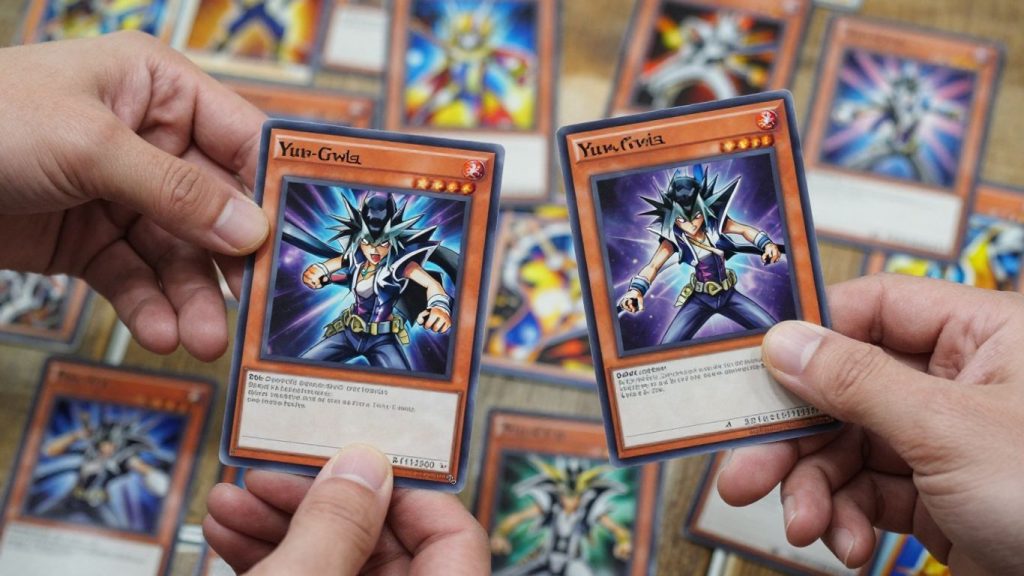
So, you’ve heard about the Yu-Gi-Oh! trading card game and maybe even saw some cards lying around. It’s been around for ages, but guess what? It’s still super popular. People are breaking records at tournaments, and Konami keeps adding new stuff that works with the old cards. Whether you’re totally new or just haven’t played since you were a kid, this guide will help you get back into the swing of things. We’re going to cover the basics so you can start dueling.
Key Takeaways
- The main goal in a Yu-Gi-Oh! trading card game duel is to reduce your opponent’s Life Points from 8000 to 0 using your monsters, spells, and traps.
- Understanding the different card types – Monsters, Spells, and Traps – is fundamental to playing the game effectively.
- The Duel Field has specific zones for your Deck, Graveyard, Monster Zones, Spell & Trap Zones, Field Zone, and Extra Deck, each serving a distinct purpose.
- The flow of a duel follows a turn structure: Draw Phase, Standby Phase, Main Phase 1, Battle Phase, Main Phase 2, and End Phase, with specific actions allowed in each.
- Building a deck involves a Main Deck (40-60 cards), an Extra Deck (0-15 cards), and an optional Side Deck (up to 15 cards), with limits on card copies.
Understanding The Yu-Gi-Oh! Trading Card Game Basics
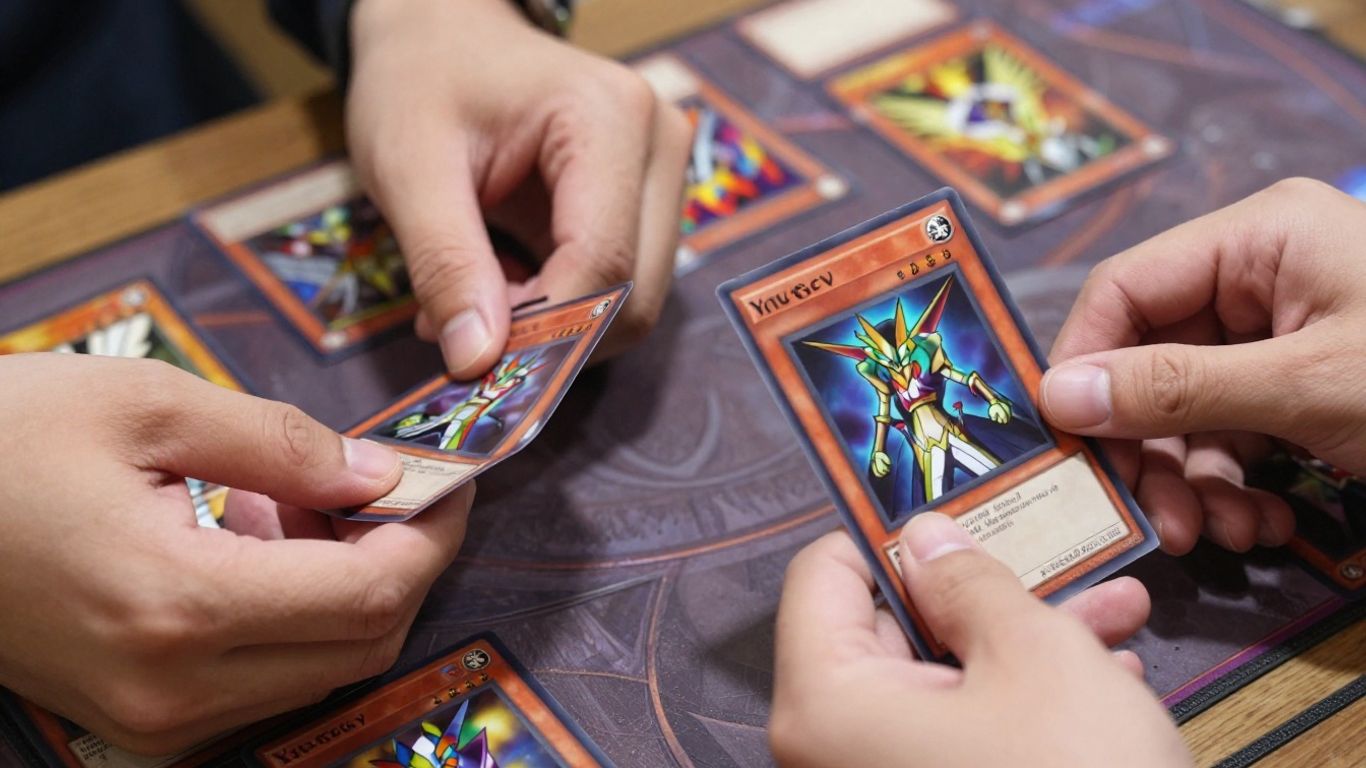
Alright, so you want to learn how to play Yu-Gi-Oh!? It’s a card game where two players go head-to-head, trying to knock each other’s Life Points down to zero. You do this by using a deck of cards that includes monsters, spells, and traps. It sounds simple, but there’s a lot of strategy involved. The main goal is to reduce your opponent’s Life Points from 8000 to 0.
The Objective Of A Duel
At its core, dueling in Yu-Gi-Oh! is about outsmarting your opponent. You’ll summon monsters to attack them, use spell cards for various effects, and set trap cards to surprise them on their turn. It’s a back-and-forth battle of wits and card advantage. The first player to successfully deplete the other’s Life Points wins the duel.
Core Card Types: Monsters, Spells, and Traps
There are three main types of cards you’ll be using:
- Monster Cards: These are your primary attackers and defenders. They have Attack (ATK) and Defense (DEF) points, and some have special abilities. You’ll summon these to the field to battle.
- Spell Cards: These cards have a wide range of effects that can help you, hinder your opponent, or change the state of the game. They are usually played during your Main Phase.
- Trap Cards: These are set face-down on your field and can be activated during your opponent’s turn, often in response to their actions. They’re great for unexpected plays and defense.
Understanding Card Attributes And Types
Every monster card has specific attributes and types that matter for card effects and summoning. Think of attributes like elements – there are LIGHT, DARK, EARTH, WATER, FIRE, and WIND. Types are like creature categories – Warrior, Spellcaster, Dragon, Zombie, and many more. These details are important because many cards specifically interact with certain attributes or types, so knowing them helps you build a more effective deck and understand how cards will work together.
Card interactions are key in Yu-Gi-Oh!. Many cards will say things like "This card gains ATK equal to the number of Dragons in your Graveyard" or "If this card is destroyed by a Spell effect, you can Special Summon a LIGHT monster from your hand." Paying attention to these specific details will make a huge difference in your duels.
Navigating The Yu-Gi-Oh! TCG Duel Field
Alright, so you’ve got your cards, you know the goal, but where does everything actually go when you start a duel? The field layout in Yu-Gi-Oh! might seem a bit much at first, but it’s actually pretty organized once you get the hang of it. Think of it like setting up a chessboard; each piece has its spot, and knowing where to put things is part of the game.
The Deck Zone And Graveyard
Your main deck, the one you built with all your monsters, spells, and traps, goes face-down in your Deck Zone. This is super important because if you ever need to draw a card and your deck is empty, you lose the duel. So, keep an eye on that deck size! When cards leave the field, they usually end up in the Graveyard (often called the GY). It’s like a discard pile, but don’t think of it as the end for those cards. Some effects can actually be used from the Graveyard, so it’s not just a place for the defeated.
Monster Zones And Spell & Trap Zones
This is where your monsters hang out. You’ve got five Monster Zones. When you summon a monster, it goes here. Most monsters will use these standard zones. Then there are the Spell & Trap Zones, also five of them. This is where you’ll place your Spell and Trap cards when you activate or set them. Some of these zones, the ones on the far left and right, have a special role for Pendulum Monsters, which can be pretty neat.
The Field Zone And Extra Deck Zone
There’s a special spot called the Field Zone. If you have a Field Spell card, this is where it goes. Field Spells affect the whole game, but you can only have one active at a time. If you play a new one, the old one gets replaced. Then there’s the Extra Deck Zone. This is for monsters that come from your Extra Deck, like Fusion, Synchro, or Xyz monsters. You can always access this zone if you meet the summoning requirements for those powerful monsters.
The layout of the duel field isn’t just for show; it’s a strategic element. Knowing where your cards are and where your opponent’s cards are can give you an edge. Using a playmat with the zones marked can really help when you’re first learning.
Here’s a quick rundown of the zones:
- Deck Zone: Holds your Main Deck. Running out of cards here means you lose.
- Graveyard (GY): Where used or destroyed cards go. Some cards have effects here.
- Monster Zones: Where you summon your monsters (5 zones).
- Spell & Trap Zones: Where you play Spell and Trap cards (5 zones).
- Field Zone: For Field Spell cards (1 zone).
- Extra Deck Zone: For monsters from your Extra Deck (2 zones, one for each player).
Mastering The Flow Of A Duel
Dueling in Yu-Gi-Oh! has a pretty specific order, and it matters more than you’d think. Every turn, players work through phases in the same order, and missing or skipping steps can cost you the game. If you’re just starting out, getting used to these phases will make your strategies much smoother and help you spot good times to play your cards. So let’s break down each phase, one at a time.
The Draw Phase
This is where the action starts (except for the very first player’s opening turn – they don’t draw). Here’s what happens:
- Draw one card from your deck to add to your hand.
- Any effects that say “when you draw a card” kick in now.
- Both players can activate Quick-Play Spells or Trap cards, but only those already set face-down.
Normally, it’s pretty straightforward, but keep an eye out for cards that trigger just because they’re drawn. You’d be surprised how often this gets overlooked.
Standby And Main Phases
Standby Phase comes right after the Draw Phase. A lot of the time, nothing gets done here, but it matters for cards with specific effects that mention this phase.
- Resolve card effects that happen "during your Standby Phase."
Then comes the Main Phase (there are two, but we’ll stick with the first for now).
Main Phase 1:
- Normal Summon or Set one monster.
- Activate Spell and Trap cards.
- Special Summon as many monsters as effects allow.
- Change positions of your monsters (attack/defense) if they haven’t just been summoned.
This is your big planning stage – decide which cards to play, which monsters to put on the field, and whether you’re gearing up to attack or play it safe.
The Battle Phase And End Phase
Once you’ve got monsters on the field, you can battle. Here’s the sequence:
- Start Step: Announce you want to enter the Battle Phase. Certain effects can trigger here.
- Battle Step: Choose one of your Attack Position monsters to attack.
- Damage Step: Calculate the outcome (damage, destruction, triggers).
- Repeat for each monster that can attack.
Battle can change everything – life points can swing fast. If you skip battling, or have no monsters that can attack, just move on (sometimes that’s your best move).
When you’re done battling, you head into Main Phase 2 (like Main Phase 1 – play spells, traps, and set up for the next turn), before reaching the End Phase.
End Phase:
- Resolve effects that say "during the End Phase."
- Make sure you have no more than six cards in your hand (discard extras).
| Phase | Key Actions |
|---|---|
| Draw | Draw a card, resolve draw effects |
| Standby | Trigger Standby-specific effects |
| Main Phase 1 | Summon monsters, play Spells/Traps, change positions |
| Battle Phase | Attack with monsters, resolve battles |
| Main Phase 2 | More spells/traps/monster movements |
| End Phase | End-of-turn effects, hand size check |
Slowing down to think about each phase – even if it seems repetitive – helps avoid misplays and lets you notice combos you might otherwise miss. The flow of a duel is where a lot of smart plays happen.
To take your understanding further, looking into various turn actions will help hone your skills, just like MewZard’s introductory guide to Dracotail supports new strategies.
Executing Attacks And Defending
Alright, so you’ve got your monsters ready, and it’s time to start putting some pressure on your opponent. This is where the Battle Phase really comes into play. It’s not just about swinging for big numbers; there’s a bit of strategy involved in how you attack and what you attack.
Attacking Monsters In Attack Position
When you decide to attack an opponent’s monster that’s in Attack Position, things can play out in a few ways. It all comes down to comparing your attacking monster’s ATK (Attack Points) against the defending monster’s ATK.
- Your monster’s ATK is higher: Your monster wins! The opponent’s monster is destroyed and sent to the Graveyard. You then deal damage to your opponent equal to the difference between your monster’s ATK and the destroyed monster’s ATK.
- ATK values are equal: It’s a draw! Both monsters are destroyed and sent to the Graveyard. No damage is dealt to either player.
- Your monster’s ATK is lower: Ouch. Your monster is destroyed and sent to the Graveyard. You take damage equal to the difference between the defending monster’s ATK and your destroyed monster’s ATK.
Attacking Monsters In Defense Position
Attacking a monster in Defense Position is a bit different. Here, you compare your attacking monster’s ATK against the defending monster’s DEF (Defense Points). The key thing to remember is that if your monster is in Defense Position, you don’t take any battle damage, even if your monster is weaker.
- Your monster’s ATK is higher than the defending monster’s DEF: Your monster wins! The opponent’s monster is destroyed and sent to the Graveyard. No damage is dealt to you because the defending monster was in Defense Position.
- ATK and DEF are equal: Nothing happens. Both monsters stay on the field, and no damage is dealt.
- Your monster’s ATK is lower than the defending monster’s DEF: Your monster survives, but you take damage equal to the difference between the defending monster’s DEF and your monster’s ATK. The opponent’s monster stays on the field.
Direct Attacks When The Opponent Has No Monsters
This is the simplest scenario. If your opponent doesn’t have any monsters on their field, you can choose to attack them directly. Your monster’s ATK value is directly subtracted from your opponent’s Life Points. This is often how you’ll win the game, by reducing your opponent’s Life Points from 8000 down to 0.
Remember, you can only attack with monsters that are in Attack Position. Monsters in Defense Position cannot initiate attacks. Also, each monster in Attack Position can generally only attack once per turn. You can change a monster’s battle position during your Main Phase 1 or Main Phase 2, but if you attack with a monster, you usually can’t change its battle position afterward in the same turn.
Building Your Yu-Gi-Oh! Trading Card Game Deck
Alright, so you’ve got the basics down, you know how the game flows, and you’re ready to start putting together your own deck. This is where things get really interesting, and honestly, a little bit of an art form. Building a good deck isn’t just about throwing your favorite cards together; it’s about creating a cohesive unit that works towards a specific goal. Think of it like assembling a team for a big game – everyone needs to have a role.
Main Deck Size Requirements
First off, let’s talk numbers. Your Main Deck, the one you’ll be drawing from most of the game, needs to have between 40 and 60 cards. Don’t go over 60, and definitely don’t go under 40. Sticking to the lower end, around 40 cards, is usually a good idea when you’re starting out. Why? Because it means you’re more likely to draw the cards you need, when you need them. If your deck is too big, you might end up sifting through a lot of cards just to find that one key piece. It’s all about consistency.
When you’re picking your monsters, aim for a good mix. A common starting point is to have about 12-18 monsters. You’ll want to focus on monsters that have effects that help your overall strategy. Some monsters are just there to hit hard, while others have effects that can disrupt your opponent or help you get more cards.
The Extra Deck and Its Purpose
Then there’s the Extra Deck. This is a separate little stash of monsters, up to 15 cards, that you can summon using special methods. You’ll find Fusion, Synchro, Xyz, and Link monsters in here – they usually have those terms in bold on their card text. These monsters are often powerful game-changers, but you can’t just summon them like your regular monsters. You need specific cards or conditions to bring them out. It’s like having a secret weapon ready to deploy when the time is right.
Utilizing a Side Deck for Strategic Advantage
Now, for those of you who get serious about dueling, there’s the Side Deck. This is a set of up to 15 cards that you can swap with cards from your Main Deck or Extra Deck between duels in a match. Think of it as your tactical reserve. If you play against someone and notice their deck has a specific weakness, or if your deck struggles against a certain type of strategy, you can use your Side Deck to bring in cards that counter them. It’s a way to adapt and overcome, making you a much more flexible player. Remember, you can only have a maximum of three copies of any single card across your Main, Extra, and Side Decks combined. It’s a rule that keeps things fair and encourages variety.
Building a deck is a journey. Don’t be afraid to experiment. Try different combinations, see what works, and don’t get discouraged if your first few decks aren’t perfect. The best way to learn is by playing and adjusting.
If building from scratch feels a bit much right now, picking up a pre-built Structure Deck is a fantastic way to get started. You get a ready-to-play deck that’s usually built around a specific theme or strategy, which is great for learning the ropes before you start tweaking things.
Understanding Card Mechanics And Interactions
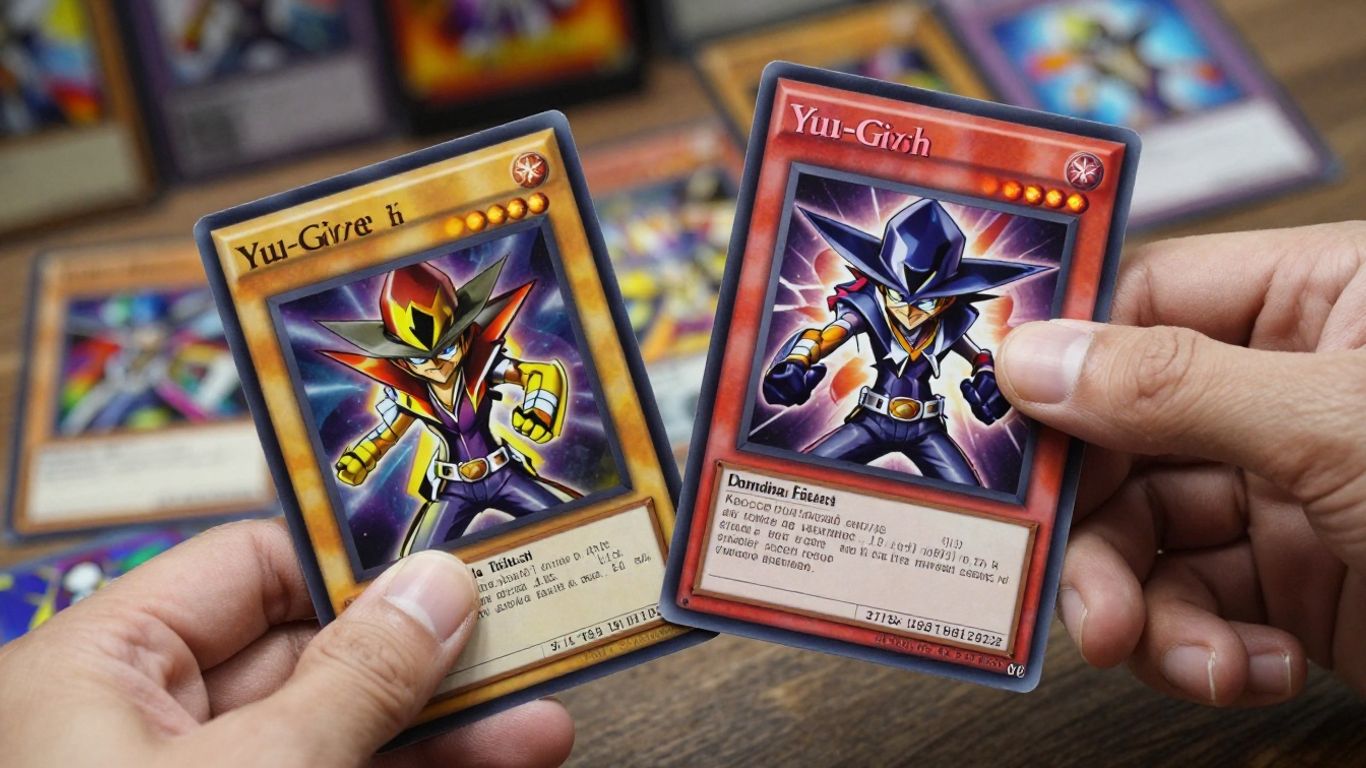
Alright, so you’ve got your monsters, spells, and traps ready to go. But how do they actually work together? That’s where understanding card mechanics and how they interact comes in. It’s not just about having strong cards; it’s about knowing when and how to play them.
How Monster Levels Affect Summoning
Monster levels are a big deal when you’re trying to get them onto the field. Think of it like a cost. The higher the level, the more you usually have to sacrifice from your own field to bring it out. This is called a Tribute Summon.
- Level 1-4: No Tribute required. You can just summon these guys straight up.
- Level 5-6: You need to send one monster from your field to the Graveyard (that’s a Tribute) before you can summon it.
- Level 7+: These big hitters require two Tributes. So, you’ll need to sacrifice two monsters from your field.
Keep in mind, some cards have special summoning conditions that might override these basic rules. Always read the card text carefully!
The Significance Of Monster Attributes And Types
Monsters have Attributes (like FIRE, WATER, EARTH, etc.) and Types (like Warrior, Dragon, Spellcaster, etc.). On their own, these don’t do much. But a lot of card effects specifically mention them. For example, a Spell Card might say, "Destroy all FIRE monsters on the field." Or a monster effect might say, "This card gains 300 ATK for every Dragon monster in your Graveyard." So, knowing your monster’s Attribute and Type is important for figuring out how they’ll interact with other cards. It’s all about synergy and finding those powerful archetypes that work well together.
Understanding Spell Speeds And Card Chains
This is where things can get a little spicy. Some cards can be activated in response to other cards, and this is called a "Chain." It’s like a stack of actions. When a card is activated, players can choose to respond with another card if its Spell Speed allows. The cool thing is, the effects resolve in reverse order – the last card added to the chain is the first one to take effect.
Here’s a quick rundown of Spell Speeds:
- Spell Speed 3: These are Counter Traps. They’re super fast and can only be responded to by other Counter Traps.
- Spell Speed 2: This includes Quick-Play Spells, most Trap Cards (like Normal Traps and Continuous Traps), and monsters with "Quick Effect" text.
- Spell Speed 1: These are your standard Normal Spells and most monster effects. They can’t be activated during the opponent’s turn unless a card specifically allows it.
When you activate a card, your opponent gets a chance to respond. If they do, you get a chance to respond to their response, and so on. This back-and-forth is what makes dueling dynamic. You have to think about not just what you want to do, but also what your opponent might do in response.
Mastering these interactions takes practice, but it’s what separates a good duelist from a great one.
Keep Dueling!
So, that’s the rundown on getting started with Yu-Gi-Oh!. It might seem like a lot at first, with all the different cards and phases, but honestly, the best way to really get it is just to play. Grab a friend, maybe a starter deck, and just go for it. You’ll mess up, sure, but everyone does when they’re learning. Keep practicing, maybe check out some more advanced guides once you’re comfortable, and before you know it, you’ll be pulling off combos like a pro. The game’s been around forever for a reason, and now you know why. Go forth and duel!
Frequently Asked Questions
What’s the main goal when playing Yu-Gi-Oh!?
The main goal in a Yu-Gi-Oh! duel is to be the first player to lower your opponent’s Life Points from 8000 to 0. You do this by attacking with your monsters and using card effects.
What are the basic types of cards in Yu-Gi-Oh!?
There are three main types of cards: Monster Cards, which you use to attack and defend; Spell Cards, which have various effects to help you or hinder your opponent; and Trap Cards, which are set facedown and can be activated later to surprise your opponent.
How many cards should be in my Main Deck?
Your Main Deck needs to have at least 40 cards, but it can have up to 60 cards. Your Extra Deck can hold up to 15 cards, and your Side Deck (if you use one) can have up to 15 cards.
What do the different parts of a Monster Card mean?
Monster cards show their Name, Level (which affects how you summon them), Attribute (like Fire or Water), Type (like Warrior or Dragon), Attack (ATK) points, Defense (DEF) points, and any special effects they might have in their text box.
What is a ‘Chain’ in Yu-Gi-Oh!?
A Chain happens when one card is activated, and then another card is activated in response to it. Cards in a Chain resolve in reverse order, meaning the last card played is the first one to take effect. It’s like a stack of actions!
How does attacking work in Yu-Gi-Oh!?
You can attack an opponent’s monster or attack them directly if they have no monsters. When attacking a monster, you compare your monster’s Attack Points to the opponent’s monster’s Attack or Defense Points, depending on its position. This determines if your monster is destroyed, if their monster is destroyed, or if damage is dealt to Life Points.