
Thinking about getting into system forex trading? It can seem like a lot at first, with all the charts and numbers. But honestly, it’s not as scary as it looks. This guide breaks down how to trade currencies, from the very basics to more involved stuff. We’ll cover how the market works, how to make a plan, and how to keep your money safe. It’s all about understanding the game and playing it smart. Let’s get started on your system forex trading journey.
Key Takeaways
- Understand the core ideas of currency trading and who the main players are in the system forex trading market.
- Learn how to create your own system forex trading strategy using technical and fundamental analysis.
- Develop the mental toughness needed to control emotions and make good choices when trading.
- Put in place solid risk management plans to protect your money, like using stop-loss orders and managing leverage.
- Explore different system forex trading tools and platforms to find what works best for you.
Understanding The Forex Market Landscape

So, you’re looking to get into Forex trading. That’s cool. But before you even think about placing a trade, you need to get a handle on what this whole Forex thing actually is. It’s not just about buying and selling currencies; it’s a massive global marketplace where money moves constantly. Think of it as the biggest financial market in the world, way bigger than the stock market. The sheer volume of trading happening every second is mind-boggling.
Core Principles Of Currency Trading
At its heart, Forex trading is about exchanging one currency for another. When you trade currencies, you’re essentially betting on whether one currency will strengthen or weaken against another. This happens in pairs, like EUR/USD (Euro versus US Dollar) or GBP/JPY (British Pound versus Japanese Yen). When you buy a currency pair, you’re buying the first currency and selling the second. If you sell it, you’re doing the opposite. The price you see is how much of the second currency it takes to buy one unit of the first. It sounds simple, but there are a lot of things that can make these prices move.
Here are some basic ideas:
- Currency Pairs: These are the foundation. You always trade one currency against another. The first one is the ‘base’ currency, and the second is the ‘quote’ currency.
- Exchange Rates: This is the price of one currency in terms of another. It’s what you’re looking at to see if you’re making money.
- Market Hours: Forex is open 24 hours a day, five days a week. This is because different financial centers around the world open and close at different times.
The value of currencies isn’t static. It’s influenced by a whole bunch of factors, from a country’s economic health to political events. Understanding these influences is key to making smart trades.
Key Market Participants And Their Roles
It’s not just individual traders like you and me in the Forex market. There are some big players with huge amounts of money. Knowing who they are and what they do helps you understand market movements.
- Central Banks: These are like the banks for banks in a country. They manage a nation’s currency, set interest rates, and often step in to stabilize their currency if needed. Their decisions can really shake things up.
- Commercial Banks: These are the big international banks. They trade currencies for their clients (like big companies that do business overseas) and also for their own accounts. They make up a huge chunk of the daily trading volume.
- Investment Funds and Hedge Funds: These guys manage large sums of money for investors. They use Forex for speculation, hedging against other investments, or diversifying their portfolios.
- Retail Traders: That’s us! Individual traders who use online brokers to access the market. While we trade smaller amounts, there are so many of us that we can collectively have an impact, especially when we all move in the same direction.
Navigating Currency Pairs Effectively
Choosing which currency pairs to trade is a big decision. Some pairs are more popular and move more predictably than others. These are often called ‘majors’.
- Major Pairs: These involve the US Dollar paired with other major currencies like the Euro (EUR/USD), Japanese Yen (USD/JPY), British Pound (GBP/USD), Swiss Franc (USD/CHF), Canadian Dollar (USD/CAD), Australian Dollar (AUD/USD), and New Zealand Dollar (NZD/USD). They have the most trading volume and are generally easier to trade because there’s more information available and they tend to be more liquid.
- Minor Pairs (or Crosses): These pairs don’t include the US Dollar but involve other major currencies, like EUR/GBP or AUD/JPY. They can sometimes offer different trading opportunities.
- Exotic Pairs: These involve one major currency paired with the currency of an emerging economy, like USD/TRY (US Dollar vs. Turkish Lira). They can be very volatile and less liquid, making them riskier for beginners.
When you’re looking at a currency pair, pay attention to its spread. The spread is the difference between the buying price and the selling price, and it’s how brokers make money. Tighter spreads usually mean more liquidity and lower trading costs.
Developing Your System Forex Trading Strategy
Alright, so you’ve got a handle on what Forex is all about. Now comes the fun part: figuring out how you’re actually going to trade it. This isn’t about guessing; it’s about building a plan, a system that works for you. Think of it like building a house – you need blueprints, the right tools, and a solid foundation. Without a strategy, you’re just throwing money at the screen and hoping for the best, which, trust me, rarely ends well.
The Art Of Technical Analysis
Technical analysis is basically looking at past price movements and trading volume to predict where prices might go next. It’s like being a detective, looking for clues in charts and patterns. You’re not trying to figure out why a price moved, but that it moved and how it tends to behave in certain situations.
Here are some common tools you’ll see:
- Candlestick Charts: These show you the open, high, low, and close prices for a specific period. They give you a quick visual of price action.
- Support and Resistance Levels: These are price points where a currency pair has historically had trouble breaking through. Support is a floor, resistance is a ceiling.
- Trendlines: Simple lines drawn on a chart to show the general direction of price movement (up, down, or sideways).
- Moving Averages: These smooth out price data to create a single flowing line, showing the average price over a set period. They help identify trends.
The goal is to spot repeatable patterns that suggest a likely outcome.
Leveraging Fundamental Analysis For Insights
While technical analysis looks at charts, fundamental analysis looks at the bigger economic picture. This means paying attention to things like interest rates, inflation, employment figures, and political stability in the countries whose currencies you’re trading. These factors can have a big impact on currency values.
Think about it: if a country’s economy is booming and its central bank is raising interest rates, its currency usually gets stronger because investors want to earn more on their money. Conversely, if there’s political turmoil or a recession, the currency might weaken.
Here’s a simplified look at what influences currencies:
- Interest Rates: Higher rates generally attract foreign investment, boosting the currency.
- Inflation: High inflation can erode purchasing power, potentially weakening a currency.
- Economic Growth (GDP): A strong economy usually means a stronger currency.
- Political Stability: Unrest or uncertainty can cause a currency to drop.
Understanding the economic health of a country is like understanding the weather before a trip. You wouldn’t go on a picnic without checking the forecast, right? Similarly, you shouldn’t trade currencies without having some idea of the economic climate.
Combining Strategies For Robust System Forex Trading
Most successful traders don’t rely on just one method. They combine technical and fundamental analysis to get a more complete view. You might use fundamental analysis to decide which currency pairs look promising based on economic conditions, and then use technical analysis to find the best time to enter and exit trades for those pairs.
For example, you might notice that the Eurozone’s economy is showing signs of improvement (fundamental analysis). You then look at the EUR/USD chart and see that the pair has just bounced off a strong support level and is forming an upward trend (technical analysis). This combination gives you more confidence to take a long position on EUR/USD.
It’s all about building a system that makes sense to you and fits your trading style. Don’t just copy what others do; experiment, learn, and refine your approach. A well-defined strategy is your roadmap in the often-choppy waters of the Forex market.
Mastering Trading Psychology And Discipline
Trading isn’t just about charts and numbers; it’s a lot about what’s going on inside your head. When the market starts moving fast, it’s easy to let fear or excitement take over. That’s where psychology and discipline come in. Without them, even the best trading plan can fall apart.
Controlling Emotions In Volatile Markets
Markets can swing wildly. One minute you’re up, the next you’re down. This rollercoaster can mess with your head. Greed can make you hold onto a winning trade too long, hoping for more, only to see it reverse. Fear, on the other hand, might make you exit a good trade too early, just because you’re scared of losing what you have. It’s a tough balance.
- Recognize your emotional triggers: What situations make you feel anxious or overly confident?
- Take breaks: Step away from the screen when you feel overwhelmed. A short walk can do wonders.
- Stick to your plan: Remind yourself why you entered a trade and what your exit strategy is.
The market doesn’t care about your feelings. It just moves. Learning to detach your emotions from your trading decisions is a skill that takes practice, but it’s one of the most important ones you can develop.
Building A Disciplined Trading Mindset
Discipline means doing what you know you should do, even when you don’t feel like it. For traders, this means following your trading plan, no matter what. It’s about consistency. You have a set of rules for entering and exiting trades, and you follow them every single time. This isn’t always easy, especially when you see others making big moves or when you’ve just had a losing streak.
Here’s a simple way to think about building discipline:
- Define your trading rules clearly: Write them down. What are your entry and exit criteria? What’s your risk per trade?
- Review your trades daily: Did you follow your rules? Be honest with yourself. Identify where you strayed.
- Practice patience: Wait for your setup. Don’t force trades just because you want to be active.
Making Rational Decisions Under Pressure
When you’re under pressure, your brain tends to go into fight-or-flight mode. This isn’t great for making smart financial decisions. You might make impulsive choices or freeze up. The goal is to train yourself to stay calm and think logically, even when the stakes are high. This often comes down to preparation and experience.
Consider this simple table for managing decisions:
| Situation | Emotional Response | Rational Action |
|---|---|---|
| Unexpected Market Drop | Panic, Fear | Review stop-loss, assess trade validity |
| Large Profit Potential | Greed, Excitement | Take partial profit, trail stop-loss |
| Losing Streak | Frustration, Doubt | Review strategy, take a break, focus on process |
The ability to make clear-headed decisions when things get tough is what separates consistently profitable traders from those who struggle. It’s about having a process that guides you, so you’re not just reacting to the market’s every twitch.
Implementing Effective Risk Management
Okay, so you’ve got a strategy, you’re feeling good about the market. That’s awesome. But here’s the thing: even the best trading plan can go sideways if you don’t watch your back. That’s where risk management comes in. It’s not about avoiding losses entirely – that’s pretty much impossible in trading. It’s about making sure those losses don’t wipe you out.
Safeguarding Your Capital With Stop-Loss Orders
Think of a stop-loss order as your trading safety net. You set a specific price where, if the market moves against your position, your trade automatically closes. This stops you from losing more than you intended. It’s a simple tool, but incredibly powerful for keeping your account balance from taking a huge hit. You decide beforehand how much you’re willing to lose on any single trade, and the stop-loss order enforces that limit.
Understanding And Utilizing Leverage Wisely
Leverage is like a double-edged sword. It lets you control a larger position with a smaller amount of your own money. Sounds great, right? It can be, because it magnifies your potential profits. But, and this is a big ‘but’, it also magnifies your potential losses. Using too much leverage is a fast track to blowing up your account. It’s really important to understand exactly how much leverage your broker offers and to use it very, very sparingly, especially when you’re starting out. Treat leverage with respect, not as free money.
Establishing Favorable Risk-Reward Ratios
This is all about making sure that when you win, you win more than you lose. A risk-reward ratio compares the amount of profit you aim to make on a trade to the amount you’re risking. For example, a 1:3 ratio means for every dollar you risk, you’re aiming to make three dollars. Most successful traders look for trades where the potential reward is significantly higher than the risk. It means you don’t have to be right all the time to be profitable.
Here’s a quick look at how different ratios stack up:
| Risk-Reward Ratio | Potential Outcome Example (Risk $100) | Notes |
|---|---|---|
| 1:1 | Aim to make $100 | You need to be right more often than wrong. |
| 1:2 | Aim to make $200 | More forgiving of losing trades. |
| 1:3 | Aim to make $300 | Generally considered a good target for many strategies. |
Protecting your trading capital isn’t just a good idea; it’s the absolute foundation of a sustainable trading career. Without it, all your strategy work and market analysis mean very little in the long run. Focus on survival first, then profits.
Exploring Advanced System Forex Trading Techniques
Once you’ve got a handle on the basics and have a solid strategy in place, it’s time to look at some more advanced ways to trade the Forex market. This isn’t about reinventing the wheel, but rather about adding more tools to your belt and understanding how to use them effectively.
Introduction To Algorithmic Trading Systems
Algorithmic trading, often called algo trading or automated trading, uses computer programs to execute trades. These programs follow a set of predefined instructions, or algorithms, to make trading decisions. The idea is to remove human emotion from trading and to execute trades much faster than a person could. Think of it as setting up a robot to do the trading for you based on rules you’ve established.
Here’s a quick look at how it works:
- Strategy Development: You first need a trading strategy with clear entry and exit rules. This could be based on technical indicators, price action, or other market data.
- Coding the Algorithm: This strategy is then translated into code that a computer can understand and execute.
- Backtesting: Before going live, the algorithm is tested on historical data to see how it would have performed.
- Live Trading: Once you’re confident, the algorithm trades in real-time, executing orders automatically when conditions are met.
The main benefit is speed and consistency, but it requires significant technical skill to develop and maintain.
Capitalizing On Economic News Events
Major economic news releases can cause significant price swings in the Forex market. Events like interest rate decisions, inflation reports, and employment figures are closely watched by traders. The market often reacts strongly to unexpected results or significant changes from previous data.
- Key Events to Watch:
- Non-Farm Payrolls (US)
- Interest Rate Decisions (e.g., Federal Reserve, European Central Bank)
- Consumer Price Index (CPI) reports
- Gross Domestic Product (GDP) figures
- Trading Approaches: Some traders try to predict the outcome and trade beforehand, while others wait for the release and trade the immediate reaction. A third group waits for the dust to settle and trades the trend that emerges afterward.
- Volatility: Be aware that these events can lead to very high volatility, increasing both potential profits and risks.
Trading around news events requires a strong understanding of how different economic data points affect currency values. It’s not just about the number itself, but also how it compares to market expectations.
Navigating Cryptocurrency Trading Within Forex
While not strictly Forex, many brokers now offer cryptocurrency trading alongside traditional currency pairs. This opens up new possibilities but also introduces different risks. Cryptocurrencies are known for their extreme volatility and operate in a less regulated environment compared to Forex.
- Understanding the Difference: Forex involves trading fiat currencies issued by governments, while cryptocurrencies are digital or virtual currencies secured by cryptography.
- Correlation: Sometimes, cryptocurrencies can show correlation with major currency pairs, especially during times of global economic uncertainty.
- Risk: The price swings in crypto can be much larger and faster than in Forex. It’s important to use smaller position sizes and stricter risk management when trading crypto.
This section is about expanding your trading horizons, but always remember to approach new markets with caution and a solid plan.
Choosing The Right Tools For System Forex Trading
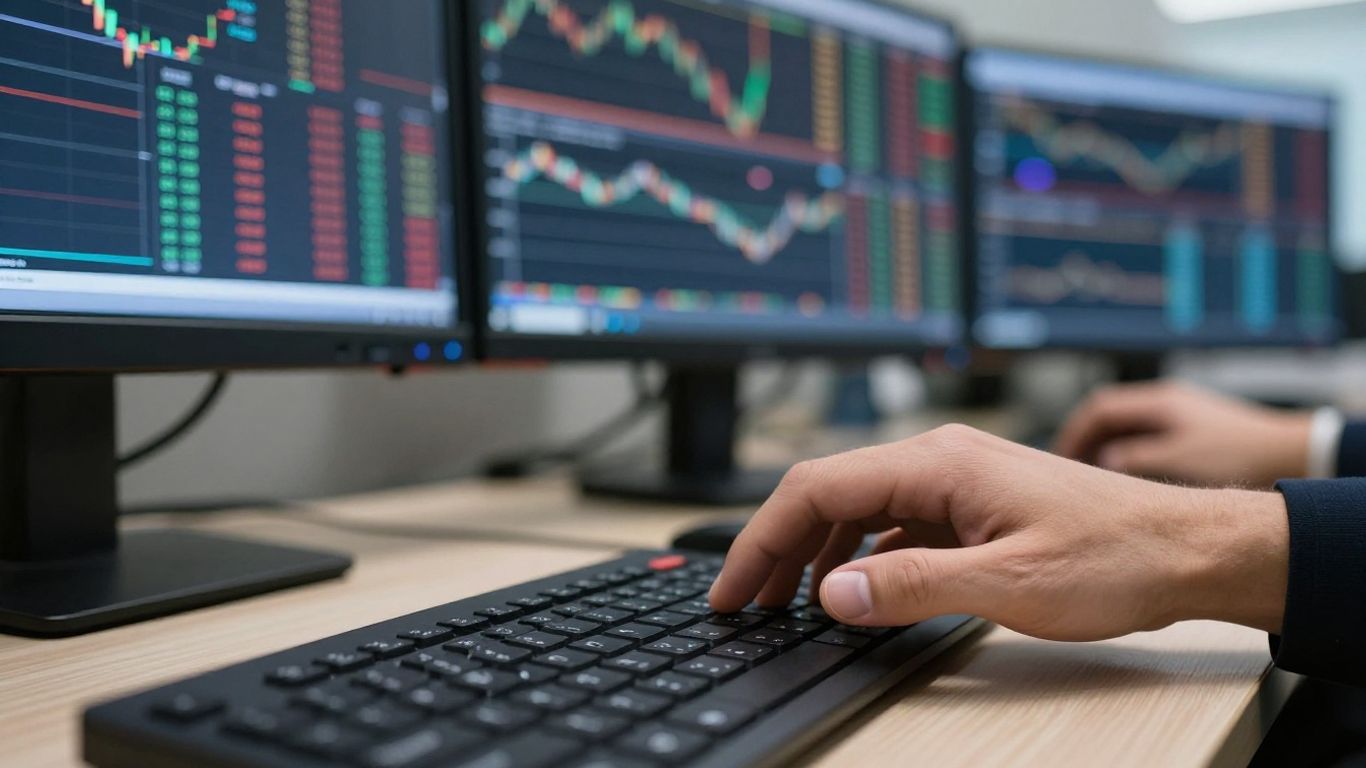
Having the right tools in place makes a big difference when you’re trading forex with a system. The right broker, platform, and indicators can make your life easier, help you avoid headaches, and might even protect your account from costly mistakes. Let’s walk through what matters most when setting up your trading toolkit.
Selecting A Reliable Forex Broker
Not all brokers are the same. Their differences can affect your experience in surprising ways.
- Check regulation: Make sure the broker is regulated by a known authority. This guards you from scams.
- Account types: Look at the account options—some brokers cater to beginners with smaller minimum deposits, while others want you to start big.
- Spreads and commissions: Every broker earns in different ways, either through spreads or fees. Compare them side-by-side to find what fits your strategy best.
| Broker Name | Regulator | Minimum Deposit | Typical Spread (EUR/USD) | Platform Support |
|---|---|---|---|---|
| Broker A | FCA | $100 | 1.2 pips | MetaTrader 4, Web |
| Broker B | CFTC | $50 | 1.8 pips | Mobile, MT4 |
| Broker C | ASIC | $200 | 0.9 pips | MetaTrader 5 |
Too many traders rush opening an account. Taking time to check a broker’s rules, withdrawal speeds, and customer service can save you real aggravation later.
Understanding Different Trading Platforms
Your trading platform is where you see your charts and place your trades. Some are simple, others get fancy. Picking the one that suits your style helps you avoid confusion during busy trading times.
- MetaTrader 4/5: These are still the most common and come packed with features for system trading.
- Web-based platforms: These are good if you need to trade from different devices, but may offer fewer tools.
- Dedicated apps: Look for apps that have easy charting and allow you to set alerts quickly.
Choose a platform that you find comfortable and dependable—don’t just copy what others use.
Utilizing Essential Trading Indicators
Trading indicators help you spot patterns and trends. Start with a few core indicators to keep things simple and less confusing.
- Moving Averages – Smooth out price movements and show general direction.
- RSI (Relative Strength Index) – Lets you know if things are possibly overbought or oversold.
- MACD – Highlights when trends might be shifting.
- Bollinger Bands – Can help you see possible breakouts or reversals.
- Pivot Points – Show likely support and resistance levels for planning entries and exits.
It’s tempting to fill your charts with every indicator out there, but more isn’t always better. Everything on your screen should have a clear reason to be there.
Getting set up with the right tools takes a bit of homework, but it pays off every time you open a trade. Take it slow, try demo accounts before committing real money, and let experience guide what you actually need and use.
Wrapping It Up
So, we’ve walked through the basics of Forex trading, talked about how to look at charts, and even touched on keeping your emotions in check. It’s a lot to take in, for sure. Remember, nobody becomes a pro overnight. The key is to keep learning, practice what you’ve read, and most importantly, manage your money wisely. Don’t jump in with everything you have. Start small, stick to your plan, and be patient. This market can be tricky, but with the right approach and a steady hand, you can definitely find your footing and work towards your trading goals. Good luck out there!
Frequently Asked Questions
What exactly is Forex trading?
Forex trading is like exchanging money between countries. Imagine you’re traveling and need to swap your dollars for euros. In Forex, people buy and sell these currencies hoping the value of one will go up compared to the other, so they can make a profit. It’s a huge global market where currencies are traded 24/7.
Do I need a lot of money to start trading Forex?
You don’t need a fortune to start. Many brokers let you open an account with a small amount of money. However, it’s important to remember that trading involves risks, and you should only trade with money you can afford to lose. Starting small is usually a smart move.
What’s the difference between technical and fundamental analysis?
Technical analysis is like reading a weather forecast by looking at past weather patterns on a map. Traders study charts and past price movements to predict where prices might go next. Fundamental analysis is more like looking at the actual weather-making conditions – it involves checking economic news, like how strong a country’s economy is, to guess how its currency might perform.
Why is risk management so important in Forex?
Think of risk management as wearing a seatbelt when you drive. Forex trading can be unpredictable, and prices can move quickly. Good risk management means having rules, like setting a ‘stop-loss’ order, to limit how much money you could lose if a trade goes wrong. It’s all about protecting your money so you can keep trading.
What is leverage, and how does it work?
Leverage is like borrowing money from your broker to trade a larger amount than you actually have in your account. It can boost your potential profits, but it also magnifies your potential losses. Using leverage wisely is crucial; too much can be very dangerous for your money.
How do I choose a good Forex broker?
Choosing a broker is like picking a reliable guide for an adventure. Look for brokers that are regulated by official financial authorities, offer a trading platform you like, have good customer support, and provide reasonable trading costs. Reading reviews and comparing different options can help you find the best fit.