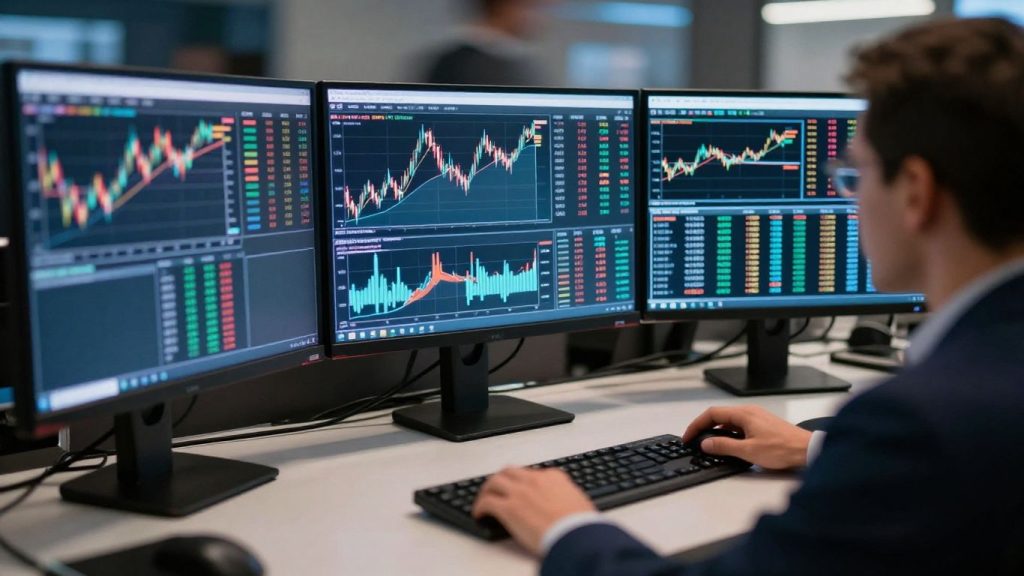
Day trading is all about making quick moves. You gotta be fast to catch those small price changes, and if you’re not, well, you can lose money just as quickly. Having the right tools, your trading platform, is super important. I’ve been around trading desks for a while, and I know that your platform can really make or break how you trade. If you want to keep up in the fast-paced intraday markets, you need something that’s built for speed, has good data, and lets you execute trades smoothly. It’s not just about the fancy features, though. How much it costs, how stable it is, and if you can actually learn how to use it all matter. This guide looks at the best trading platform for day traders in 2026, focusing on how they’re built, their costs, and if they support the kinds of strategies active traders use.
Key Takeaways
- Interactive Brokers is a top choice for active traders, offering powerful tools and a wide range of markets, though it can take time to learn.
- TradeStation is great for technical traders with its advanced charting and unique tools like ‘Why is it Moving?’, but it’s not ideal for beginners.
- E*TRADE’s Power E*TRADE platform provides a strong web-based experience with good customization and tools for options trading.
- Charles Schwab offers the thinkorswim platform, a robust desktop option that’s fast and feature-rich, suitable for serious day traders.
- tastytrade is known for its focus on options and futures, with a platform that’s user-friendly for those strategies and offers good educational content.
1. Interactive Brokers
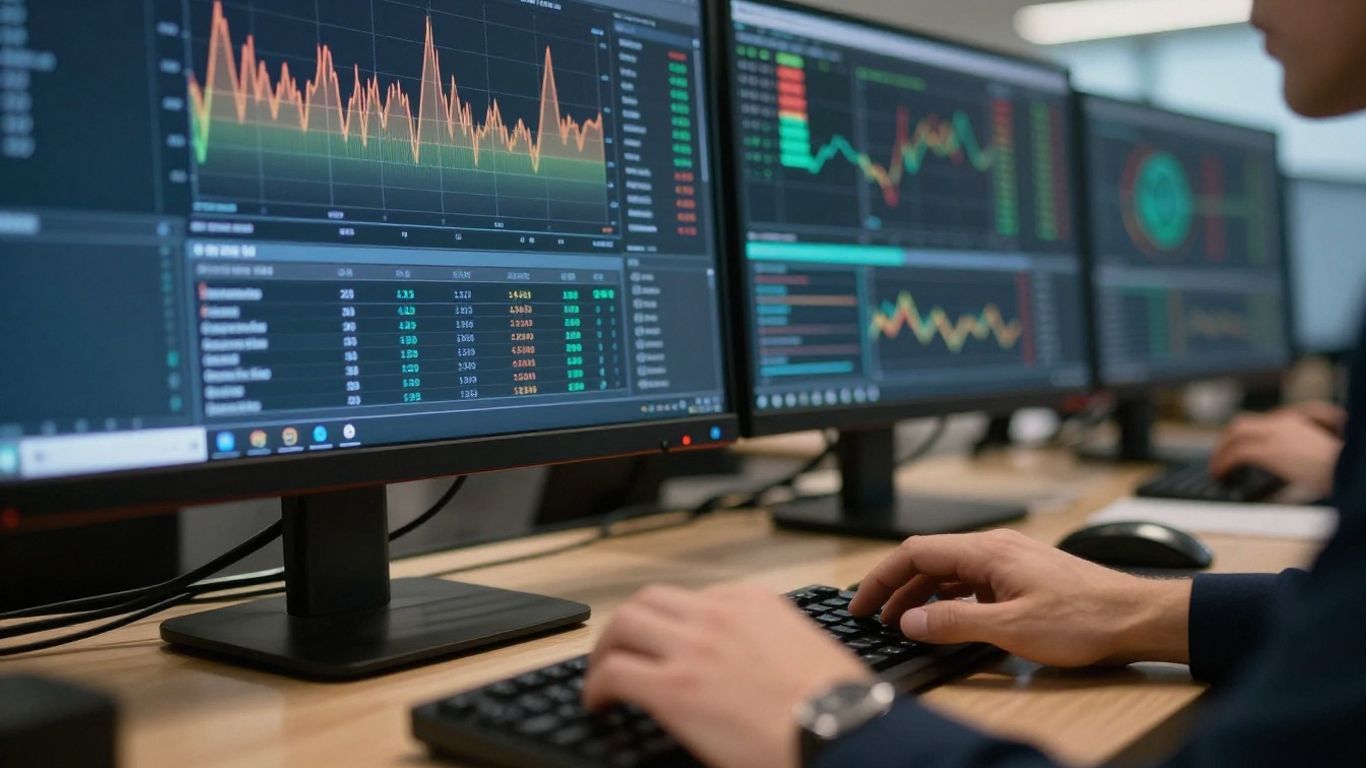
Interactive Brokers, often just called IBKR, is a big name in the trading world, and for good reason. They’re known for giving serious traders the kind of tools you’d usually only find at big financial institutions. If you’re someone who trades a lot and needs advanced features, IBKR is definitely worth a close look. Their Trader Workstation (TWS) platform is where a lot of the magic happens. It’s super customizable, meaning you can set it up exactly how you like it, with charts, scanners, and all sorts of data right where you want them. This is great for day traders who need to see a lot of information quickly.
One of the standout features for active traders is how they handle orders. You can set up bracket orders, which automatically place a stop-loss and a profit target on a trade all at once. This is a lifesaver when you’re trying to manage risk in fast-moving markets. It helps you stay disciplined and avoid emotional decisions.
Here’s a quick look at some key aspects:
- Platform: Trader Workstation (TWS) is their main desktop platform. It’s powerful and can be tailored to your specific needs. They also have web and mobile apps.
- Markets: You can trade in over 150 different markets, which is a huge range. This includes stocks, options, futures, forex, bonds, and more.
- Costs: While they have a Pro plan with low commissions for stocks and options, they also offer a Lite plan with commission-free stock trades. Their margin rates are generally among the lowest you’ll find anywhere.
- Mobile Trading: The IBKR mobile app is surprisingly robust. It supports complex options trades and shows you the margin impact before you even place the order. It’s not just a watered-down version of the desktop platform.
IBKR’s platform can feel a bit overwhelming at first because there are so many options and settings. It takes time to learn how to use it best, especially if you’re new to trading. But for those willing to put in the effort, the control and capabilities are pretty impressive.
They also provide real-time margin information, so you always know where you stand financially with your trades. This transparency is a big plus for managing risk effectively. Overall, IBKR is a solid choice for traders who want a professional-grade platform with a wide reach and competitive pricing.
2. TradeStation
TradeStation is a brokerage that really leans into serving active traders, especially those who like to dig deep into charts and options. They’ve got this new platform called Titan X, and it feels like they built it specifically for people who need things to be fast and precise. It’s not really for someone just dipping their toes into trading; this is more for the folks who know what they’re doing and want tools that can keep up.
The charting tools here are a big deal. You can load up over 100 different indicators, tweak them all at once, and the drawing tools actually snap right where you want them on the price charts. When you’re placing orders, it’s pretty slick too. You can set up bracket orders easily, figure out your risk based on percentages, and for options, you get a clear look at potential gains, losses, and all the Greek letters. It’s all about giving you control.
Here’s a quick look at some of their pricing:
| Feature | Cost |
|---|---|
| Stock Trades | $0.00 |
| Options (Per Contract) | $0.60 |
| Minimum Deposit | $0.00 |
TradeStation is best if you’re into technical analysis and complex options plays. If you’re looking for broad market research or are new to trading, you might find it a bit much. But for disciplined traders who want a powerful platform, it’s a solid choice.
3. E*TRADE
ETRADE has a couple of platforms, but for day traders who want to stay in the browser, Power ETRADE is the way to go. It’s pretty fast and flexible, which is what you need when you’re trying to make quick decisions. You don’t have to download anything extra, which is nice.
The charting tools are pretty good, with lots of indicators and ways to save your setups. They’re not perfect for super precise drawing, but for most active traders, they get the job done. The options trading part is where Power E*TRADE really shines on the web. You can customize the options chain, build multi-leg trades easily, and see the risks and probabilities clearly. The economic calendar is also a big help, showing you potential market moves and letting you set up trades right from the event.
Here’s a quick look at their fees:
| Trade Type | Cost |
|---|---|
| Stock Trades | $0.00 |
| Options (Per Contract) | $0.65 |
If you’re looking for a solid web-based platform with good tools for active trading, ETRADE’s Power ETRADE is a strong contender. It balances having enough features with being easy enough to use.
E*TRADE also has some downsides. Their margin rates can be higher than some other places, and you can’t buy individual fractional shares of stocks, which some traders like. Also, if you’re into crypto, you can only get exposure through ETFs and futures, not direct coin trading.
4. Charles Schwab
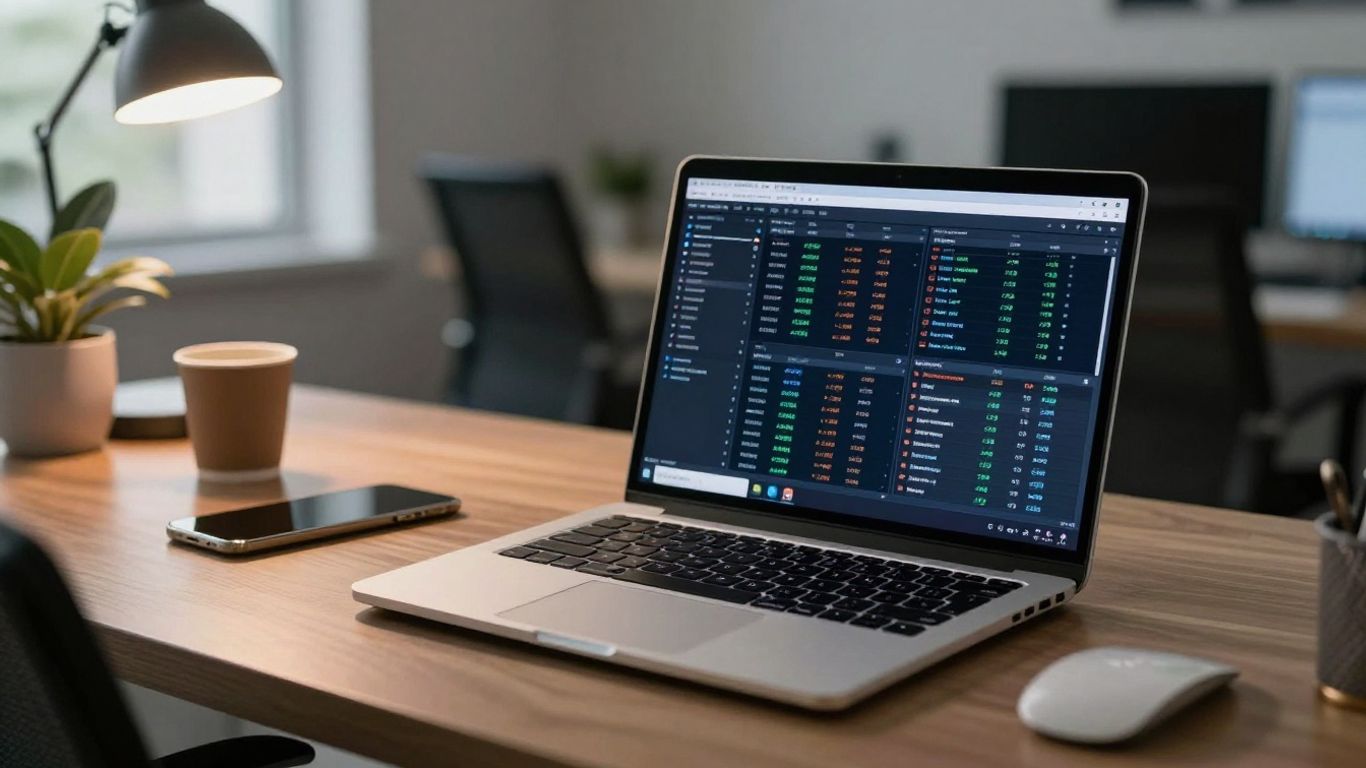
Charles Schwab is a big name in the investing world, and for good reason. They’ve got this platform called thinkorswim, which is pretty much the gold standard for serious traders, especially those who like to day trade. It’s not just some basic charting tool; it’s packed with features that let you really dig into the market.
The charting capabilities on thinkorswim are seriously impressive. You get hundreds of technical indicators, drawing tools, and features that help explain what’s going on with the charts. Switching between different charts is smooth, even when you’re looking at a ton of data. This makes it easier to spot trends and make quick decisions.
When it comes to actually placing trades, thinkorswim is built for speed. You can use things like Active Trading mode, set up conditional orders, and even customize hotkeys to speed up your workflow. One-click order entry and trade tickets that you can tweak to your liking really help when every second counts.
Here’s a quick look at some of the costs:
| Feature | Cost |
|---|---|
| Stock Trades | $0.00 |
| Options (Per Contract) | $0.65 |
| Minimum Deposit | $0.00 |
Beyond just trading, Schwab gives you a lot of research tools right within the platform. You can get real-time news, see economic releases, watch Schwab Network updates, and even check out earnings analysis. They also have a way to test your trading strategies using historical data, which is pretty neat for seeing if your ideas might work before you risk real money.
Margin management is also a strong point. The platform shows your margin balances and buying power clearly, and you can even customize the views to see margin requirements. This transparency is helpful for understanding your risk.
While Schwab is great for active traders, it’s also a solid choice for beginners. They have a lot of educational resources, including webinars and courses, that can help you learn the ropes. It’s a platform that can grow with you as your trading skills develop.
5. tastytrade
tastytrade is a platform that really focuses on options and futures traders, and it shows. They’ve built a pretty solid reputation for being a go-to spot if that’s your main game. It’s not really for someone just dipping their toes into the market, but for active traders who know what they’re doing, it’s got some serious appeal.
One of the biggest draws is their approach to commissions and fees. They used to have a flat-fee structure, but now they offer commission-free trades on stocks and ETFs, which is a huge plus for frequent traders. Options trades still have a small fee, but it’s competitive.
Here’s a quick look at their pricing:
| Trade Type | Cost |
|---|---|
| Stocks & ETFs | $0.00 |
| Options (Per Contract) | $0.65 (capped) |
| Futures (Per Contract) | $1.25 (capped) |
Their platform, while maybe not the flashiest, is built for speed and efficiency. They have a few different interfaces, including their web-based platform and a more advanced desktop version called
Wrapping It Up
So, picking the right trading platform is a big deal for day traders. It’s not just about having the latest tech; it’s about finding a tool that fits how you trade and helps you make those quick decisions. We looked at a few top contenders for 2026, each with its own strengths. Whether you’re all about deep technical analysis or need a solid all-around performer, there’s likely a platform out there for you. Remember to think about costs, how easy it is to use, and what kind of support you get. Trying out a demo account or paper trading can also be super helpful before you put real money on the line. Good luck out there!
Frequently Asked Questions
Can I use more than one trading platform at the same time?
Yes, it’s quite common for day traders to have accounts with different brokers and use several trading platforms. This lets you use the best tools each platform offers, like great charting from one and easy options trading from another. It’s also smart to have a backup ready in case your main platform has issues.
What is the quickest day trading platform?
Desktop platforms like TradeStation, tastytrade, Charles Schwab’s thinkorswim, and Interactive Brokers’ Trader Workstation (TWS) are generally the fastest because they run directly on your computer. However, modern web-based platforms can be just as quick. Your internet speed is often the biggest factor in how fast trades happen.
What’s the best mobile app for day trading?
Interactive Brokers’ trading app is considered the top choice for day trading on mobile in 2026. It offers advanced features, detailed order options, and is easy to use, which is crucial when you’re not at your computer. It provides powerful tools right on your phone.
Which trading platform is best for beginners?
For those just starting out in day trading, Fidelity is a great option. Its platform is user-friendly, easy to set up how you like, and helps new traders get comfortable with the fast-paced market.
What types of investments can I trade on these platforms?
Most of the platforms listed offer stocks, ETFs, and options. Some also include individual bonds, and several allow trading in cryptocurrencies and futures. It’s good to check which assets a platform supports if you plan to trade them.
Is day trading risky?
Day trading itself can be very risky. It involves trying to make quick profits by buying and selling within the same day, and you can lose money, sometimes a lot. Only a small percentage of day traders consistently make money. It’s often best to keep most of your investments in safer, long-term options like index funds and only use a small amount of money for day trading.