So, you’re looking to get better at trading, huh? It can feel like a lot sometimes, with all the charts and numbers flying around. But what if there was a way to make it all a bit simpler? We’re talking about a dashboard trading system. Think of it like the dashboard in your car – it shows you everything important at a glance. This kind of system can really help you see what’s going on in the markets without getting lost in the details. Let’s check out how a good dashboard can change your trading game.
Key Takeaways
- A dashboard trading system helps organize your trading activity, making it easier to see important information all in one place.
- You can use these systems to find more trading chances and figure out if they’re likely to work out.
- Building and testing your own trading strategies becomes more straightforward with the right tools.
- These dashboards let you keep an eye on how you’re doing, helping you spot what’s working and what’s not.
- Advanced features in a dashboard trading setup can give you an edge by spotting opportunities and signals automatically.
Streamline Your Trading With A Powerful Dashboard
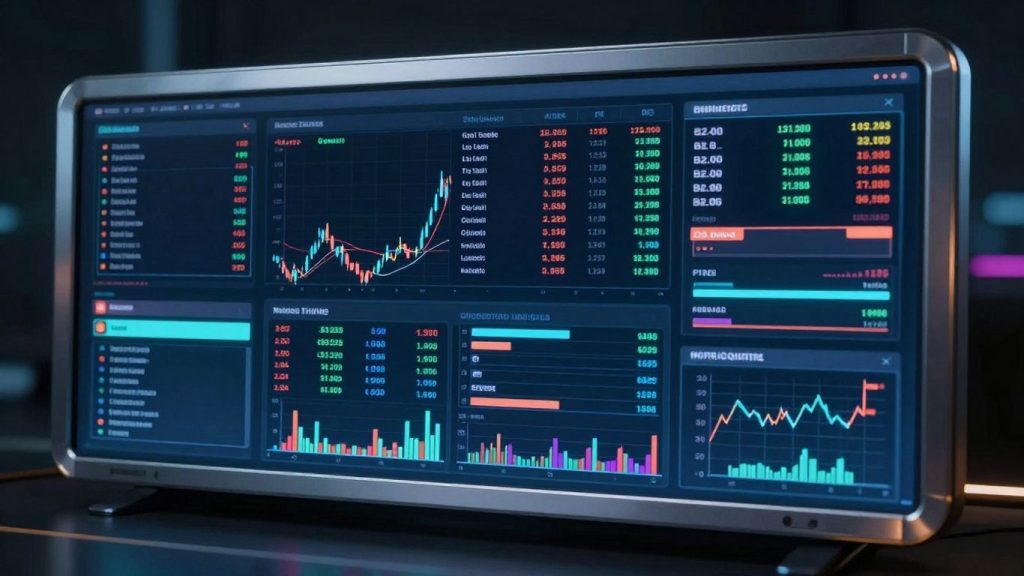
Think of a trading dashboard like your car’s dashboard, but for the financial markets. It puts all the important stuff right in front of you, so you don’t have to dig around for it. This makes trading a lot less chaotic and a lot more focused.
Enhance Your Trading System
Your trading system is your game plan. A good dashboard helps you see if that plan is actually working. It’s not just about looking at charts; it’s about seeing how your trades are performing over time. You can track things like how long you hold onto a winning trade, or how often your losing trades happen. This kind of detail helps you figure out what’s working and what’s not, so you can tweak your system.
- See your trade history clearly.
- Identify patterns in your wins and losses.
- Make adjustments based on real data, not just gut feelings.
A dashboard brings all your trading information into one place. This means less time switching between different apps or websites and more time actually trading or analyzing.
Discover More Setups
Finding good trading opportunities can feel like searching for a needle in a haystack. A dashboard can help by showing you potential setups based on rules you set. Instead of manually checking hundreds of stocks, the system can flag ones that meet your criteria. This saves a ton of time and helps you spot chances you might have missed.
| Setup Type | Criteria Example | Dashboard Action |
|---|---|---|
| Breakout | Price above resistance | Alert |
| Pullback | Stock near moving average | Watchlist |
| Volume Spike | Unusual trading volume | Notification |
Evaluate Trading Potential
Before you even place a trade, you want to know if it’s likely to work out. A dashboard can give you a quick look at a stock’s potential. It might show you how often a certain pattern has led to a profitable trade in the past, or how much risk is involved. This helps you decide if a trade is worth your time and money. It’s about making smarter decisions before you commit your capital.
Develop and Test Your Trading Strategies
So, you’ve got some ideas about how you want to trade. That’s great! But before you put real money on the line, you really need to see if those ideas actually work. This is where developing and testing your strategies comes into play. It’s not just about guessing; it’s about building a plan and then checking it against what the market has done before.
Backtest Custom Strategies
This is where the rubber meets the road. You can build your own trading rules, maybe something like ‘buy when the 50-day moving average crosses above the 200-day moving average and sell when it crosses below.’ Then, you feed that into a backtester. The system looks at historical data – years of it, if you want – and simulates how your strategy would have performed. Did it make money? How much? What were the drawdowns? It’s like a dress rehearsal for your trading plan. You can tweak the rules, change the parameters, and run the test again. This process helps you find out if your strategy has potential or if it’s just a pipe dream. Tools like Streamlit can help you build these kinds of interactive backtesting dashboards if you’re into coding.
Analyze Historical Data
Running the backtest is only half the battle. The real work is digging into the results. What does the data tell you? You’re not just looking for a big profit number. You want to see consistency. Was the profit spread out over many small wins, or was it a few big wins that masked a lot of losses? You should look at things like:
- Win Rate: What percentage of trades were profitable?
- Average Win/Loss: How much did you typically make on a winning trade versus lose on a losing one?
- Maximum Drawdown: How much did your account balance drop from its peak during the test period?
- Profit Factor: The ratio of gross profits to gross losses.
Understanding these numbers helps you see the real risk and reward profile of your strategy. It’s easy to get excited by a profitable backtest, but a deep dive into the metrics reveals the true character of the strategy.
Utilize Multiple Indicators
Most successful trading strategies don’t rely on just one signal. They often combine several indicators to confirm a trading idea. For example, you might use a moving average crossover for the main entry signal, but then add a Relative Strength Index (RSI) to check if the market is overbought or oversold. Or maybe you use volume to confirm a breakout. When you’re building and testing, you can experiment with different combinations of indicators. This helps you create more robust strategies that are less likely to give false signals. It’s about building layers of confirmation to increase your confidence before you place a trade.
Testing your strategies thoroughly is non-negotiable. It’s the bridge between having an idea and having a plan that has a statistical edge. Skipping this step is like building a house without a foundation – it’s bound to collapse.
Scan Markets For Valuable Opportunities
Finding good trades can feel like searching for a needle in a haystack sometimes, right? That’s where a good dashboard system really shines. It’s not just about seeing what’s happening now, but actively looking for what could happen next. Think of it as having a super-powered assistant who’s constantly sifting through the markets for you.
Set Scanners Based On Filters
This is where you tell the system exactly what you’re looking for. Instead of just glancing at charts, you can set up specific rules. Want to find stocks that have just broken above their 50-day moving average? Or maybe you’re interested in companies with a certain price-to-earnings ratio? You can build these criteria into your scanner. It’s like creating a custom search engine for trading opportunities. You can combine different technical indicators, price action patterns, or even fundamental data points to create a very precise search. The more specific you are, the more relevant the results will be.
Identify Daily Market Opportunities
Markets move every day, and opportunities can pop up quickly. A dashboard system with a good scanner can help you catch these. It’s designed to sift through a lot of data fast, looking for those specific setups you’ve defined. This means you don’t have to be glued to your screen all day. The scanner can alert you when a potential trade meets your criteria, giving you a heads-up. This is especially helpful for identifying short-term setups or reacting to sudden market shifts.
Integrate Custom Watchlists
We all have our favorite stocks or assets we like to keep an eye on. Your dashboard system can take this a step further by letting you create custom watchlists and then applying your scanners directly to them. So, instead of scanning the entire market, you can focus your search on a curated list of assets you already know and trust. This makes the scanning process even more efficient and tailored to your personal trading style. You can have different watchlists for different sectors or strategies, and apply specific scanners to each.
The real power comes from combining your personal market knowledge with the automated detection capabilities of the dashboard. It’s about working smarter, not just harder, to find those high-probability trades.
Elevate Your Trading Performance
So, you’ve got your trading system humming along, and you’re finding opportunities. That’s great! But how do you know if you’re actually getting better? This is where keeping a close eye on your performance comes in. It’s not just about making trades; it’s about understanding what’s working and what’s not.
Monitor Trading Activity
Think of this like a car’s dashboard. You wouldn’t drive without knowing your speed or fuel level, right? Your trading dashboard should give you that same kind of real-time info. You want to see your open positions, your recent wins and losses, and maybe even how long you’re holding onto trades. It helps you stay grounded and react quickly if something seems off. Keeping track of your trades is a big part of improving your system.
Analyze Key Performance Indicators
This is where you dig a little deeper. Instead of just looking at the raw numbers, you want to see the trends. What’s your win rate? What’s your average profit on winning trades versus your average loss on losing trades? Are you taking too many small losses? Are your winning trades big enough to cover those? Looking at these numbers helps you spot patterns in your own behavior.
Here are some common things to check:
- Win Rate: Percentage of trades that were profitable.
- Profit Factor: Gross profits divided by gross losses. A number above 1 means you’re profitable.
- Average Win/Loss Ratio: How much you make on average when you win compared to how much you lose when you lose.
- Holding Period: How long you tend to keep trades open.
Understanding these metrics isn’t about judgment; it’s about data. The more you know about your performance, the clearer the path becomes to making smarter decisions in the future. It’s like having a map for your trading journey.
Gain A Competitive Edge
All this monitoring and analysis isn’t just busywork. It’s how you find your edge. Maybe you notice you consistently do better on certain types of setups, or perhaps you perform best during specific market hours. By identifying these strengths and weaknesses, you can refine your strategy and focus on what truly gives you an advantage. It’s about working smarter, not just harder, to make your trading more consistent and hopefully, more profitable.
Unlock Deeper Trading Insights
Knowing what you’re doing right and wrong in the market is half the battle. This dashboard helps you see your trading patterns more clearly, so you can actually improve.
Track Your Trading Habits
It’s easy to forget the little things that add up. This system lets you log your trades and see where you’re spending your time and energy. Are you spending too much time on low-probability setups? This is where you find out.
- Record Entry and Exit Points: Note exactly when and why you entered and exited a trade.
- Log Trade Rationale: Briefly explain your thinking behind each trade.
- Categorize Trade Types: Tag trades by setup, market condition, or strategy.
Understanding your personal trading behavior is key to consistent profitability. It’s like keeping a diary, but for your money.
Review Profit and Loss
Beyond just the final numbers, this section breaks down your performance. You can see which strategies are actually making money and which ones are costing you.
| Metric | Value |
|---|---|
| Total Trades | 152 |
| Winning Trades | 98 |
| Losing Trades | 54 |
| Win Rate | 64.5% |
| Average Win | $125 |
| Average Loss | $78 |
This kind of detail helps you focus on what works and cut out what doesn’t. You can also explore top marketing dashboard tools to see how data visualization can help in other areas of business.
Visualize Trading Progress
Seeing your progress over time can be a huge motivator. The dashboard creates charts and graphs that show your equity curve, win rates, and other important stats. It makes it easy to see if you’re moving in the right direction, even on days when trades don’t go your way. This visual feedback loop is pretty important for staying on track.
Leverage Advanced Dashboard Tools
This section is all about the fancy tools that can really make a difference in how you trade. Think of them as your trading superpower.
Utilize Strategy Scanners
These scanners are like having a super-fast assistant who can sift through the entire market looking for exactly what you’re interested in. You set the rules – maybe you want to find stocks that have gone up 5% today, or perhaps you’re looking for a specific chart pattern. The scanner does the heavy lifting, bringing potential opportunities right to you. It’s way faster than trying to watch everything yourself.
- Filter by Price Action: Find stocks moving in a certain way.
- Pattern Recognition: Spot common chart formations.
- Custom Watchlist Integration: Keep an eye on your favorite stocks.
- Daily Opportunity Alerts: Get notified about what’s happening now.
Setting up a scanner means you’re not just randomly looking for trades. You’re telling the system precisely what you want to see, which saves a ton of time and helps you focus on the setups that actually fit your plan.
Employ Strategy Backtesters
Ever wonder if a trading idea would have worked in the past? That’s what a backtester is for. You can take a strategy you’ve thought up, plug it into historical market data, and see how it would have performed. This is super important for figuring out if your strategy is even worth trying with real money.
Here’s a quick look at what you can do:
| Feature | Description |
|---|---|
| Historical Data | Test strategies on years of past market activity. |
| Multiple Indicators | Combine different indicators in your tests. |
| Performance Reports | Get detailed results of how the strategy did. |
It’s like having a crystal ball, but based on real past events.
Generate Custom Trading Signals
This is where things get really automated. Once you’ve tested your strategies and are happy with them, you can set up the dashboard to generate trading signals based on your rules. These signals can alert you when a trade setup occurs, or in some cases, even automate parts of your trading. It takes the emotion out of trading by sticking to your pre-defined plan.
- High-Probability Detections: Signals based on proven patterns.
- Custom Strategy Alerts: Get notified when your specific rules are met.
- Risk Management Integration: Signals can factor in your risk tolerance.
- Indicator-Based Signals: Triggered by specific technical indicator movements.
Putting It All Together
So, we’ve talked a lot about how a good trading dashboard can really change things up. It’s not just about looking at charts; it’s about having all the important info right where you need it, when you need it. Think of it like having a co-pilot for your trading journey. Tools like scanners, backtesters, and journals help you see what’s working, what’s not, and where you can get better. It takes the guesswork out of trading and lets you focus on making smarter moves. If you’re serious about improving your trading game, getting a solid system in place is definitely the way to go.
Frequently Asked Questions
What is a trading dashboard system?
Think of a trading dashboard like the control center for your car. It shows you all the important stuff at once – like your speed, fuel level, and engine warnings. A trading dashboard does the same for trading. It brings together all the tools and information you need, like market prices, your past trades, and potential trading ideas, into one easy-to-see place.
How can a dashboard help me trade better?
It makes trading simpler and faster. Instead of jumping between many different apps or websites, everything you need is right there. This helps you spot chances to trade, make smart choices quickly, and keep track of how well you’re doing, all without missing a beat.
Can I test my trading ideas with this system?
Yes! You can use a special tool called a ‘backtester’ to see how your trading ideas would have worked in the past. It’s like practicing a video game before playing for real money. This helps you find out if your strategy is good before you risk your actual cash.
What is a ‘scanner’ in trading?
A scanner is like a detective for the market. You tell it what you’re looking for – like a certain type of stock or a specific price move – and it searches through thousands of options to find them for you. It saves you tons of time and helps you find good trading chances you might have missed.
How does a dashboard help me understand my own trading?
It keeps a record of all your trades. You can then look back at your wins and losses, see what worked well, and where you made mistakes. It’s like having a coach review your game film so you can improve your skills for next time.
Is this system good for beginners?
Absolutely! While it has advanced features for experienced traders, its main goal is to make trading easier to understand and manage. By putting everything in one place and offering tools to test ideas, it helps new traders learn faster and build confidence without getting overwhelmed.