
Thinking about trading Contracts for Difference, or CFDs? It sounds complicated, but it’s really just a way to bet on whether an asset’s price will go up or down. This guide breaks down cfd in trading for anyone just starting out. We’ll cover what they are, how they work, and some simple ways to get involved. No need to worry about owning the actual stocks or currencies – it’s all about the price changes. We’ll also touch on how to avoid losing too much money, which is pretty important.
Key Takeaways
- A Contract for Difference (CFD) lets you speculate on price changes of assets like stocks or currencies without actually owning them.
- You make money if the price moves in your favor and lose if it moves against you, based on the difference between opening and closing prices.
- CFDs offer the chance to profit in both rising (going long) and falling (going short) markets.
- Leverage can amplify both profits and losses, so it’s vital to understand and manage this risk carefully.
- Using tools like stop-loss orders and practicing with demo accounts are smart ways to start trading CFDs safely.
Understanding Contracts For Difference
What Is A Contract For Difference?
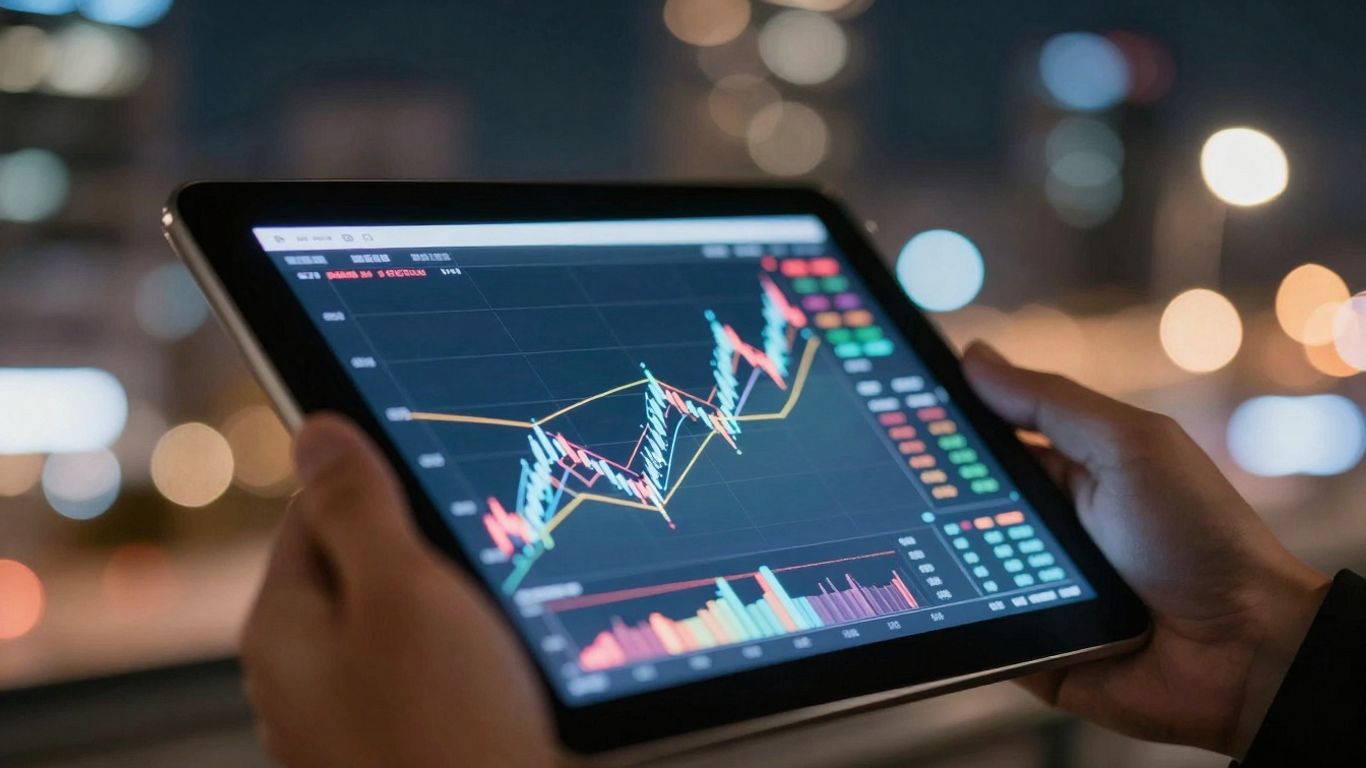
A Contract For Difference, or CFD, is basically an agreement between you and a broker. You’re essentially betting on whether the price of something – like a stock, a currency pair, or a commodity – will go up or down. The key thing here is that you don’t actually own the underlying asset. Instead, you’re just trading on the difference in its price from when you open the trade to when you close it. If the price moves in your favor, you profit from that difference. If it moves against you, you pay the difference as a loss.
This setup means you can potentially make money whether the market is climbing or falling. If you think a price is going to rise, you ‘go long’ (buy). If you think it’s going to drop, you ‘go short’ (sell). It’s a way to get exposure to market movements without the hassle of actually owning the physical item.
How Contracts For Difference Work
So, how does this actually play out? When you decide to trade a CFD, you agree with your broker on a specific contract size. This size represents the value of the underlying asset you’re speculating on. Let’s say you want to trade Apple stock, and you agree on a contract size of $1,000. You then decide if you’re going long or short based on your price prediction.
When you’re ready to exit the trade, the broker calculates the difference between the price when you opened the contract and the price when you closed it. This difference is what gets settled. If you were long and the price went up, the broker pays you the difference. If you were short and the price went down, you also get paid the difference. It’s a cash settlement based purely on that price change.
Here’s a quick rundown:
- Agreement: You and your broker agree to exchange the price difference of an asset.
- Speculation: You predict if the asset’s price will increase or decrease.
- Settlement: When you close your position, the profit or loss is calculated based on the price change.
It’s important to remember that CFDs are derivative products. This means their value is derived from an underlying asset, but they are not the asset itself. This distinction is pretty significant for how they’re traded and the risks involved.
Key Terminology In CFD Trading
Getting into CFD trading means getting familiar with some specific terms. It can seem like a lot at first, but once you get the hang of it, it makes more sense.
- Spread: This is the gap between the price at which you can buy a CFD (the ask price) and the price at which you can sell it (the bid price). A smaller spread generally means it’s easier for your trade to become profitable.
- Leverage: This is a tool that lets you control a larger position size with a smaller amount of your own money. For example, 10:1 leverage means you only need to put up 10% of the total trade value as margin.
- Margin: This is the amount of money you need to deposit to open and maintain a leveraged position. Think of it as a security deposit.
- Stop-Loss Order: This is an order you can set to automatically close your trade if the price moves against you by a certain amount, limiting your potential losses.
- Take-Profit Order: This is the opposite of a stop-loss. It’s an order to automatically close your trade when it reaches a specific profit target.
- Going Long/Short: As mentioned, ‘going long’ means you’re betting on the price going up, while ‘going short’ means you’re betting on the price going down.
Getting Started With CFD Trading
So, you’re ready to jump into the world of Contracts For Difference? That’s great! But before you start placing trades, there are a few important things to get sorted. Think of it like preparing for a road trip – you wouldn’t just hop in the car and go, right? You need to pick your vehicle, plan your route, and make sure you have the essentials. CFD trading is similar.
Choosing A Reputable CFD Broker
This is probably the most important first step. Picking the right broker is like finding a good guide for your trading journey. You want someone who’s trustworthy and offers the tools you need. Look for brokers that are overseen by recognized financial authorities. This gives you some assurance that they’re playing by the rules and that your money is safer. Don’t just pick the first one you see. Spend some time looking at reviews, comparing what different brokers offer, and see what other traders are saying. Consider how easy their trading platform is to use, what kind of research and analysis tools they provide, and if they have resources to help you learn.
Here are a few things to check when choosing a broker:
- Regulation: Is the broker licensed by a reputable financial body?
- Platform: Is the trading software user-friendly and stable?
- Instruments: Do they offer the markets you want to trade (forex, stocks, indices, etc.)?
- Costs: Are the spreads and any other fees competitive?
- Support: Is customer service readily available and helpful?
Utilizing Demo Accounts For Practice
Almost all brokers offer something called a demo account. This is a fantastic tool, especially when you’re just starting out. It lets you trade with virtual money, so you can get a feel for the platform, test out different trading ideas, and see how the market moves without risking any of your own cash. It’s like a practice field where you can make mistakes and learn from them without any real-world consequences. Seriously, don’t skip this step! It’s the best way to build confidence and get comfortable before you put real money on the line.
Understanding Margin And Leverage
Now, this is where CFDs can get a bit more complex, and it’s super important to grasp. Margin and leverage are what allow you to control a larger position with a smaller amount of your own money. It sounds good because it can amplify your profits, but it works both ways – it can also amplify your losses. Think of leverage like a loan from your broker to increase your trading size. Margin is the deposit you need to put down to open and maintain that leveraged position.
Let’s break it down:
- Leverage: A multiplier that increases your exposure. For example, 10:1 leverage means for every $1 of your money, you can control $10 worth of the asset.
- Margin: The actual amount of money you need in your account to open a leveraged trade. This is usually a small percentage of the total trade value.
It’s easy to get excited by the potential for bigger profits, but you absolutely must understand that leverage significantly increases your risk. Always be aware of how much leverage you’re using and how it affects your potential losses. Start with low leverage until you’re experienced.
Trading with leverage is a double-edged sword. While it can magnify your gains, it equally magnifies your potential losses. It’s vital to understand the exact mechanics and risks involved before you commit any real capital. Treat leverage with respect; it’s not a magic wand for quick riches, but a tool that requires careful and informed application.
Exploring CFD Trading Strategies
So, you’ve got a handle on what CFDs are and how they work. That’s great! But knowing how to trade is just the first step. The real fun, and the potential for profit, comes from having a solid strategy. It’s not just about guessing; it’s about having a plan. Let’s look at a few ways traders approach the market.
Trend Following Strategies
This is a pretty common approach. The idea is simple: if a market is moving in a certain direction, it’s likely to keep going that way for a while. You’re basically trying to catch a ride on the trend. To do this, traders often look at charts and use indicators, like moving averages, to spot if the price is generally going up (a bullish trend) or down (a bearish trend). If you think the price is going to keep climbing, you’d open a ‘long’ position, hoping to buy low and sell high. If you reckon it’s heading south, you’d go ‘short’, aiming to sell high and buy back lower. It’s all about aligning your trade with the market’s momentum. The key here is to identify the trend early and stick with it as long as it lasts.
Range Trading Techniques
Sometimes, instead of a clear trend, a market just bounces back and forth between two price levels. Think of it like a ball being hit between two walls. The lower level is called ‘support’, and the upper level is ‘resistance’. Range traders try to profit by buying near the support level and selling near the resistance level. It can be good for short-term trades, but you have to be careful. Markets don’t always stay in their ranges. If the price breaks out of the range, your trade could go wrong quickly. That’s why managing your risk is super important with this method. You need to have a plan for what happens if the price breaks out.
Speculating On Market Movements
This is a broader category, but it really gets to the heart of what CFD trading is about: making a bet on where you think the price of an asset will go. It’s not just about following trends or trading ranges; it’s about using all the information you have – news, economic data, chart patterns – to make an educated guess. You might be speculating on a big announcement affecting a stock, or a change in interest rates impacting a currency pair. This is where you can really get creative with your trading. For beginners, it’s often best to start with simpler strategies and gradually build up to more complex speculation as you gain experience and develop a winning trading approach.
When you’re developing your trading strategies, it’s easy to get caught up in the excitement of potential profits. However, it’s vital to remember that every trade carries risk. Having a clear plan for how you’ll manage that risk, before you even place a trade, is just as important as the strategy itself. This includes knowing when to cut your losses and when to take your profits.
Managing Risk In CFD Trading
When you’re trading Contracts For Difference, it’s easy to get caught up in the potential for quick profits. But let’s be real, the market can turn on a dime, and without a solid plan, you could find yourself in a tough spot. That’s where managing risk comes in. It’s not about avoiding losses altogether – that’s pretty much impossible – it’s about controlling them so they don’t wipe you out.
The Importance Of Stop-Loss Orders
Think of a stop-loss order as your safety net. You set a specific price, and if the market moves against your position and hits that price, your trade is automatically closed. This stops you from racking up bigger losses than you intended. It’s a way to take some of the emotion out of trading, because you’re not glued to the screen hoping things will turn around. You’ve already decided your exit point.
- Limits potential losses: This is the main job. It prevents a small loss from becoming a huge one.
- Automates exits: You don’t have to be there to manually close the trade.
- Reduces emotional trading: Sticking to your pre-set stop-loss helps avoid impulsive decisions.
Setting Take-Profit Levels
Just as important as knowing when to cut your losses is knowing when to lock in your gains. A take-profit order does exactly that. You set a target price, and when the market reaches it, your trade is automatically closed, securing your profit. This stops you from holding onto a winning trade for too long, only to see it reverse and give back all your hard-earned gains.
- Secures profits: Ensures you don’t miss out on gains if the market reverses.
- Provides clear targets: Helps you define what a successful trade looks like.
- Automates profit-taking: Frees you up from constantly monitoring for profit opportunities.
Position Sizing And Capital Preservation
This is where things get a bit more strategic. Position sizing is all about deciding how much of your trading capital to allocate to any single trade. A common rule of thumb is to risk only a small percentage, like 1-2%, of your total trading account on any one trade. This means that even if you have a string of losing trades, you won’t blow up your account. It’s about playing the long game and protecting your capital so you can keep trading.
Deciding how much to trade is as important as deciding what to trade. A small percentage of your capital per trade means you can survive losing streaks and keep participating in the market.
Here’s a simple way to think about it:
- Determine your total trading capital. This is the amount you’re willing to risk on trading.
- Decide on your maximum risk per trade. For example, 1% of your total capital.
- Calculate your position size. Based on the stop-loss level you’ve set for a particular trade, figure out how many units you can trade without exceeding your maximum risk per trade.
By carefully considering these risk management tools, you can trade CFDs with more confidence and a better chance of long-term success.
CFD Trading Across Different Markets

CFDs aren’t just for one type of financial instrument. They open doors to a whole bunch of different markets, letting you speculate on price changes without actually owning the underlying asset. This flexibility is a big draw for traders looking to diversify or tap into various market movements.
Trading CFDs on Forex Pairs
Forex, or foreign exchange, is the biggest financial market in the world. Trading currency pairs with CFDs means you’re betting on whether one currency will strengthen or weaken against another. For example, you might trade EUR/USD, speculating on the euro’s movement relative to the US dollar. It’s a 24/5 market, so there are always opportunities, but it’s also known for its volatility. Understanding economic news and central bank policies is pretty important here.
Speculating on Stock Indices with CFDs
Instead of picking individual stocks, you can trade CFDs on major stock indices like the S&P 500, FTSE 100, or Nikkei 225. This lets you bet on the overall direction of a market or a basket of companies. If you think the US economy is doing well, you might go long on an S&P 500 CFD. It’s a way to get broad market exposure without having to research dozens of individual companies. Keep an eye on economic reports and geopolitical events that can sway entire markets.
Commodities and Other Assets
CFDs also cover a wide range of commodities, from gold and oil to agricultural products. Want to bet on rising oil prices? You can do that with an oil CFD. Similarly, you can trade CFDs on other assets like cryptocurrencies or even interest rates. This diversification is a key advantage. However, each market has its own drivers – think supply and demand for oil, or regulatory news for crypto. It’s important to understand what makes each asset tick.
Here’s a quick look at some common markets you can access via CFDs:
- Forex: Major, minor, and exotic currency pairs.
- Indices: Global stock market indexes like Dow Jones, DAX, and Hang Seng.
- Commodities: Precious metals (gold, silver), energy (oil, natural gas), and agriculture.
- Stocks: CFDs on individual company shares (availability varies by region).
- Cryptocurrencies: Bitcoin, Ethereum, and others (subject to broker and regulation).
When trading CFDs across different markets, remember that each asset class has its own unique characteristics and risk factors. What moves gold might not affect the S&P 500 in the same way. It’s wise to focus on a few markets you understand well before spreading yourself too thin.
Advanced CFD Trading Concepts
Going Long Versus Going Short
When you trade Contracts For Difference (CFDs), you’re essentially betting on whether an asset’s price will go up or down. This gives you two main ways to position yourself in the market. Going ‘long’ means you believe the price of the asset will increase. You buy the CFD hoping to sell it later at a higher price for a profit. Conversely, going ‘short’ means you expect the price to fall. You sell the CFD, anticipating you can buy it back later at a lower price to pocket the difference. This ability to profit from both rising and falling markets is a key feature of CFD trading.
Hedging Strategies With CFDs
Hedging is a risk management technique used to offset potential losses in an existing investment. With CFDs, you can hedge by taking an opposing position in a related asset. For example, if you own shares in a company and are worried about a short-term price drop, you could open a short CFD position on that same company’s stock. If the stock price falls, the loss on your shares might be balanced by the profit from your short CFD trade. It’s a way to protect your portfolio, though it’s not foolproof and can incur costs.
Understanding Margin Calls
Margin calls are a critical concept to grasp when trading CFDs, especially because of the leverage involved. When you trade with leverage, you only put up a small percentage of the total trade value as margin. Your broker essentially lends you the rest. A margin call happens when the losses in your open positions reduce your account equity to a point where it falls below the required margin level. Your broker will then contact you, demanding that you deposit more funds to bring your equity back up to the required level, or they may close your positions to prevent further losses. It’s vital to monitor your account equity closely to avoid unexpected margin calls.
Here’s a simplified look at how margin works:
| Concept | Description |
|---|---|
| Position Size | The total value of the trade you are entering. |
| Leverage | The ratio of position size to the margin required (e.g., 1:10 means $1 margin controls $10 of value). |
| Margin | The actual amount of money you need to deposit to open a leveraged position. |
| Equity | The current value of your account, including unrealized profits and losses. |
| Margin Level | A percentage calculated as (Equity / Used Margin) * 100. Brokers have a minimum required level. |
Failing to meet a margin call can lead to the forced closure of your trades by the broker. This often happens at the worst possible moment, locking in losses and potentially wiping out a significant portion of your capital. Always be aware of your account’s margin level and the potential for adverse price movements.
Continuous Improvement In CFD Trading
Analyzing Your Trading Performance
So, you’ve been trading CFDs for a bit, maybe even made some decent moves. But are you really learning from it? Just trading without looking back is like driving blindfolded. You gotta check your rearview mirror, you know? Keeping a trading journal is the simplest way to do this. Write down why you opened a trade, what you were thinking, what happened, and how it ended. Did you stick to your plan? Did you get emotional? Looking at this log regularly helps you spot patterns. Maybe you always lose money on Fridays, or perhaps you’re great at spotting uptrends but miss the downtrends. Pinpointing these habits is the first step to fixing them. It’s not about beating yourself up; it’s about getting smarter with each trade.
Maintaining Trading Discipline
This is where a lot of traders, especially beginners, stumble. You have a plan, you know what you’re doing, and then the market does something unexpected, or you see a ‘sure thing’ tip. Suddenly, you’re chasing losses or jumping into trades based on gut feelings, not your strategy. Discipline means sticking to your trading plan, even when it’s tough. It means not letting fear or greed take over. Think of it like sticking to a diet; it’s easy to start, but hard to keep going when tempted. You need to build mental toughness to ignore the noise and focus on your strategy. This often means setting clear rules for yourself and sticking to them, no matter what.
Staying Updated On Market Conditions
The financial markets are always changing. What worked last year might not work today. New economic events pop up, global politics shift, and technology advances. You can’t just set it and forget it. You need to keep an eye on the news, understand what’s happening in the world, and how it might affect the markets you trade. This doesn’t mean reacting to every headline, but rather understanding the bigger picture. Maybe a new trade deal is announced, or a central bank changes interest rates – these things can move markets. Staying informed helps you adjust your strategies and avoid surprises. It’s about being aware, not necessarily predicting the future, but being prepared for different scenarios.
Trading is a marathon, not a sprint. You won’t become a master overnight. Each trade, win or lose, is a lesson. The traders who stick around and succeed are the ones who treat every day as a chance to learn and refine their approach. It’s a constant cycle of planning, executing, reviewing, and adjusting.
Wrapping It Up
So, we’ve gone through what CFDs are and how they work. It’s a pretty flexible way to trade, letting you bet on prices going up or down without actually owning the stuff. Remember, though, that leverage thing can really make your wins bigger, but it can also make your losses way worse. Always start small, use those stop-loss orders, and seriously, keep learning. Trading CFDs isn’t a get-rich-quick scheme; it takes time, practice, and a good head on your shoulders to do it right. Don’t forget to practice on a demo account first – it’s like training wheels for your trading journey.
Frequently Asked Questions
What exactly is a CFD?
A CFD, or Contract for Difference, is like a bet between you and a trading company. You’re betting on whether the price of something, like a stock or currency, will go up or down. You don’t actually own the item, you just agree to pay or receive the difference in price between when you started the bet and when you ended it. It’s a way to trade without owning the actual thing.
How does CFD trading actually work?
When you trade a CFD, you’re making a deal with a broker. You predict if the price of an asset will rise or fall. If you think it will rise, you ‘go long’ (buy). If you think it will fall, you ‘go short’ (sell). When you’re done trading, you and the broker settle up based on how much the price changed from when you opened the deal to when you closed it. If you were right, you make money; if you were wrong, you lose money.
Can beginners use CFDs?
Yes, beginners can use CFDs, but they need to be very careful. CFDs offer a way to start trading with less money and can be used to bet on prices going down as well as up. However, they also come with big risks because of something called leverage, which can make your losses much bigger. It’s super important for beginners to learn a lot and use tools to limit their losses before they start trading with real money.
What is leverage in CFD trading?
Leverage is like borrowing money from your broker to make a bigger trade than you could with just your own money. For example, if you have $100 and the leverage is 10:1, you can control a $1,000 trade. This can make your profits much bigger if you’re right, but it also means your losses can be much bigger if you’re wrong. It’s a powerful tool but also very risky.
What are stop-loss and take-profit orders?
These are like safety nets for your trades. A stop-loss order automatically closes your trade if the price moves against you by a certain amount, limiting your losses. A take-profit order automatically closes your trade when it reaches a price where you’ve made the profit you wanted. They help you manage risk and protect your money.
Is CFD trading legal everywhere?
No, CFD trading isn’t legal in every country. Some places have banned it because of the high risks involved, especially with leverage. It’s really important to check the rules in your specific country or region to make sure it’s allowed before you start trading CFDs.