Picking the right online trading broker in 2026 can feel like a big deal. It’s not just about where you put your money, but also about the tools and support you get along the way. Whether you’re just starting out or you’ve been around the block a few times, the broker you choose can really shape your investing journey. This guide is here to help you sort through the options and find a trading online broker that fits you best.
Key Takeaways
- Figure out what you want to achieve with your investments and how much experience you have before looking at brokers.
- Look closely at the trading platforms, research tools, and mobile apps a broker provides.
- Understand the different types of accounts available, like standard, retirement, or specialized ones, to see what suits your goals.
- Pay attention to costs, including commissions, fees, and account minimums, to make sure it’s affordable for you.
- Always check that your chosen trading online broker is secure and protected by things like SIPC insurance and fraud protection.
Understanding Your Trading Needs
Before you even think about picking a broker, let’s get real about what you’re trying to do with your money. It’s not a one-size-fits-all situation, and what works for your buddy might be a total mess for you. So, let’s break down how to figure out what you actually need.
Identifying Your Investment Goals
What’s the big picture here? Are you trying to save up for a down payment in five years, or are you thinking about retirement decades down the line? Maybe you just want to grow some extra cash over the next year or two. Your goals really shape everything else. If you need the money soon, you’ll probably want to stick to safer, less volatile investments. If you’ve got a long runway, you can afford to take on a bit more risk for potentially bigger returns. It’s about matching your timeline and your comfort level with risk to the types of investments you’ll be making.
Assessing Your Trading Experience Level
Let’s be honest, how much do you already know about trading? Are you brand new to this, like, ‘what’s a stock?’ new? Or have you been dabbling for a while and understand things like market orders and stop losses? Maybe you’re a seasoned pro who knows your way around options and futures. This is super important because some brokers are built for beginners with simple interfaces and lots of hand-holding, while others are packed with advanced tools that can be overwhelming if you’re just starting out. Picking a platform that matches your knowledge level will save you a lot of headaches.
Determining Your Preferred Trading Style
How do you actually want to trade? Are you the type to buy a stock and hold onto it for years, checking in maybe once a quarter? Or are you someone who likes to be in and out of the market frequently, maybe even multiple times a day? This is often called ‘active trading.’ Your style affects the kind of tools you’ll need. Active traders might want fast execution, real-time data, and advanced charting. Long-term investors might prioritize research reports and easy portfolio tracking. There’s no right or wrong style, but knowing yours helps narrow down broker choices significantly.
Think about your daily routine too. If you have a demanding job, trying to day trade might be a recipe for disaster. You need a strategy that fits into your life, not the other way around. It’s better to have a simple plan you can stick to than a complicated one you’ll abandon after a week.
Key Features of Top Online Brokers
When you’re picking an online broker, it’s not just about picking one that lets you buy stocks. You’ve got to look at what they offer, you know? Think of it like choosing a car – you wouldn’t just pick the first one you see, right? You’d check out the engine, the safety features, how it drives. It’s the same with brokers. The best ones really stand out because of their platforms, the research they give you, and how easy it is to trade on your phone.
Evaluating Trading Platforms and Tools
The trading platform is basically your command center. It’s where you’ll see prices, make trades, and check your portfolio. Some platforms are super simple, good for beginners. Others are packed with advanced charts, real-time data, and all sorts of order types that active traders love. For example, Charles Schwab has been recognized for its user-friendly desktop platform, making it a solid choice for many investors. On the other hand, Interactive Brokers is known for its institutional-grade platform, thinkorswim, which is a favorite among experienced traders who need a lot of control and data. It’s important to find one that matches how you like to trade.
Here’s a quick look at what to consider:
- Ease of Use: Can you figure it out without a manual the size of a phone book?
- Charting Tools: Do they have the charts and indicators you need to analyze the market?
- Order Types: Beyond just ‘buy’ and ‘sell’, are there options like stop-loss or limit orders?
- Speed and Reliability: Does it freeze up when the market gets wild?
A good trading platform should feel like an extension of your own decision-making process, not a hurdle. It should provide the information you need, when you need it, without unnecessary complexity.
Assessing Research and Educational Resources
Nobody knows everything about investing, and that’s okay. The best brokers know this and provide resources to help you learn and make smarter decisions. This can include:
- Market News: Real-time updates on what’s happening in the financial world.
- Analyst Reports: In-depth research on specific stocks or sectors.
- Educational Articles and Videos: Guides on investing basics, trading strategies, and market analysis.
- Webinars and Live Events: Opportunities to learn from experts and ask questions.
Fidelity, for instance, is often praised for its extensive educational materials and strong customer support, which can be a big help for those still building their investment knowledge. Having access to good research can really make a difference in your investment journey.
Comparing Mobile Trading Capabilities
Let’s be real, most of us don’t sit at our computers all day. We’re on the go. That’s why a good mobile app is a must-have. You want an app that’s not just a watered-down version of the desktop platform. It should be intuitive, fast, and let you do most of what you need, whether that’s checking your account balance, placing a trade, or looking up stock quotes. Many brokers are putting a lot of effort into their mobile apps. For example, Charles Schwab’s mobile app has received awards for its design and functionality, making it easy to manage your investments from anywhere. When you’re comparing brokers, definitely download their apps and take them for a spin to see how they feel.
Navigating Brokerage Account Types
So, you’ve figured out your trading style and what you want to achieve. Now comes the part where you pick the right ‘home’ for your investments. Think of brokerage accounts like different types of bank accounts – they all hold money, but they’re set up for different purposes. Choosing the right one is pretty important, not just for how you trade, but also for how your money grows and how taxes might affect it.
Standard Brokerage Accounts Explained
These are your everyday investment accounts. You put money in, you buy investments, and hopefully, they grow. There are two main flavors here: cash accounts and margin accounts. A cash account is straightforward: you buy something, you pay for it with the money you have. Simple, right? It keeps things basic and limits your risk. On the other hand, a margin account lets you borrow money from the broker to buy more investments. This can really boost your buying power, meaning bigger potential gains. But, and this is a big ‘but’, you have to pay interest on the borrowed money. Plus, if your investments tank, you could get a ‘margin call,’ which means you have to put in more cash or sell stuff, potentially at a loss. It’s definitely for folks who know what they’re doing and can handle the extra risk.
- Cash Account: Buy with your own money. Lower risk, simpler to manage.
- Margin Account: Borrow from the broker to buy more. Higher potential gains, but also higher risk and interest costs.
- Settlement Dates: Be aware of when trades officially complete. Trading before settlement in a cash account can lead to penalties.
Retirement Accounts for Long-Term Growth
If your goal is to save for the future, like retirement, these accounts are where it’s at. They come with some nice tax advantages that can really help your money grow over time. The most common ones are IRAs (Individual Retirement Arrangements). You’ve got your Traditional IRA, where your contributions might be tax-deductible now, and you pay taxes when you withdraw in retirement. Then there’s the Roth IRA, where you pay taxes on your contributions now, but qualified withdrawals in retirement are tax-free. Some employers also offer 401(k)s or similar plans, which often come with employer matching – basically free money!
- Traditional IRA: Tax-deferred growth. Contributions may be tax-deductible now.
- Roth IRA: Tax-free growth. Contributions are made with after-tax money.
- 401(k) / 403(b): Employer-sponsored plans, often with matching contributions.
Picking the right retirement account depends a lot on your current income, your expected income in retirement, and how much you plan to contribute. It’s worth looking into the specifics for each to see which one fits your long-term financial picture best.
Specialized Accounts for Specific Needs
Beyond the standard and retirement accounts, there are other options for specific situations. For example, if you’re saving for college, a 529 plan offers tax benefits for education expenses. If you’re a business owner, you might look into SEP IRAs or SIMPLE IRAs for yourself and your employees. There are also joint accounts, which are great for couples or partners who want to invest together, and custodial accounts (like UGMA/UTMA) for minors, where an adult manages the assets until the child reaches a certain age. It’s all about finding the account that lines up with your unique financial goals and circumstances.
Cost Considerations for Online Trading
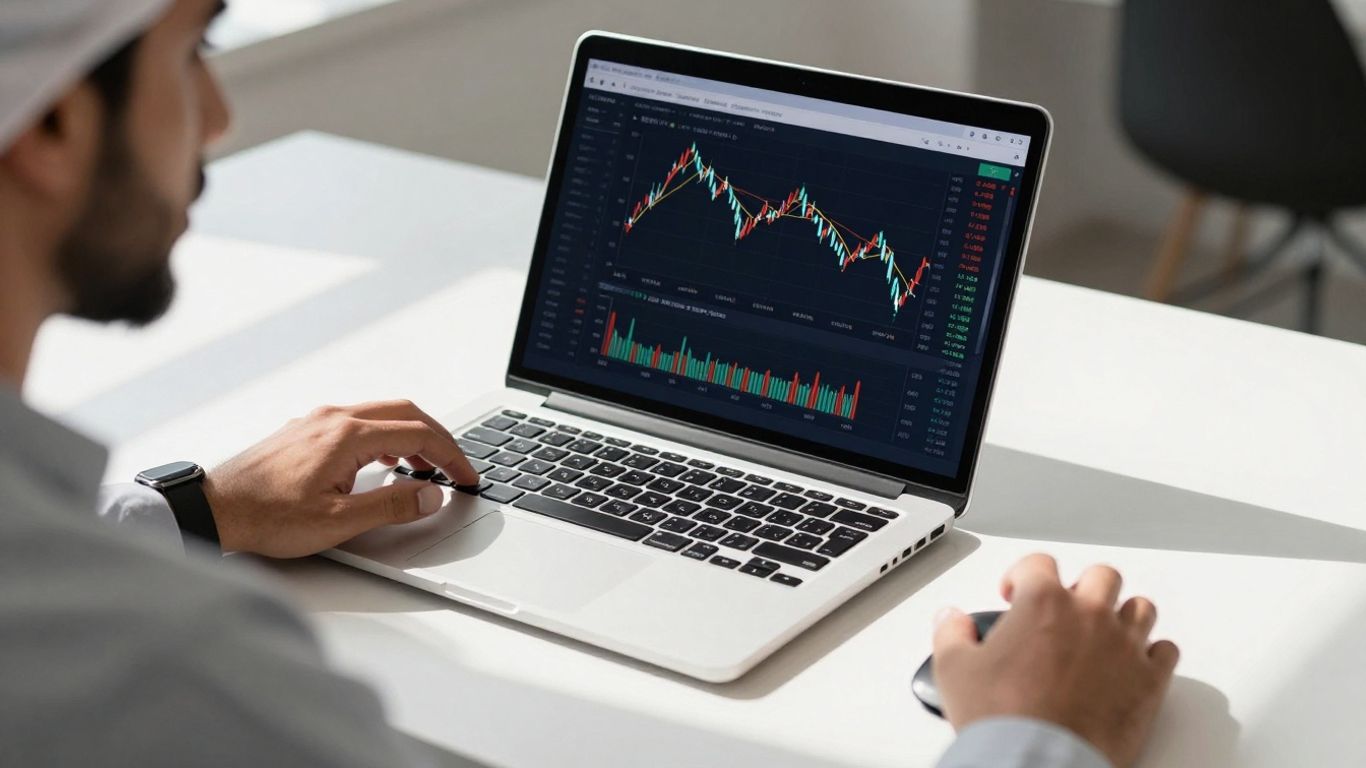
When you’re picking an online broker, the costs involved can really add up, or sometimes, they’re surprisingly low. It’s not just about the trades themselves; there are other fees to keep an eye on.
Understanding Commission Structures
Most brokers today offer commission-free trades for stocks and ETFs. That’s a big win for everyday investors. However, this doesn’t mean trading is entirely free. You might still see charges for other investment types, like options or mutual funds. For instance, some brokers charge a per-contract fee for options, which can become significant if you trade them often. It’s smart to check the specific commission schedule for anything beyond basic stock trades.
- Stock & ETF Trades: Often $0.
- Options Trades: Can range from $0.50 to $1.00+ per contract.
- Mutual Funds: May have transaction fees, especially for funds not on a broker’s no-transaction-fee list.
- Futures Trades: Typically have their own fee structure.
Always look at the full fee schedule. What seems cheap for one type of trade might be expensive for another. Your trading habits will dictate which commission structure works best for you.
Analyzing Account Minimums and Fees
Some brokers used to require a hefty sum to open an account, but thankfully, many have dropped those minimums to $0. This makes it much easier to get started without a large chunk of cash. Still, other fees can pop up. Think about:
- Account Maintenance Fees: Some accounts might have these if you don’t meet certain activity levels or balances.
- Inactivity Fees: If you don’t trade for a while, you might get charged.
- Transfer Fees: Moving your account to another broker often comes with a fee.
- Wire Transfer Fees: For moving money in or out of your account.
- Paper Statement Fees: If you opt for physical statements instead of digital.
Evaluating Costs for Options and Futures Trading
If you’re planning to trade options or futures, pay close attention to the specific costs. As mentioned, options often have a per-contract fee. For futures, you’ll usually see a commission plus exchange and regulatory fees. These can add up quickly, especially if you’re making many trades. Some brokers offer tiered pricing, where the per-contract fee decreases if you trade a higher volume. For example, a broker might charge $0.65 per contract, but if you make 30 or more trades in a quarter, it drops to $0.50.
| Trade Type | Typical Cost Range (per trade/contract) | Notes |
|---|---|---|
| Stocks/ETFs | $0.00 | Most brokers |
| Options | $0.50 – $1.00+ | Per contract fee |
| Futures | Varies | Commission + exchange/regulatory fees |
| Mutual Funds | $0 – $75+ | Depends on fund and broker |
| Account Transfer | $0 – $100 | Fee to move account to another broker |
The best approach is to list out the types of investments you plan to make and then compare the associated costs for each broker.
Ensuring Safety and Security with Your Broker

When you’re putting your money into the market, you want to know it’s in good hands. It’s not just about picking stocks that go up; it’s about making sure the place where you keep your investments is solid and trustworthy. Think of it like choosing a bank – you want to know your money is protected.
The Importance of SIPC Protection
One of the first things to check is if your broker is part of the Securities Investor Protection Corporation, or SIPC. Basically, SIPC acts like a safety net. If your brokerage firm goes belly-up, SIPC steps in to help cover your assets. This protection goes up to $500,000 for your total investments, and that includes a $250,000 limit for any cash sitting in your account. It’s not insurance against losing money because your investments dropped in value – that’s a different story – but it does protect you if the broker itself fails.
Understanding Fraud Protection Guarantees
Beyond the broker failing, there’s also the risk of someone getting into your account without your permission. Most reputable online brokers have fraud protection in place. This usually means if your account is hacked and unauthorized trades or withdrawals happen, the broker will make you whole, provided you report the issue promptly. Always use strong, unique passwords and enable two-factor authentication whenever possible. It’s a simple step that adds a big layer of security.
Recognizing Reputable Online Trading Platforms
So, how do you spot a good, safe broker? Look for companies that have been around for a while and have a solid track record. Check if they are regulated by major financial authorities in your country. You can usually find this information in the website’s footer or an ‘About Us’ section. Also, read reviews from other users, but take them with a grain of salt – focus on recurring themes about security and customer service. A broker that is transparent about its security measures and clearly outlines its protection policies is generally a good sign.
Remember, while brokers offer protection against their own failure or account breaches, they can’t protect you from the natural ups and downs of the market. Investment losses due to market volatility are your responsibility. That’s why doing your homework on what you invest in is just as important as choosing a secure broker.
Choosing a Broker for Specific Investor Profiles
So, you’ve figured out what you want to do with your money and how you like to trade. That’s a big step! Now, let’s talk about which online broker actually fits you. It’s not a one-size-fits-all situation, and what works for your buddy might be a total mess for your investing style.
Best Online Brokers for Beginners
If you’re just starting out, the sheer number of options can feel overwhelming. You want a broker that makes things simple, offers plenty of help, and doesn’t charge an arm and a leg. Look for platforms with easy-to-understand interfaces, lots of educational articles and videos, and customer support that’s actually helpful. Zero-commission trades are a big plus here, as they let you focus on learning without worrying about every little fee eating into your profits. Some brokers even offer demo accounts so you can practice trading without risking real money. For example, Wealthsimple Trade is often recommended for new investors because its app is pretty straightforward for trading Canadian stocks and ETFs.
Top Choices for Active and Experienced Traders
Got a bit more experience under your belt? You might be looking for more advanced tools. Active traders often need real-time data, sophisticated charting tools, and the ability to place complex orders quickly. You might also want access to a wider range of investment products, like options, futures, or even forex. Brokers that cater to this group usually have more customizable platforms and may offer margin accounts for those comfortable with borrowing to trade. It’s worth comparing platforms that provide in-depth research reports and news feeds to keep you on top of market movements.
Selecting a Broker for Long-Term Investors
If your goal is to build wealth over many years, perhaps for retirement, your needs are different again. You’re probably less concerned with day-to-day market swings and more focused on solid investments that grow over time. Look for brokers that make it easy to set up retirement accounts like IRAs, offer a good selection of low-cost index funds and ETFs, and provide tools for long-term planning. Some brokers even have features that help you rebalance your portfolio automatically. The focus here is on stability, low costs for holding investments, and resources that support a buy-and-hold strategy.
Picking the right broker is like choosing the right tool for a job. Using a hammer when you need a screwdriver just won’t cut it. Take the time to match the broker’s features to your personal investing journey, whether you’re just dipping your toes in or you’re already a seasoned pro.
Wrapping It Up
So, picking the right online trading broker in 2026 really comes down to knowing what you want to do with your money. Are you just starting out and need something simple, or are you a seasoned pro looking for all the bells and whistles? Think about what you’ll be trading – stocks, options, maybe even crypto – and what tools will help you the most. Don’t forget to check out fees and make sure the platform feels right for you. It might seem like a lot, but taking the time now will make your investing journey a whole lot smoother down the road. Just get started, and you’ll figure out the rest as you go.
Frequently Asked Questions
What’s the main difference between brokers now that trading is often free?
Since many brokers don’t charge for basic stock trades anymore, they compete by offering better tools, easier-to-use platforms, and more helpful research. Think of it like choosing a phone – they all make calls, but some have way cooler features!
How do I know which broker is best for me?
First, think about what you want to do. Are you just starting out and want to learn? Do you plan to trade a lot? Or are you saving for retirement? Once you know your goals, you can find a broker that fits your style, whether that’s a simple app or a platform with lots of advanced tools.
What should I look for in a trading platform?
A good platform should be easy to understand and use, especially if you’re new. It should also offer the tools you need, like charts or ways to research companies. Many brokers have apps too, so check if their mobile option works well for you.
Are my investments safe with an online broker?
Your money is generally safe if you choose a reputable broker. Look for ones protected by SIPC, which acts like insurance if the company goes out of business. Also, most brokers have ways to protect you from fraud if your account gets hacked. However, you can still lose money if your investments don’t do well.
What’s the difference between a regular account and a retirement account?
A regular (or taxable) brokerage account is for general investing where you pay taxes on profits. A retirement account, like an IRA, is specifically for saving for the future and often comes with tax benefits to help your money grow more over time.
Should I worry about fees and minimums?
Yes, it’s smart to check! While many trades are free, some brokers might charge for other things like trading options or futures, or have fees for certain account types. Also, some might require you to start with a certain amount of money. Compare these costs to make sure they fit your budget.