Deciding between trading forex and stocks can feel like a big choice, and honestly, it is. Both markets have their own vibe, you know? Like, one is always buzzing, and the other has its own set schedule. We’re going to break down what makes each one tick, so you can figure out which one might fit better with what you’re trying to do with your money. It’s not about which one is ‘better’ overall, but which one is better for *you*. Let’s get into the nitty-gritty of trading forex vs stocks.
Key Takeaways
- Forex trading is all about currencies, happening 24/5 globally and known for high liquidity and fast-paced action, often using leverage. Stocks, on the other hand, involve owning pieces of companies, traded on exchanges during set hours, and are generally seen as more stable for long-term growth.
- When you trade forex, you’re looking at currency pairs and how their values change against each other. With stocks, you’re buying shares of individual companies, and their prices are tied to how well that company is doing and its industry.
- Forex markets are decentralized and open all the time, which means you can trade whenever, but liquidity can dip. Stock markets are centralized on exchanges with specific trading times, and while big stocks are liquid, smaller ones might not be.
- Leverage can really boost your potential profits (and losses) in forex, making it potentially riskier. Stock trading usually has lower leverage, which can mean slower gains but also less risk for your initial money.
- Your personal goals matter a lot. If you want quick trades and flexibility, forex might catch your eye. If you’re thinking about owning a piece of a business and holding it for years, stocks are probably more your speed.
Understanding The Core Differences: Forex vs Stocks
When you’re looking at trading, two of the big players that often come up are Forex and stocks. They might seem similar because they both involve buying and selling, but honestly, they’re pretty different beasts. Think of it like comparing a speedboat to a cruise ship – both get you on the water, but that’s about where the similarities end. Understanding these core differences is the first step to figuring out which one, if either, is right for you.
Market Nature and Trading Instruments
The Forex market, or foreign exchange market, is all about currencies. You’re trading one currency for another, like the Euro against the US Dollar (EUR/USD) or the British Pound against the Japanese Yen (GBP/JPY). It’s a global, decentralized marketplace. This means there isn’t one single place where all trading happens; it’s a network of banks, institutions, and traders worldwide. The main things you trade are currency pairs, and these are usually grouped into majors, minors, and exotics depending on the currencies involved.
Stocks, on the other hand, represent ownership in a specific company. When you buy a stock, you’re buying a small piece of that business. Trading happens on organized exchanges, like the New York Stock Exchange (NYSE) or NASDAQ. These exchanges have a central location and specific rules. The instruments here are individual company shares, which can be categorized by industry or by the company’s size (like large-cap or small-cap).
Global Reach Versus Exchange Limitations
One of the most striking differences is how these markets operate globally. The Forex market is truly international and operates 24 hours a day, five days a week. Because currencies are traded all over the world, as one market closes, another opens. This continuous trading means you can react to news or events at almost any time. It’s a massive, highly liquid market, with trillions of dollars changing hands daily. This unparalleled scale makes it very accessible.
Stock markets, however, are tied to specific exchanges and their operating hours. The NYSE, for example, is open from 9:30 AM to 4:00 PM Eastern Time. While some brokers offer extended trading before and after these hours, liquidity can drop significantly, and prices might be more volatile. So, if a major event happens overnight that affects a stock you own, you might have to wait until the market opens to do anything about it.
Decentralized Forex Versus Centralized Stock Exchanges
This brings us to the structure of the markets. Forex is an over-the-counter (OTC) market. This means trades happen directly between two parties, often through a broker, without a central exchange. While this offers flexibility, it also means there isn’t a single, transparent order book showing all the bids and offers. Prices are set by liquidity providers, and you don’t always see the full market depth.
Stock exchanges, conversely, are centralized. They provide a regulated environment where buyers and sellers meet. You can typically see order books, which show the prices people are willing to buy (bid) and sell (ask) at, giving you a clearer picture of market depth and available liquidity for a specific stock. This centralization can offer a greater sense of order and transparency for many traders.
Key Characteristics: Trading Hours and Liquidity
When you’re looking at trading Forex versus stocks, one of the first things that jumps out is how and when you can actually trade. It’s not just about what you’re buying or selling, but the whole rhythm of the market itself.
Continuous Forex Trading Versus Fixed Stock Market Hours
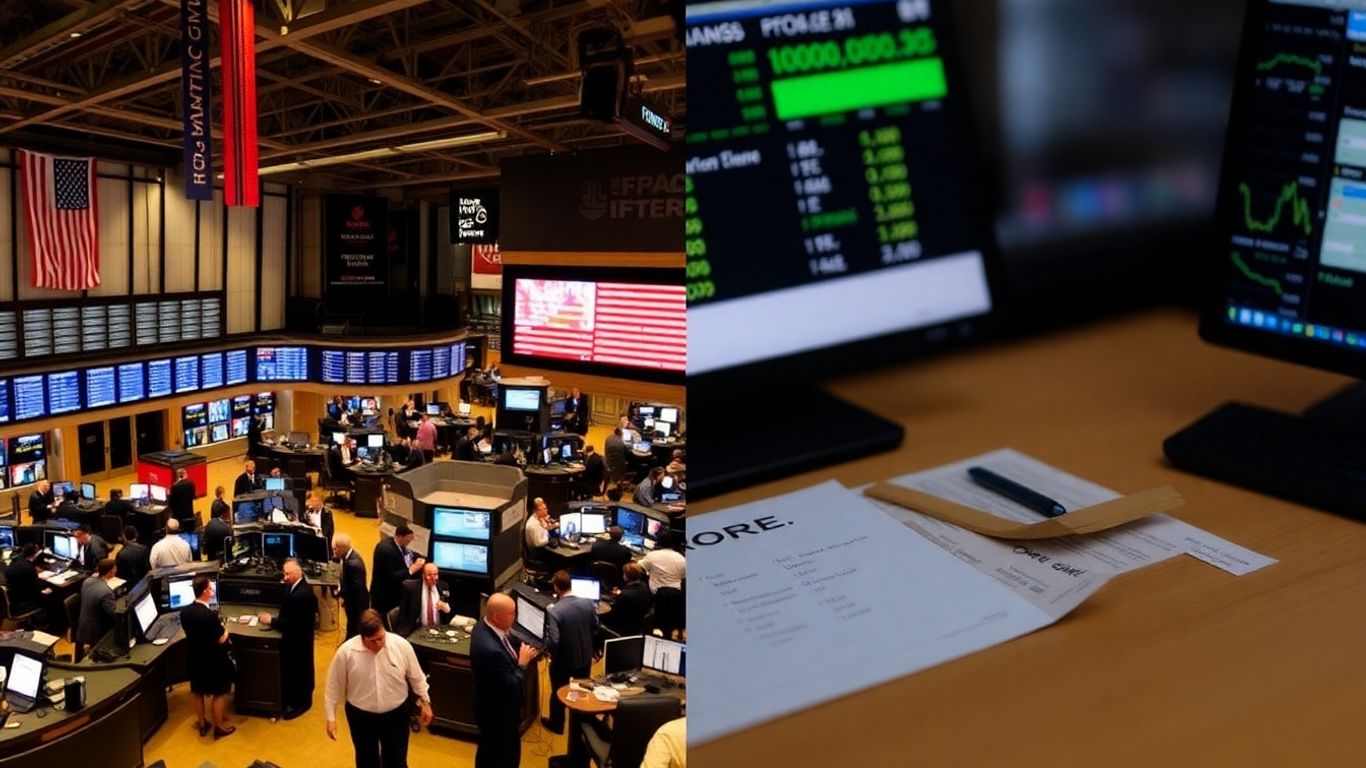
The Forex market is pretty wild in terms of its schedule. It’s open 24 hours a day, five days a week. This is because it’s a global thing, with trading happening all over the world. Think of it like a relay race where as one major financial center like London closes, another like New York is just getting started, and then Tokyo picks up the baton. This constant activity means you can jump in or out of trades pretty much whenever you want, which is a big deal if you have a regular job or just can’t be glued to a screen during typical business hours. For stock markets, it’s a different story. They operate on set schedules, usually tied to the business day in their specific region. For example, the New York Stock Exchange (NYSE) opens its doors from 9:30 AM to 4:00 PM Eastern Time. While this structure provides a certain predictability, it can also mean missed opportunities if major news breaks outside those hours or if your own schedule doesn’t line up.
Liquidity Dynamics in Currency and Share Markets
Liquidity is basically how easily you can buy or sell something without drastically affecting its price. The Forex market is famously the most liquid financial market on the planet. Major currency pairs, like the euro against the US dollar (EUR/USD), see massive amounts of money changing hands every single day. This high volume means you can usually get your trades done quickly and at a good price, with tight spreads between buying and selling costs. It’s pretty robust, even when big economic news hits. Stock market liquidity, however, can be a bit more of a mixed bag. Big, well-known companies, often called blue-chip stocks, are usually quite liquid. You can buy and sell shares of companies like Apple or Microsoft without much fuss. But if you look at smaller companies or those that aren’t traded as often, liquidity can drop significantly. This means it might be harder to sell your shares quickly, or you might have to accept a lower price than you hoped for.
Impact of Trading Hours on Market Accessibility
The difference in trading hours really shapes who can access each market and when. The 24/5 nature of Forex makes it super accessible for people all over the globe, regardless of their time zone or daily commitments. You can trade from Asia in the morning, Europe in the afternoon, and the Americas in the evening. This flexibility is a huge draw. Stock markets, with their fixed hours, are more traditional. They offer a clear structure, which some traders prefer. However, this also means that if you’re in a different time zone or have a busy life, you might find it challenging to participate actively. It requires more planning to fit stock trading into your day.
The continuous operation of the Forex market, driven by global financial centers, provides constant trading opportunities. In contrast, the fixed hours of stock exchanges offer a structured environment but can limit immediate access for traders in different time zones or with demanding schedules.
Here’s a quick look at how they stack up:
- Forex:
- 24 hours a day, 5 days a week.
- High liquidity, especially for major currency pairs.
- Global accessibility, fitting various schedules.
- Stocks:
- Fixed trading hours per exchange (e.g., NYSE: 9:30 AM – 4:00 PM ET).
- Liquidity varies by company; blue-chips are generally liquid.
- Structured trading, but potentially less accessible for some.
Understanding these characteristics is key to figuring out which market might be a better fit for your personal trading style and goals. For instance, if you’re looking for constant action and flexibility, the global reach of the forex market might be more appealing. If you prefer a more structured approach and are interested in owning a piece of companies, stocks could be your path.
Leverage, Risk, and Capital Requirements
When you’re thinking about trading, how much money you need to start and the risks involved are pretty big deals. It’s not just about picking the right market; it’s about understanding what you can afford to put in and what you’re willing to lose.
Leverage Amplification in Forex Trading
Forex trading is known for letting you use leverage. Basically, this means you can control a much larger amount of money than you actually have in your account. For example, with a 100:1 leverage ratio, a $100 deposit could let you control $10,000 worth of currency. This sounds great because it can really boost your profits if the market moves in your favor. But, and this is a big ‘but’, it works both ways. If the market moves against you, your losses are also magnified. A small price change can wipe out your entire initial investment pretty quickly. It’s like using a magnifying glass – it makes small things look big, both good and bad.
- Amplified Profits: Small price movements can lead to significant gains when using leverage.
- Magnified Losses: A slight adverse move can result in substantial losses, potentially exceeding your initial deposit.
- Lower Capital Entry: Allows traders to participate in larger market movements with less personal capital.
The allure of high leverage in forex is undeniable, offering the potential for rapid wealth creation. However, this power comes with a significant responsibility. Without a solid grasp of risk management, leverage can quickly turn a promising trade into a financial setback.
Stock Market Leverage and Risk Mitigation
Stocks usually have less leverage available compared to forex. Often, you need to put up the full amount of money to buy a stock, or at least a much larger percentage than in forex. This means your potential gains and losses are more directly tied to the actual amount you invest. While this might seem less exciting than forex’s high leverage, it generally means less risk. If you buy $1,000 worth of stock, and it drops 10%, you lose $100. It’s a more straightforward relationship between your investment and the outcome. Brokers also tend to have stricter rules about margin calls, which can help prevent you from losing more than you have.
- Lower Leverage Ratios: Typically requires a larger portion of the trade value to be covered by your own capital.
- Direct Risk Exposure: Losses and gains are more closely aligned with the actual capital invested.
- Stricter Margin Requirements: Often provides a buffer against rapid, large losses compared to highly leveraged markets.
Initial Capital Considerations for Each Market
So, how much cash do you actually need to get started? For forex, you can technically start with a very small amount, sometimes as little as $50 or $100, especially with micro-accounts offered by many brokers. This low entry point is a big draw for new traders. However, to make any meaningful profit with such small amounts, you’d likely need to use high leverage, which, as we’ve discussed, is risky. For stocks, the amount you need can vary a lot. You can buy fractional shares of expensive stocks for just a few dollars, but if you want to buy whole shares of many companies or invest a larger sum, you’ll need more capital upfront. Generally, to build a diversified stock portfolio with a reasonable chance of growth, having a few thousand dollars to start is more practical than trying to do the same in forex with the same amount.
| Market | Typical Minimum Start | Considerations |
|---|---|---|
| Forex | $50 – $100 (Micro) | High leverage needed for significant returns; high risk. |
| Stocks | $1 – $100 (Fractional) | Whole shares or diversification require more capital; lower inherent risk. |
Investment Goals and Trading Styles

When you’re looking at Forex versus stocks, it’s really about what you want to get out of your trading or investing. Are you looking to make a quick buck, or are you trying to build wealth over many years? Your goals totally shape which market might be a better fit. It’s not just about picking a market; it’s about picking the market that matches how you want to trade.
Short-Term Opportunities in Forex
The Forex market is often seen as the place to be if you’re into short-term trading. Think day traders, scalpers, and even swing traders. Because currencies move all the time, 24 hours a day, five days a week, there are always opportunities popping up. You can jump in and out of trades pretty quickly. This market thrives on volatility and quick price changes, which is exactly what short-term traders look for. It’s fast-paced, and you need to be ready to react. For instance, a trader might focus on the USD/JPY pair, trying to profit from small price swings that happen within minutes or hours, especially around major economic news releases. This kind of trading requires a lot of focus and quick decision-making. If you like action and don’t want to wait years for your money to grow, Forex might catch your eye. It’s a good place for day trading, offering flexibility that stocks often don’t. Forex day trading advantages are pretty clear for those who like this style.
Long-Term Wealth Accumulation in Stocks
Now, stocks are usually the go-to for people thinking about the long haul. We’re talking about building wealth over years, maybe even decades. Strategies like buy-and-hold are super popular here. You buy shares in a company, like Apple or Microsoft, and you just hold onto them, expecting the company to grow and your investment to increase in value over time. Many investors also look for companies that pay dividends, which is like getting a regular income from your investment. This approach is generally less stressful than Forex trading because you’re not glued to the screen every second. You’re betting on the overall growth of a company and the economy. It’s a more patient game, focused on capital appreciation and sometimes steady income streams.
Aligning Trading Style with Market Dynamics
So, how do you pick? It really comes down to your personality and how you like to approach things. If you’re someone who likes constant action, can handle quick decisions, and maybe even enjoys the thrill of high leverage, Forex might be your jam. You’ll need to be disciplined and manage your risk carefully, though. On the other hand, if you prefer a more laid-back approach, enjoy researching companies, and are comfortable waiting for your investments to grow over time, the stock market is probably a better fit. It’s about matching your natural tendencies with the way each market behaves. Here’s a quick look at how different styles fit:
- Forex: Best for day traders, scalpers, and those who want to profit from short-term price swings. Requires active monitoring and quick reactions.
- Stocks: Ideal for buy-and-hold investors, value investors, and growth investors looking for long-term capital gains or dividend income. Allows for more passive management.
Ultimately, understanding your own goals and how you prefer to trade is the first step. Don’t just jump into a market because it sounds exciting; make sure it actually fits with what you want to achieve and how much time you have to commit. It’s about making a smart choice for your financial future.
Choosing the right strategy isn’t just about picking a market; it’s about understanding yourself. Are you a sprinter or a marathon runner when it comes to your money? Forex is often like a sprint, with lots of quick bursts of activity. Stocks, especially with strategies like buy-and-hold, are more like a marathon, requiring endurance and a steady pace. Both can lead to success, but they require very different approaches and mindsets.
Market Participants and Influencing Factors
Who Trades Forex and Stocks?
Both the Forex and stock markets attract a wide variety of players, from big institutions to individual folks like you and me. In the Forex world, you’ve got major banks and central banks moving huge sums, trying to manage international money flows or influence currency values. Then there are hedge funds and investment firms using it for hedging bets or trying to make a quick profit. And of course, there are individual retail traders, often using brokers to access the market with smaller amounts of cash. Commercial companies also jump in, usually to protect themselves from currency swings when they do business overseas.
Stocks are a bit different. You still have institutional investors and hedge funds, but the focus is on owning pieces of companies. Individual investors buy stocks hoping the company does well and the stock price goes up, or maybe they get paid dividends. Companies themselves use the stock market to raise money by selling shares. It’s a way for businesses to grow and for people to invest in that growth.
Factors Driving Forex Price Movements
Forex prices are constantly shifting, and a bunch of things can cause that. Economic news is a big one – think interest rate decisions from central banks, inflation reports, or unemployment numbers. These can make a currency suddenly look more or less attractive. Political events matter too; elections or major policy changes in a country can shake up its currency. Sometimes, it’s just about supply and demand for a currency, influenced by international trade or investment flows. And don’t forget about market sentiment – if traders suddenly feel optimistic or pessimistic about a country’s economy, that can push currency prices around.
Company Fundamentals and Stock Performance
When it comes to stocks, what a company is actually doing is super important. Things like how much money they’re making (earnings), whether their sales are growing, and what their overall financial health looks like all play a big role. A company that’s reporting strong profits and has a good outlook is likely to see its stock price go up. On the flip side, bad news, like a product recall or a drop in sales, can send the stock price tumbling. Beyond just the company itself, the whole industry it’s in matters. If the tech sector is booming, tech stocks tend to do well. And, of course, the broader economic picture – things like interest rates and overall market confidence – can affect all stocks, regardless of how well the individual companies are performing.
The Forex market operates as a decentralized, over-the-counter system, meaning trades happen directly between two parties. This lack of a central exchange can sometimes mean less transparency compared to stock markets, where trades are often visible on public exchanges. This difference can influence how traders assess market depth and sentiment.
Choosing Your Path: Forex or Stocks
So, you’ve been learning about Forex and stocks, and now it’s time to figure out which one, if either, is the right fit for you. It’s not really a one-size-fits-all situation, you know? What works for your buddy down the street might be a total mess for your own financial life. It all boils down to a few personal things you need to think about.
Assessing Personal Risk Tolerance
This is a big one. How much of a gamble are you comfortable with? Forex, with its high leverage and constant price swings, can feel like a rollercoaster. You can make money fast, sure, but you can also lose it just as quickly. Think about those times you’ve taken a chance – did it pay off, or did you end up regretting it? Stocks, especially those from big, established companies, tend to be a bit more like a steady climb. They might not give you those wild, quick wins, but they’re generally less likely to give you a heart attack. It’s about understanding if you’re the type who likes the thrill of the chase or prefers a more predictable journey.
Evaluating Time Commitment and Availability
How much time do you actually have to dedicate to this? The Forex market is open 24 hours a day, five days a week. That means if you want to trade actively, you’re pretty much on call all the time. You might be checking charts at 3 AM if you’re in a different time zone or if a major economic event is happening. Stocks, on the other hand, have set trading hours. You can usually trade during your workday or in the evenings after the market closes, depending on your broker. If you have a full-time job and can only check in a few times a day, stocks might be a much better fit. Trying to keep up with Forex when you’ve only got a few minutes here and there can be pretty stressful.
Making An Informed Decision For Your Portfolio
Ultimately, the choice isn’t just about which market is ‘better,’ but which one aligns with your personal financial situation and how you like to operate. Here’s a quick rundown to help you sort it out:
- Forex: Think quick trades, high action, and the potential for rapid gains (and losses). It’s for people who like to be actively involved and can handle the ups and downs.
- Stocks: Consider this for building wealth over time. It’s more about owning a piece of a company and benefiting from its growth, often with less day-to-day stress.
- Both? Many people do trade both. You can use Forex for shorter-term plays and stocks for your long-term savings. It’s all about building a balanced portfolio that makes sense for you.
Before you jump in with real money, seriously consider using a demo account. It’s like a practice run where you can try out trading strategies without risking a dime. You get a feel for the market’s movements and see if you actually enjoy the process before you commit your hard-earned cash. It’s a smart move that can save you a lot of headaches down the line.
Think about what you want to achieve with your money. Are you saving for a down payment in a few years, or are you planning for retirement decades from now? Your goals will heavily influence whether you lean towards the fast-paced world of currency trading or the more measured approach of investing in company shares.
So, Forex or Stocks? What’s the Verdict?
Alright, so we’ve gone through the ins and outs of both Forex and stock trading. It’s pretty clear there’s no single ‘better’ option here. Forex is like the fast lane – think quick trades, lots of action, and you can jump in pretty much anytime. It’s great if you like that kind of pace and are okay with the risks that come with it. Stocks, on the other hand, are more like a steady drive. They’re often about building wealth over time, owning a piece of a company, and maybe getting some dividends along the way. It feels a bit more grounded, especially if you’re not looking to stare at charts all day. Ultimately, the choice really boils down to what you’re trying to achieve with your money, how much risk you’re comfortable with, and just your general personality as a trader or investor. Don’t forget to practice on a demo account first – seriously, it’s a lifesaver before you put real cash on the line. Both markets have their own learning curves, so keep learning and stay smart about managing your money.
Frequently Asked Questions
What is the main difference between trading Forex and stocks?
Trading Forex is like swapping one country’s money for another’s, trying to guess which will be worth more. Stocks, on the other hand, are like buying tiny pieces of a company, hoping the company does well and your piece becomes more valuable.
When can I trade Forex versus stocks?
You can trade Forex almost any time, 24 hours a day, five days a week, because it’s a global market. Stock markets have set hours, like a regular workday, and are closed on weekends and holidays.
Which market is riskier, Forex or stocks?
Forex can be riskier because prices can change very quickly, and you can use something called ‘leverage’ which is like borrowing money to trade bigger amounts. This can make you win big, but also lose big, fast. Stocks can also be risky, but they are often seen as more stable, especially if you invest in big, well-known companies for a long time.
Can I make money quickly with Forex or stocks?
Forex is often used for short-term trading, meaning people try to make money quickly by making many trades. Stocks are usually better for long-term goals, like saving for retirement, where you hold onto them for years to let them grow.
Do I need a lot of money to start trading Forex or stocks?
You can often start trading Forex with a smaller amount of money than you might need for stocks. However, it’s always smart to start small and learn before putting in a lot of cash, no matter which market you choose.
Can I trade both Forex and stocks?
Absolutely! Many people trade both. It’s like having different types of investments in your piggy bank. Trading both can help spread out your risk and give you more chances to make money in different ways.