So, you want to learn trading? It sounds exciting, maybe even a little intimidating. Lots of people jump in thinking it’s a quick way to make money, but honestly, it’s more about smart decisions and sticking to a plan. This guide is here to break down how to learn trading for beginners, cutting through the noise so you can actually get started without feeling completely lost. We’ll cover the basics, how to keep your cool, the tools you’ll need, and how to protect your money.
Key Takeaways
- Trading is a structured process, not guesswork. Understand that it involves probabilities, discipline, and patience, and always control your risk.
- Start by picking just one market to focus on, like Forex, Gold, or Indices, and learn its specific behaviors before moving on.
- Commit to a single, simple trading strategy. Trying too many at once leads to confusion and failure; master one first.
- Protecting your capital is the most important part. Always know how much you’re willing to risk on any single trade.
- Develop a disciplined mindset and a daily routine to remove emotional decision-making and build consistency over time.
Understanding The Core Principles Of Trading
So, you want to get into trading? That’s cool. But before you even think about clicking ‘buy’ or ‘sell’, we need to get on the same page about what trading actually is. It’s not like the movies, where people are shouting and making millions in minutes. It’s more like a business, but one where you’re the CEO, the analyst, and the risk manager all rolled into one.
What Trading Truly Entails: Beyond The Illusions
Let’s clear the air right away. Trading isn’t a get-rich-quick scheme. It’s not about guessing or hoping for the best. Think of it as a game of probabilities. You’re looking at past data, current events, and trying to make an educated guess about where prices might go. The market moves because of supply and demand, sentiment, and bigger economic stuff happening. It’s a constant dance between buyers and sellers, and sometimes it gets pretty wild. Most people who try trading and fail don’t do so because trading is impossible, but because they never really understood these basic ideas. It’s about making structured decisions, sticking to a plan, and always, always keeping an eye on the risks. If you’re looking for a solid start, understanding the basics is key, and resources like Introduction to Trading: What Beginners Must Understand can help.
Identifying Your Primary Trading Environment
Okay, so you’ve got a clearer picture of trading. Now, where are you going to trade? The market isn’t just one big thing; it’s made up of different parts. You’ve got currency pairs (Forex), precious metals like gold, and stock market indexes. Trying to learn about everything at once is a recipe for confusion. It’s way better to pick one area and really get to know it. For example, Forex is often seen as a good starting point because it’s usually pretty stable and has a lot of activity. Gold can be more emotional and react strongly to news, especially about the US dollar. Indices tend to move with momentum. The idea here is simple: pick one lane and focus on mastering it. This one decision can cut down a huge amount of the confusion beginners face. You don’t need to be an expert in everything; you just need to be good at one thing.
The Importance of a Singular Trading Strategy
Once you’ve picked your market, you need a plan for how you’re going to trade within it. People talk about all sorts of strategies – breakouts, pullbacks, trend following, you name it. But here’s the thing: trying to use every single strategy is a sure way to fail. What you really need is one simple, clear strategy that you can follow step-by-step. Think of it like having a checklist. Your strategy tells you what conditions need to be met before you even consider a trade, how you’ll enter, and how you’ll get out. This focused approach is what leads to consistency. It’s not about finding the ‘perfect’ strategy, but about finding a workable one and sticking to it until you’re really good at it. This disciplined approach is a big part of why some traders succeed where others don’t. It’s about building a repeatable process, not chasing every new idea that pops up.
Developing A Disciplined Trading Mindset
Look, trading isn’t just about picking stocks or knowing when to buy and sell. A huge part of it, maybe the biggest part, is what goes on between your ears. If your head’s not in the right place, even the best strategy will fall apart. It’s about building a mental toughness that can handle the ups and downs without you losing your cool.
Cultivating Emotional Resilience In Volatile Markets
Markets move. Sometimes they move a lot, really fast. It’s easy to get caught up in the excitement when things are going your way, or panic when they’re not. The goal is to stay neutral, like a calm observer, no matter what the price charts are doing. This means recognizing when fear or greed is trying to take over and having a plan to deal with it. It’s not about not feeling emotions, but about not letting them drive your decisions. Think of it like this:
- Fear: Makes you exit winning trades too early or avoid taking good setups.
- Greed: Pushes you to take on too much risk or hold onto losing trades too long.
- Impatience: Leads to random, unforced trades just to feel like you’re doing something.
Learning to manage these feelings is key. It takes practice, and sometimes it feels like you’re fighting yourself. But with time, you get better at spotting these emotional traps before they trip you up. It’s about building self-trust through repetition, not just hoping for good results [30a7].
Building Self-Discipline Through Routine
Randomness is the enemy of consistency in trading. If you’re just jumping into the market whenever you feel like it, or making decisions on the fly, you’re setting yourself up for trouble. A solid daily routine acts like a filter, cutting out the noise and helping you stick to your plan. It removes the need for constant, high-stakes decision-making in the heat of the moment. Here’s a basic structure that can help:
- Pre-Market Checklist: Reviewing your plan, economic news, and key levels before the market opens.
- Trade Execution: Sticking to your strategy’s entry and exit rules, and importantly, your risk controls.
- Post-Trade Reflection: Reviewing your trades, win or lose, to see what worked and what didn’t.
This kind of structure helps you trade more like a professional, where actions are deliberate and planned, not impulsive. It’s about creating habits that support your trading goals.
The Power of Scenario Planning for Predictability
Markets don’t always do what we want them to. They can go up, down, or sideways, and often when we least expect it. Instead of trying to guess the future, which is a losing game, it’s smarter to prepare for different possibilities. This is where scenario planning comes in. You map out what you’ll do if the market moves in a certain direction, both bullish and bearish. This means:
- Identifying potential upside targets and resistance levels.
- Identifying potential downside targets and support levels.
- Knowing at what point your initial idea becomes invalid.
When you’ve thought through these different paths beforehand, you’re less likely to be shocked or make rash decisions when the market moves. You’re not reacting; you’re executing a pre-determined plan. This makes you less anxious, more patient, and ultimately, a more disciplined trader. It’s about expecting both sides of the coin, so you’re ready for whatever the market throws at you.
Mastering Essential Trading Tools And Techniques
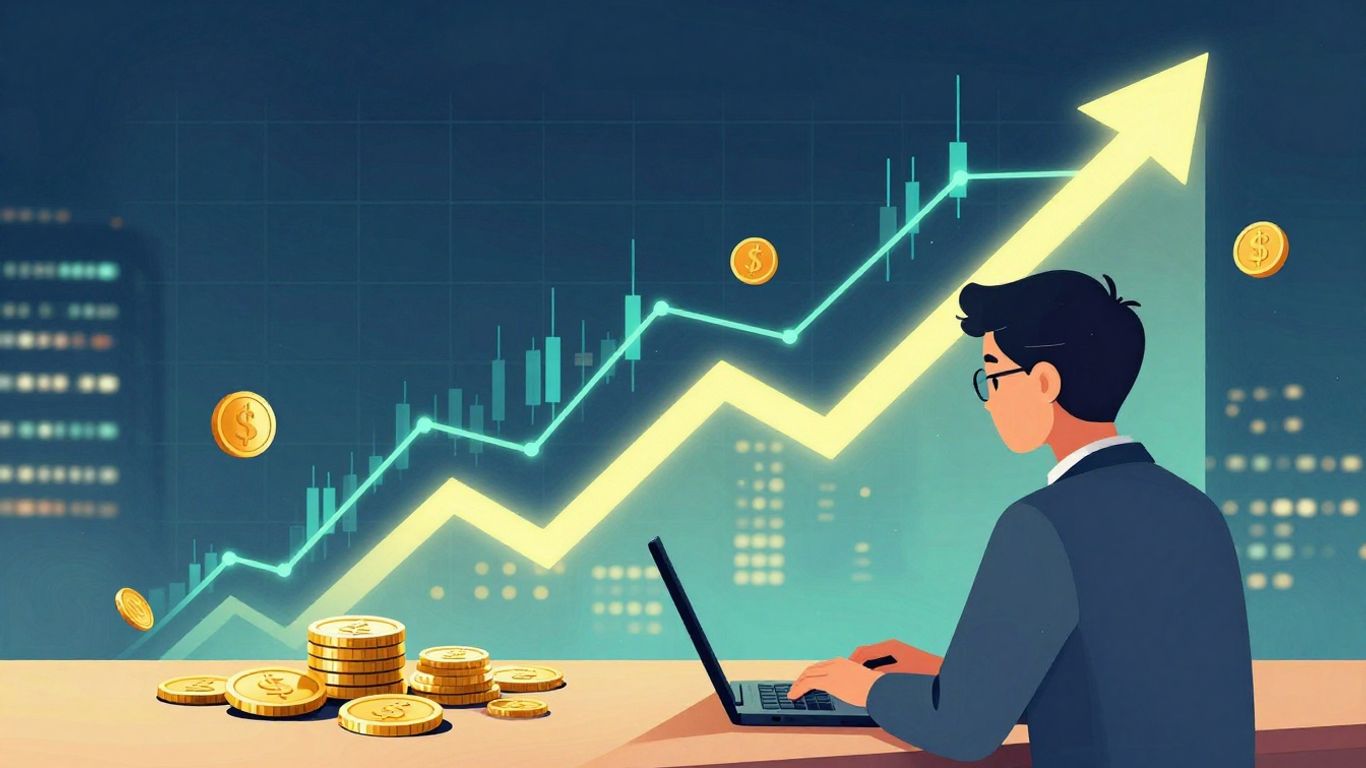
Alright, let’s talk about the gear you’ll need for this trading adventure. It’s easy to get lost in all the fancy software and indicators out there, but honestly, you don’t need a million things to get started. The goal here is to keep things simple so you can actually focus on making smart decisions.
Leveraging Charting Tools and Algorithmic Systems
Think of charting tools as your map and compass in the market. They show you where prices have been and give you clues about where they might go. Most trading platforms come with built-in charting, and they’re usually pretty good. You can draw lines, add basic indicators, and see price movements in real-time. Algorithmic systems, or ‘algos,’ are basically automated trading programs. For beginners, messing with complex algos might be too much, too soon. It’s better to understand the basics of chart reading first. You can start by just watching how prices move on a simple line or bar chart. See how highs and lows form, and how prices react to certain levels. As you get more comfortable, you can explore adding more advanced features, but don’t feel pressured to use everything right away.
Understanding Japanese Candlesticks for Price Action
Candlesticks are a really popular way to look at price charts. Each ‘candle’ shows you the open, high, low, and close price for a specific time period (like a minute, an hour, or a day). They’re not just pretty pictures; they tell a story about what happened during that time. For example, a long green candle might show strong buying pressure, while a long red one could indicate selling pressure. A candle with a long wick at the top might show that sellers tried to push the price down but buyers stepped in. Learning to read these basic patterns can give you a quick sense of market sentiment. You don’t need to memorize hundreds of patterns. Focus on a few key ones that show buying or selling strength, or indecision. Remember, candles are most meaningful when they appear at important price levels, like previous support or resistance areas.
Exploring Minimalist Indicators for Clarity
So many traders get bogged down trying to use every indicator under the sun – RSI, MACD, moving averages, you name it. It’s like trying to listen to ten different songs at once; it’s just noise. For beginners, it’s way better to stick to a few simple tools that actually help you see the bigger picture. A good starting point is often a single moving average to get a sense of the trend direction. You might also use Fibonacci retracement levels to find potential areas where a price might pull back to before continuing its trend. The idea is to use indicators as confirmation, not as the sole reason to enter a trade. Keep your charts clean. Less clutter means clearer thinking and fewer mistakes. You want tools that support your decision-making, not complicate it.
The market is a constant flow of information. Your job as a trader is to find the tools that help you interpret that flow without getting overwhelmed. Simplicity often leads to better execution because it reduces the number of variables you have to consider at any given moment.
Implementing Robust Risk Management Strategies

Look, trading can feel like a wild ride sometimes, right? You see big numbers flashing, hear stories of people making fortunes overnight, and it’s easy to get caught up in the excitement. But here’s the thing: the real pros, the ones who stick around and actually make a living from this, they aren’t just lucky. They’re smart about protecting their money. Risk management isn’t just a part of trading; it’s the whole game. Without it, even the best strategy can fall apart faster than you can say "margin call."
The Critical Role of Capital Protection
Think of your trading capital like the foundation of a house. If that foundation crumbles, the whole structure is in trouble, no matter how fancy the roof is. In trading, your capital is what allows you to even play the game. Losing too much of it too quickly means you’re out. It’s that simple. So, the absolute first priority is to make sure you don’t lose it all. This means being super careful about how much you put on the line with each trade.
Determining Appropriate Risk Per Trade
So, how much is too much? Most experienced traders will tell you to stick to a small percentage of your total trading account for any single trade. We’re talking about 1% to 2% at most. It sounds small, but it adds up. Let’s say you have a $10,000 account. Risking 1% means you’re only willing to lose $100 on that specific trade. If you have a string of losing trades – and you will, that’s part of trading – this small percentage helps you stay in the game.
Here’s a quick look at how that plays out:
| Account Size | 1% Risk | 2% Risk |
|---|---|---|
| $1,000 | $10 | $20 |
| $5,000 | $50 | $100 |
| $10,000 | $100 | $200 |
| $25,000 | $250 | $500 |
This approach means you can have several losing trades in a row and still have plenty of capital left to trade. It’s about survival first, then profit.
Crafting Your Comprehensive Risk Management Plan
Having a plan isn’t just about deciding on a percentage. It’s about having rules for everything related to risk. This includes:
- Stop-Loss Orders: These are non-negotiable. You need to decide before you enter a trade where you’ll get out if the market moves against you. This takes the emotion out of it.
- Position Sizing: This is directly tied to your risk per trade. You calculate how many units or shares you can buy or sell based on your stop-loss distance and your chosen risk percentage.
- Maximum Drawdown Limits: Set limits for how much you’re willing to lose in a day, a week, or a month. If you hit that limit, you stop trading and reassess.
- Risk-to-Reward Ratio: Aim for trades where your potential profit is significantly larger than your potential loss. A 1:2 or 1:3 ratio (meaning you risk $1 to make $2 or $3) is a good starting point.
- Avoiding Over-Leverage: Using too much borrowed money (leverage) can magnify both your wins and your losses. Be extremely cautious with it, especially when you’re starting out.
Building a solid risk management plan is like putting on a seatbelt before you drive. You hope you never need it, but if you do, it can save you from serious damage. It’s the bedrock of any trading career, separating those who last from those who don’t.
Remember, no strategy is foolproof. Markets are unpredictable. But by controlling your risk, you give yourself the best possible chance to weather the storms and keep trading another day.
Navigating Specific Markets And Trading Styles
Alright, so you’ve got the basics down, you’re building that disciplined mindset, and you’re getting a handle on your tools. Now, where do you actually apply all this? That’s where picking your battlefield comes in. Trying to trade everything at once is like trying to learn every language in the world simultaneously – it’s just not going to happen effectively. You need to focus.
Exploring Forex, Gold, and Indices
Think of these as your main arenas. Each has its own personality, its own rhythm. Forex, for instance, is the biggest market out there, running 24/5. It’s generally pretty liquid, which can be good for getting in and out of trades without too much slippage. Pairs like EUR/USD are popular because they’re usually quite stable, though they can still move. Then you have gold. Gold’s a bit of a wild child. It often acts as a safe haven when things get shaky in the world, but it also reacts strongly to economic news, especially anything related to the US dollar. It can be fast and sometimes a bit emotional. Indices, like the S&P 500 or the Nasdaq, represent a basket of stocks. They tend to move with the overall economic sentiment and are often strongest during specific trading sessions, like when the US market is open. They can show strong trends.
- Forex: Great for beginners due to high liquidity and 24-hour access. Good for learning the ropes of currency movements.
- Gold: Acts as a safe haven, sensitive to economic data and geopolitical events. Can be more volatile.
- Indices: Reflect broader market sentiment, often trending well during active trading sessions.
Fundamentals of Day Trading and Swing Trading
Once you’ve picked a market, you need to decide how you want to play it. Are you a short-term player or a bit more patient? Day trading means you’re in and out of trades within the same day. No overnight risk. It requires a lot of focus and quick decision-making. You’re looking for smaller, quicker profits. Swing trading, on the other hand, is about holding positions for a few days to a couple of weeks. You’re trying to catch a bigger move, a ‘swing’ in the market. This usually means less screen time but requires more patience and a good understanding of how to manage risk over a longer period.
The key here is to match your trading style to your personality and lifestyle. If you can’t stare at charts all day, day trading might be a struggle. If you get antsy with positions open overnight, swing trading could be tough. Find what fits.
Understanding Market Drivers and Correlations
Markets don’t just move randomly. There are reasons behind the price action. Central banks changing interest rates, inflation reports, job numbers – these all send ripples through the markets. Geopolitical events can cause big swings, especially in assets like gold. It’s also smart to understand how different markets relate to each other. For example, sometimes when the US dollar strengthens, gold might weaken, or vice versa. This is called correlation. Knowing these connections can give you an edge, helping you anticipate how one market might move based on what’s happening in another. It’s like seeing the bigger picture instead of just one small piece of the puzzle.
The Journey Towards Trading Consistency
Becoming a consistent trader isn’t about finding some magic bullet or a secret indicator. It’s more like building a sturdy house – brick by brick, with a solid plan. You don’t just wake up one day and have a profitable trading career. It takes time, a lot of practice, and sticking to what works. The real goal is to make your trading system so ingrained that it becomes second nature.
Aligning Identity with Your Trading System
Think about it: if you see yourself as a trader who reacts impulsively to every news headline, that’s the identity you’ll embody. But if you start seeing yourself as someone who follows a defined plan, sticks to risk rules, and waits for specific setups, your actions will naturally follow. It’s about becoming the system, not just using it. This means your daily actions should reflect the strategy you’ve chosen. If your strategy is about waiting for pullbacks, then your identity should be that of a patient trader, not someone constantly chasing the market. It’s a subtle shift, but it makes a huge difference in how you approach each trading day.
The Role of Backtesting in Skill Development
Live trading can be pretty intense, especially when real money is on the line. That’s where backtesting comes in. It’s like a simulator for your trading strategy. You go back in time and see how your plan would have performed on historical data. This isn’t just about seeing if your strategy made money; it’s about understanding its quirks. You learn how often it wins, what the biggest losses look like, and where you tend to make mistakes. Doing this for at least 50–100 trades per strategy is a good starting point. It helps build confidence and refines your approach before you risk your capital. You can practice months of trading in just a few days, which really speeds up the learning curve.
Patience as a Catalyst for Compounding Growth
This is where many beginners stumble. They want big results fast, which often leads to taking too much risk or trading too frequently. But the math of compounding works best over time, and that requires patience. It’s about letting your winners run and cutting your losers quickly, sticking to your plan even when it feels slow. A good rule of thumb is to never risk more than 1-2% of your capital on any single trade. This protects your account and allows it to grow steadily. Think of it like planting a tree; you water it consistently, protect it, and eventually, it grows strong. Trading is similar – consistent, disciplined actions over time lead to significant growth, not impulsive big wins. You can learn more about this approach in a trading strategy playbook.
The market doesn’t owe you a specific direction. It can go up, it can go down, and you need to be prepared for both. Planning for both bullish and bearish scenarios removes emotional shock and helps you react calmly instead of predicting wildly. This mental shift is what truly separates beginners from seasoned traders.
Your Trading Journey Starts Now
So, we’ve covered a lot of ground, from understanding the basics of what trading even is to getting a handle on your own mindset. Remember, this isn’t about getting rich quick; it’s about building a solid foundation, picking one path, and sticking with it. Don’t get bogged down by all the noise out there. Focus on what works for you, manage your risks carefully, and most importantly, be patient. The markets have their ups and downs, and learning to ride those waves takes time and practice. Keep learning, keep adapting, and you’ll be well on your way to becoming a more confident trader.
Frequently Asked Questions
What is trading, really?
Trading is like a game where you make smart choices about buying and selling things like stocks or currency. It’s not about guessing or luck; it’s about learning how the market works, having a plan, and being patient. Think of it as a business where you manage your money carefully.
How much time does it take to get good at trading?
Becoming a good trader usually takes time, like learning a new skill. Most people need about 6 months to a year and a half to get really comfortable. This involves learning, practicing a lot with fake money (called backtesting), and learning to control your feelings.
Should I use lots of fancy tools when I start trading?
No, definitely not! It’s better to start simple. You don’t need many tools. Knowing how to read price charts and maybe using a couple of basic tools is enough for most beginners. Too many tools can be confusing.
How much money should I risk on each trade?
It’s super important to protect your money. Most experts say you should only risk a very small amount, like 1% or 2%, of your total trading money on any single trade. This helps you avoid losing too much if a trade doesn’t go as planned.
What’s the best market for beginners to trade?
The Forex market (trading different countries’ money) is often recommended for beginners because it’s usually more stable. Gold and stock market indexes can move faster, which might be a bit much when you’re just starting out.
Do I need to be good at math to trade?
You don’t need to be a math whiz! Basic math skills are helpful for understanding percentages and how much you’re risking. But trading is more about making smart decisions, managing your feelings, and sticking to your plan than complex calculations.