Thinking about where to put your money in 2026? It often comes down to two big players: forex and stocks. They both let you trade, but they’re really different beasts. Understanding these differences is key, whether you’re just starting out or looking to shake up your current strategy. This article breaks down forex vs stocks, helping you see what makes each tick so you can make a smarter choice for your wallet.
Key Takeaways
- Forex involves trading currency pairs globally, operating 24/5, and is influenced heavily by macroeconomic news and central bank actions. Stocks represent ownership in companies, trade during set exchange hours, and are affected by company performance and industry trends.
- The forex market is much larger and more liquid than the stock market, meaning trades can often be executed faster with tighter price differences, especially for major currency pairs.
- Stock markets are centralized with visible order books, offering more transparency on market depth. Forex is decentralized (over-the-counter), making full market depth less visible.
- Forex trading often suits shorter-term strategies like day trading or scalping due to its continuous operation and high volatility, while stock investing frequently involves longer holding periods focused on company growth and dividends.
- Both markets have risks, but forex is known for higher leverage potential, which can amplify both gains and losses significantly. Stocks also have volatility, with risks like market crashes and company-specific issues.
Understanding Market Characteristics: Forex vs Stocks
When you’re looking at trading, whether it’s currencies or company shares, it helps to know what makes each market tick. They’re not quite the same, and understanding these differences is pretty important before you jump in. Think of it like comparing a bustling international airport to a busy local train station – both move people, but in very different ways.
Market Size, Liquidity, and Trading Hours
The sheer scale of the forex market is mind-boggling. It’s the biggest financial market on the planet, with trillions of dollars changing hands every single day. This massive volume means it’s usually super liquid, especially for the major currency pairs like EUR/USD or USD/JPY. Liquidity is basically how easily you can buy or sell something without drastically changing its price. Because currencies are traded globally, the forex market basically runs 24 hours a day, five days a week. You can trade pretty much anytime, from Sunday evening to Friday evening. This constant availability is a big draw for many traders.
Stocks, on the other hand, are tied to individual companies and specific stock exchanges. While the total value of all stocks is huge, the daily trading volume for any single stock is much, much smaller than for major currency pairs. Liquidity in stocks can vary a lot. Big, well-known companies (think tech giants) tend to be very liquid, meaning you can buy and sell their shares easily. Smaller companies? Not so much. You might find wider price differences and it could be harder to get your trades done quickly. Plus, stock markets have set trading hours. The New York Stock Exchange, for example, opens and closes at specific times. While some brokers offer trading before and after these hours, the liquidity is usually much lower then.
Here’s a quick look:
| Feature | Forex | Stocks |
|---|---|---|
| Market Size | Largest financial market globally | Large, but fragmented by individual companies |
| Liquidity | Very high for major pairs, 24/5 | Varies greatly by company; exchange hours only |
| Trading Hours | Continuous (Sunday evening – Friday evening) | Fixed exchange hours (e.g., 9:30 AM – 4 PM ET) |
Market Depth and Order Types
Forex operates as an over-the-counter (OTC) market. This means there isn’t one central place where all the buy and sell orders are listed for everyone to see. Instead, it’s a network of banks and financial institutions quoting prices. You don’t get to see the full ‘order book’ – how many buy or sell orders are waiting at different price levels. Your broker shows you their best prices, but the actual depth of the market isn’t fully transparent. This can sometimes lead to different prices from different brokers.
Stock markets, while also having brokers, are generally more transparent regarding order depth, especially on major exchanges. You can often see more information about the bids and asks. When you place an order for a stock, it typically goes through an exchange’s system, which is designed to match buyers and sellers. This centralized system can offer more clarity on where your trade is likely to be executed, though factors like the size of your order and market volatility still play a role.
The decentralized nature of forex means that price discovery happens through a network of participants, rather than a single, visible order book. This can lead to slightly different pricing across various platforms.
Decentralized vs. Centralized Exchange Operations
This difference in how they operate – decentralized for forex and more centralized for stocks – is a big deal. Forex’s OTC structure means it’s less regulated in a single, unified way compared to stock exchanges. While major banks and institutions involved are regulated, the overall market isn’t overseen by one specific body. This can mean more flexibility but also requires traders to be extra careful about choosing reputable brokers. Stock exchanges, like the NYSE or Nasdaq, are highly regulated entities. They have strict rules about listing companies, trading practices, and reporting. This provides a layer of investor protection and market integrity that’s built into the system itself.
Key Differentiators in Trading Forex and Stocks
When you’re looking at forex and stocks, they’re really quite different beasts, even though they both involve buying and selling. It’s not just about what you’re trading, but how and when you can trade it, and what makes the prices move. Understanding these differences is pretty important before you jump in.
Core Trading Instruments and Their Influences
Forex trading is all about currency pairs. Think EUR/USD, GBP/JPY, or USD/CAD. You’re essentially betting on whether one currency will strengthen or weaken against another. The prices here are heavily influenced by big-picture stuff like interest rate decisions from central banks, inflation reports, and major political events happening in countries. It’s a global game, and what happens in one part of the world can ripple through currency markets pretty quickly.
Stocks, on the other hand, are shares of individual companies. When you buy a stock, you own a tiny piece of that business. So, naturally, what affects stock prices is often tied to the company itself. Things like their quarterly earnings reports, new product launches, management changes, or even just industry trends play a big role. While the overall economy matters, company-specific news can cause a stock to move dramatically, sometimes even when the broader market is quiet.
Global 24/5 Forex Market vs. Exchange-Specific Stock Hours
This is a huge difference. The forex market is open 24 hours a day, five days a week. It never really sleeps because it’s a global network of banks and traders. This means you can technically trade currencies pretty much any time, which is great if you have a day job or live in a different time zone. However, liquidity can dip during off-peak hours, especially for less common currency pairs.
Stock markets, however, operate on strict exchange hours. For example, the New York Stock Exchange has its opening and closing bells, and trading only happens within those times. While some brokers offer extended hours, the liquidity is usually much lower, and spreads can widen. This means you have to be more mindful of when you place your trades if you’re dealing with stocks.
Impact of Macroeconomic Factors on Currencies
Macroeconomic factors are the main drivers for currency prices. Think about it: if a country’s central bank raises interest rates, that currency often becomes more attractive to foreign investors looking for better returns. This can push its value up. Conversely, if inflation is running wild and the central bank isn’t acting, people might lose confidence, and the currency could weaken.
Geopolitical events, like elections or international disputes, can also cause currencies to swing wildly. Traders are constantly watching economic calendars and news releases because these events can create significant price movements in the forex market. It’s a constant dance between economic data and political stability.
While stocks are also affected by the economy, the direct link between a specific macroeconomic report and a currency pair’s movement is often more immediate and pronounced in the forex market. It’s like the currency is a direct reflection of the country’s economic health and policy direction.
Factors Influencing Price Movements
Company Fundamentals and Industry Trends in Stocks
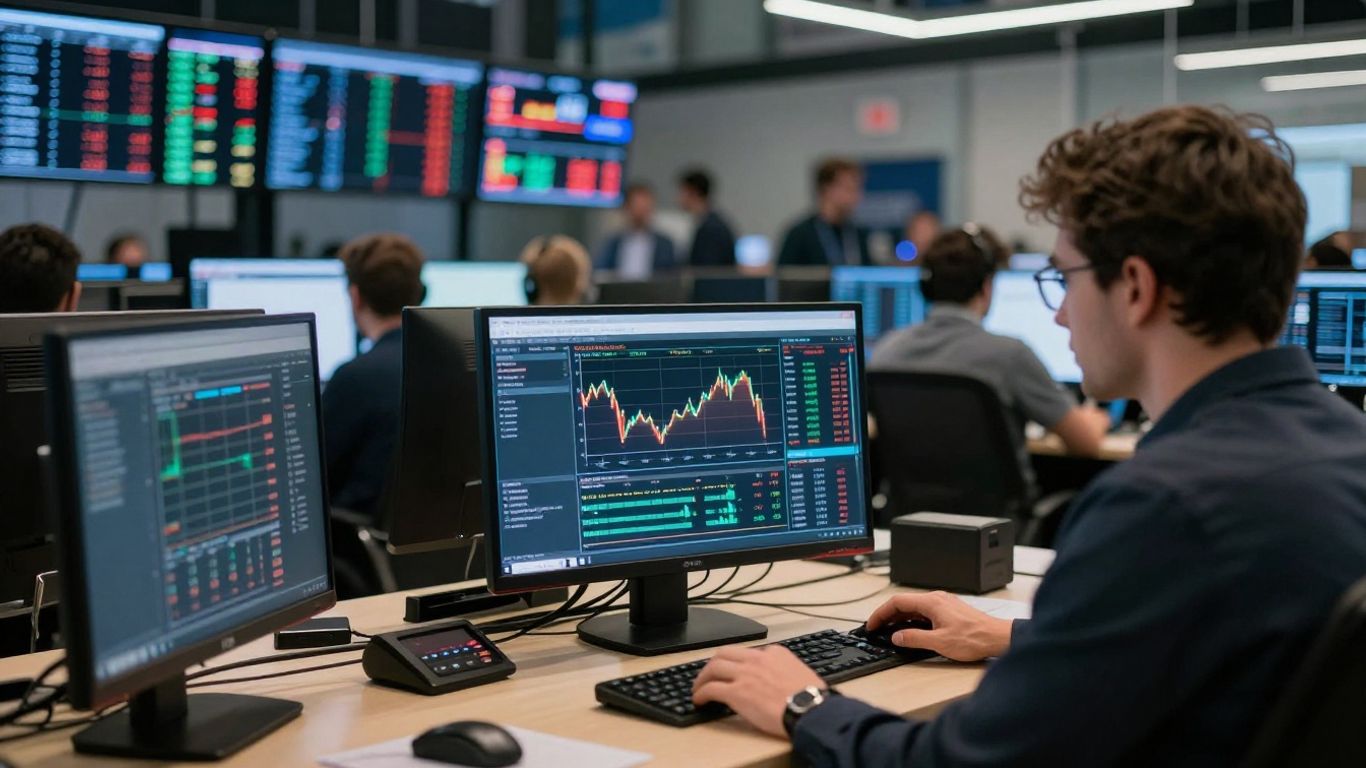
When you’re looking at stocks, the price really boils down to what’s happening with the company itself and the industry it’s in. Think about a company’s earnings reports – did they make more money than expected? Or less? That’s a big one. Also, how much debt does the company have? Are they growing? Beyond the company, you’ve got to consider the whole sector. If a new technology comes out that disrupts an entire industry, like renewable energy impacting oil companies, that’s going to move stock prices across the board. News reports about a specific company or its industry can cause prices to jump or fall pretty quickly. It’s like trying to figure out if a particular restaurant is going to be popular based on its menu, its location, and what people are saying about it.
Geopolitical Events and Central Bank Policies in Forex
Forex trading is a whole different ballgame. Since you’re dealing with currencies, you’re looking at what’s happening in entire countries. Big political events, like elections or major policy changes, can really shake things up. And then there are the central banks. They have a huge say in how strong or weak a currency is. For instance, if a central bank decides to raise interest rates, that usually makes the currency more attractive to foreign investors, pushing its value up. On the flip side, lowering rates can weaken the currency. It’s a constant dance between different countries’ economic policies. Sometimes, central banks might even step in directly to influence their currency’s value, which can cause quick price swings. The global currency outlook for the new year suggests these interventions could significantly impact currency values and international investment flows.
The Interplay of Interest Rates and Inflation on Both Markets
Interest rates and inflation are like the background music for both stock and forex markets, but they play different tunes for each. For forex, interest rate decisions are a direct driver. Higher rates in a country generally attract more money, strengthening its currency. Inflation is also key; if inflation is high, a central bank might raise rates to cool things down, which then affects the currency. It’s a bit of a chain reaction. In the stock market, interest rates affect companies differently. When rates go up, borrowing becomes more expensive for businesses, which can slow down their growth and potentially lower stock prices. Lower rates can make it cheaper for companies to borrow, potentially boosting their stock values. Inflation can also impact company profits and consumer spending, indirectly affecting stock prices. So, while both markets feel the heat from interest rates and inflation, the way they react is quite distinct.
Trading Strategies and Holding Periods
When you’re looking at trading forex versus stocks, the way you approach your trades and how long you plan to hold onto them can be pretty different. It really boils down to the nature of each market and what you’re trying to get out of it.
Short-Term Forex Strategies: Day Trading and Scalping
Forex trading often lends itself to shorter timeframes. Many traders focus on capturing small price movements that happen throughout the day. This is where strategies like day trading and scalping come into play. Day traders aim to close all their positions before the trading day ends, avoiding overnight risks. Scalpers, on the other hand, try to make many trades in a single day, holding positions for just a few seconds or minutes to grab tiny profits. These approaches rely heavily on technical analysis and quick decision-making. You can discover some of the top Forex trading strategies that are proven effective in 2026.
Long-Term Stock Investment Approaches
Stocks, however, are frequently viewed through a longer-term lens. Investors might buy shares of a company they believe has solid prospects for growth over months or even years. This approach often involves looking at a company’s financial health, its industry, and overall economic conditions. It’s less about catching tiny daily fluctuations and more about participating in the company’s potential long-term appreciation. Some investors also focus on dividend-paying stocks, which can provide a regular income stream.
Dividend Earnings and Overnight Interest Considerations
One key difference pops up when you think about holding positions overnight. In the forex market, holding a currency pair overnight can mean you either earn or pay interest, depending on the interest rates of the two currencies involved. This is known as the rollover or swap rate. For stocks, you don’t typically earn interest on shares you hold. Instead, you might receive dividends if the company decides to distribute profits to its shareholders. This can be a significant factor for investors, especially those focused on income generation.
Here’s a quick look at how holding periods and income differ:
| Feature | Forex Trading | Stock Trading |
|---|---|---|
| Typical Holding | Short to medium-term (minutes to weeks) | Medium to long-term (months to years) |
| Overnight Income | Earn or pay interest (rollover/swap) | May receive dividends (company dependent) |
| Primary Focus | Price fluctuations, interest rate differentials | Company growth, dividends, industry trends |
The choice between short-term forex plays and long-term stock investments often comes down to your personal trading style, how much time you can dedicate, and your comfort level with different types of market risk. It’s not a one-size-fits-all situation, and what works for one person might not be the best fit for another.
Risk and Volatility in Forex vs Stocks
When you’re trading, understanding how prices can swing is a big deal. Both forex and stocks have their own ways of being unpredictable, and knowing this helps you manage your money better. Volatility is basically how much and how fast prices change. Think of it like a roller coaster; some rides are smoother, while others have sharp drops and climbs. The forex market is known for its fast-paced action. Because currencies are traded all over the world, 24 hours a day, five days a week, news can hit and prices can move pretty quickly. Major economic announcements, like interest rate changes from big central banks, or even unexpected political events, can cause currency values to jump or fall suddenly. This high level of activity means there’s a lot of potential for quick gains, but also for quick losses.
Stocks, on the other hand, often feel a bit more stable day-to-day, especially for big, well-known companies. Their prices are more tied to how a specific company is doing – think earnings reports, new products, or industry news. However, stocks aren’t immune to big swings. A major company scandal, a sudden shift in an entire industry, or even broad economic worries can cause stock prices to drop sharply. We’ve seen markets experience what are sometimes called ‘gaps,’ where a stock’s price jumps or falls significantly between one day’s closing price and the next day’s opening. This often happens when important news breaks outside of regular trading hours. These gaps can be a surprise and can lead to unexpected outcomes for your trades.
Here’s a quick look at how volatility can differ:
- Forex: Generally higher volatility due to global 24/5 trading and influence from many macroeconomic factors.
- Stocks: Volatility can vary greatly. Large-cap stocks might be more stable, while smaller or more speculative stocks can be very volatile. Major news events can cause significant price swings.
The sheer volume of money moving through the forex market daily means that even small shifts in sentiment or news can trigger larger price movements compared to individual stocks. However, the stock market can experience concentrated volatility when specific companies or sectors face significant challenges or opportunities.
When it comes to risk, leverage plays a huge role, especially in forex. Leverage lets you control a larger amount of money with a smaller deposit. This can magnify your profits if the market moves in your favor. But, and this is a big ‘but,’ it also magnifies your losses if the market moves against you. It’s like using a powerful tool – it can be very effective, but you need to know exactly what you’re doing to avoid accidents. Stock trading can also involve leverage, but it’s often more common and accessible in forex trading. Understanding how leverage works and using it cautiously is key to managing risk in either market. You can find more information on managing risk in the forex market.
Market crashes and sudden drops, sometimes called ‘flash crashes,’ can happen in both markets. These are often caused by a sudden lack of buyers or sellers, or by major, unexpected events. While less common in forex than in stocks, they can still occur, especially after weekends or during periods of high uncertainty. Being aware of these possibilities and having a plan in place, like setting stop-loss orders, can help protect your capital when the unexpected happens.
Choosing Between Forex and Stock Trading
So, you’re standing at a crossroads, trying to figure out if forex or stocks are the right path for your trading journey. It’s a big decision, and honestly, there’s no single ‘better’ option. It really boils down to what kind of trader you are and what you’re hoping to achieve. Let’s break down some of the key things to consider.
Assessing Your Trading Style and Time Commitment
Think about how you like to trade. Are you someone who wants to be in and out of the market quickly, looking for smaller, more frequent wins? Or do you prefer to do your homework on a company, buy its shares, and hold on for the long haul, maybe collecting dividends along the way? Forex markets are open 24/5, which is a huge deal if you have a day job or other commitments. This continuous trading window in forex offers greater flexibility for traders. Stock markets, on the other hand, have set hours, usually tied to the exchange’s operating times. While some brokers offer extended hours, liquidity can be thin. This means you need to be available during specific times to trade stocks effectively.
Here’s a quick look at how trading styles often align:
- Forex: Often suits day traders and scalpers who aim to profit from small price swings throughout the day and night. The high liquidity in major currency pairs makes quick entries and exits possible.
- Stocks: More commonly associated with long-term investors who focus on company growth, earnings, and dividends. However, active traders also operate in stocks, often focusing on specific sectors or news events.
Risk Tolerance and Investment Goals
Your comfort level with risk is a massive factor. Forex trading, especially with the higher leverage often available, can amplify both gains and losses significantly. This means you could potentially make a lot of money quickly, but you could also lose your investment just as fast. Stocks, while also carrying risk, can sometimes feel more tangible. You’re investing in a piece of a company. The risk is often tied to the company’s performance, industry trends, and the overall economy. However, individual stocks can be very volatile, and market crashes can hit equities hard.
Consider these points:
- High Risk Tolerance: If you’re comfortable with the possibility of rapid, substantial losses in exchange for potentially rapid, substantial gains, forex might appeal. The use of leverage is a big part of this.
- Moderate to Lower Risk Tolerance: If you prefer a more measured approach, focusing on the underlying value of assets and potentially accepting slower growth for reduced volatility, stocks might be a better fit.
- Investment Goals: Are you saving for retirement, looking for income, or aiming for quick profits? Long-term stock investing is often geared towards wealth accumulation over years, while forex trading is frequently used for shorter-term profit generation.
The decision between forex and stocks isn’t just about which market moves more. It’s about aligning the market’s characteristics with your personal financial objectives and how much uncertainty you can handle without losing sleep.
The Appeal of High Liquidity in Forex Trading
One of the biggest draws of the forex market is its sheer size and liquidity. We’re talking about the largest financial market in the world, with trillions of dollars changing hands daily. This means that for major currency pairs, you can usually get in and out of trades very quickly without drastically affecting the price. This high liquidity supports tighter spreads, which can be a big advantage, especially for short-term traders. While stocks, particularly large-cap ones, can also be quite liquid, the forex market generally offers a deeper pool of buyers and sellers around the clock. This constant activity makes it easier to execute trades at your desired price, reducing the chance of significant slippage, especially during normal market hours. If fast execution and minimal price impact are high on your list, forex trading has a strong case.
Synergies and Diversification Opportunities
It might seem like forex and stock trading are completely separate worlds, but they actually share a lot of common ground. Understanding these connections can help you build a more robust trading plan. Both markets rely heavily on analysis, whether it’s looking at economic data or chart patterns. This means skills you develop in one area can often be applied to the other.
Shared Analytical Tools: Fundamental and Technical Analysis
Whether you’re watching currency pairs or company shares, the way you analyze the market often looks similar. Technical analysis, for instance, uses charts and indicators to spot trends and potential price moves. You’ll find patterns like support and resistance levels, moving averages, and candlestick formations are useful across both forex and stocks. Similarly, fundamental analysis plays a big role. For forex, this means keeping an eye on interest rates, inflation, and political stability in different countries. With stocks, it’s about a company’s financial health, industry trends, and overall economic conditions. Learning to read these signals in one market can give you a head start in the other.
Utilizing Derivatives for Both Markets
Derivatives are financial contracts whose value comes from an underlying asset. Think of Contracts for Difference (CFDs), for example. You can trade CFDs on forex pairs, allowing you to speculate on currency movements without actually owning the currencies. The same applies to stocks; you can trade stock CFDs. This gives you flexibility. You can potentially profit from price increases (going long) or decreases (going short). This approach is common in both markets, offering a way to get exposure to price action without necessarily buying the physical asset. It’s a way to access different markets with a single type of instrument, which can simplify your trading setup.
Hedging Strategies Across Forex and Stocks
Sometimes, you might want to protect your existing investments from unexpected moves. This is where hedging comes in. Imagine you hold a significant position in a particular stock. If you’re worried about the currency it’s traded in weakening, you could potentially use forex trading to offset that risk. For example, if you own US stocks and are concerned about the US dollar weakening, you might consider taking a short position on a USD currency pair. This way, if the dollar falls, your stock investment might lose value, but your forex trade could gain, balancing things out. It’s a way to manage risk across different asset classes. Some investors look for specific companies that might perform well even in uncertain times, like those on Stephens’ Best Ideas List.
Diversifying your investments across both forex and stocks, and using tools like derivatives and hedging, can help spread out risk. It’s not about putting all your eggs in one basket. Instead, it’s about creating a more balanced approach to the financial markets, where different parts of your portfolio can potentially perform well under various conditions.
Wrapping It Up
So, after looking at all this, it’s pretty clear that both forex and stocks have their own thing going on. Forex is this massive, always-on market, great if you like fast action and watching global news. Stocks, on the other hand, are more about individual companies, and you can take your time with them, maybe even hold on for years. Neither one is really ‘better’ than the other; it just depends on what you’re looking for. Do you want to jump in and out quickly, or are you more into researching companies and watching them grow? Think about your own style, how much time you have, and what kind of risks you’re okay with. You can even trade both if you want to spread things out. The main thing is to know what you’re getting into and manage your money carefully, no matter which market you choose.
Frequently Asked Questions
What’s the main difference between trading forex and stocks?
Think of forex trading like exchanging money between countries. You’re buying one currency while selling another, like the US dollar for the Euro. Stock trading is like owning a tiny piece of a company, such as Apple or Google. You buy shares hoping the company does well and its stock price goes up.
When can I trade forex and stocks?
The forex market is open almost all the time, 24 hours a day, five days a week, because the world is always trading money. Stock markets, however, are only open during specific business hours, like from 9:30 AM to 4 PM on weekdays, depending on the stock exchange.
Which market is bigger, forex or stocks?
The forex market is much, much bigger! Trillions of dollars are traded every single day in forex, making it the largest financial market globally. The stock market is also huge, but its daily trading volume is significantly smaller compared to forex.
What makes prices change in forex and stocks?
For stocks, prices often change based on how well a company is doing, like its profits, or news about its industry. For forex, prices are more affected by big global events, what countries’ governments are doing, and their economic health, like inflation or interest rates.
Is one market riskier than the other?
Both markets have risks, but forex is often seen as more unpredictable. It’s known for big, fast price swings (volatility) and is frequently traded using borrowed money (leverage), which can boost your wins but also your losses. Stocks can also be volatile, especially smaller companies, but generally, they might feel a bit more stable for beginners.
Can I trade both forex and stocks?
Absolutely! Many traders do trade both. Some might use forex for quick trades because it’s always open, and stocks for longer-term investments, hoping for steady growth. Trading both can also help spread out your risk, so you’re not putting all your eggs in one basket.