In today’s digital asset ecosystem, the Philippines has transitioned from a support hub to a Strategic Security Perimeter. By merging BSP-regulated compliance frameworks with “Agentic AI” forensic oversight, specialized Philippine fintech BPOs provide the high-security operational engine required for global crypto exchanges to maintain 99.9% uptime and regulatory resilience.

Strategic Intelligence Briefing
- The Intelligence Pivot: Leading trading platforms now leverage Philippine-based “Risk Architects” to counteract Agentic AI fraud—scams currently 4.5x more profitable for criminals than legacy methods due to autonomous social engineering.
- Regulatory Compliance Moat: Philippine operations align with BSP Memorandum M-2026-003, mandating real-time “Travel Rule” orchestration and enhanced due diligence for all cross-border VASP transfers.
- Web3-Native Forensics: Specialists in Manila provide “on-chain” triage, identifying “peeling chains” and obfuscated laundering clusters before they settle on the ledger.
- Operational Resilience: Manila’s specialized crypto hubs are designed for 24/7/365 uptime, matching the “never-sleep” nature of global blockchain markets and high-volatility trading cycles.
- Zero-Trust Infrastructure: Elite partners utilize ephemeral virtual desktops and biometric-gated clean rooms to eliminate the social engineering risks inherent in decentralized asset management.
The Volatility Friction: Closing the Support-Trust Gap
The global cryptocurrency ecosystem has reached a stage of institutional maturity where “software-only” security is a relic of the past. As trading platforms scale toward their next 100 million users, they are hitting an Operational Ceiling. Automated systems are increasingly failing to detect the nuanced, human-centric fraud patterns that INTERPOL and the FATF recently identified as the centerpiece of modern “polycriminality.” This friction has created a “Support-Trust Gap”—the space where a 15-minute delay in a wallet synchronization or a failed AML flag can lead to systemic brand erosion and catastrophic regulatory fines.
Expert Insight: “In the 2026 landscape, the primary risk for a crypto exchange isn’t a market dip—it’s a trust breach,” notes John Maczynski, CEO of PITON-Global. “We are moving away from simple outsourcing and toward ‘Sovereign Operational Extensions.’ By housing core risk and forensic functions in the Philippines, US exchanges aren’t just cutting costs; they are building a human firewall that is as decentralized and resilient as the blockchains they support.”
To close this gap, the world’s leading exchanges have relocated their high-stakes “engine rooms” to the Philippines. This move is no longer about labor arbitrage; it is about Intelligence Arbitrage. The Philippines provides a rare concentration of tech-literate professionals who view Web3 as a primary language. These are not call center agents; they are Digital Forensics Specialists who manage the complex intersection of decentralized finance (DeFi), Layer-2 scaling, and institutional-grade custody. By partnering with the elite Top 1% of the BPO market through advisory firms like PITON-Global, crypto exchanges are embedding a “Human-in-the-Loop” (HITL) firewall into their core architecture.
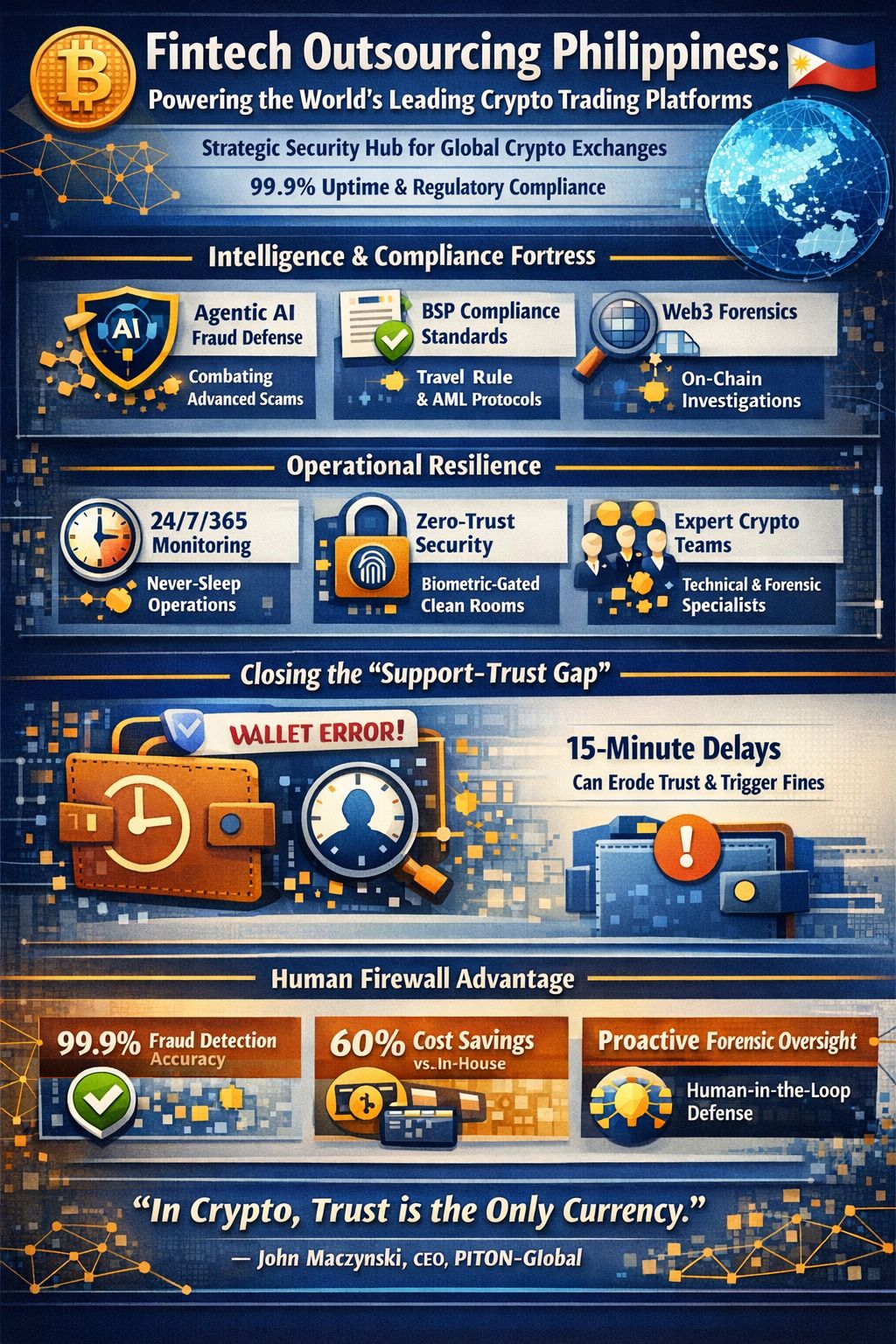
Table 1: Operational Efficiency Benchmarks (2026/27 Projections)
| Metric | In-House US Operations | Specialized Philippines BPO | Strategic Impact |
| Hourly Rate (Expert Level) | $30 – $60+ | $14 – $20 | 50-70% OPEX Reduction |
| KYC/AML Processing Speed | 4 – 12 Hours | < 60 Minutes (24/7) | Instantaneous Onboarding |
| Fraud Detection Accuracy | 90% (Tool Dependent) | 99.9% (Forensic HITL) | Lower Insurance Premiums |
| Web3 Tech Proficiency | Scarce / Expensive | High Density / Native | Reduced Engineering Load |
| Regulatory Agility | Reactive | Proactive (RegTech Sync) | Audit-Ready 24/7 |
The Forensic Shift in Digital Asset Oversight
As we navigate the current regulatory landscape, the most significant value for crypto exchanges lies in the transition from reactive to Proactive Forensic Oversight. While automated KYC tools are standard, they are increasingly vulnerable to sophisticated deepfake threats and synthetic identity generation. The Philippine advantage lies in a specialized model where analysts perform real-time on-chain transaction tracing.
Advanced AML & Transaction Forensics
Unlike legacy financial services, crypto requires a granular understanding of On-Chain Behavioral Tracing. Philippine analysts serve as Audit Trail Guardians, providing:
- Suspicious Activity Reporting (SAR): Manual forensic review of “on-chain” anomalies—such as peeling chains or high-frequency hopping—that automated bots frequently misclassify as legitimate high-frequency trading.
- UBO Mapping & Cluster Analysis: Complex entity resolution for institutional crypto accounts, identifying ultimate beneficial owners across obfuscated “shell-in-shell” laundering clusters.
- Sanctions & “Dusting” Defense: 24/7 real-time monitoring against global watchlists (OFAC, UN, EU) to prevent illicit actor penetration and managing the fallout of unsolicited “dusting” attacks.
The Web3 “Support-as-Code” Evolution
Today’s crypto stack is no longer just a user interface; it is an interconnected web of APIs, smart contracts, and decentralized protocols. Specialized Manila hubs provide deep technical assistance that bridges the gap between customer service and engineering. Support specialists in these elite hubs are capable of resolving Level 2 and Level 3 technical issues—such as troubleshooting failed gas-fee optimizations on a Layer-2 network (Optimism/Arbitrum) or investigating “stalled” smart contract events—that previously required expensive onshore engineering hours.
Expert Insight: “The complexity of Layer-2 scaling and cross-chain bridges has made standard customer support obsolete,” explains Ralf Ellspermann, CSO of PITON-Global and an authority on financial technology outsourcing to the Philippines. “We are now implementing a ‘Support-as-Code’ philosophy in Manila. Our partners’ teams aren’t just reading scripts; they are querying smart contracts and auditing API latency in real-time. This level of technical intermediary work is what allows global exchanges to scale their user base without ballooning their domestic engineering budgets.”
Table 2: Risk Management & Compliance Frameworks
| Risk Category | Mitigation Strategy | Compliance Standard |
| Identity Theft | Real-time Biometric & Liveness Audits | NIST 800-63 / FIDO2 |
| Data Privacy | Ephemeral VDI & PII Masking | GDPR / Data Privacy Act 2012 |
| Asset Security | Multi-Sig Approval Workflows | SOC 2 Type II / ISO 27001 |
| Transaction Risk | Real-time On-Chain Tracing | BSP M-2026-003 / FATF R.16 |
| Social Engineering | Zero-Trust Workstations | PCI-DSS 4.0 |
Agentic AI: The New Frontier of Crypto Fraud Defense
The defining threat of 2026 is Agentic AI fraud. Criminal organizations now deploy autonomous AI agents that can “socially engineer” their way through automated voice and chat support systems. They can mimic a user’s voice, writing style, and even bypass traditional 2FA through sophisticated session hijacking.
To counter this, specialized Philippine BPOs have deployed “Agentic Defense” squads. These are analysts trained to use their own AI co-pilots to detect “machine-to-machine” interaction patterns that are invisible to the human eye but signal a non-human attacker. By monitoring for micro-delays in response times and non-human linguistic markers, these teams provide the only viable defense against the next generation of automated scams.
Table 3: The Crypto BPO Selection Matrix
| Selection Factor | Generalist BPO (The “Many”) | Specialized Fintech BPO (The “Top 1%”) |
| Talent Pool | General Customer Service | Computer Science / Finance Grads |
| Tech Stack | Basic CRM | Blockchain Analytics & AI-Defense |
| Security Certification | Basic ISO | SOC2, PCI-DSS 4.0, BSP Registered |
| Support Tiers | Level 1 Only | Level 1, 2, and 3 (Technical) |
| Strategic Partnership | Vendor Relationship | Institutional Extension |
Expert FAQ: High-Stakes Crypto Operations
1. How do Philippine teams specifically counter “Deepfake” identity fraud? “We’ve moved beyond static rules. Our BPO partners use ‘Agentic Defense’—specialized analysts who leverage AI co-pilots to simulate fraud attacks and identify vulnerabilities in the onboarding flow before criminals do,” says Maczynski. “The Philippines provides the human layer of certainty that allows automated exchanges to operate with institutional-grade integrity.”
2. What is the “Intelligence Arbitrage” gain for a global exchange? “The gain is 24/7 forensic readiness. You aren’t just saving 60% on costs; you are gaining a workforce that understands ISO 20022 and PCI-DSS 4.0 as deeply as they understand a MetaMask integration,” explains Ellspermann. “This is why the Philippines remains the gold standard for global crypto support.”
3. Is it possible to maintain “Clean-Room” standards in a remote environment? No. For the world’s leading exchanges, we only recommend “On-Premise” high-security hubs in the Philippines. These facilities utilize physical biometric access, no-phone zones, and secure VDI (Virtual Desktop Infrastructure) to ensure that the security perimeter is absolute and audit-ready for regulators.
4. How does PITON-Global define the “Top 1%” of BPOs for this sector? Our audit process is exhaustive. We look for firms with specific experience in blockchain transaction monitoring, ISO 27001 certifications, and a recruitment pipeline from the Philippines’ top technical universities. Only a fractional percentage of the 1,200+ BPOs operating in the country meet these institutional-grade requirements.
5. How are these teams preparing for the “Quantum Threat” to encryption? Elite Philippine providers are already integrating quantum-resistant encryption protocols within their VDI environments. While the threat is nascent, the “Top 1%” approach requires planning for the 2030 horizon today.
Final Thought: “In crypto, trust is the only currency that doesn’t devalue. The Philippines provides the human layer of certainty that allows automated exchanges to grow without compromising their regulatory integrity or user security,” concludes Maczynski.

Peyman Khosravani is a global blockchain and digital transformation expert with a passion for marketing, futuristic ideas, analytics insights, startup businesses, and effective communications. He has extensive experience in blockchain and DeFi projects and is committed to using technology to bring justice and fairness to society and promote freedom. Peyman has worked with international organizations to improve digital transformation strategies and data-gathering strategies that help identify customer touchpoints and sources of data that tell the story of what is happening. With his expertise in blockchain, digital transformation, marketing, analytics insights, startup businesses, and effective communications, Peyman is dedicated to helping businesses succeed in the digital age. He believes that technology can be used as a tool for positive change in the world.