Finding the expert advisor best for your trading strategy in 2026 can feel like a big task. There are so many options out there, and they all promise the moon. But really, it’s about matching the tool to how you like to trade. Think of it like picking the right wrench for a specific bolt. You wouldn’t use a pipe wrench on a tiny screw, right? Same idea here. We’ll look at some popular choices and different types of EAs to help you figure out what might work for you. It’s not about finding a magic bullet, but a solid partner for your trading.
Key Takeaways
- Forex Fury is a flexible EA good for beginners and conservative traders, handling scalping and trend-following across various markets.
- Forex Diamond uses a mix of strategies, fitting experienced traders who want to adjust their approach.
- Flex EA is known for its adaptability, letting you customize many parts of its trading logic.
- Understanding different EA types like trend-following, scalping, grid, and Martingale is key to finding one that fits your risk tolerance and market view.
- Always backtest and forward test any EA on a demo account before using real money to make sure it works with your broker and in live conditions.
1. Forex Fury
Forex Fury is a pretty popular choice for traders looking for an automated system. It’s known for being relatively straightforward to set up, which is a big plus if you’re not super tech-savvy. The system is designed to do high-frequency scalping but also incorporates trend-following techniques. This combo means it can work across different types of markets, not just the super fast ones. It’s compatible with both MT4 and MT5, which covers most traders out there.
One of the main selling points is its claim of verified results. You can often find links to independent tracking sites like Myfxbook, which show its performance over time. When looking at these results, it’s smart to check out how long the track record is, what the equity swings look like, and the maximum drawdown. Don’t just focus on the win rate; that can be misleading sometimes.
Forex Fury offers different risk modes – low, medium, and high. This lets you adjust how aggressive you want the EA to be. It also supports trading on various assets, not just forex pairs, but also some indices and cryptocurrencies. This multi-asset capability can be appealing if you want to diversify your automated trading.
Here’s a quick look at what to consider:
- Verified Performance: Always check independent results. Look for consistent performance over a decent period.
- Risk Settings: Understand the low, medium, and high risk modes and how they affect potential drawdowns.
- Compatibility: Ensure it works with your broker and trading platform (MT4/MT5).
- Updates: The vendor usually offers lifetime updates, which is good for keeping the EA current with market changes.
When you’re checking out Forex Fury, or any EA really, the best approach is to test it thoroughly on a demo account first. See how it handles different market conditions, news events, and broker spreads. Only after you’re comfortable with its performance on demo should you consider moving to a live account, and even then, start with a small amount of capital. This cautious approach helps protect your investment.
They offer different license packages, usually based on the number of live accounts you can use. The Gold package typically allows one live account, while the Diamond package might allow two. Remember to check the current pricing and what’s included, as these details can change. It’s a solid option for beginners and those who prefer a more conservative approach to automated trading, but like anything in trading, do your homework.
2. Forex Diamond
Forex Diamond is an interesting EA because it doesn’t just stick to one way of trading. It actually bundles three different systems into one package: one that follows trends and waits for a retrace, another that goes against the trend, and a scalping mode for quick trades. This means it can try to adapt to different market conditions, which is pretty neat.
The vendor claims it has a high recovery factor and includes features like drawdown protection and guards against bad slippage and wide spreads. It also supports one live account and several demo accounts, and you can set it to only trade long or short.
Here’s a quick look at what it offers:
- Multi-Strategy Approach: Combines trend-following, counter-trend, and scalping modules.
- Adaptability: Designed to work in various market environments.
- Risk Management: Includes features for drawdown protection and spread/slippage control.
- Customization: Options for long-only or short-only trading.
When looking at Forex Diamond, it’s smart to check out any independent results, like Myfxbook, to see how long the trading history is and what the actual drawdowns look like, not just the win rate. You can also toggle the different strategies on or off, so you can try to match its settings to your broker’s spreads and the trading sessions you prefer. The vendor mentions lifetime updates and quick support, but it’s always a good idea to confirm their current policy before you buy.
Remember that claims like long backtests or high recovery factors are a good starting point, but they aren’t proof that it will work for you. Always test it yourself on a demo account first.
3. Flex EA
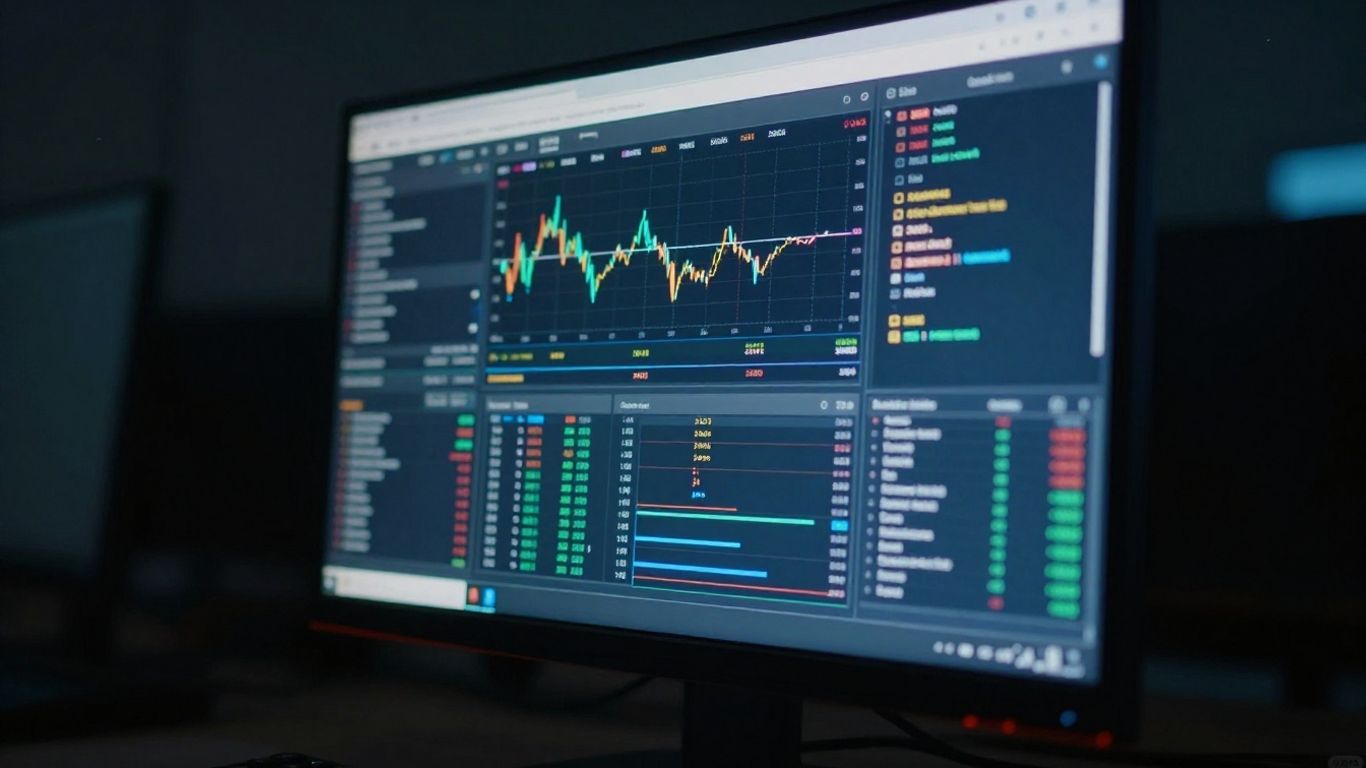
Flex EA is another popular choice for traders looking for an automated solution on both MT4 and MT5 platforms. What sets it apart is its "virtual trades" engine. Basically, it scans the market and only places real trades when it finds what it considers ideal entry points. This approach aims to filter out a lot of noise and only act on high-probability setups.
You get a bunch of different strategies built-in, like Global DE TDI Slope and Candlesticks v6, and you can mix and match them. It’s pretty modular, which is nice because you can turn different parts on or off. This lets you tailor it to your specific trading style and risk tolerance. The ability to customize strategy blocks for entry, exit, and money management is a big plus.
When you’re setting it up, pay attention to parameter sensitivity. It’s easy to over-optimize settings to historical data, which then falls apart in live trading. Using constrained parameter ranges and walk-forward analysis can help make sure the settings are robust.
Here’s a quick look at what you might want to check:
- Strategy Variety: Does it offer enough different ways to trade that you can find something that fits your style?
- Customization: How much control do you really have over the settings, like stop-loss, take-profit, and entry filters?
- Backtesting & Forward Testing: Does the vendor provide good backtest data, and how easy is it for you to run your own forward tests on a demo account?
- Support & Updates: Are they actively updating the EA for current market conditions, and is their support team responsive?
Remember, even with advanced EAs like Flex EA, thorough testing on a demo account is non-negotiable. What looks good on paper or in a backtest might behave differently with your broker’s specific spreads and slippage. Always start small on a live account after you’re confident with demo results.
4. Trend-Following EAs
Trend-following Expert Advisors are built around the idea of catching and riding sustained market movements. Think of it like catching a wave; these EAs try to get in when a market starts moving strongly in one direction and stay in until that momentum starts to fade. They typically use indicators like moving averages, the Average Directional Index (ADX), or breakout patterns to spot these trends.
The core principle is to profit from the continuation of a trend, whether it’s up or down.
Here’s a quick look at how they generally operate:
- Trend Identification: The EA analyzes price action and indicator signals to determine the current market direction. This could involve checking if prices are consistently above or below a moving average, or if an indicator like ADX is showing strong directional force.
- Entry Signals: Once a trend is identified, the EA waits for specific entry conditions to be met. This might be a price crossover of moving averages, a breakout above resistance, or a specific indicator reading.
- Trade Management: After entering a trade, the EA will typically use a trailing stop loss to protect profits as the trend progresses. It aims to hold the position as long as the trend remains intact.
- Exit Signals: The EA exits the trade when indicators suggest the trend is weakening or reversing. This could be a moving average crossover in the opposite direction, or a divergence on an oscillator.
These EAs work best in markets that are trending clearly, meaning they have distinct up or down movements without too much sideways chop. They can struggle, however, when the market is ranging or moving erratically. A simple approach using just a few ETFs can help manage risk during these choppy periods, requiring only monthly adjustments. This makes them a good choice for traders who prefer a less hands-on approach to managing their automated systems, especially if they’re looking for a way to manage risk during uncertain times. You can find some strategies that focus on this approach for crisis protection.
While trend-following EAs can be very profitable during strong market moves, it’s important to remember they aren’t foolproof. They can get caught out by sudden reversals or choppy conditions where trends don’t establish themselves. Backtesting and forward testing are key to understanding how a specific EA will perform in different market environments before you commit real capital.
5. Scalping EAs
Scalping Expert Advisors are built for speed. They aim to grab small profits, like 5 to 15 pips, over and over again throughout the trading day. Think of it as picking up pennies in front of a steamroller – you have to be quick and precise. These EAs often make dozens, sometimes even hundreds, of trades daily.
The core idea behind scalping EAs is to capitalize on tiny price movements. This requires extremely fast trade execution and very tight spreads from your broker. If your connection is slow or your broker’s spreads widen, your profits can disappear before you even make them.
Here’s a quick rundown of what makes scalping EAs tick:
- Speed is King: They need to enter and exit trades in seconds, sometimes milliseconds. This means low latency is a must.
- Small, Frequent Wins: The goal isn’t to catch a big trend, but to accumulate many small gains.
- High Trade Volume: Expect a lot of activity. This can be good for consistent results but also means more potential for small losses to add up.
- Market Sensitivity: They perform best in highly liquid markets, like major currency pairs (EUR/USD, GBP/USD) during peak trading sessions when there’s plenty of price action.
Scalping EAs are not for the faint of heart or for those with a slow internet connection. They demand a trading environment that is optimized for speed and precision. If you’re looking for an EA that can execute trades around the clock without needing constant attention to market news, a scalping EA might fit, but only if you have the right setup.
When looking for a scalping EA, pay close attention to its backtesting results, especially the average trade length and the number of trades. Also, check independent reviews and verified track records. Since they rely so heavily on execution speed, testing one on a demo account with your specific broker is absolutely critical before you even think about using real money.
6. Grid EAs
Grid EAs are a bit of a unique beast in the automated trading world. Basically, they work by placing a series of buy and sell orders at set distances, both above and below the current market price. Think of it like setting up a net. As the price moves back and forth, which markets often do, the EA tries to catch profitable trades within that grid. The core idea is to profit from market oscillation rather than a strong directional move.
These EAs are often best suited for markets that are ranging or consolidating, meaning they aren’t making big, sustained moves in one direction. When the price bounces between support and resistance levels, a grid EA can potentially rack up a lot of small wins. However, this is also where the big risk lies. If the market decides to break out of its range and trend strongly, a grid EA can end up with a lot of open positions that are all losing money. This can lead to significant drawdowns, so managing the risk is super important.
Here’s a quick rundown of how they generally operate:
- Order Placement: Multiple pending orders (buys above, sells below) are set at fixed intervals.
- Trade Execution: As the price hits these levels, orders are triggered.
- Profit Taking: Often, each trade has its own take profit, or the grid EA might aim to close a set of trades for a net profit.
- Risk Management: This is key. Some grid systems have rules to close out losing trades or adjust the grid if the market moves too far against the positions.
When looking at grid EAs, you’ll want to pay attention to how they handle drawdowns and what their maximum lot progression looks like. Some popular options you might find include EAs like Waka Waka EA or others that are specifically designed for grid strategies. It’s not a strategy for everyone, and you really need to understand the potential downsides before you commit any capital.
Grid EAs can be quite effective in sideways markets, but they require careful monitoring. The potential for rapid equity growth is matched by the potential for rapid losses if a strong trend emerges. It’s a strategy that demands a good understanding of market behavior and a solid risk management plan in place.
7. Martingale EAs

Martingale Expert Advisors are built around a high-risk, high-reward trading approach. The core idea is simple: after a losing trade, you double your position size for the next trade. The goal is that a single win will not only recover all previous losses in that sequence but also generate a profit. It sounds good on paper, right? This strategy can lead to rapid account depletion if a losing streak occurs.
Martingale systems are known for their potential to recover quickly from small losses, but they come with a significant caveat. A series of consecutive losses, which can and does happen in trading, can exponentially increase your position size, leading to catastrophic losses. It’s a strategy that requires a deep understanding of the risks involved and a substantial capital buffer to withstand potential drawdowns.
Here’s a breakdown of how they generally operate:
- Initial Trade: You start with a base lot size.
- Loss: If the trade loses, the next trade’s lot size is doubled.
- Win: If the trade wins, you revert to the base lot size for the next trade.
- Consecutive Losses: Each loss doubles the size, increasing the potential recovery amount but also the risk.
While some traders might see the appeal in the potential for quick recovery, it’s vital to be aware of the dangers. Many traders have unfortunately blown their accounts using these systems. If you’re considering a Martingale EA, make sure you thoroughly test it on historical data and a demo account. Understanding the high risk of capital loss is paramount before even thinking about using real money.
Martingale EAs are not for the faint of heart. They require strict discipline and a clear understanding that while they might offer quick recovery, they also carry the potential for devastating losses. Always prioritize risk management and never risk more than you can afford to lose.
8. Breakout EAs
Breakout Expert Advisors are designed to jump into the market when price decisively moves beyond a defined level. Think of it like a dam breaking – the water rushes out, and these EAs aim to catch that surge. They typically watch for price to push through established support or resistance levels, or even previous day highs and lows. The idea is that once a barrier is broken, the price will continue moving in that direction for a while, giving the EA a chance to grab some decent pips.
These EAs are often best suited for markets that have been stuck in a tight range for a while. When that range finally breaks, it can signal the start of a new trend. However, they aren’t foolproof. The biggest headache with breakout EAs is the dreaded false breakout. This is when price briefly pokes its head beyond a level, triggering the EA to enter a trade, only for the price to quickly reverse and go back into the range. This can lead to a string of small losses if the EA doesn’t have good exit logic.
Here’s a quick rundown of what to look for:
- Entry Triggers: Does it wait for a confirmed breakout (e.g., price closing beyond the level) or jump in on the first sign of movement?
- Exit Strategy: How does it lock in profits or cut losses? Does it use trailing stops, fixed take-profits, or something else?
- False Breakout Filters: Does the EA have any built-in mechanisms to try and avoid getting caught by fakeouts?
- Market Conditions: Some breakout EAs perform better in volatile conditions, while others prefer calmer breakouts.
When considering a breakout EA, it’s super important to backtest it thoroughly. You want to see how it handles periods of consolidation versus strong trending moves. Pay close attention to the drawdown during false breakout scenarios, as this is where accounts can get hit hard.
9. Hedge EAs
Hedge EAs are a bit different from the usual trading bots. Instead of just looking for profit, they’re often built with risk management as a top priority, sometimes even using opposing trades to protect your account. Think of it like having a built-in insurance policy for your trades.
These EAs can work in a few ways. Some might open a counter-trade if a position starts losing too much, aiming to lock in a smaller loss or even break even. Others might use a basket of correlated currency pairs, opening trades that are designed to offset each other’s potential losses. It’s a strategy that can help smooth out the ride, especially in choppy markets.
Here’s a quick look at how they might operate:
- Opposing Trades: When a trade goes against you, the EA opens a new trade in the opposite direction. The goal isn’t necessarily to profit from this new trade, but to limit the damage on the original one.
- Correlation Hedging: This involves trading multiple currency pairs at once. If you’re long EUR/USD, you might also go short USD/CHF, as these pairs often move in opposite directions. The EA manages these positions together.
- Grid/Martingale Integration: Sometimes, hedging logic is combined with grid or martingale systems. This can be risky, as the hedging might not be enough to cover the increasing lot sizes if the market moves strongly against the entire grid.
The main idea behind a hedge EA is to reduce overall portfolio risk, not necessarily to maximize profits on every single trade.
While hedging can offer a layer of protection, it’s not a magic bullet. It can add complexity to your trading, and sometimes the cost of holding multiple offsetting positions can eat into profits. It’s also important to remember that hedging doesn’t eliminate risk entirely; it just changes its nature. You still need to understand the underlying strategy and the potential downsides.
10. Hybrid EAs
Hybrid Expert Advisors, or EAs, are the jack-of-all-trades in the automated trading world. They don’t stick to just one way of doing things. Instead, they cleverly mix and match different trading strategies to try and catch opportunities in various market conditions. Think of it like a chef who knows how to make Italian, Mexican, and Thai food – they can adapt their skills depending on what the customer wants or what ingredients are available.
These EAs are built to be flexible. They might use a trend-following component to catch bigger moves, then switch to a scalping module for quick profits when the market is choppy, or even incorporate elements of breakout strategies when key levels are being tested. The goal is to create a more robust system that isn’t easily tripped up by a single market behavior.
Here’s a look at how some common strategies might be combined:
- Trend + Scalp: Uses trend indicators to identify the general direction, then scalping logic to grab small profits within that trend.
- Breakout + Grid: Enters a trade on a breakout, then uses grid orders to manage the position if the price moves against it slightly.
- Indicator Filter + Price Action: Combines signals from technical indicators with direct price movement analysis for more confirmed entries.
The real strength of a hybrid EA lies in its adaptability, aiming to perform reasonably well across a wider spectrum of market environments than a single-strategy EA. However, this complexity can also be a double-edged sword. Designing and testing a hybrid EA requires a deep understanding of multiple trading styles and how they interact. It’s also more challenging to optimize, as you’re balancing parameters for several strategies at once. If not built carefully, a hybrid EA could end up being a master of none, performing poorly across the board.
When looking at hybrid EAs, pay close attention to the logic behind how it switches between strategies. Does it have clear rules for when to use each component? A well-designed hybrid EA will have a defined process for adapting, rather than just randomly applying different techniques. It’s about smart integration, not just throwing everything at the wall to see what sticks.
Wrapping It Up
So, picking the right Expert Advisor isn’t just about finding something that looks good on paper. It’s about matching a tool to how you actually trade. We’ve talked about how important testing is – really testing, not just looking at pretty charts. Remember to check how it handles different market swings, not just the smooth rides. And don’t forget about your broker’s setup, because that can make a big difference too. If you’re thinking about using an EA, take your time, do your homework, and start small. It’s better to be safe than sorry, especially when your money is on the line. Good luck out there.
Frequently Asked Questions
What exactly is an Expert Advisor (EA) in forex trading?
Think of an Expert Advisor, or EA, as a trading robot for your forex platform, like MetaTrader 4 or 5. It’s a computer program that follows a set of rules you give it to automatically make trades. It can spot chances, enter trades, and even exit them, all without you having to be glued to the screen. It’s like having a tireless assistant that never gets tired or emotional.
Why is it important to choose the right EA for my trading style?
Picking the right EA is super important because it needs to match how you like to trade. Some EAs are built for quick, small trades (scalping), while others are designed to catch bigger moves in a trend. If you use an EA that doesn’t fit your strategy, it might lose money or not perform well. It’s like trying to use a screwdriver to hammer a nail – it’s the wrong tool for the job.
What’s the difference between backtesting and forward testing an EA?
Backtesting is like looking at an EA’s report card from the past. You test it on historical data to see how it *would have* performed. Forward testing, on the other hand, is like giving it a practice exam in real-time, usually on a demo account. This shows how it handles current market conditions, including things like spreads and slippage, which backtesting can’t perfectly predict.
Can an EA completely replace a human trader?
While EAs can automate a lot of trading tasks, they can’t fully replace a human trader. EAs follow programmed rules strictly, which is great for discipline, but they can’t react to unexpected news events or understand major shifts in the market like a human can. You still need to oversee the EA, manage risk, and make sure it’s working correctly.
What are some common mistakes people make when choosing or using an EA?
A big mistake is believing in EAs that promise guaranteed riches without proof. Many traders also fail to test EAs properly on demo accounts before using real money. Another pitfall is not adjusting the EA’s settings to match current market conditions or their own risk tolerance. It’s also crucial to avoid EAs that use risky strategies like Martingale without fully understanding the dangers.
How does a VPS (Virtual Private Server) help when using an EA?
A VPS is like having a dedicated computer that runs 24/7 in a data center. When you use an EA, it needs to be running all the time to catch trades. A VPS ensures your EA stays connected to the market and your broker without interruption, even if your home computer turns off or your internet goes down. This is especially important for fast trading strategies like scalping.