If you’ve ever wondered how traders manage to buy and sell at lightning speed, it’s probably thanks to algo trading algorithms. These systems use computer code to make trading decisions, often much faster than any person could. For folks just starting out, it can seem a bit overwhelming, but learning the basics and taking it step by step really helps. This guide is here to break down how algo trading algorithms work, what you need to build your own, and how to keep improving as you go. Whether you’re curious or ready to dive in, let’s get started.
Key Takeaways
- Algo trading algorithms use computer programs to automate trading decisions and actions.
- Building a good algorithm starts with a clear strategy and reliable data sources.
- Testing your algorithm with past data (backtesting) helps spot problems before risking real money.
- Risk management is just as important as finding good trades—protecting your capital comes first.
- Staying updated and trying new tools or ideas is key for anyone who wants to keep improving.
Understanding The Core Of Algo Trading Algorithms
So, you’re looking to get into algo trading, huh? It sounds fancy, but at its heart, it’s really about using computers to make trades for you. Think of it like setting up a very specific set of instructions for your money to follow in the market. Instead of you sitting there, glued to the screen, waiting for the perfect moment, you write down the rules, and the computer does the heavy lifting. This is what we call algorithmic trading, or algo trading for short. It’s been around for a while, but it’s really taken off lately because computers are just so much faster and can look at way more information than we ever could.
Defining Algorithmic Trading
Basically, algorithmic trading is just using computer programs to carry out your trading orders. You tell the program what to do based on certain market conditions, and it goes and does it. This can be for stocks, currencies, commodities – pretty much anything you can trade. The main idea is to catch opportunities that might slip by if a human had to make the decision. It’s all about speed and consistency. You’re not trying to outsmart the market with gut feelings; you’re following a plan, precisely.
How Algo Trading Algorithms Function
How does it actually work? Well, you or a programmer creates a set of rules, an algorithm. This algorithm looks at market data – like prices and how much is being traded – and when certain conditions are met, it automatically places a buy or sell order. It’s like a super-fast, super-disciplined trader. These systems can process tons of data in the blink of an eye, making decisions based on what you programmed them to look for. It’s a way to automate financial decisions, and it’s becoming a big deal in the trading world.
Here’s a simplified look at the process:
- Data Input: The algorithm receives market data (prices, volume, etc.).
- Analysis: It checks this data against your predefined rules.
- Signal Generation: If the rules are met, it creates a buy or sell signal.
- Order Execution: The trade is automatically placed in the market.
- Risk Management: Built-in checks help limit potential losses.
The goal isn’t just to make trades faster, but to make more consistent trades based on a logical plan, removing emotional reactions that can often hurt performance.
Key Components Of Automated Trading Systems
To get an automated trading system up and running, you need a few main things. First off, you need good data. Without accurate and timely information, your algorithm is flying blind. This includes things like current prices and how much of something is being bought and sold. Then, you need the actual algorithm – the brain of the operation, which contains your trading strategy. You also need a way for the algorithm to connect to a broker and actually place trades. Finally, and this is super important, you need ways to manage risk, so one bad trade doesn’t wipe you out. It’s about building a reliable system that can handle the ups and downs of the market. You can explore different algorithmic trading strategies to see what fits your approach.
Developing Your Algo Trading Algorithms
So, you’ve got the basics of what algo trading is, and now you’re ready to actually build something. This is where the real fun, and maybe a bit of frustration, begins. Developing your own trading algorithms isn’t just about knowing how to code; it’s a mix of art, science, and a whole lot of testing. You need to come up with a plan, figure out how to translate that plan into something a computer can understand, and then make sure it actually works without losing all your money.
Strategy Development: The Art And Science
This is the absolute first step. What are you trying to achieve? Are you looking to catch quick price swings, or are you more interested in longer-term trends? Your strategy is your roadmap. It needs to be specific. Just saying ‘buy low, sell high’ isn’t going to cut it. You need concrete rules.
- Define your objective: What’s the goal? Profit? Hedging? What markets will you trade?
- Set your risk tolerance: How much are you willing to lose on any single trade or overall?
- Choose your trading style: Day trading, swing trading, or something else?
- Outline entry and exit points: Exactly when will the algorithm buy, and more importantly, when will it sell?
Developing a trading strategy is like planning a trip. You need to know your destination, how you’ll get there, and what you’ll do if you hit a roadblock. Without a clear plan, you’re just wandering around hoping for the best, which usually doesn’t end well in trading.
Leveraging Technical Indicators And Chart Patterns
Once you have a strategy idea, you need tools to help the algorithm spot opportunities. This is where technical indicators and chart patterns come in. Think of indicators as signals that tell you something about the market’s direction or strength. Chart patterns are visual cues on price charts that have historically suggested certain future movements.
Here are some common ones you might consider:
- Moving Averages (MA): Simple or exponential, these smooth out price data to show the average price over a period. Crossovers between different MAs can signal potential trend changes.
- Relative Strength Index (RSI): This momentum oscillator measures the speed and change of price movements. It helps identify if a stock is overbought or oversold.
- MACD (Moving Average Convergence Divergence): Another momentum indicator that shows the relationship between two moving averages of a security’s price. It’s used to spot changes in momentum.
- Chart Patterns: Things like ‘head and shoulders’ (often a reversal pattern) or ‘flags’ (often continuation patterns) can be programmed into an algorithm to look for.
| Indicator/Pattern | What it Measures | Common Use |
|---|---|---|
| Moving Average Crossover | Trend direction | Entry/Exit signals |
| RSI | Momentum | Overbought/Oversold identification |
| Head and Shoulders | Trend Reversal | Potential sell signal |
Integrating Statistical Models And Machine Learning
For those looking to go a bit deeper, statistical models and machine learning (ML) can add a powerful layer to your algorithms. These aren’t just about looking at simple price charts anymore.
- Statistical Models: You could use things like regression analysis to see how one asset’s price might be related to another, or to economic factors. Mean reversion strategies often rely on statistical models to find assets that have deviated too far from their average price.
- Machine Learning: This is where algorithms can actually learn from data. Instead of you explicitly telling it every single rule, an ML model can analyze vast amounts of historical data to find patterns you might miss. Techniques like neural networks or decision trees can be trained to predict price movements or optimize strategy parameters. This ability to learn and adapt is what makes ML so exciting for algo trading. It’s complex, sure, but the potential payoff is significant if you can get it right.
Essential Building Blocks For Algo Trading Algorithms

So, you’ve got a trading idea, maybe something you saw on a chart or read about in a financial report. That’s great! But turning that idea into a working algorithm means you need some solid foundations. Think of it like building a house; you can’t just start putting up walls. You need a strong base, and for algo trading, that base is built on good data and understanding what that data actually tells you.
Robust Data Collection For Informed Decisions
This is where everything starts. Without good data, your algorithm is basically flying blind. You need information that’s accurate and, ideally, comes in fast enough to be useful. What kind of data are we talking about?
- Market Prices: This is the most obvious one. You need to know what an asset is trading at, both right now and historically. This helps you spot trends or see if prices are behaving unusually.
- Trading Volumes: How many shares or contracts are changing hands? High volume often means a price move has more conviction behind it. Low volume? It might be less significant. It’s a good indicator of market interest.
- Order Book Data: This is a bit more advanced. It shows you all the buy and sell orders waiting at different price levels. It gives you a peek into the immediate supply and demand, which can help predict short-term price moves. It’s like seeing all the offers on the table before a negotiation.
Getting this data reliably is half the battle. You need systems in place that can gather and process it without much fuss. If your data feed is always breaking or giving you old information, your algorithm won’t be able to make smart choices.
Understanding Market Prices And Trading Volumes
Okay, so you’ve got the price and volume data. Now what? It’s not just about having the numbers; it’s about knowing what they mean. Prices move, and volumes fluctuate, and these movements are the language of the market. For instance, a sharp price increase on very low volume might not be as significant as the same price increase on massive volume. You’re looking for confirmation. Are buyers stepping in with conviction (high volume) when the price starts to climb? Or is it just a few small trades moving the needle? Understanding this relationship helps you filter out noise and focus on the signals that matter. It’s about seeing the story the numbers are telling, not just reading the numbers themselves. You can find some helpful tools for this kind of analysis in key tools for algorithmic trading.
Utilizing Order Book Data And Economic Indicators
Beyond just prices and volumes, there’s more intel to gather. Order book data, as mentioned, shows you the depth of the market – how many orders are stacked up at various price points. This can be super useful for understanding immediate buying or selling pressure. If there are a lot of sell orders just above the current price, that might act as resistance. Conversely, a wall of buy orders below could provide support. Then you have economic indicators. Things like interest rate decisions, inflation reports, or employment numbers can send big ripples through the markets. An algorithm needs to be aware of these potential market movers, even if its primary strategy doesn’t directly use them. They can create unexpected volatility or shift overall market sentiment, impacting even the most carefully crafted trading strategies. So, while your algorithm might be focused on price action, keeping an eye on the broader economic picture is smart practice.
Implementing And Refining Algo Trading Algorithms
So, you’ve got a trading idea, maybe even coded it up. Now what? This is where the rubber meets the road. You can’t just throw an algorithm at the market and hope for the best. We need to see if it actually works and then make it better. This part is all about testing and tweaking.
Backtesting Trading Strategies For Performance
Think of backtesting like a historical simulation. You take your algorithm and run it on past market data to see how it would have performed. It’s not a crystal ball, but it gives you a solid idea of whether your strategy has potential. You’re basically asking, ‘If I had used this strategy from, say, 2020 to 2023, what would have happened?’ This helps you catch obvious flaws before risking real money.
Here’s a quick look at what you’re trying to figure out:
- Profitability: Did it make money overall?
- Consistency: Were the profits steady, or was it a wild ride?
- Drawdowns: How much did it lose from its peak value during bad periods?
- Trade Frequency: How often did it actually trade?
Backtesting is a critical step, but remember it’s based on historical data. The market changes, and past performance doesn’t guarantee future results. It’s a tool to refine, not a promise of profit.
Key Metrics For Evaluating Algorithm Success
Just saying an algorithm made money isn’t enough. We need to look at specific numbers to really understand its performance. These metrics help you compare different strategies or different versions of the same strategy.
- Sharpe Ratio: This tells you how much return you got for the risk you took. A higher Sharpe Ratio is generally better.
- Maximum Drawdown: This is the biggest percentage loss from a peak to a trough. You want this number to be as small as possible.
- Win Rate: The percentage of trades that ended up being profitable. While important, a high win rate doesn’t always mean a profitable strategy if the losing trades are too big.
- Profit Factor: This is the total gross profit divided by the total gross loss. A profit factor above 1 means the strategy is profitable.
Execution Techniques For Optimal Trade Placement
How your algorithm actually enters and exits trades matters a lot. Even a great strategy can fall apart if the execution is poor. You need to think about how to get your orders into the market efficiently.
- Market Orders: These are fast but might not give you the best price, especially in fast-moving markets.
- Limit Orders: These let you set a specific price, but your order might not get filled if the market doesn’t reach that price.
- Stop Orders: These are used to limit losses or to enter a trade when a certain price level is breached. They can sometimes turn into market orders if the market moves quickly past your stop price.
Choosing the right execution method depends on your strategy’s goals and the market conditions. For instance, a high-frequency strategy might need very fast execution, while a slower strategy might prioritize getting a specific price.
Mastering Advanced Features Of Algo Trading Software
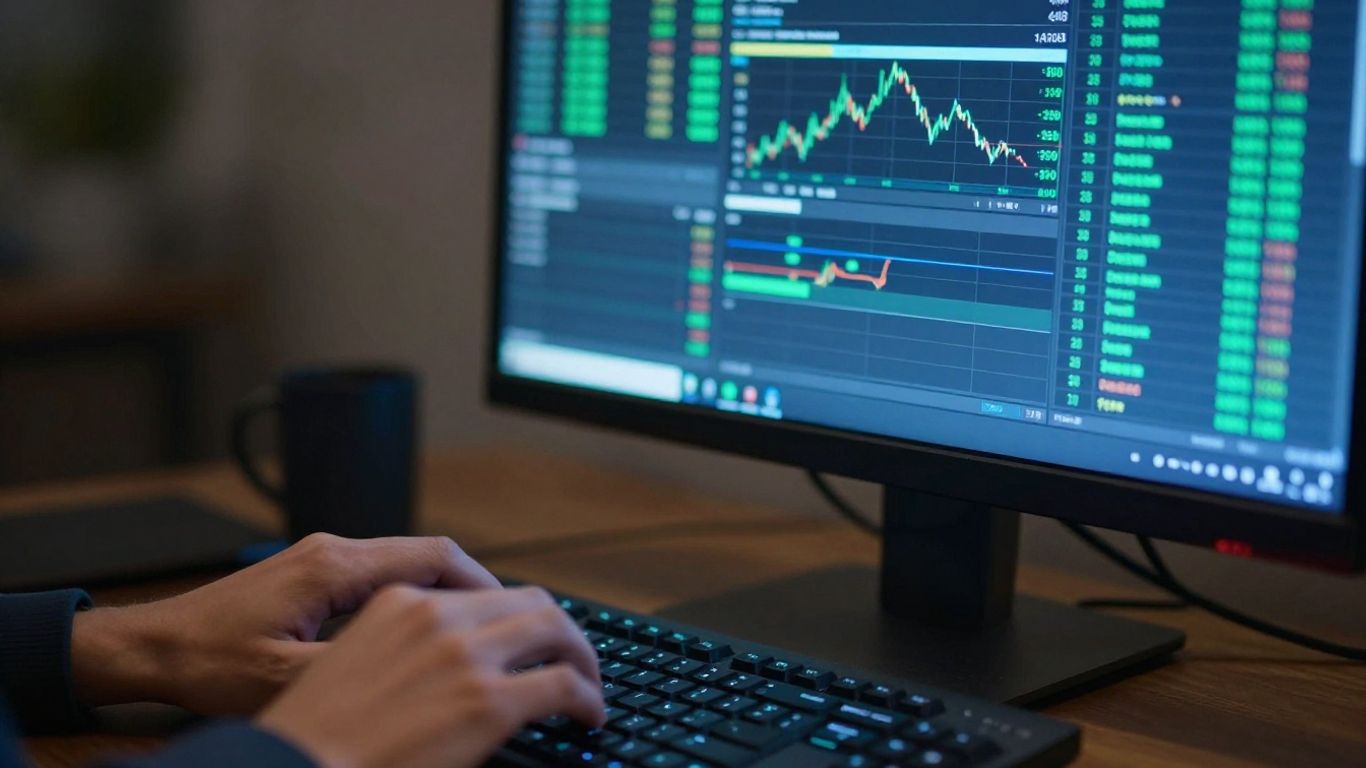
So, you’ve got your algorithmic trading software picked out, and you’re ready to move beyond the basics. That’s great! Now it’s time to really dig into what makes these platforms tick. Think of it like getting the keys to a sports car; you know how to drive it, but mastering the advanced features is what makes you a real driver.
Exploring Backtesting and Optimization Tools
Backtesting is your crystal ball, letting you see how a strategy would have performed on historical data. It’s not perfect, of course, but it’s super important for spotting flaws before you risk real money. Most software has built-in tools for this. You feed it your strategy rules and a chunk of past market data, and it spits out performance numbers. Optimization tools take it a step further. They’ll tweak the parameters of your strategy – like the length of a moving average or a specific threshold – to find the settings that historically gave the best results. It’s a bit like tuning an engine to get the most power.
Here’s a quick look at what you’re usually testing:
- Profit Factor: How much profit you made for every dollar lost.
- Max Drawdown: The biggest percentage drop from a peak in your equity curve.
- Win Rate: The percentage of trades that were profitable.
- Sharpe Ratio: A measure of risk-adjusted return.
Understanding Risk Management Settings
This is arguably the most critical part. No strategy wins 100% of the time, and you need to protect your capital. Good software will have robust risk management features. You can usually set things like:
- Stop-Loss Orders: Automatically exit a trade if it moves against you by a certain amount.
- Take-Profit Orders: Automatically exit a trade when it reaches a desired profit level.
- Position Sizing: How much capital you allocate to each trade, often based on your account size and risk tolerance.
- Daily Loss Limits: A hard stop that halts trading for the day if losses reach a predefined cap.
Proper risk management isn’t about avoiding losses entirely; it’s about controlling them so you can stay in the game long enough for your profitable trades to make a difference. It’s the safety net that keeps your trading journey going.
Harnessing Automated Trading Capabilities
This is where the magic happens – letting the software execute trades automatically based on your strategy. Once you’ve backtested and optimized, and you’re comfortable with the risk settings, you can switch to live trading. The software monitors the market in real-time, and when your strategy’s conditions are met, it sends the orders to your broker. This removes the emotional aspect of trading and allows for faster execution than any human could manage. You can often find great resources on developing successful algorithms to help you get the most out of these automated capabilities. It’s about letting the code do the heavy lifting while you focus on refining your approach and monitoring overall performance.
Continuous Learning In Algo Trading Algorithms
The world of algo trading isn’t static; it’s always shifting. Markets change, technology gets better, and new ideas pop up all the time. Because of this, you can’t just learn something once and be done with it. Staying curious and willing to learn new things is probably the most important skill you can have in this game.
Staying Updated On Market Trends And Technology
Markets are like living things – they breathe, they shift, and sometimes they throw curveballs. Keeping up means knowing what’s happening not just with prices, but with the bigger picture too. Think about new regulations that might affect trading, or big economic news that could shake things up. Technology is another big one. New programming languages, faster computers, or better ways to get data can all make a difference in how your algorithms perform.
- Read financial news daily: Focus on sources that cover market movements and economic policy.
- Follow tech blogs: Look for updates on AI, data science, and computing that could apply to trading.
- Check out industry reports: These often highlight emerging trends and potential future shifts.
It’s easy to get stuck in your own routine, focusing only on the code and the charts. But the market is way bigger than just your trading screen. Understanding the forces outside your direct control can give you an edge.
Networking With Industry Experts
Talking to other people who are doing this stuff is super helpful. You can learn from their mistakes and successes without having to go through it all yourself. Conferences, online forums, or even just connecting with people on professional sites can open up new perspectives.
- Attend webinars and online meetups: Many are free and offer great insights.
- Join online communities: Places like Reddit’s r/algotrading or dedicated forums can be goldmines for information.
- Reach out to people: If you find someone doing interesting work, a polite message might lead to a valuable conversation.
Experimenting With New Algorithms And Tools
Don’t be afraid to try new things. Maybe there’s a new indicator that looks promising, or a different programming approach you’ve read about. The key is to test these ideas carefully before putting real money on the line.
- Start small: Test new ideas with paper trading or very small amounts of capital.
- Document everything: Keep notes on what you tried, what happened, and why.
- Be patient: Not every experiment will work, but each one teaches you something.
Wrapping It Up
So, we’ve walked through the basics of algo trading, from what it is to how you can start building your own strategies. It’s definitely not a get-rich-quick scheme, and there’s a lot to learn. But by taking it step-by-step, focusing on solid strategies, and always keeping an eye on risk, you can begin to harness the power of automated trading. Remember, practice and continuous learning are your best friends in this field. Don’t be afraid to experiment, learn from your mistakes, and keep refining your approach. The world of algorithmic trading is vast, and this guide is just the beginning of your journey.
Frequently Asked Questions
What is algorithmic trading?
Algorithmic trading, or algo trading, is when computers use special rules and math to buy and sell things like stocks or currencies automatically. This helps traders make decisions and place trades much faster than people can by hand.
Do I need to know programming to start algo trading?
It helps a lot to know some basic programming, like Python, but some trading platforms let you use ready-made tools or drag-and-drop features. Still, learning how to code gives you more control and lets you build your own strategies.
How do I test if my trading algorithm works?
You can use a process called backtesting. This means you run your algorithm on past market data to see how it would have performed. If it does well in backtesting, you can try it with real trades, but always start small.
What are the main risks in algo trading?
Some risks include computer bugs, market changes, and losing money quickly if the algorithm doesn’t work as planned. That’s why it’s important to use stop-loss orders and keep checking your system regularly.
Can beginners start with algo trading?
Yes, beginners can start with algo trading. It’s smart to start simple, use small amounts of money, and learn as you go. There are many guides, courses, and communities online to help you.
How often should I update or change my trading algorithm?
Markets change all the time, so it’s important to review your algorithm regularly. If you notice it’s not working as well or the market is different, you should adjust your strategy or try new tools.