Thinking about getting into forex trading? It’s a big market, and jumping in without knowing what you’re doing is a quick way to lose money. This guide is your roadmap for 2026, covering everything a beginner needs to know. We’ll break down the basics, talk about what makes a good forex trading for beginners full course, and help you avoid common mistakes. Let’s get you started on the right foot.
Key Takeaways
- A solid forex trading for beginners full course should start with the absolute basics, like what currency pairs are and how the market works.
- Learning to use trading platforms like MT4 and MT5 is a must, and good courses offer hands-on practice.
- Managing your money and understanding risk is more important than picking winning trades; look for courses that emphasize this.
- Don’t trade with real money until you’ve practiced a lot on a demo account; this is a common mistake beginners make.
- Getting a globally recognized certification can add real value, especially if you plan to pursue forex trading professionally.
Understanding The Forex Market Landscape

So, you’re looking to get into forex trading, huh? It’s a big world out there, the biggest financial market on the planet, actually. We’re talking trillions of dollars changing hands every single day. It can seem a bit overwhelming at first, but that’s totally normal. Think of it like learning to drive; you wouldn’t just hop on the highway without knowing the rules of the road, right? The same applies here. Getting a solid education is the first step to not just surviving, but actually doing well in this market.
What is Forex Trading?
Forex, short for foreign exchange, is basically the global marketplace where currencies are bought and sold. When you travel to another country, you exchange your money for their currency. That’s a mini-forex transaction. In the trading world, it’s much bigger. People and institutions trade currencies with the aim of making a profit from the changes in their values. It’s a 24-hour market, running five days a week, which means opportunities can pop up at any time. The sheer volume means it’s incredibly liquid, making it easier to buy and sell currencies quickly.
Why Forex Education Matters for Beginners
Jumping into forex without knowing what you’re doing is like playing a game of chance, and honestly, most beginners lose money fast. Why? Because they don’t understand the basics. They don’t know how currency pairs work, what makes their prices move, or how to manage the risks involved. Education is your map and compass in this market. It teaches you the language of forex, how to read the charts, and most importantly, how to protect your money. Without it, you’re essentially just guessing, and that’s a losing strategy.
Navigating Currency Pairs and Market Sessions
Currencies are always traded in pairs, like EUR/USD (Euro and US Dollar) or GBP/JPY (British Pound and Japanese Yen). Each pair has its own personality and reacts differently to economic news and events. Understanding these pairs is key. Then there are market sessions. The forex market is open 24 hours, but it’s divided into different sessions based on major financial centers: Sydney, Tokyo, London, and New York. These sessions overlap, and different sessions have different trading volumes and volatility. Knowing when each session is active and how they influence currency movements can help you decide when to trade and when it’s best to sit on the sidelines.
- Major Currency Pairs: These involve the US Dollar paired with another major currency (e.g., EUR/USD, USD/JPY, GBP/USD).
- Minor Currency Pairs: These don’t include the US Dollar but involve other major currencies (e.g., EUR/GBP, AUD/CAD).
- Exotic Currency Pairs: These involve one major currency and one from an emerging economy (e.g., USD/TRY – US Dollar and Turkish Lira).
Understanding the unique characteristics of each currency pair and the dynamics of the different trading sessions is not just helpful; it’s a requirement for making informed trading decisions. Ignoring this can lead to unexpected losses.
Essential Components of A Forex Trading Course
So, you’re looking to get into forex trading, huh? It’s a big market, and jumping in without a solid plan is like trying to build a house without blueprints. A good trading course isn’t just about watching videos; it’s about building real skills. Think of it as your training ground before you step onto the actual battlefield of the financial markets.
Beginner-Friendly Foundational Modules
This is where it all starts. A proper course will take you from knowing absolutely nothing about forex to understanding the basics. You’ll learn what currency pairs are, like EUR/USD or GBP/JPY, and why they move the way they do. They’ll explain terms like ‘pips’ and ‘lots’ in simple language, so you’re not lost from the get-go. It’s all about building a strong base before you even think about placing a trade.
Mastering Trading Platforms: MT4 and MT5
Most traders, whether they’re just starting or have been at it for years, use platforms like MetaTrader 4 (MT4) or MetaTrader 5 (MT5). These are the tools of the trade. A good course will give you hands-on practice with these platforms. You’ll learn how to place orders, set stop-losses, and read the charts right there on the platform. It’s not just about knowing they exist; it’s about feeling comfortable using them, almost like driving a car you’ve practiced in.
Live Market Analysis and Chart Reading
Theory is one thing, but seeing it in action is another. The best courses won’t just talk about charts; they’ll show you real charts, real market movements, and how to interpret them. You’ll learn to spot patterns, understand price action, and connect what’s happening on the chart to actual economic events. This part is super important because it’s where you start to see how all the pieces fit together in real-time.
A well-structured forex course acts as your guide, preventing common mistakes that cost new traders their capital. It provides a clear roadmap, teaching you not just how to trade, but how to trade responsibly and with a plan.
Here’s a quick look at what you should expect:
- Introduction to Forex: What it is, how it works, and why it’s the biggest market globally.
- Currency Pair Mechanics: Understanding majors, minors, and exotics.
- Market Hours: Knowing when to trade and when to sit on the sidelines.
- Platform Navigation: Getting comfortable with MT4/MT5.
- Basic Chart Patterns: Identifying simple trends and formations.
- Risk Management Basics: Learning about stop-losses and position sizing.
Crucial Skills for Forex Success
Trading currencies might seem straightforward, but success in the Forex market really hinges on developing a specific set of abilities. It’s not just about picking winners; it’s about protecting your capital and making smart, calculated moves. Let’s break down what you absolutely need to get right.
Implementing Effective Risk Management Strategies
This is probably the most important part of trading, and honestly, it’s often the most overlooked by newcomers. You can have the best trading ideas in the world, but if you don’t manage your risk, one bad trade can wipe out your account. Think of it like building a house – you need a solid foundation before you start adding the fancy stuff.
Here’s what effective risk management looks like:
- Stop-Loss Orders: Always set a stop-loss. This is an automatic order to close your trade if it moves against you by a certain amount. It’s your safety net.
- Position Sizing: Don’t put too much money into a single trade. A common rule is to risk only 1-2% of your total trading capital on any one trade.
- Capital Protection: Understand that preserving your capital is more important than chasing big profits. If you lose your money, you can’t trade anymore.
The goal isn’t to avoid losses entirely, because that’s impossible in trading. The real skill is to make sure your losses are small and manageable, while letting your winning trades run.
Understanding and Utilizing Leverage Wisely
Forex trading offers something called leverage, which lets you control a large amount of currency with a relatively small amount of your own money. It sounds great because it can magnify your profits. However, and this is a big however, it magnifies losses just as much, if not more.
- Leverage Amplifies Everything: A 100:1 leverage means for every $1 you put up, you control $100. If the market moves just 1% against you, you could lose your entire initial investment quickly.
- Start Low: Most beginner courses recommend starting with very low leverage, or even no leverage, until you fully grasp how it works and how it impacts your trades.
- Know Your Margin: Understand margin requirements. This is the amount of money you need in your account to open and maintain a leveraged position.
Developing a Trading Strategy
Just jumping into trades based on a hunch or what you saw on the news is a recipe for disaster. You need a plan, a system that tells you when to enter a trade, when to exit, and why. This strategy should be something you’ve tested and are comfortable with.
Consider these elements when building your strategy:
- Entry and Exit Rules: Clearly define the conditions that will make you enter a trade and the conditions that will make you exit, whether it’s a profit target or a stop-loss.
- Market Conditions: Your strategy might work better in certain market conditions (e.g., trending markets vs. range-bound markets). Know when your strategy is most likely to be effective.
- Backtesting and Forward Testing: Before risking real money, test your strategy on historical data (backtesting) and then in a demo account with live market data (forward testing) to see how it performs.
Having a well-defined trading strategy, combined with strict risk management and a cautious approach to leverage, forms the bedrock of consistent profitability in the Forex market.
Choosing Your Forex Learning Path
So, you’ve decided to jump into the forex trading world. That’s awesome! But with so many ways to learn, where do you even start? It can feel like standing in front of a giant buffet – lots of options, but what’s actually good for you?
Evaluating Online Forex Trading Courses
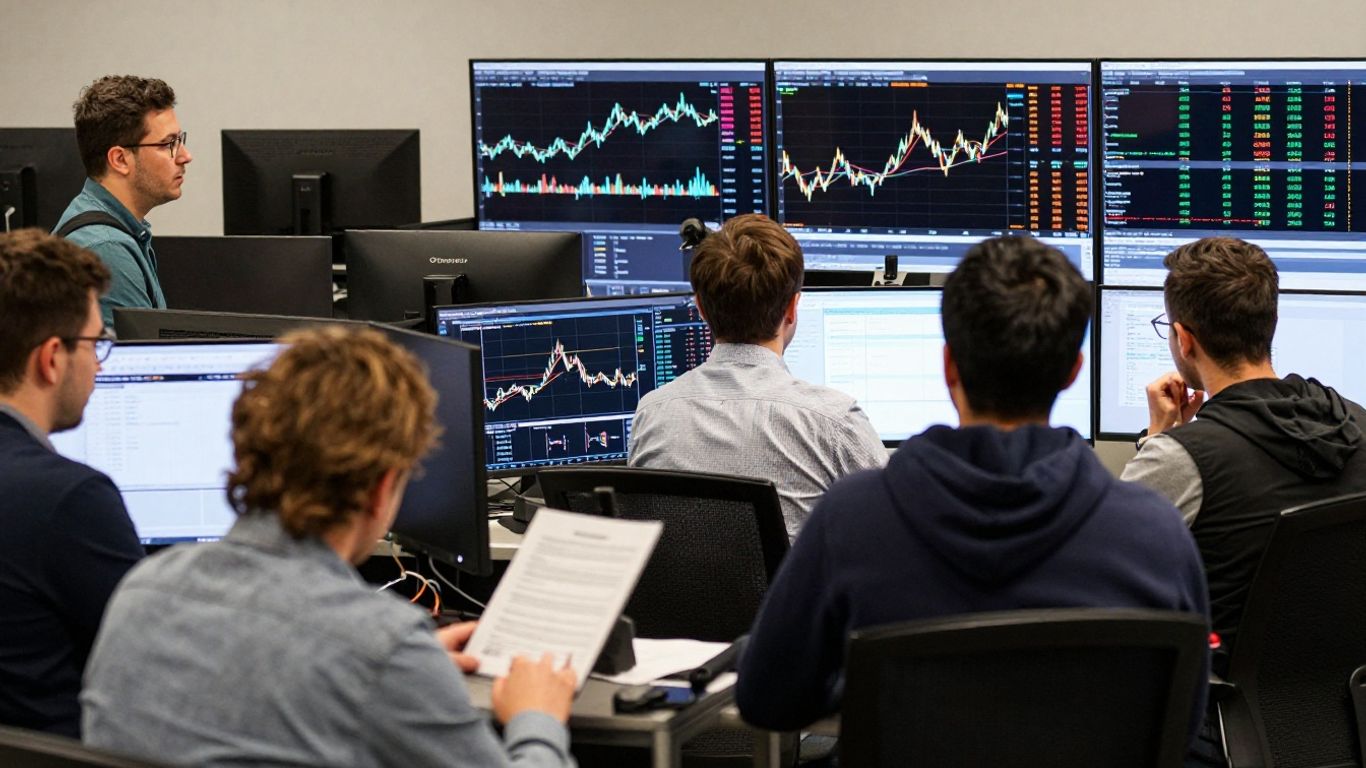
When you’re looking at online courses, think about what you really need. Some are super basic, just explaining what a pip is. Others get deep into complex strategies. It’s important to find a course that matches your current knowledge level and your goals. Don’t sign up for an advanced "price action" course if you don’t even know what a currency pair is yet. Look for courses that break things down step-by-step. Check out reviews, see who the instructors are, and what kind of support they offer. Does it feel like they’re just trying to sell you something, or do they genuinely want you to learn?
Free Resources vs. Certified Programs
There are tons of free resources out there. Websites like Babypips offer a great starting point, kind of like a free intro class. They’re fun, easy to follow, and cover the basics really well. They’re perfect for getting your feet wet without spending a dime. Then you have certified programs. These usually cost money, but they often come with more structured learning, direct access to instructors, and sometimes even a certificate when you’re done. Think of it like this:
- Free Resources: Great for understanding the "what" and "why" of forex.
- Paid/Certified Programs: Better for learning the "how" with practical application and professional guidance.
- Demo Accounts: Absolutely necessary for practicing what you learn without risking real money.
The Role of Mentorship and Community Support
Learning on your own can be tough. Sometimes, you just need someone to ask a quick question to, or to see how a pro trader analyzes a chart in real-time. That’s where mentorship and community come in. A good mentor can guide you through the tricky parts, offer personalized advice, and help you avoid common mistakes. Being part of a trading community means you can share ideas, get different perspectives, and stay motivated. It’s like having a study group, but for trading. You can learn a lot from others who are on the same journey or who have already made it through.
Choosing the right learning path isn’t just about picking a course; it’s about setting yourself up for success. It means finding a balance between learning the theory and getting practical, hands-on experience. Don’t rush this decision – your trading future depends on it.
Avoiding Common Pitfalls for New Traders
Alright, let’s talk about the stuff that trips up most folks when they first jump into forex. It’s easy to get excited and jump in, but there are some common mistakes that can really cost you. Think of it like learning to drive – you wouldn’t just hop on the highway without lessons, right? The forex market is similar, and skipping the proper learning can lead to some serious headaches.
The Dangers of Trading Without a Clear Plan
This is a big one. Many new traders just sort of wing it. They might buy or sell based on a hunch, something they read on a forum, or just a gut feeling. This kind of trading is basically gambling, not investing. Without a plan, you don’t have rules for when to enter a trade, when to exit, or what to do if things go south. It’s like trying to build a house without blueprints – it’s bound to fall apart.
Here’s what a solid trading plan usually includes:
- Entry and Exit Rules: Specific conditions that must be met before you open or close a trade.
- Risk-to-Reward Ratio: How much you’re willing to risk versus how much you aim to gain on each trade.
- Market Conditions: Understanding when your strategy works best and when to sit on the sidelines.
- Trade Management: How you’ll adjust your position if the market moves against you.
The Cost of Ignoring Risk Management
This is probably the most critical part, and sadly, it’s often overlooked. Risk management isn’t about predicting the future; it’s about protecting your capital so you can keep trading. Not using tools like stop-loss orders is a fast track to losing all your money. Imagine a leaky boat – you can keep bailing, but if you don’t fix the hole, you’re going down.
Key risk management tools and concepts:
- Stop-Loss Orders: Automatically close a trade when it reaches a certain loss level.
- Position Sizing: Calculating how much of your capital to risk on any single trade (usually a small percentage).
- Take-Profit Orders: Automatically close a trade when it reaches a desired profit level.
- Diversification (less common in forex but still relevant): Not putting all your capital into one trade or currency pair.
Ignoring risk management is like going into battle without armor. You might be skilled, but one wrong move and you’re out of the game. Protecting your capital is the number one priority, always.
The Importance of Demo Trading Practice
Before you put real money on the line, you absolutely need to practice. Demo accounts, often called practice accounts, let you trade with virtual money in real market conditions. It’s your training ground. Think of it as test-driving a car before you buy it, or practicing your presentation in front of a mirror before the big meeting. You get to try out your strategies, get comfortable with the trading platform, and make mistakes without any financial consequences.
Using a demo account helps you:
- Learn the trading platform (like MT4 or MT5) without pressure.
- Test your trading strategies to see if they actually work.
- Develop discipline and emotional control.
- Understand how market news affects prices in real-time.
Jumping straight into live trading without demo practice is a recipe for disaster. You wouldn’t try to run a marathon without training, so don’t try to trade forex without practicing first.
Key Features of Top Forex Trading Courses
Globally Recognized Certification
When you’re looking at forex courses, especially for beginners, getting some kind of official recognition can be a big deal. It’s not just about learning; it’s about having proof that you’ve gone through a structured program. A globally recognized certification shows that the course meets certain standards, no matter where you are in the world. This can be super helpful if you ever decide to work with a financial institution or just want that extra bit of confidence in your skills. It’s like getting a diploma for trading, which sounds pretty cool, right?
Hands-On Platform Training
Reading about trading is one thing, but actually doing it is another. Top courses won’t just talk about platforms like MetaTrader 4 (MT4) or MetaTrader 5 (MT5); they’ll make sure you get to use them. This means practice sessions where you can learn the buttons, understand how to place orders, set stop-losses, and manage your trades without risking real money. It’s like learning to drive a car – you need to get behind the wheel, not just read the manual.
Expert Coaching and Doubt Clearing
Sometimes, you’ll hit a wall with a concept, or a trade just won’t make sense. That’s where good coaching comes in. The best courses have instructors or mentors who are available to answer your questions. This could be through live Q&A sessions, dedicated forums, or even one-on-one calls. Having someone experienced to guide you through tricky parts and clear up your doubts makes a huge difference. It stops you from getting stuck and feeling lost.
Here’s what you can expect from good coaching:
- Live Q&A Sessions: Scheduled times to ask questions directly to instructors.
- Community Forums: A place to interact with other students and mentors.
- Personalized Feedback: Sometimes, you might get specific advice on your trading approach.
Learning forex trading can feel like trying to assemble complex furniture without instructions. A good course provides those instructions, plus a helpful guide who can point out where you might be going wrong before you end up with a wobbly table. It’s about building confidence through practical, guided experience.
Wrapping It Up
So, we’ve gone through a lot in this guide, from the absolute basics of what forex trading even is to how you can actually start learning and practicing. It’s a big market, no doubt about it, and jumping in without a plan is a fast way to lose money. That’s why getting some solid education, like the courses we talked about, is super important. Whether you start with something free like Babypips or go for a certified program like IMFA Global, the main thing is to actually start learning and not just guess. Keep practicing, stay disciplined with your risk, and remember that becoming a good trader takes time and effort. Good luck out there!
Frequently Asked Questions
What exactly is forex trading, and why should I care about it?
Forex trading is like exchanging money from one country to another, but you’re trying to make money by guessing which currency will become stronger or weaker. It’s the biggest money market in the world, with trillions of dollars moving every day! Learning about it can open up new ways to potentially earn money.
Why is learning about forex trading so important before I start?
Jumping into forex trading without knowing what you’re doing is like trying to cross a busy street blindfolded. Most new traders lose money because they don’t have a plan or understand the risks. A good course teaches you the rules of the game, how to protect your money, and how to make smart decisions.
What are currency pairs and market sessions, and why do they matter?
Currency pairs are like teams, such as the Euro and the US Dollar (EUR/USD). You trade one against the other. Market sessions are the different times of day when different parts of the world are trading. Knowing when these sessions happen helps you understand why prices move and when it’s best to trade.
What are the most important skills I need to learn for forex trading success?
The top skills are managing your money so you don’t lose it all (like using stop-losses), understanding how to use borrowed money (leverage) without getting into trouble, and having a clear plan or strategy for when to buy and sell. It’s less about winning big and more about not losing big.
Should I pay for a forex course, or can I learn for free?
You can start learning for free with resources like Babypips, which is great for basics. However, for serious learning, especially if you want a certificate and expert guidance, paid courses like IMFA Global offer structured lessons, hands-on practice with trading platforms, and crucial mentorship that free resources often lack.
What are the biggest mistakes beginners make, and how can a course help me avoid them?
Common mistakes include trading without a plan, not protecting your money, using too much borrowed money (leverage), and jumping into real trading without practicing first. Good courses teach you solid strategies, how to manage risk properly, and the importance of practicing with fake money on a demo account.