So, you’re thinking about getting into day trading. It sounds exciting, right? Making quick profits, being your own boss. But jumping in without practice is like trying to run a marathon without training. That’s where a simulator for day trading comes in. It’s your practice field, your sandbox, your safe space to learn the ropes before you put any real money on the line. Think of it as a dress rehearsal for the real market. You get to try out strategies, make mistakes, and figure things out without the stress of losing cash. This article is all about how to use one of these tools to get good.
Key Takeaways
- A simulator for day trading lets you practice trading without risking real money, which is great for learning and building confidence.
- Look for simulators with real market data, good replay features, and options to customize your trading environment.
- Use the simulator to practice specific trading strategies, focusing on when to enter and exit trades, and how to manage your money.
- Reviewing your past trades in the simulator, using replay and journaling tools, helps you spot mistakes and improve your decisions.
- When you feel ready, transition to live trading slowly, maybe with a small amount of money, and keep using the simulator to practice new ideas.
Why a Simulator for Day Trading Is Essential for Skill Building
Trading looks straightforward until you actually try it for real money. Everyone thinks, “How hard can it be?” until prices start jumping and you’re on the hook for every decision. The pressure hits differently when it’s not play money. That’s where a good day trading simulator steps up – it creates a space where you can mess up, figure stuff out, and try again, all without any cash on the line.
Developing Confidence in Real-Time Scenarios
- You can’t get comfortable with trading by just reading or watching videos. You need to practice making quick choices with information flying at you.
- Simulators give you that pressure, minus the financial pain, so you build real confidence executing your plans.
- Over time, redoing the same setups on a simulator turns shaky guesses into steady responses, making trades feel less like stabs in the dark and more like muscle memory.
There’s something about real-time decisions that you just can’t learn from a book. You have to live through the chaos a few times before it clicks. That living-through-it part goes easier on the nerves (and bank account) in a simulator than the actual market.
Learning Without Financial Risk
| Benefit | Simulator | Live Trading |
|---|---|---|
| Financial Exposure | None – virtual cash | Real money at risk |
| Feedback Speed | Instant | Instant |
| Repetition Allowed | Unlimited | Limited by funds/time |
| Stress Level | Lower | High |
You can make every mistake possible, sometimes more than once, and not lose a dime. This lets you try new strategies, see how they play out, and adjust without sweating over your savings. You get the benefit of real market reactions but zero risk to your pocket.
Avoiding Common Beginner Pitfalls
- Jumping into the market with no plan and oversizing trades
- Ignoring stop-losses or risk management rules because “it’ll turn around”
- Letting losses pile up by revenge-trading or chasing breakouts after the fact
- Focusing on profits instead of learning the process
A trading simulator keeps those mistakes from becoming expensive learning moments. Mistakes still sting, but they become useful feedback instead of costly setbacks. Over time, habits start to improve—you set realistic position sizes, stick to your rules, and work on execution, not just hopes.
For anyone just starting out, the right trading simulator turns mistakes into lessons, and practice sessions into lasting skills. That’s where most of the progress happens, well before you ever risk real cash.
Choosing the Right Simulator for Day Trading Success
Picking the right trading simulator is like choosing the right tool for a job. You wouldn’t use a hammer to screw in a bolt, right? The same goes for trading. Not all simulators are created equal, and the one you pick can really affect how quickly you learn and how well you prepare for real trading.
Key Features to Look For
When you’re looking around, keep an eye out for a few things that make a simulator actually useful. It’s not just about seeing fake money go up and down. You want something that mimics the real market as closely as possible.
- Realistic Market Data: The simulator should use actual historical or live market data. This means prices move like they do in the real market, with all the ups and downs.
- Order Execution: How you place trades matters. A good simulator will show you how your orders might get filled, including potential delays or slippage, which is when your trade executes at a slightly different price than you expected.
- Review and Replay Tools: Being able to go back and watch past market sessions, replay specific trades, and see exactly what happened is super important for learning.
- Performance Analytics: Beyond just showing your profit or loss, a good simulator will break down your trading performance. It should show you things like your win rate, average win size, average loss size, and how often you hit your stop losses.
Real Market Data vs. Demo Accounts
This is a big one. Sometimes people use the terms interchangeably, but there’s a difference. A simulator often uses historical data and has more robust replay features, letting you practice over and over. A demo account usually just streams live data but might not have the same replay or detailed review tools.
| Feature | Trading Simulator | Demo Account |
|---|---|---|
| Data Source | Real historical or live data | Live market data stream |
| Repetition | High (replay sessions, practice setups) | Limited (usually forward-looking only) |
| Execution Realism | Often simulates slippage, order fill nuances | Can be less realistic, faster fills |
| Review Tools | Advanced replay, on-chart journaling | Basic trade history |
| Learning Focus | Skill building, strategy testing, pattern recognition | Live market feel, basic order entry practice |
The goal is to find a tool that lets you practice the process of trading, not just the outcome.
Customization and Asset Class Coverage
Think about what you actually want to trade. If you’re interested in stocks, make sure the simulator covers stocks well. If crypto is your thing, find one that has good crypto data. Some simulators let you customize your workspace, which can be helpful as you get more comfortable.
- Asset Variety: Does it cover stocks, options, forex, crypto, or futures? Pick one that matches your interests.
- Chart Settings: Can you change indicators, drawing tools, and chart types to match how you plan to analyze the market?
- Watchlists: Can you create and manage watchlists of the assets you want to follow?
Choosing the right simulator means finding a platform that feels like a real trading desk, but without the real money on the line. It should challenge you, let you make mistakes safely, and provide the feedback you need to improve. Don’t just pick the first one you see; take a little time to find one that fits your learning style and trading goals.
Executing Winning Strategies Inside a Trading Simulator
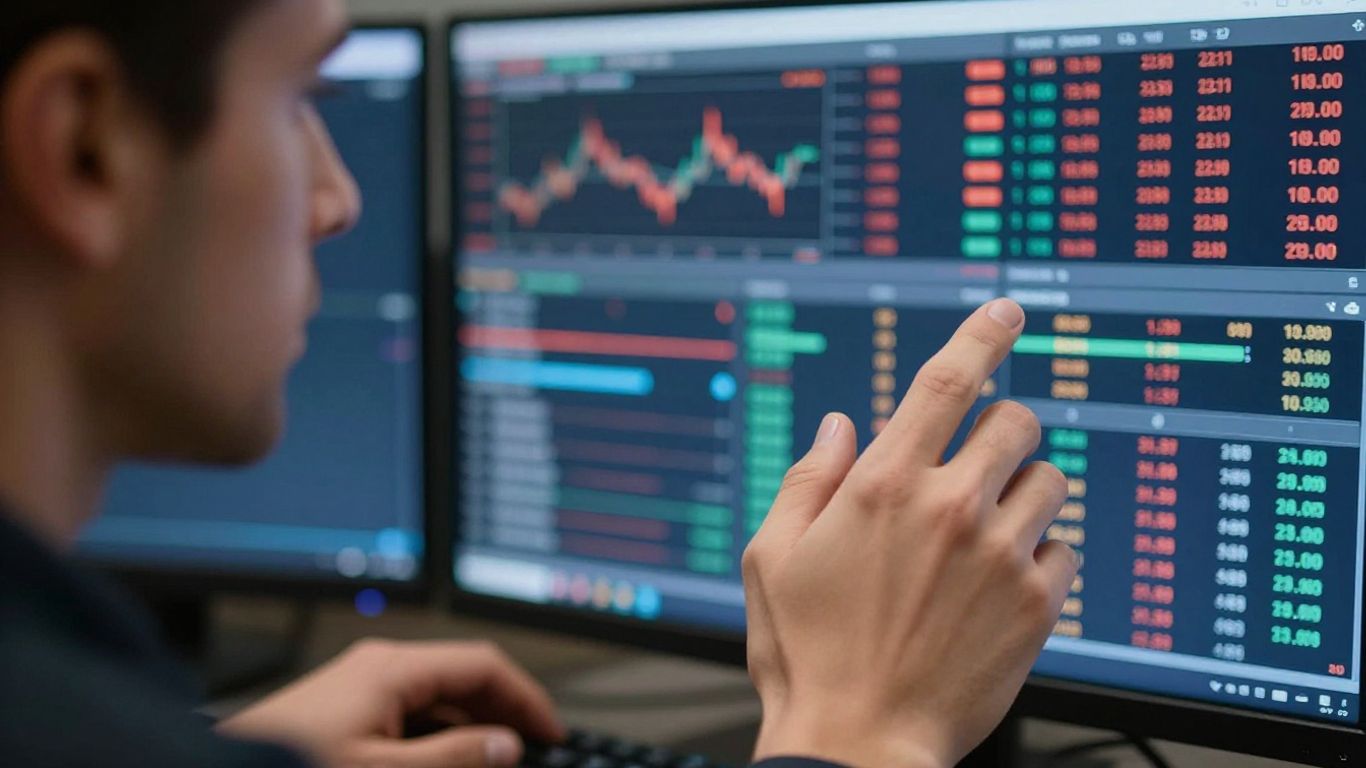
Trading simulators are where the rubber meets the road for your day trading plans. It’s not just about watching charts; it’s about actively putting your ideas to the test. You can have the best strategy on paper, but if you can’t execute it when the market’s moving, it’s not worth much. This is where simulators really shine, giving you a safe space to practice the actual mechanics of trading.
Practicing Proven Trading Setups
This is your chance to really get a feel for the setups you’ve been studying. Whether it’s a specific candlestick pattern, a breakout from a consolidation range, or a moving average crossover, you need to practice spotting them and acting on them. Don’t just look for one or two; try to find dozens of examples within the simulator. This repetition helps make them second nature.
- Identify your chosen setup on the chart.
- Wait for all the entry criteria to be met.
- Execute the trade as if real money were on the line.
- Observe how the price action unfolds after your entry.
The goal here is to build muscle memory for your trading decisions. You want to reach a point where recognizing and acting on a setup feels almost automatic, freeing up your mental energy for other aspects of the trade.
Mastering Entry and Exit Points
Knowing when to get into a trade and, more importantly, when to get out is a huge part of success. Simulators let you experiment with different entry and exit strategies without the sting of real losses. Should you enter on the first sign of momentum, or wait for a slight pullback? When do you take profits – at a fixed target, or trail your stop? Testing these variations helps you find what works best for your strategy and risk tolerance. You can even use market replay features to see how different exit points would have played out on the same trade.
Simulators are fantastic for refining the precise timing of your trades. You can experiment with entering a few seconds earlier or later, or exiting at slightly different price levels, and see the direct impact on your hypothetical profit or loss. This granular practice is hard to get in live trading without risking capital.
Testing Risk Management Techniques
This is arguably the most important part. Your strategy might be sound, but without proper risk management, one bad trade can wipe out weeks of gains. In a simulator, you can practice setting stop-losses, determining position sizes based on your risk per trade, and managing your overall daily loss limits. See how these rules affect your performance over many trades. A simulator allows you to develop a profitable strategy without the emotional panic that can come with real-money losses.
Here’s a look at how different risk management approaches might play out:
| Risk per Trade | Max Daily Loss | Hypothetical Trades Won | Hypothetical Trades Lost | Net Result |
|---|---|---|---|---|
| 1% | 3% | 60 | 40 | +20 Trades |
| 2% | 5% | 55 | 45 | +10 Trades |
| 3% | 7% | 50 | 50 | 0 Trades |
This table shows how a more conservative approach (1% risk per trade) can lead to a better net result even with fewer wins, highlighting the impact of risk control.
Using Replay and Review Tools to Sharpen Your Trading Edge
Okay, so you’ve been practicing your trades in the simulator, placing orders, and watching the simulated money go up and down. That’s great, but are you actually learning from it? Just clicking around isn’t enough. This is where replay and review tools really come into play. They’re like having a personal coach who can rewind the tape and show you exactly what you did right, and more importantly, what you did wrong.
Market Session Playback for Repetition
Imagine being able to re-watch a whole trading day, or even just a specific hour, over and over. That’s what market session playback lets you do. You can pick a day where you saw a setup you liked, or a day where things went sideways, and play it back. This isn’t just about seeing the price action again; it’s about practicing your reactions. You can pause, place a simulated trade, see how it plays out, and then rewind and try a different entry or exit. This kind of repetition is how you build muscle memory for trading. It helps you get comfortable with different market conditions without the pressure of real money. Platforms like TradingView offer robust replay features that let you scrub through historical data, giving you endless opportunities to practice specific scenarios.
Performance Journaling Directly on Charts
Most simulators let you see your profit and loss, but that’s just the surface. The real learning happens when you can connect your trades to the actual price action. Good review tools allow you to annotate directly on the charts. You can mark your entry and exit points, add notes about why you took the trade, or even jot down how you were feeling. This creates a visual trading journal. Instead of just a list of numbers, you have a story for each trade, linked to the chart. This makes it much easier to spot patterns in your own behavior.
Here’s a quick look at what you should aim for:
- On-Chart Notes: Ability to add text, drawings, or tags directly to your trade history on the chart.
- Trade Tagging: Categorize trades by strategy, mistake, or emotional state for later analysis.
- Contextual Review: See your trade execution alongside the price movement that occurred.
Analytics That Go Beyond Profit and Loss
When you’re reviewing your simulated trading, don’t just look at the final number. Dig deeper. What were your winning trades like? What about your losing ones? Were there specific times of day or types of setups that consistently performed better or worse?
Advanced analytics can break down your performance by trade setup, time of day, and even the specific patterns you were looking for. This level of detail helps you understand not just if you made money, but why you made or lost money, pointing you toward specific areas for improvement.
Look for simulators that offer:
- Win Rate by Setup: How often does your favorite setup actually work?
- Average Gain/Loss per Trade: Are your winners bigger than your losers?
- Performance Over Time: How does your trading change throughout the day or week?
By using these replay and review features actively, you turn your simulator time from just playing a game into serious skill development.
Making the Most of Gamified Trading Environments
Interactive Challenges and Quizzes
Some trading simulators go beyond just mimicking market action. They add layers of challenges and quizzes designed to test your knowledge and decision-making skills in a fun way. Think of it like a video game, but for learning how to trade. These aren’t just random questions; they’re often tied to specific trading concepts or scenarios you’ll encounter in the real market. For example, you might get a quiz on identifying chart patterns or a challenge to execute a trade within a tight time limit based on specific news. This approach makes learning less of a chore and more engaging. It helps solidify what you’ve learned in lessons by putting it to the test immediately.
Visual Pattern Recognition Trainers
Spotting patterns on a stock chart can feel like learning a new language. Gamified simulators often include tools specifically for this. One popular type is a ‘Pattern Hunter’ or ‘Candlestick Trainer’. These tools present you with charts, often highlighting specific patterns, and ask you to identify them or predict the next move. This focused practice is incredibly effective for building the visual intuition needed for day trading. It’s like flashcards for traders, helping you quickly recognize setups that have historically led to certain price movements. The more you use these trainers, the faster you’ll become at spotting opportunities when you’re actually trading.
Progress Tracking and Motivation Tools
Let’s be honest, learning to trade can be a long road, and it’s easy to get discouraged. Gamified simulators often incorporate progress tracking and motivational elements to keep you going. You might see a dashboard showing your win rate, the number of trades you’ve executed, or milestones you’ve achieved. Some platforms even offer leaderboards or badges for completing certain challenges. This gamification taps into our natural desire for achievement and competition. It provides a clear picture of how far you’ve come and what you still need to work on, making the learning process feel more rewarding and less overwhelming. It’s about turning the learning curve into a series of achievable steps.
While gamified elements can make learning more enjoyable and help reinforce concepts, remember that the ultimate goal is real-world trading success. The virtual rewards and progress tracking are there to motivate you, but they don’t replace the need for disciplined strategy development and risk management when real money is on the line.
Transitioning from Simulated to Live Day Trading
So, you’ve spent a good chunk of time in the simulator, feeling pretty good about your trades. That’s awesome. But now comes the big leap: actually putting real money on the line. It’s a different ballgame, and honestly, it can be a bit jarring at first. The virtual wins feel great, but virtual losses? They don’t quite hit the same way as seeing your actual account balance shrink. That’s why this transition needs to be handled with care.
Managing Emotions During the Switch
The biggest hurdle isn’t usually the market itself, but what’s going on between your ears. When real money is involved, fear and greed can kick in hard, making you do things you wouldn’t dream of in the simulator. You might hesitate to enter a trade you’d normally take, or you might bail out too early because you’re scared of losing. It’s a totally normal reaction, but something you need to be aware of.
- Acknowledge the Fear: Understand that feeling nervous is okay. It means you care about your capital.
- Stick to Your Plan: This is where your simulator practice really pays off. If you have a solid trading plan, follow it religiously, even when emotions are high.
- Take Breaks: If you feel overwhelmed, step away from the screen. Come back with a clear head.
The psychological shift from simulated to live trading is significant. What felt like a game with fake money now has real consequences, and that changes everything about how you perceive risk and reward. It’s not about eliminating emotions, but learning to manage them effectively.
Incremental Capital Integration
Don’t go all-in on day one. Think of it like dipping your toes in the water before diving in. Start with a small amount of capital that you’re genuinely comfortable losing. This allows you to experience the real emotional impact of trading without risking your entire savings.
Here’s a way to think about it:
| Stage | Capital Allocation | Focus | Goal |
|---|---|---|---|
| 1 | Very Small (e.g., 1-5% of total trading capital) | Emotional acclimatization, plan execution | Experience real P&L swings, build discipline |
| 2 | Moderate (e.g., 10-20% of total trading capital) | Strategy refinement, risk management testing | Increase position size gradually, maintain emotional control |
| 3 | Full Allocation (as per your plan) | Consistent execution, performance optimization | Achieve steady profitability, scale trading size |
This staged approach helps you build confidence and adapt to the real-time pressures of live trading at a pace that works for you.
Continuous Practice Alongside Real Trades
Just because you’ve started trading with real money doesn’t mean the simulator is useless. Far from it! Many successful traders continue to use simulators even when they’re trading live. It’s a fantastic tool for testing new strategies without risking capital, practicing specific setups you want to improve, or even just warming up before a trading session. Think of it as your personal practice field. You can replay market sessions, analyze your simulated trades, and refine your approach before applying it to your live account. This ongoing practice is key to staying sharp and adapting to changing market conditions.
Collaborative Learning and Analytics in Trading Simulators
Sharing Strategies and Trades with Peers
Trading simulators aren’t just for solo practice anymore. Many platforms now let you share your charts and trade logs with other traders. This is a big deal. Imagine you find a setup that works, and you can show it to a friend or a study group. They can then replay that exact market action, see your entry and exit points, and understand your thinking. It’s like having a shared whiteboard for trading ideas. This kind of peer-to-peer learning can really speed things up. You get to see how others approach the market, and they get to learn from your successes and mistakes. It moves trading from a solitary pursuit to a more connected experience.
Mentor Feedback and Group Review Sessions
Beyond just sharing with peers, some simulators allow mentors or educators to review your trading sessions. This is where you get more structured guidance. A mentor can look at your recorded trades, see exactly where you entered and exited, and provide specific feedback. They might point out a pattern you missed, a risk management error, or a psychological hurdle you’re facing. Group review sessions, where multiple traders share their performance and get feedback from an instructor or experienced traders, are also super helpful. It’s like a weekly debrief where everyone learns from the collective experience. This kind of targeted feedback is hard to get anywhere else.
Leveraging AI Insights for Performance Growth
Artificial intelligence is starting to play a bigger role in trading simulators. Think of it as having a super-smart assistant that watches your every move. These AI tools can analyze your trading data in ways that are difficult for humans to do. They can spot subtle patterns in your behavior, like consistent hesitation before entering a trade or a tendency to exit too early on winning positions. The AI can then provide personalized suggestions for improvement. It’s not about telling you what to trade, but how to trade better. This data-driven feedback can help you identify blind spots and refine your approach much faster than just looking at profit and loss numbers alone.
The real value of collaborative tools and AI in simulators isn’t just about seeing more data; it’s about turning that data into actionable steps. When you combine shared experiences with intelligent analysis, you create a powerful feedback loop that accelerates learning and helps you build more robust trading habits before you risk real money.
Ready to Trade Smarter?
So, we’ve gone over why using a simulator is a smart move before you put real money on the line. It’s like practicing scales on a piano before a concert, or running drills before a big game. You get to try things out, make mistakes without losing cash, and really get a feel for how the market works. Remember, the goal isn’t just to rack up fake profits, but to build good habits and confidence. When you feel ready, take that leap, but always keep learning and refining your approach. Happy trading!
Frequently Asked Questions
What exactly is a trading simulator?
Think of a trading simulator like a video game for learning how to trade stocks. It lets you practice buying and selling different things, like stocks or crypto, using fake money. You get to see how the market moves and try out different strategies without actually losing any of your own money.
Why should I use a simulator instead of just trading with real money?
Using a simulator is super important because it’s like practicing for a big game before the real match. You can learn without the stress of losing money. This helps you get better at making quick decisions, understand how the market works, and avoid common mistakes that new traders often make when they first start out.
Can I use real market information in a simulator?
Yes, many simulators use real market data. This means you’re practicing with prices and information that are actually happening in the stock market right now, or from past days. It makes the practice feel very real, so you’re better prepared when you start trading with real money.
How do simulators help me get better at trading?
Simulators let you try out different trading plans and see what works. You can practice buying at the right time and selling at the right time. They also have tools that let you review your past trades, like watching a video replay, so you can learn from your mistakes and get smarter.
Is it hard to switch from a simulator to trading with real money?
It can feel a bit different because real money changes how you feel. Simulators help you get used to the actions of trading, but the feelings of winning or losing real money are unique. It’s often best to start with a small amount of real money and slowly increase it as you get more comfortable.
Can I learn with others using a trading simulator?
Absolutely! Some simulators let you share your trades or strategies with friends or other traders. You can learn from what they do, and they can learn from you. It’s like studying in a group, where everyone helps each other get better at trading.