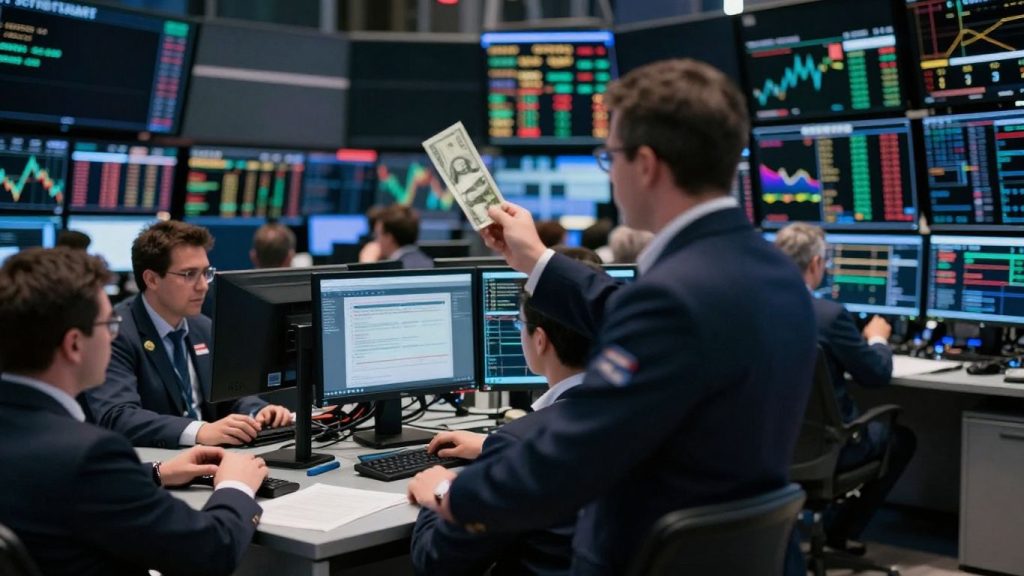
So, you’re looking to make some money trading the forex news? It’s a wild ride, for sure. Big economic announcements can really shake things up, and if you know what you’re doing, you can profit from that movement. But it’s not just about hitting a button when news drops. You need a plan, some smart tactics, and a good handle on risk. This article is all about helping you get that sorted for 2026, focusing on how forex news trading can work for you.
Key Takeaways
- Understand how economic news events directly influence currency pair prices and create trading opportunities.
- Develop specific strategies like breakout trading and retest confirmation to capture profits around major announcements.
- Master the use of economic calendars and chart patterns to make informed decisions during high-impact news.
- Incorporate advanced methods such as fundamental analysis and AI reaction assessment for a competitive edge in forex news trading.
- Prioritize robust risk management, including stop-losses and position sizing, to protect your capital in volatile news-driven markets.
Understanding The Forex News Trading Landscape
The foreign exchange market, or forex, is where currencies are swapped. It’s a massive, global network that operates nearly 24 hours a day. Think of it like a constant flow of buying one currency and selling another. Your job as a trader is to figure out which way that flow is going to move and position yourself accordingly. Prices don’t just move randomly; they react to real-world events. Understanding these events is key to trading forex effectively.
The Impact of Economic Catalysts on Currency Pairs
Currencies are directly tied to the economic health of their respective countries. When major economic news comes out, it can really shake things up. Things like:
- Interest rate decisions by central banks
- Inflation reports (CPI data)
- Employment figures (like non-farm payrolls)
- Gross Domestic Product (GDP) growth
- Political events, such as elections or major policy changes
These are the big drivers. For example, if the US Federal Reserve raises interest rates, the US dollar often gets stronger because higher rates attract foreign investment. Conversely, if a country’s economy is showing signs of slowing down, its currency might weaken. It’s a constant dance between different economies, and news events are the music that makes the pairs move. For instance, silver has seen some wild swings lately, showing how quickly sentiment can shift based on market news [9b09].
Navigating Volatility During Major Announcements
When a big economic announcement is due, the forex market can get pretty choppy. Prices might jump around a lot right before and after the news is released. This period of high volatility can be a double-edged sword. For some traders, it’s an opportunity to make quick profits. For others, especially beginners, it can lead to unexpected losses if they aren’t careful. The key here is preparation. Knowing when these announcements are happening and understanding the potential impact helps you decide whether to participate or sit on the sidelines. It’s about managing risk when the market is unpredictable.
The forex market is a global, interconnected system. Understanding how different economic events in one country can ripple through to affect currency pairs involving other nations is a core skill. It’s not just about memorizing data; it’s about connecting the dots between economic policy, national performance, and currency valuation.
Leveraging Algorithmic Trading in News Events
These days, a huge chunk of forex trading, over 90%, is done by algorithms. These are computer programs designed to trade automatically based on pre-set rules. In the context of news events, algorithmic trading can react to data releases in milliseconds, often before human traders can even process the information. This means that the market might move very quickly as soon as news hits. For individual traders, this doesn’t mean you’re out of luck. It just means you need to be aware of this dynamic. Some strategies involve trying to anticipate the algorithmic reaction, while others focus on the price action after the initial algorithmic rush has subsided. Understanding how these systems operate gives you a better picture of the market’s behavior during high-impact news.
Core Strategies for Forex News Trading Success
Trading around major economic news releases can feel like standing in front of a freight train. It’s fast, it’s powerful, and if you’re not careful, it can run you over. But for those who know how to read the tracks, it can also be incredibly profitable. The key is to have a plan and stick to it, even when the market is going wild.
Event-Driven Breakout Strategies
This is all about catching the initial surge of momentum when news hits. Think of it like this: a big economic report comes out, and suddenly, the price of a currency pair has to make a decision – go up or go down, fast. A breakout strategy aims to jump on that decision as it happens.
- Identify Consolidation: Look for periods where the price has been trading in a tight range, building up energy. This could be a few hours before the news or even the Asian trading session range.
- Watch for the Break: When the news is released, the price will often blast through the top or bottom of that range. You want to enter the trade in the direction of that breakout.
- Confirm with Volume (Optional but Recommended): A surge in trading volume during the breakout can add extra confidence to the move.
The goal here is to capture the immediate reaction to the news before the market has a chance to settle down.
Post-News Retest and Confirmation Tactics
Sometimes, the initial breakout after news can be a bit wild, a false move, or just the start of a bigger trend. This is where retest strategies come in. Instead of jumping in immediately, you wait for the dust to settle a bit.
- Wait for a Pullback: After the initial price move (the breakout), wait for the price to retrace or pull back towards the level it just broke through (the old resistance now acting as support, or vice versa).
- Look for Confirmation: See if the price holds at that retested level. You’re looking for signs that the level is now acting as a solid floor or ceiling. This could be a specific candlestick pattern forming at that level, or simply the price bouncing off it.
- Enter on the Bounce: Once you see confirmation, you can enter the trade in the direction of the original breakout, but with potentially better risk management because you’re not catching the absolute peak of the initial move.
This approach is often less risky than a pure breakout strategy because you’re letting the market show you where it’s truly heading after the initial shock.
Scalping Volatility Around Key Releases
Scalping is about making many small profits from tiny price movements. When major news is about to drop, volatility often spikes, creating these small, fast opportunities. This is not for the faint of heart, though.
- Focus on High-Impact News: Stick to events known to cause sharp, quick price swings, like Non-Farm Payrolls or major interest rate announcements.
- Use Tight Stop-Losses: Because you’re aiming for small profits, you need to cut losses very quickly if the trade goes against you. We’re talking a few pips, maybe 5-10 at most.
- Trade Liquid Pairs: Major currency pairs like EUR/USD or USD/JPY tend to have the tightest spreads and best execution, which is vital for scalping.
This strategy requires extreme focus and quick decision-making. You’re essentially trying to grab a few pips from the immediate chaos, often within seconds or minutes of the news hitting. It’s like trying to catch a few coins dropped from a speeding truck – you need speed and precision.
Remember, news trading isn’t just about predicting the news; it’s about having a solid plan for how you’ll react to the market’s reaction. Each of these strategies offers a different way to approach the volatility, but all require discipline and careful risk management.
Essential Tools and Techniques for News Traders
Alright, so you’re looking to trade the news in the forex market. It’s exciting, for sure, but it can also feel like trying to catch lightning in a bottle if you don’t have the right gear and know-how. Think of it like being a chef; you wouldn’t try to whip up a gourmet meal with just a butter knife, right? Same idea here. You need the right tools to even stand a chance.
Utilizing Economic Calendars Effectively
First things first, you absolutely need an economic calendar. This isn’t some fancy gadget; it’s more like your daily newspaper for the forex world. It tells you when the big economic events are happening – things like interest rate decisions, inflation reports, or employment figures. These are the things that can send currency prices flying.
- Know the Impact: Not all news is created equal. Look for the high-impact events. These are usually marked with a high degree of importance or volatility. Think Non-Farm Payrolls in the US or CPI data.
- Timing is Everything: The calendar shows you the exact release time. You need to be ready before the news drops, not scrambling when it happens. This means knowing the time zone differences too.
- Actual vs. Expected: Always compare the actual released number to the forecast. A big difference is what usually causes the market to move sharply. If the numbers are close to expectations, the market might not react much.
The forex market is constantly changing, and staying informed about economic events is key to making smart trading decisions. Keeping up with these releases can give you an edge.
Interpreting Candlestick Patterns Amidst News
Once the news hits, the charts start telling a story, and candlesticks are the words. During news events, price action can get wild, but certain patterns can still give you clues. You’re not looking for complex formations here; it’s more about the immediate reaction.
- Long Wicks (Shadows): These show that price tried to move in one direction but was quickly pushed back. A long upper wick might suggest selling pressure after an initial price spike.
- Large Bodies: A big green candle means strong buying pressure, while a big red candle indicates strong selling. The size of the body shows the conviction behind the move.
- Doji and Spinning Tops: These can signal indecision. After a strong move, seeing a doji might mean the trend is losing steam, but be careful – it could also be a pause before the next leg.
Leveraging Support and Resistance Levels
These are like invisible floors and ceilings on your price charts. When news comes out, price often reacts strongly around these key levels. Knowing where they are helps you anticipate potential turning points or breakout levels.
- Breakouts: If a strong news release pushes price through a resistance level, it can signal the start of a new upward move. The opposite is true for support.
- Rejections: Price might hit a resistance level after good news, only to get pushed back down, showing the news wasn’t enough to overcome the selling pressure at that level.
- Confirmation: Sometimes, price will break a level on the news, then pull back to retest that level (now acting as support if it was resistance before). This retest can offer a good entry point if the level holds. Understanding these levels is a big part of trading forex effectively.
Having these tools and techniques in your arsenal will make trading around news events a lot less like guesswork and more like a calculated approach. It’s about being prepared and knowing how to read the immediate market reaction.
Advanced Forex News Trading Approaches

Fundamental Analysis for News Event Prediction
Trying to guess what the news will say before it comes out is a tough game. It’s like trying to predict the weather a week in advance. But, you can get better at it by looking at the bigger economic picture. Think about what central banks are saying, how the job market is doing, or if prices are going up too fast. These things give you clues about what kind of news might be coming and how the market might react. For example, if inflation has been high for a while, you might expect interest rate news to be a big deal. Understanding these underlying economic forces can help you anticipate market moves, not just react to them. It’s not about being right every time, but about having a better idea of the probabilities.
Combining Technicals with News Catalysts
So, you’ve got your economic clues, now what about the charts? This is where technical analysis comes in. You can look at support and resistance levels, or see if a currency pair is already in a strong trend. When a big news event is expected, you can see if the price is already sitting near a key level. If a strong economic report comes out that supports the current trend, you might see a quick move through that level. If the news goes against the trend, that level could hold, or it could break dramatically. It’s about seeing how the news might interact with the existing price action. You’re not just looking at one thing; you’re putting the economic story together with what the chart is showing you.
Here’s a simple way to think about it:
- Economic Data: What is the likely outcome of the upcoming report?
- Market Expectation: What does the market already expect to happen?
- Technical Levels: Where is the price right now? Are we near support or resistance?
- News Impact: Does the actual news confirm or contradict expectations and trends?
Adapting to AI-Driven Market Reactions
Things are changing fast with artificial intelligence. A lot of trading now happens automatically, driven by algorithms. These AI systems can process news and react much faster than a human can. This means that sometimes, the market moves before you even finish reading the news headline. You might see very sharp, quick price swings right after an announcement. It’s not always about trying to beat the AI, but understanding that it’s there. Some traders use AI tools themselves to help analyze data or even execute trades. Others focus on trading the aftermath, waiting for the initial AI-driven volatility to settle down before entering a trade. It’s a new layer to consider in your news trading approach.
Mastering Risk Management in Forex News Trading
Look, trading the forex market, especially around big news events, can feel like riding a rollercoaster. One minute you’re up, the next you’re down. That’s why keeping your capital safe is the absolute number one priority. Without it, you can’t trade at all, right? So, let’s talk about how to protect your money when the market gets wild.
Setting Prudent Stop-Losses for Volatile Trades
Think of a stop-loss order as your safety net. It’s an order you place with your broker to automatically close a trade if the price moves against you by a certain amount. For news trading, where prices can jump around fast, setting these is super important. You don’t want a small move to turn into a huge loss.
- Determine your maximum acceptable loss per trade. This is usually a small percentage of your total trading capital.
- Place the stop-loss order immediately after entering a trade. Don’t wait.
- Adjust stop-losses based on volatility. During high-impact news, you might need a slightly wider stop to avoid getting kicked out by a temporary spike, but never widen it beyond your pre-set maximum risk.
- Consider using trailing stops. These move with your profitable trades, locking in gains while still offering protection.
When news hits, price action can become erratic. A stop-loss acts as a circuit breaker, preventing a single bad trade from wiping out a significant portion of your account. It’s not about predicting the exact price, but about controlling the damage if you’re wrong.
Managing Position Sizing During High Impact News
This is where many traders stumble. When a big economic report is due, the temptation is to go big, thinking you’ll catch a massive move. But that’s exactly when you should be scaling back. The goal is to survive the volatility, not to hit a home run on every single announcement.
Here’s a simple way to think about it:
- Standard Risk: For most trades, you might risk 1-2% of your account. This is your baseline.
- News Event Risk: Before major news, consider reducing your position size by 50% or even more. If your standard risk is 1% with a certain lot size, you might use a lot size that represents only 0.5% or 0.25% of your account for that specific trade.
- Account Size Matters: Always calculate your position size based on your current account balance, not a fixed dollar amount. As your account grows or shrinks, your position size should adjust accordingly.
Avoiding Slippage and Execution Pitfalls
Slippage happens when your order gets filled at a different price than you expected. This is common during fast-moving markets, like right after a major news release. Brokers try to fill orders at the requested price, but in extreme conditions, they might fill it at the next available price. This can mean your stop-loss is hit at a worse level than you set, or your entry price is not what you anticipated.
- Choose a reliable broker: Look for brokers with good execution speeds and a reputation for minimizing slippage, especially during volatile periods. Check their regulatory status.
- Use pending orders with caution: While useful, be aware that pending orders might not always trigger at the exact price you set during extreme volatility.
- Understand your broker’s execution policy: Know how they handle orders during news events. Some might widen spreads or temporarily disable trading on certain pairs.
- Consider trading slightly after the initial shockwave: Sometimes, waiting a few minutes after the news is released allows the market to settle a bit, reducing the chance of severe slippage and giving you a clearer picture.
Developing a Disciplined Forex News Trading Plan
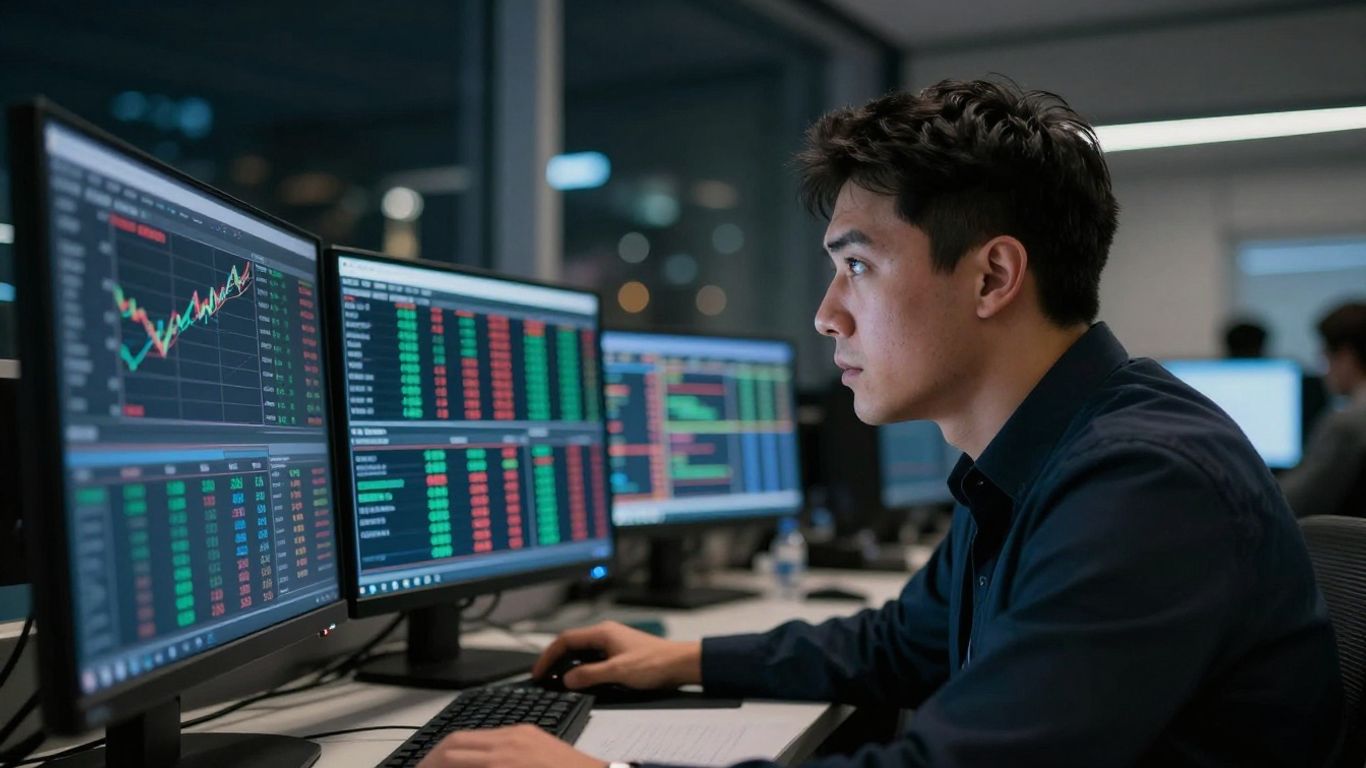
It makes all the difference to show up with a plan instead of pressing buttons just because you saw a big candle. Let’s talk about how to build a routine and mindset that keeps you in the game for the long haul.
Creating a Trading Checklist for News Events
A checklist isn’t just for pilots—it keeps you focused when the heat is on. Before every news event, your checklist should be simple and unskippable:
- Identify which currency pairs are likely to be impacted
- Mark news release times on your calendar
- Double-check your stops, targets, and order sizes
- Ensure all trading platform settings are ready (no surprises on execution)
- Keep a blank journal page to jot down what actually happens
Here’s a sample quick checklist table:
| Step | Done? |
|---|---|
| News time confirmed | |
| Pairs prepped | |
| Stop/target set | |
| Volume/lot checked | |
| Platform updated |
The Importance of Patience and Discipline
Sitting on your hands and not trading is sometimes the best move. When you treat trading like work instead of a game, you learn to wait for the market to give you a high-probability signal. It’s not about catching every pip—it’s about catching the right moves and skipping the noise.
- Hesitate before you click. Review your setup one last time.
- Accept there will be days when you make no trades and that’s okay.
- Don’t let FOMO or boredom drive your entries. Both can blow up your account.
Building discipline in news-trading is less about finding the perfect setup and more about avoiding sloppy ones—consistency is more important than excitement in the long run.
Continuous Learning and Strategy Refinement
Even when you find a strategy that works, the market will change, and you have to keep up. Testing, tweaking, and learning from your mistakes keeps your edge fresh. Keep a log of your trades, especially after big news moves—writing down what you did and what you felt uncovers patterns you’d miss otherwise.
- Review your log at the end of each week: what worked? What bombed?
- Backtest new tweaks on demo accounts before committing real money
- Read, watch, and talk to other traders regularly—don’t get stuck in your own echo chamber
A disciplined plan is not a one-off document; it grows with you and keeps your risk in check as you adapt to the market.
Conclusion
So, that’s the real story behind trading forex news in 2026. There’s no magic formula, but there are clear steps you can take to stack the odds in your favor. Focus on simple strategies you can actually stick to—like waiting for the news to hit, letting the dust settle, and then looking for trades that make sense both on the chart and in the bigger picture. Don’t get caught up chasing every headline or trying to outsmart the market with wild guesses. Instead, keep your risk small, use stop-losses, and remember that it’s okay to sit out if things look messy. The market will always be there tomorrow. With a bit of patience, a plan you trust, and a willingness to keep learning, you’ll find your groove. News trading isn’t easy, but it’s not impossible either. Just keep it honest, keep it simple, and don’t let one wild day throw you off your game.
Frequently Asked Questions
What is Forex news trading and why is it important?
Forex news trading is like trying to guess what will happen in the world and how it will affect money values. Big news, like when a country’s jobs report comes out or if interest rates change, can make currency prices jump around a lot. Knowing about this news helps traders try to make smart moves and maybe earn some money, but it’s also risky because prices can change super fast.
How can I start trading Forex news without losing all my money?
To start trading news, it’s best to begin small. Use a demo account first to practice without using real money. When you do trade with real money, only risk a tiny bit of your total money on each trade, like 1% or 2%. This way, if a trade goes wrong, it won’t hurt your account too much. Also, don’t trade right before big news happens; wait to see what the market does first.
What are some simple strategies for trading news events?
One simple idea is to wait for the news to be released and then see which way the price is moving strongly. This is called a ‘breakout.’ Another way is to watch for the price to move sharply after the news and then pull back a little before continuing in the same direction. This is a ‘retest’ strategy. The key is to be patient and not jump in too quickly.
What tools do I need to trade Forex news effectively?
You’ll definitely need an economic calendar. This is like a schedule that tells you when important news is coming out for different countries. It helps you know when the market might get wild. Also, learning to read simple chart patterns, like support and resistance levels, can help you see where prices might stop or turn around.
Is it true that most Forex traders lose money?
Sadly, yes, most new traders do lose money. This often happens because they trade without a plan, risk too much money on each trade, or let their feelings like fear and excitement take over. The good news is that by learning good strategies, managing your risk carefully, and staying disciplined, you can become one of the traders who actually makes money.
How does AI affect Forex news trading now?
Computers and AI are now a huge part of trading. They can analyze news and market data much faster than people. Some traders use AI tools to help them find trading ideas or even to make trades automatically. While AI is powerful, it’s still important for traders to understand the news themselves and use AI as a helpful assistant, not a complete replacement for their own thinking.