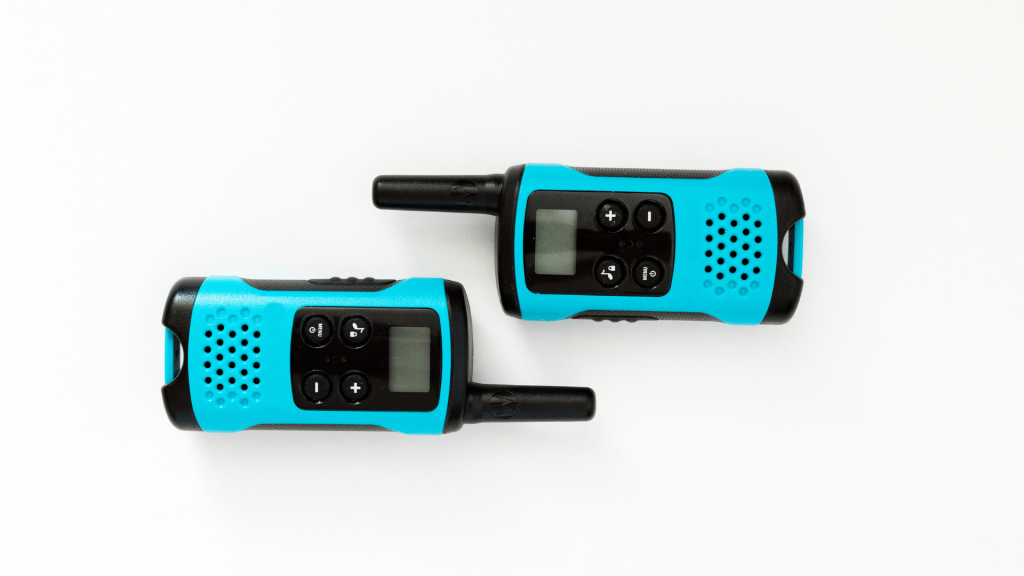
Choosing the right two-way radios when the trail’s long, the jobsite’s loud, and the signal’s gone AWOL.
You’re 40 feet up on scaffolding. Wind in your face. Crew below waiting on your call.
You press the button on your cheap walkie.
Static.
Silence.
Then: “…zzzz—what?”
That’s not the kind of backup you need.
Whether you’re elbow-deep in drywall dust or hiking above the treeline, two-way radios aren’t just convenient—they’re critical. But picking the right one? That’s where it gets tricky.
Because there’s a big difference between a toy and a tool.
Let’s break down what actually matters—before you end up with a glorified paperweight in your pack or your palm.
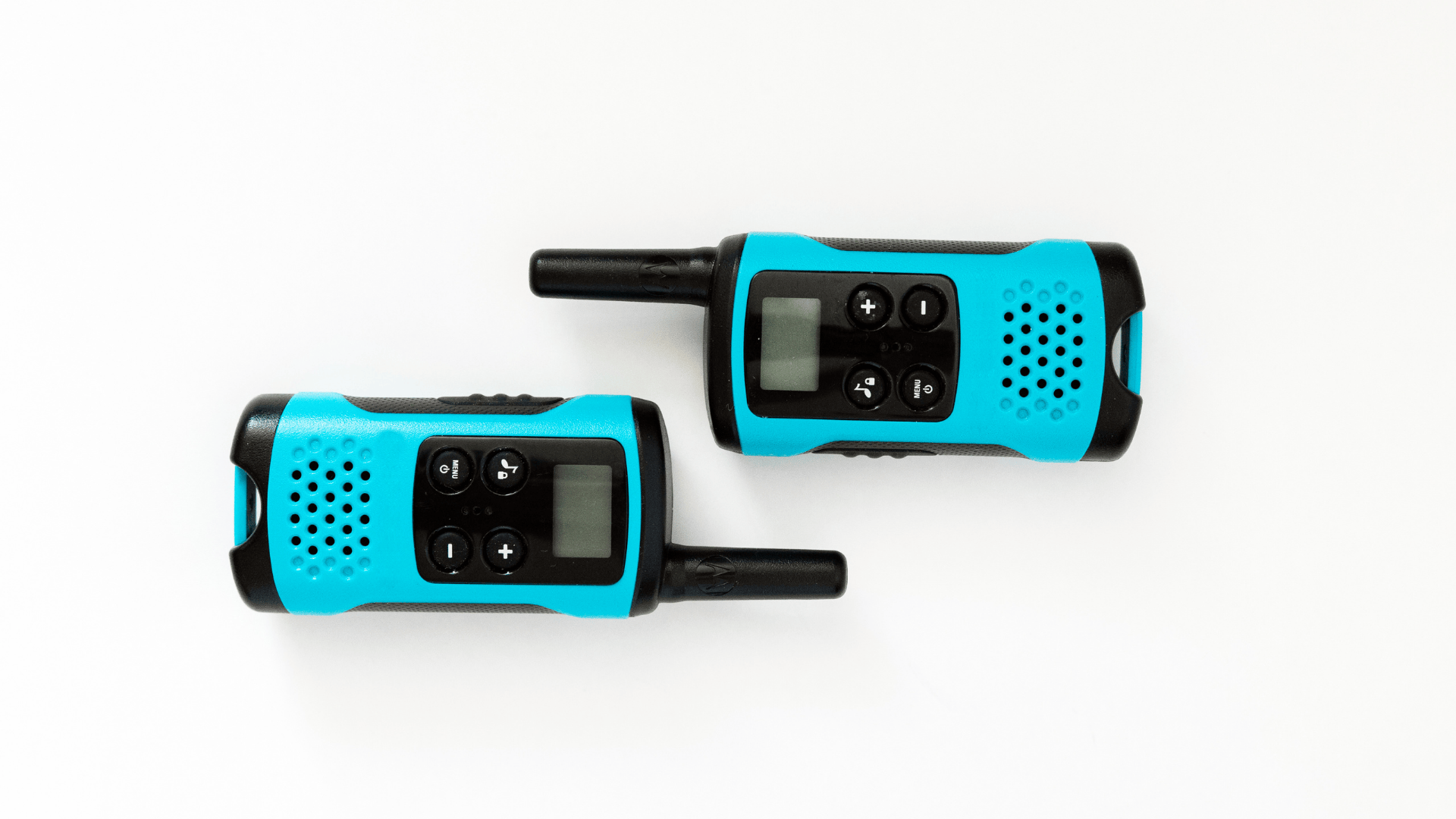
“Up to 35 Miles!” Lies, Damn Lies, and Marketing Copy
Here’s the dirty little secret: that giant “35-mile range” printed on the box? It’s a fantasy.
It assumes you’re standing on one mountain, shouting across a valley to your buddy on another mountain. No buildings. No trees. No humidity. No actual life.
In the real world—full of steel beams, hills, forests, and Wi-Fi clutter—expect closer to 1–3 miles. Maybe 5 if you’re lucky. Maybe 0.5 if you’re underground.
That doesn’t mean the radio’s bad. It means physics is undefeated.
Want range that isn’t a lie? You’ll need a device that taps into LTE or Wi-Fi. Same feel. Massive upgrade in reach.
Durability: Can It Take a Fall Off a Ladder?
Spoiler: the radio will get dropped.
On concrete. In mud. Off a truck bed. It’s going to happen.
So if the model you’re eyeing looks like it came from a toy aisle at a gas station? Hard pass.
Look for radios with:
- IP67 or higher water/dust resistance
- Shockproof design
- Rugged casing that laughs in the face of impact
If you work where weather and risk go hand-in-hand, your gear needs to be as tough as your team.
Battery Life: Because Mid-Shift Charging Is a Crime
Radio’s dead. You’re halfway through your 12-hour shift. Now what?
The right radios don’t die mid-task. They last all day—and then some.
Questions to ask:
- Rechargeable lithium-ion or AA backups?
- Swappable batteries?
- Battery-saver mode for long hauls?
Also: charging docks > loose cables. Just saying.
Hands-Free: Because You’ve Got Other Things to Hold
Shovels. Ropes. Power tools. Coffee.
The last thing you want is to juggle your radio like it’s made of glass. Look for:
- VOX (voice-activated transmit) so you can talk while working
- Earpiece or mic support for loud environments
- Wearable options—clip it, strap it, forget it
Because one-handed is cool. No-handed? Better.
Sound Matters: Loud, Clear, and Not “Say Again?” Every 10 Seconds
Some radios sound like someone whispering through a sock.
That’s fine if you’re calling your cousin from the driveway. Not fine if you’re managing a team in a thunderstorm.
For serious use, demand:
- Noise-canceling mics
- High-volume speakers
- Crisp audio in loud environments
Bad sound equals bad communication. And bad communication? That’s when things start to break—tools, timelines, even bones.
Channels & Privacy: No Eavesdroppers Allowed
Imagine shouting sensitive instructions… and the random tourist group at the trailhead hears every word.
Not ideal.
Good radios offer:
- Multiple channels
- Privacy codes (CTCSS/DCS)
- Secure one-on-one call options
The more crowded your worksite (or the forest), the more you’ll appreciate this.
Smart Features (But Not Too Smart)
You’re not buying a smartphone. But that doesn’t mean you should settle for 1998 tech.
Depending on your job or outdoor adventure, these are worth looking for:
- Emergency alert buttons
- GPS tracking
- Weather channels
- Man-down detection for solo workers
Pick what fits your mission. Ignore what doesn’t.
License? Maybe. Maybe Not.
Here’s the thing: some radios require FCC licenses. Some don’t.
For outdoor casual use? You can usually stick to unlicensed FRS models.
For work crews needing power, privacy, and customization? You might need GMRS or commercial-grade units—which means a license is part of the deal.
Or you could skip the red tape and go with a solution that rides the cellular networks but feels like a traditional radio. One example? Rapid radios nationwide PTT walkie-talkie. No license, no towers, just coverage that works where your phone probably doesn’t.
Can It Scale?
You might start with five radios. Two months later, you need 25.
Don’t buy a dead-end system.
Look for:
- Programmable channels
- Cross-model compatibility
- Scalable platforms that grow with your team
Your gear should evolve as fast as your crew does.
Final Thought: Buy for the Job, Not the Hype
Two-way radios aren’t about shiny features. They’re about staying in touch when nothing else works.
They’re for the muddy, sweaty, signal-free moments where communication isn’t optional—it’s everything.
So whether you’re building skyscrapers or scaling ridgelines, the right radio keeps the conversation going. Keeps the team safe. Keeps the day moving.
And when that radio works across terrain, counties, and even states?
Now we’re talking.

Peyman Khosravani is a global blockchain and digital transformation expert with a passion for marketing, futuristic ideas, analytics insights, startup businesses, and effective communications. He has extensive experience in blockchain and DeFi projects and is committed to using technology to bring justice and fairness to society and promote freedom. Peyman has worked with international organizations to improve digital transformation strategies and data-gathering strategies that help identify customer touchpoints and sources of data that tell the story of what is happening. With his expertise in blockchain, digital transformation, marketing, analytics insights, startup businesses, and effective communications, Peyman is dedicated to helping businesses succeed in the digital age. He believes that technology can be used as a tool for positive change in the world.