So, you’re looking to get into trading but the thought of losing real money makes your palms sweat? Totally understandable. It’s like wanting to learn to swim but being afraid of the deep end. That’s where TradingView paper trading comes in. Think of it as your personal, risk-free training pool. You get to splash around, practice your strokes, and get comfortable with the water – all without the fear of sinking. This guide is all about showing you how to use TradingView’s paper trading feature to build your skills and confidence before you ever put a dollar on the line.
Key Takeaways
- TradingView paper trading lets you practice trading with fake money in real market conditions, making it a safe place to learn.
- Setting up your paper trading account on TradingView is free and straightforward, allowing you to customize your starting cash and fees.
- The trading panel on TradingView gives you a clear view of your simulated account, trades, and profit or loss, helping you track progress.
- Digital paper trading, like TradingView’s, offers instant feedback and realistic market simulations, which is better than old-school pen and paper methods.
- To get the most out of paper trading, treat it like real trading, experiment with different strategies, and be honest with yourself about your results.
Understanding TradingView Paper Trading
What is Paper Trading?
Paper trading is basically a way to practice trading without using real money. Think of it like a flight simulator for pilots, but for people who want to trade stocks, crypto, or other markets. You get to see how the market moves in real-time and make buy and sell decisions, but all the money involved is pretend. It’s a safe space to learn the ropes and get a feel for how things work before you put your own cash on the line. This risk-free environment is key for anyone starting out.
The Role of Simulated Trading in Skill Development
Learning to trade is a lot like learning any new skill, say, playing a musical instrument or learning to cook. You wouldn’t expect to play a concert or host a fancy dinner party on your first try, right? Trading is similar. You need practice to get good. Paper trading lets you try out different approaches and see what happens. You can test out strategies, learn how to read charts, and understand how news events might affect prices. It’s where you build the muscle memory for making trading decisions.
Here’s how it helps:
- Practice without pressure: You can make mistakes and learn from them without losing money.
- Strategy testing: Try out different trading ideas to see if they actually work.
- Platform familiarity: Get comfortable with the tools and how to place orders.
You’re essentially building a foundation. Without this practice, jumping into live trading can feel like being thrown into the deep end of a pool. You might know how to swim, but the shock of the cold water and the vastness of the pool can be overwhelming.
Why TradingView Paper Trading Matters
TradingView is a popular platform for charting and analysis, and its paper trading feature is a big reason why. It gives you access to real market data and a trading interface that looks and feels a lot like the real thing. This means when you switch to trading with actual money, the transition is much smoother. You’re not learning a new platform at the same time you’re trying to manage the stress of real financial risk. It’s about making the learning process as close to the actual experience as possible, so you’re better prepared when it counts.
Setting Up Your TradingView Paper Trading Account
Getting your paper trading account set up on TradingView is pretty straightforward. It’s like opening a new bank account, but for practicing your trading skills without using real money. First things first, you’ll need a TradingView account. If you don’t have one, signing up is quick and only asks for basic info like your email and a password. Once you’re logged in, look for the ‘Trading Panel’ at the bottom of your screen. This is where the magic happens.
Connecting to the Paper Trading Account
In the Trading Panel, you’ll see a list of brokers. Don’t get confused by all the names; just find and select the ‘Paper Trading’ option. Click ‘Connect,’ and just like that, TradingView automatically creates a simulated account for you. It’s that simple. You’ll usually start with a default balance, which is great for getting a feel for the platform right away.
Customizing Your Starting Balance
Now, that default balance might not match what you plan to trade with in real life. To make your practice sessions more realistic, you can adjust this. After connecting to Paper Trading, you should see a gear icon or a settings option. Clicking on this will allow you to ‘Reset’ your paper trading account. This is where you can set your starting balance to whatever amount you plan to use when you eventually trade with real money. Making this number match your intended real-world capital is a key step for effective practice.
Adjusting Commission Settings
Real trading involves costs, like commissions. To get the most accurate practice, you should set up your commission settings to reflect what you expect to pay when you trade live. Look for the commission settings within the paper trading account setup, usually accessible through that same gear icon. You can input the percentage or fixed fee you anticipate. This detail might seem small, but it really helps in understanding the true cost of your trades and how they impact your overall profit or loss.
Here’s a quick rundown of the setup steps:
- Sign Up/Log In: Create or access your TradingView account.
- Locate Trading Panel: Find it at the bottom of the TradingView interface.
- Select Paper Trading: Choose ‘Paper Trading’ from the broker list and click ‘Connect’.
- Reset Account: Use the settings to adjust your starting balance to a realistic figure.
- Configure Commissions: Input your expected trading commission fees for accurate simulation.
Setting up your paper trading account accurately is like preparing for a real mission. The more details you get right, the better you’ll understand the challenges and rewards you’ll face when the stakes are real.
Navigating the Trading Panel
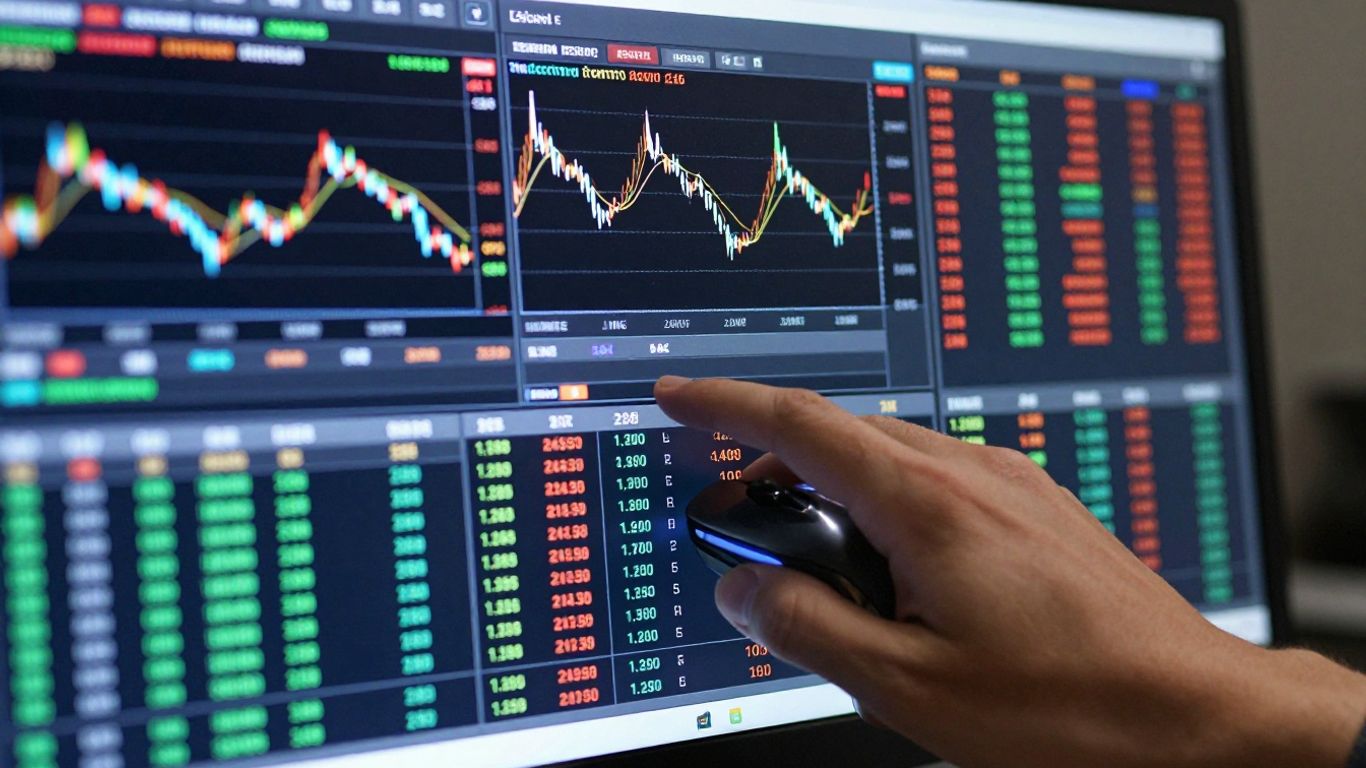
Alright, so you’ve got your paper trading account set up on TradingView. Now what? It’s time to actually get familiar with the trading panel itself. This is where all the action happens, virtually speaking, of course.
Understanding Your Account Overview
When you first open the trading panel, you’ll see a summary of your paper trading account. It’s pretty straightforward. You’ll see your current balance, which you can set to match what you plan to start with in real trading. There’s also a section for your open positions – these are the trades you currently have active. Below that, you’ll find your order history and a profit and loss (P&L) statement. This P&L is your report card, showing you exactly how you’re doing. It’s important to check this regularly to see if your strategies are actually making money or losing it.
Placing and Managing Trades
This is the fun part, right? Placing trades is simple. You can usually do it directly from your chart or through the trading panel itself. You’ll need to decide on the asset you want to trade, the quantity, and the type of order. For beginners, using limit orders is a good idea because you can specify the exact price you want to buy or sell at. This helps avoid unexpected costs. You can also set stop-loss orders to limit potential losses and take-profit orders to lock in gains. If you change your mind before a trade executes, you can easily modify or cancel it.
Here’s a quick look at common order types:
- Market Order: Executes immediately at the best available price. Good for quick entries, but the price might not be exactly what you expected.
- Limit Order: Executes only at your specified price or better. Gives you price control.
- Stop Order: Becomes a market order once a specific price is reached. Often used for stop-losses.
- Stop-Limit Order: Combines a stop order with a limit order. It becomes a limit order when the stop price is hit, giving you price control but with a risk it might not fill.
Interpreting Profit and Loss Statements
Your P&L statement is more than just numbers; it’s a story of your trading decisions. It breaks down your gains and losses, often showing them as both a dollar amount and a percentage. You can see your unrealized P&L (for open trades) and your realized P&L (for closed trades). Looking at this data helps you figure out which trades worked and which didn’t. It’s a good idea to keep a trading journal alongside this to note down why you made certain trades and what you learned from them. This helps you refine your approach over time and practice trading more effectively.
Don’t get too caught up in the day-to-day P&L swings. Focus on the overall trend of your performance and what you’re learning from each trade. Consistency in your approach is more important than hitting home runs every time.
Advantages of Digital Paper Trading
So, why bother with digital paper trading when you could just jot things down on a notepad? Well, for starters, it’s way more realistic. You get to see the market move in real-time, just like it would if you were using actual money. This isn’t just about clicking buttons; it’s about experiencing the actual flow of trading.
Real-Time Market Simulation
Digital platforms like TradingView offer a live look at market action. You’re not looking at yesterday’s prices or some delayed feed. Everything you see – the price charts, the order book, the news flashes – is happening now. This means you’re practicing with the same information a live trader has. It’s like practicing a sport on the actual field, not just in the locker room.
- See live price movements and chart updates.
- React to breaking news as it impacts the market.
- Understand how order flow affects prices in real-time.
The biggest win here is that you’re not just guessing. You’re making decisions based on current conditions, which is exactly what you’ll do when real money is on the line. This kind of practice is invaluable for getting a feel for market volatility and how quickly things can change.
Instant Trade Analysis and Tracking
Forget scribbling notes after every trade. Digital paper trading automatically logs everything. You can see exactly when you entered, when you exited, how much you made or lost, and why you made that move. This makes reviewing your performance super easy. You can quickly spot patterns in your trading, like always missing the perfect exit or entering trades too late.
Here’s a quick look at what you get:
| Metric | Description |
|---|---|
| Entry/Exit Price | The exact price you bought or sold at. |
| P/L | Your profit or loss on that specific trade. |
| Trade Duration | How long you held the position. |
| Strategy Used | The reason or method behind your trade decision. |
This detailed record-keeping is a huge step up from manual methods. It helps you learn from mistakes without the sting of losing actual cash. You can find more about risk-free trading on platforms like this.
Mimicking Real-World Trading Conditions
Digital paper trading tools are designed to be as close to the real thing as possible. They often include features that simulate the actual trading environment, such as:
- Market Data: Access to historical data and real-time feeds.
- Indicators: A full suite of technical indicators to analyze charts.
- Order Execution: Simulating how orders are filled, including potential slippage (though often minimized in paper trading).
- Commissions and Fees: You can often set these to match what a broker would charge, adding another layer of realism.
This level of detail means you’re not just playing a game; you’re preparing for the actual trading floor. It helps you get comfortable with the tools and the environment before you commit any of your own funds.
Maximizing Your Paper Trading Experience
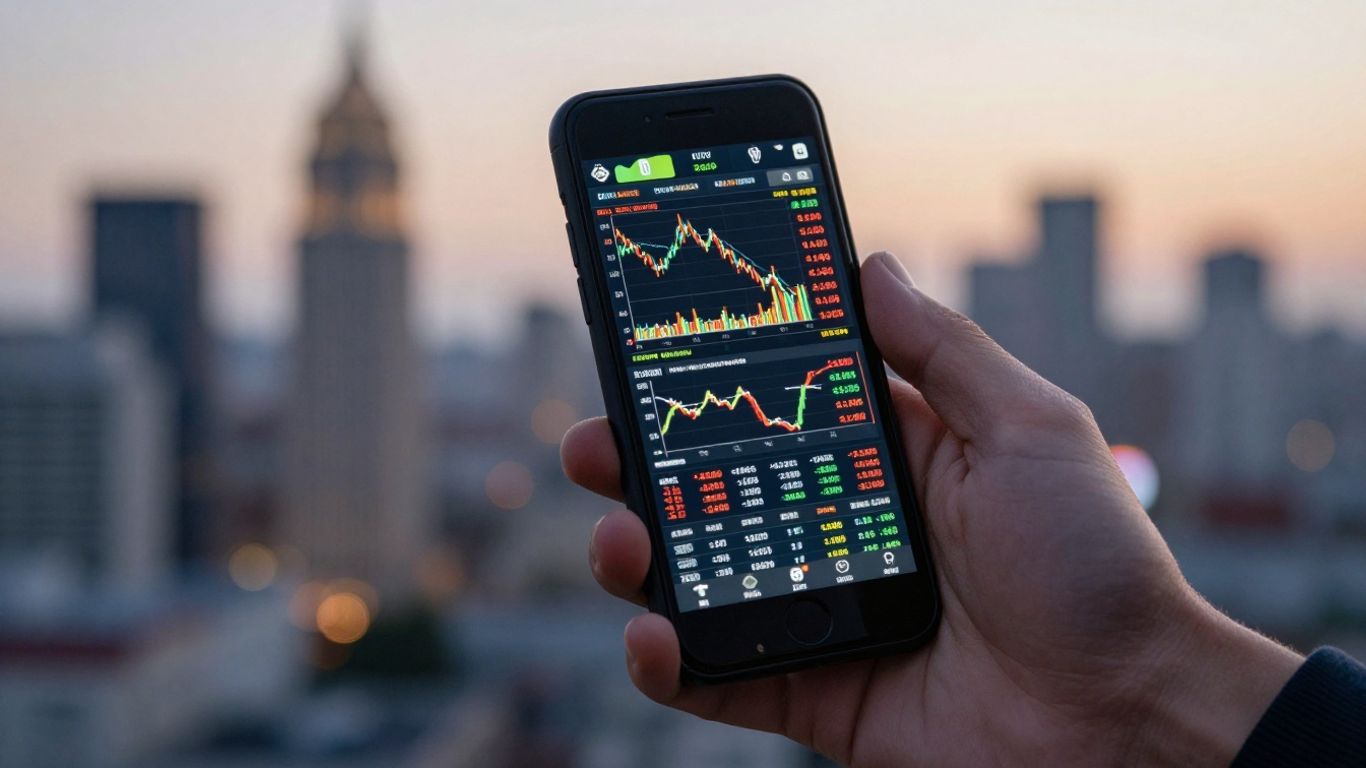
So, you’ve got your paper trading account set up and you’re ready to go. That’s great! But just clicking around and making random trades isn’t going to get you anywhere useful. To really make this practice time count, you’ve got to treat it like the real deal. It’s your chance to build solid habits before real money is on the line.
Embracing Simulated Market Realism
Don’t just go through the motions. Try to make your practice sessions feel as close to actual trading as possible. This means being honest with yourself about how you’d react if it were real money. It’s easy to take big risks when you know you can’t actually lose anything, but that’s not going to help you when you’re live. Think about the stress, the quick decisions, and the potential for unexpected market moves. Try to factor in things like slippage – that’s when your order doesn’t fill at the exact price you wanted because the market moved. Paper trading platforms don’t always show this perfectly, so try to mentally account for it.
The goal here is to build a mental framework that prepares you for the actual trading floor. If you don’t take your paper trades seriously, you’re essentially just playing a game and not learning anything that will stick.
Experimenting with Diverse Trading Strategies
This is where paper trading really shines. It’s a risk-free zone to try out all sorts of trading ideas you might have. Curious about day trading? Want to see how swing trading works? Maybe you’re interested in options? Now’s the time to test them. Don’t be afraid to step outside your usual comfort zone. Keep a record of what you try and how it goes. This helps you see what fits your style and what doesn’t.
Here are a few strategy types to consider testing:
- Trend Following: Identify assets moving strongly in one direction (up or down) and trade with that momentum.
- Mean Reversion: Look for assets that have moved far from their average price and bet on them returning to that average.
- Breakout Trading: Watch for assets breaking through established price levels (resistance or support) and trade in the direction of the break.
Developing Discipline and Honesty in Practice
This is probably the most important part. You need to be disciplined and honest with yourself. If you make a bad trade, own it. Don’t go back and change your entry or exit points in your notes just to make yourself look better. That’s cheating yourself out of a learning opportunity. Think of it like practicing a musical instrument – you wouldn’t skip the hard parts in rehearsal and expect to play perfectly on stage, right? The same applies here. Keep a trading journal to track your trades, your reasons for making them, and the results. Review it regularly to see what’s working and what needs adjustment. This consistent, honest review is what turns practice into real skill.
Exploring Trading Strategies with Paper Trading
Paper trading is your personal sandbox for trying out different ways to trade. It’s the perfect spot to test theories without the worry of losing actual cash. Think of it as a dress rehearsal before the big show.
Testing Options Trading Strategies
Options can seem a bit much at first, right? But with paper trading, you can mess around with strategies like covered calls or protective puts. See how they behave when the market moves up or down. You can also get a feel for the ‘greeks’ – Delta, Gamma, Theta, Vega – and how they mess with option prices. It’s a low-stakes way to learn the ropes.
Practicing Trend Following and Mean Reversion
Two common approaches you can really dig into are trend following and mean reversion. With trend following, you’re looking for stocks that are already moving in a clear direction – up or down – and you jump in with that trend. Mean reversion is the opposite; you’re looking for stocks that have gone a bit too far from their usual price and betting they’ll snap back. Paper trading lets you see which of these, or other methods, fit your style.
Implementing Breakout Trading Techniques
Breakout trading is another strategy worth practicing. This involves spotting when a stock price is stuck in a range and then jumping in when it bursts out of that range, either up or down. You can practice identifying these ranges and then see if your trades work out when the price breaks free. The key is to treat these practice trades with the same seriousness you would real ones.
Don’t just click around randomly. Set clear goals for each strategy you test. Are you trying to catch a quick move, or are you holding for a few days? Define your entry and exit points beforehand. This makes the practice much more useful.
Here are some ideas to get you started:
- Define your objective: What do you want to learn from this strategy test?
- Set risk limits: Decide how much virtual money you’re willing to risk on each trade, just like you would with real money.
- Keep a journal: Write down why you entered a trade, how you exited, and what the outcome was. This is super important for learning.
Building Confidence with Trading Interfaces
Getting comfortable with the tools you’ll use for trading is a big part of the process. Think of it like learning to drive a car; you wouldn’t want to hit the highway for the first time without knowing where the gas pedal is, right? TradingView’s paper trading setup is your practice lot. It lets you get a feel for the platform without any real money on the line. This is where you learn the ins and outs of placing orders, checking your account status, and seeing how your trades are doing in real-time.
Getting Comfortable with Trading Tools
TradingView offers a lot of features, and it can seem a bit overwhelming at first. The paper trading account is your sandbox to play around. You can click on every button, explore every menu, and see what happens. This hands-on experience is way better than just reading about it. You’ll start to recognize where to find charts, how to add indicators, and how to pull up the trading panel. The more you interact with the interface, the less intimidating it becomes. It’s all about building muscle memory so that when real money is involved, you’re not fumbling around.
Mastering Order Types
Understanding different order types is key. Paper trading lets you experiment with them all. You’ve got your basic market orders, which execute immediately at the best available price. Then there are limit orders, where you set a specific price you’re willing to buy or sell at. Stop-loss orders are super important for managing risk – they automatically sell if the price drops to a certain point. You can also try out stop-limit orders, which combine the two. Practicing these in a simulated environment helps you understand the nuances:
- Market Order: Quick execution, but price might not be exactly what you expected.
- Limit Order: You control the price, but execution isn’t guaranteed.
- Stop-Loss Order: Protects against big losses, but can trigger at a worse price in fast markets.
- Stop-Limit Order: Offers price control with a stop trigger, but can miss execution.
Reducing Stress Before Live Trading
Honestly, the biggest hurdle for many new traders isn’t the market itself, but the anxiety that comes with it. When you’ve spent time in the paper trading environment, you’ve already faced the simulated ups and downs. You’ve seen your virtual profits grow and shrink. This exposure helps desensitize you to the emotional rollercoaster. It builds a level of confidence that comes from knowing you can execute trades, manage positions, and understand the platform under pressure, even if that pressure is just pretend for now. It’s like practicing a presentation in front of friends before the big meeting – you’re more prepared and less nervous.
The goal here isn’t just to make fake money. It’s about building familiarity and trust with the trading platform. When you know the interface like the back of your hand, you can focus more on your trading strategy and less on the mechanics of placing a trade. This mental shift is huge for reducing stress and making better decisions when you transition to live trading.
Wrapping It Up
So, we’ve gone over how to use TradingView’s paper trading feature. It’s a pretty neat tool, right? It lets you practice trading without actually losing any money, which is a big deal when you’re just starting out or trying something new. Think of it like practicing a sport before the big game – you wouldn’t just jump in without any warm-up. Paper trading gives you that safe space to figure things out, test your ideas, and get a feel for how the markets move. Don’t just treat it like a game, though. Try to be as serious with it as you would with real money. That way, when you do decide to trade with actual cash, you’ll be much better prepared and hopefully, more successful. Keep practicing, keep learning, and you’ll be on your way.
Frequently Asked Questions
What exactly is paper trading?
Paper trading is like a practice game for trading stocks or other money stuff. You get fake money to buy and sell things in the market. It helps you learn how to trade without losing any real money if you make a mistake. Think of it like a flight simulator for pilots, but for traders!
Why is using TradingView for paper trading a good idea?
TradingView is a popular tool that shows you real market prices and lets you practice trading easily. It feels a lot like trading with real money because it uses live market data. This helps you get used to the platform and learn how to make trades before you use your own cash.
How much money do I start with in TradingView’s paper trading?
When you first start, TradingView usually gives you $100,000 in fake money. But you can change this amount! You can reset your paper trading account to match the amount of money you plan to use when you start trading for real. This makes your practice more realistic.
Can I try different trading strategies with paper trading?
Absolutely! Paper trading is the perfect place to try out all sorts of trading ideas. You can test strategies like following trends, trying to catch prices when they bounce back, or trading when prices break out. It’s a safe way to see what works for you without any risk.
Does paper trading help me get over the fear of trading with real money?
Yes, it really does! By practicing a lot and getting comfortable with how trades work and how the market moves, you build confidence. When you finally trade with real money, you’ll feel less nervous because you’ve already been through the motions many times in your practice sessions.
Is paper trading useful even for experienced traders?
Definitely! Markets are always changing, and new situations pop up. Even experienced traders use paper trading to test new strategies, get used to different types of markets (like crypto if they usually trade stocks), or practice during uncertain times without risking their money. It’s a great way to keep skills sharp.