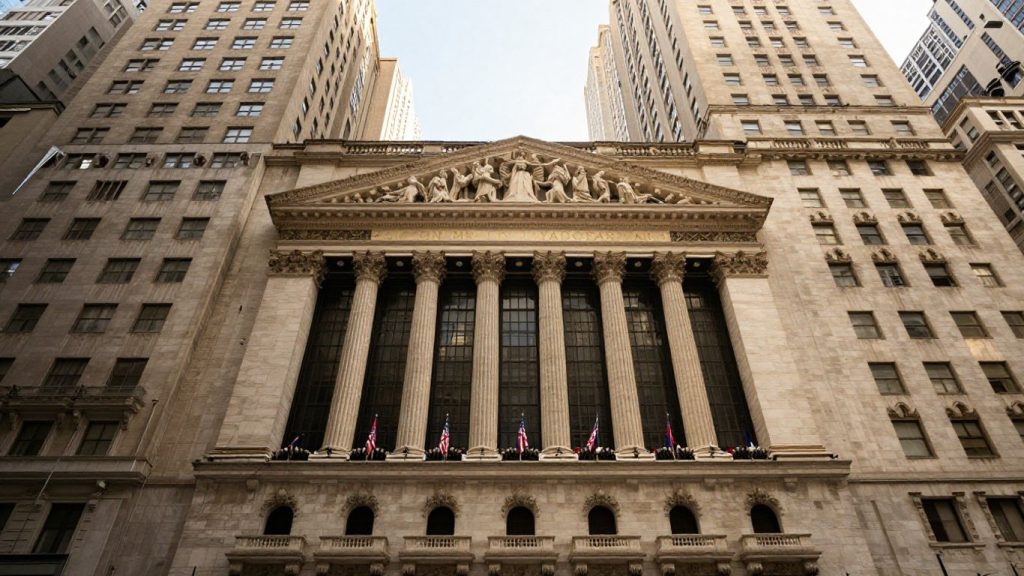
Figuring out the best time to trade on the New York Stock Exchange can feel like a puzzle. When exactly is the market open, and what’s the deal with those early morning or late evening trading sessions? We’ll break down the trading time new york stock exchange, so you know when to watch the market and when to maybe grab a coffee.
Key Takeaways
- The main trading hours for the NYSE and Nasdaq are Monday through Friday, from 9:30 AM to 4:00 PM Eastern Time (ET).
- Other North American exchanges generally follow a similar schedule to the NYSE.
- Trades placed when the market is closed usually get processed when it opens next, unless your broker has special options.
- Extended trading happens before 9:30 AM and after 4:00 PM ET, but there’s usually less activity and more price swings.
- The stock market observes several holidays and sometimes closes early before them, so always check the calendar.
Understanding the Core Trading Time at the NYSE
When you’re looking to trade stocks on the New York Stock Exchange (NYSE), knowing the clock is pretty important. It’s not just about when you can place an order, but also when most of the action happens. The NYSE, along with other major North American exchanges like Nasdaq, sticks to a pretty standard schedule.
The Standard NYSE Trading Window
The main trading session for the NYSE runs from Monday through Friday. It officially kicks off at 9:30 AM Eastern Time (ET) and wraps up at 4:00 PM Eastern Time (ET). This is the period when the vast majority of stock buying and selling takes place. Think of it as the main event, where most investors and traders are actively participating. This 9:30 AM to 4:00 PM ET window is the heart of the trading day.
Consistency Across North American Exchanges
One thing that makes trading in North America a bit simpler is that most major exchanges follow the same core hours. Whether you’re looking at the NYSE or Nasdaq, the 9:30 AM to 4:00 PM ET timeframe is the norm. This consistency helps create a unified market environment across the region. It means that if you’re following news or events impacting the US market, you can generally expect similar trading activity across these platforms during the same hours. This alignment is a big deal for anyone trading across different securities or even different exchanges within North America.
The Importance of Eastern Time
You’ll notice that all these times are given in Eastern Time (ET). This is because New York City is the financial hub, and its time zone dictates the official market hours. Whether you’re in California, Texas, or even overseas, when we talk about the NYSE trading hours, we’re always referring to ET. It’s important to remember that Eastern Time has two variations: Eastern Standard Time (EST) and Eastern Daylight Time (EDT), depending on the time of year. EST is UTC-5, while EDT is UTC-4. So, if you’re in a different time zone, you’ll need to do a quick conversion to know exactly when the market opens and closes relative to your local time. For example, if you’re in Los Angeles, which is on Pacific Time (PT), the market opens at 6:30 AM PT and closes at 1:00 PM PT. Keeping track of this time difference is key for planning your trades effectively.
Understanding these core hours is the first step. It sets the stage for everything else, from when to watch for market-moving news to when your orders will actually be processed. It’s the bedrock of your trading strategy on the NYSE.
Here’s a quick rundown of the standard hours:
- Monday – Friday: 9:30 AM to 4:00 PM ET
- Weekends: Closed
- Market Holidays: Closed (specific dates vary)
This regular schedule provides a predictable framework for most trading activities. However, it’s also good to know that there are opportunities to trade outside these core hours, which we’ll get into next.
Beyond Regular Hours: Extended Trading Opportunities
So, the NYSE has its main hours, right? From 9:30 AM to 4:00 PM ET. But what if you’ve got news hitting after the bell rings, or you want to get in before the morning rush? That’s where extended trading sessions come into play.
Navigating Pre-Market Trading
Think of pre-market trading as the early bird special for stocks. It usually kicks off around 4:00 AM ET and goes until the main market opens at 9:30 AM ET. This is your chance to react to overnight news from overseas or get ahead of any big announcements. It’s not as busy as regular hours, though, so you might see bigger gaps between the buy and sell prices. You’ll need to check with your broker to see exactly when their pre-market access starts.
Exploring After-Hours Trading Sessions
Once the 4:00 PM ET closing bell sounds, the trading doesn’t necessarily stop. The after-hours session typically runs from 4:00 PM to 8:00 PM ET. This is useful if a company releases its earnings report late in the day or if there’s a significant development after the market closes. Like pre-market, it’s a bit of a wild west out there – less trading volume means prices can swing more dramatically. It’s a good idea to understand the T+2 settlement cycle to know when your trades will actually be finalized.
Liquidity and Volatility in Extended Hours
Here’s the main thing to remember about trading outside the core 9:30 AM to 4:00 PM ET window: it’s usually less liquid and more volatile. What does that mean? Well, fewer buyers and sellers are around, so it can be harder to get your order filled at the exact price you want. Prices can also jump around more easily. So, while these extended hours offer flexibility, they come with their own set of challenges. It’s a trade-off, for sure.
- Lower Volume: Fewer participants mean fewer trades happening.
- Wider Spreads: The difference between the highest price a buyer will pay and the lowest price a seller will accept is often larger.
- Price Swings: Small trades can sometimes cause bigger price movements.
Trading outside of regular hours requires a bit more caution. You need to be aware that your orders might not execute immediately or at the price you expect. It’s always best to have a clear plan and understand the risks involved before jumping in.
Navigating NYSE Trading Time Around Holidays and Events
Just like you need to know when your local grocery store is open, understanding the New York Stock Exchange’s schedule around holidays and special events is pretty important for traders. It’s not always a straight 9:30 AM to 4:00 PM, Monday through Friday, you know.
Observing Market Holidays
The NYSE takes a break on several U.S. federal holidays. Think New Year’s Day, Martin Luther King Jr. Day, Presidents’ Day, Good Friday, Memorial Day, Independence Day, Labor Day, Thanksgiving Day, and Christmas Day. If a holiday falls on a Saturday, the market usually closes the Friday before. If it’s on a Sunday, it’s often closed the following Monday. It’s good to keep a list handy, or just check the official NYSE holiday schedule to avoid surprises.
Early Closures Before Major Holidays
Sometimes, the market doesn’t just close for the whole holiday; it also shuts down early the day before. This often happens before big holidays like Thanksgiving, Christmas, and Independence Day. For example, the market might close at 1:00 PM ET on these days. This means you’ve got a shorter window to get your trades in, so planning ahead is key. It’s a bit like knowing when the post office closes early before a long weekend.
Impact of Unforeseen Market Closures
While less common, unexpected events can also lead to market closures. Major weather events, like Hurricane Sandy in 2012, or significant national emergencies can force the NYSE to shut down for a day or even longer. These situations can cause a lot of uncertainty and volatility when the market eventually reopens. It’s rare, but it’s something to be aware of – the market isn’t always open, even on a weekday.
Unexpected closures can really shake things up. They disrupt the usual flow of trading and can lead to big price swings when the market finally gets back online. Staying informed about any news that might affect trading hours is a smart move for any investor.
Strategic Considerations for Trading Time at the NYSE
When you’re looking at trading on the New York Stock Exchange, just knowing the basic hours isn’t quite enough. You’ve got to think about how different times of day, and even what’s happening across the globe, can affect your trades. It’s not just about when the bell rings to start or end the day; it’s about the whole picture.
Timing Trades for Maximum Impact
Think about the flow of information. Big news often breaks overnight or early in the morning, before the NYSE even opens. This means that by 9:30 AM ET, a lot of the market’s reaction might have already happened. If you’re trying to get in on a move based on that news, you might be a bit late if you wait for the regular session to start. On the flip side, the last hour of trading, from 3 PM to 4 PM ET, can be pretty active as people adjust their positions before the close. Sometimes, you can catch some good moves then, but it can also get a bit choppy.
Here’s a quick look at typical activity:
- Opening Bell (9:30 AM – 10:30 AM ET): Often sees high volume as overnight news is processed and initial trades are placed. Can be volatile.
- Mid-Day (10:30 AM – 3:00 PM ET): Generally a more stable period, though significant news can still cause swings.
- Closing Bell (3:00 PM – 4:00 PM ET): Volume and volatility often pick up again as traders close out positions or rebalance portfolios.
The settlement cycle, often referred to as T+2, means that when you buy or sell a stock, the actual transfer of money and ownership takes a couple of business days to finalize. This isn’t something you see directly in the price, but it’s important for understanding cash balances and managing risk, especially if you’re trading frequently.
The Role of Overseas News in Trading Time
Don’t forget that the world doesn’t stop when the NYSE closes. Events happening in Europe, Asia, or anywhere else can have a ripple effect. If there’s a major economic announcement in China or a political development in Europe, it could influence how investors feel about US stocks when the market reopens. Keeping an eye on global headlines, even when the US market is quiet, can give you a heads-up on potential market movements. This is why many traders look at futures markets or international markets that might be open when the NYSE is closed.
Understanding Settlement Cycles
It’s not just about when you place a trade, but when that trade actually settles. In the US, the standard is T+2, meaning trades take two business days to complete. So, if you buy a stock on Monday, the money leaves your account and the stock officially lands in your portfolio on Wednesday. This delay matters for cash management and can affect how quickly you can use proceeds from a sale for another purchase. If you sell a stock on Friday, it won’t settle until Tuesday. This is a pretty standard practice, but it’s good to be aware of it so you don’t run into surprises with your account balance.
Global Perspectives on NYSE Trading Time
Aligning International Schedules with NYSE Hours
For folks outside the U.S., keeping tabs on the New York Stock Exchange (NYSE) means getting friendly with Eastern Time (ET). Most major global markets try to sync up their trading hours to some extent, aiming for a window where there’s enough activity to make trading worthwhile. It’s not always a perfect match, though. Think about markets in Asia or Europe; their regular business hours are way off from New York’s. This means international investors often have to adjust their own schedules, sometimes quite a bit, to catch the main action on Wall Street.
Trading American Depositary Receipts (ADRs)
If you’re an international investor and find the NYSE hours a bit tricky to work with, there’s a neat workaround: American Depositary Receipts, or ADRs. These are basically certificates that represent shares of a foreign company but trade on U.S. stock exchanges. They’re priced and settled in U.S. dollars, making them super convenient for U.S.-based investors. For those abroad, it means you can get exposure to U.S. companies without directly dealing with the complexities of foreign exchanges or trying to perfectly time your trades with NYSE hours. It simplifies things quite a bit.
Time Zone Differences for International Investors
Let’s break down how time zones can really mess with your trading plans if you’re not in New York. The NYSE runs from 9:30 AM to 4:00 PM ET. So, if you’re in London, that’s roughly 2:30 PM to 9:00 PM your time. If you’re in Tokyo, it’s a late-night affair, around 10:30 PM to 5:00 AM the next day. Even places like Mexico City, which is in the Central Time Zone, generally align their trading hours to mirror the NYSE, so they’re also operating during that same general ET window.
Here’s a quick look at how some major cities stack up against New York’s 9:30 AM ET open:
| City | Time Zone | Local Open Time (approx.) |
|---|---|---|
| New York | ET | 9:30 AM |
| London | GMT/BST | 2:30 PM |
| Tokyo | JST | 10:30 PM |
| Sydney | AEST | 11:30 PM |
| Mexico City | CST | 8:30 AM |
The reality for many international investors is that they’ll be trading either very early in their morning or late into their evening. This can make it tough to stay focused and react quickly to market changes, especially if you have other commitments during those hours. It really highlights the need for a solid strategy and perhaps using those extended trading sessions if your broker allows.
Practicalities of Trading Outside Standard Hours
So, you’re thinking about trading when the New York Stock Exchange isn’t officially open? It’s definitely possible, but there are some things you need to know before you jump in. It’s not quite the same as trading during the regular 9:30 AM to 4:00 PM ET window.
Order Execution When the Market is Closed
If you try to place a trade when the market is shut, your order won’t just disappear. Instead, it usually gets put in a queue. This means it will wait until the next trading session starts. Think of it like leaving a message for the market to pick up later. For example, if you put in an order at 7 PM on a Saturday, it’ll be there waiting for the market to open on Monday morning. Your broker might offer ways to trade outside these hours, but it’s important to understand how they handle these orders.
Risks and Rewards of Extended Trading
Trading before the market opens (pre-market) or after it closes (after-hours) can give you more chances to react to news. This can be good if you want to get in or out of a position quickly. However, it’s not all sunshine and rainbows. These extended sessions often have fewer buyers and sellers compared to regular hours. This can mean:
- Wider Spreads: The difference between the highest price a buyer will pay and the lowest price a seller will accept can be bigger. This can cost you more.
- Higher Volatility: Prices can jump around more suddenly. A small piece of news can cause a big price swing.
- Limited Liquidity: It might be harder to find someone to take the other side of your trade, meaning your order might not get filled, or it might get filled at a price you didn’t expect.
The potential for quicker reactions to news is a big draw, but the increased risk of unfavorable pricing is something to seriously consider.
Broker Policies for After-Hours Trading
Every brokerage firm has its own rules when it comes to trading outside of regular hours. Some might give you access to pre-market and after-hours sessions, while others don’t. It’s really important to check with your broker to understand:
- What specific hours they allow for extended trading.
- Which types of orders they accept during these times (e.g., limit orders vs. market orders).
- If there are any extra fees or commissions involved.
- Which stocks or securities are available for trading during these extended periods.
Understanding your broker’s specific policies is key. It prevents surprises and helps you use extended trading hours more effectively, or decide if it’s even worth it for your trading style.
Wrapping Up Your Trading Day
So, we’ve gone over when the New York Stock Exchange is actually open for business. It’s not just about the main hours, but also those early morning and late evening sessions that can sometimes move things. Knowing these times, and when the market takes a break for holidays or other reasons, really helps you plan your trades. It’s like knowing the best time to go fishing – you want to be there when the fish are biting. Keep an eye on the clock, and you’ll be in a better spot to make your moves.
Frequently Asked Questions
When is the New York Stock Exchange (NYSE) open for trading?
The NYSE is open for regular trading from Monday to Friday, between 9:30 AM and 4:00 PM Eastern Time (ET). Think of it like a store’s main business hours, when most of the buying and selling happens.
Can I trade stocks before or after the main NYSE trading hours?
Yes, you can! There are special times called pre-market trading (before 9:30 AM ET) and after-hours trading (after 4:00 PM ET). However, it’s good to know that fewer people are trading then, so prices might jump around more, and it can be harder to buy or sell at the exact price you want.
What happens if I try to place a trade when the stock market is closed?
If you try to buy or sell stocks when the market is closed, your order usually just waits. It will be processed when the market opens again. If your broker offers special trading times, your order might go through then, but it could be at a different price than you expected.
Does the NYSE close for holidays?
Yes, the NYSE closes on major holidays like New Year’s Day, Independence Day (July 4th), Thanksgiving, and Christmas. Sometimes, the market might also close early on the day before a holiday, like Christmas Eve.
Why is Eastern Time important for NYSE trading?
Eastern Time (ET) is the standard time zone used for the NYSE and most other major stock markets in North America. So, whether you’re in New York, Toronto, or Mexico City, the main trading times are all based on ET, making it easier for everyone to follow the same schedule.
What is the ‘T+2 settlement cycle’?
The T+2 settlement cycle means that when you buy or sell a stock, the actual exchange of money and shares doesn’t happen immediately. It takes two business days after the trade date. So, if you trade on Monday, the deal is fully settled on Wednesday.