Thinking about getting into forex trading? It’s a big market, and honestly, it can feel like a lot to take in at first. You hear about people making money, but also about the risks. This guide is here to help you figure out a solid trading forex strategy. We’ll break down what you need to know, from the basics of how the market works to putting together a plan that makes sense for you. No fancy talk, just straight-up info to get you started on the right foot.
Key Takeaways
- The forex market is where currencies trade, operating 24/5 through electronic networks, not a central location.
- Developing a trading forex strategy involves picking a style (like day trading or swing trading), understanding market news, and using charts to find good entry and exit points.
- A successful trading forex strategy needs careful currency pair selection, smart use of leverage, and keeping an eye on interest rates and economic news.
- Creating a trading plan with clear goals and keeping a journal to review your trades is important, but sticking to the plan, especially when emotions run high, is what really matters.
- Be ready for market ups and downs, manage your own feelings about trading, and understand that costs like spreads can impact your profits.
Understanding the Forex Market Landscape

Alright, let’s talk about the forex market. It’s basically a giant, worldwide marketplace where different countries’ money gets bought and sold. Think of it as the biggest market on the planet, way bigger than any stock market you’ve ever heard of. It’s open 24 hours a day, five days a week, which is pretty wild. This means you can technically trade pretty much anytime, from Sunday evening to Friday afternoon, U.S. time. It’s all done electronically, no single building where everyone meets up. Instead, it’s a network of computers connecting traders all over the globe.
What Is the Forex Market?
The foreign exchange market, or forex (FX) for short, is where national currencies are exchanged. It’s the largest and most liquid financial market globally, with trillions of dollars changing hands daily. This massive scale means prices can move quickly, offering opportunities but also risks. Currencies are always traded in pairs, like the Euro against the U.S. Dollar (EUR/USD) or the British Pound against the Japanese Yen (GBP/JPY). When you trade forex, you’re essentially betting on whether one currency will strengthen or weaken against another. It’s a constant dance of supply and demand, influenced by everything from economic news to political events.
How Does the Forex Market Work?
So, how does this whole thing actually function? Unlike stock markets that have set opening and closing times, forex operates around the clock. The trading day starts in Asia, moves to Europe, and then finishes in North America. This continuous cycle is why it’s a 24/5 market. While it was once dominated by big banks and institutions, online brokers have made it accessible to individual traders like us. You’re buying one currency while simultaneously selling another, hoping the exchange rate shifts in your favor. For instance, if you buy EUR/USD, you’re buying Euros and selling U.S. Dollars, expecting the Euro to gain value relative to the Dollar. Understanding the basic market structure is key here.
Key Market Participants
Who’s actually trading in this massive market? It’s a mix of players:
- Central Banks and Governments: They trade currencies to manage their country’s reserves, influence exchange rates, and conduct international business.
- Commercial Banks and Financial Institutions: These are the big players, handling massive volumes for their clients and trading for their own accounts. They form the backbone of the forex market.
- Corporations: Businesses that operate internationally need to exchange currencies to pay for imports, receive payments for exports, or manage foreign investments.
- Investment Managers and Hedge Funds: These groups trade forex to hedge against currency risk in their portfolios or to speculate on currency movements.
- Retail Traders: That’s us! Individual traders who access the market through online brokers, often with smaller amounts of capital.
The forex market is a complex ecosystem where global economic forces, political developments, and investor sentiment all play a role in shaping currency values. It’s a dynamic environment that requires constant attention and a solid strategy to navigate successfully.
Developing Your Core Trading Forex Strategy
Alright, so you’ve got a handle on what the forex market is and how it generally works. That’s a good start! But to actually make money, you need a plan, a strategy. It’s not just about picking a currency and hoping for the best. You’ve got to figure out how you’re going to trade.
Choosing Your Trading Style: Scalping, Day Trading, Swing Trading, or Position Trading
First off, how much time do you have and what’s your personality like? This is where you pick your trading style. Are you the type who wants to make lots of quick, small trades throughout the day, or do you prefer to hold positions for days or even weeks?
- Scalping: This is for the super-fast traders. You’re in and out in seconds or minutes, aiming for tiny profits on many trades. It requires intense focus and quick decision-making.
- Day Trading: You open and close all your trades within the same trading day. No overnight risk, but still requires a good chunk of your day.
- Swing Trading: You hold trades for a few days to a couple of weeks, trying to catch bigger price swings. This needs less constant attention than day trading.
- Position Trading: This is the long game. You might hold a trade for weeks, months, or even longer, focusing on major trends. It’s more about patience and big-picture analysis.
Fundamental Analysis for Strategic Decisions
This is about looking at the big economic picture. What’s going on with countries’ economies? Things like interest rates, inflation, employment numbers, and political stability all play a role. If a country’s economy is doing well, its currency usually gets stronger. It’s like looking at a company’s financial reports before investing. You’re trying to figure out if a currency is undervalued or overvalued based on solid economic data. This kind of analysis helps you decide which currency pairs might be good long-term bets. For instance, understanding how interest rates affect currency values is key to developing a trading strategy.
Technical Analysis for Precise Entry and Exit Points
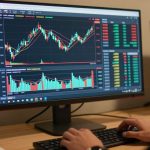
While fundamental analysis tells you what to trade, technical analysis helps you figure out when to trade it. This involves looking at price charts and using indicators to spot patterns and trends. Think of it like reading a weather map to decide when to go sailing. You’re looking for signals that suggest a price is likely to move in a certain direction. Common tools include moving averages, support and resistance levels, and chart patterns like head and shoulders or double tops. The goal is to find high-probability entry and exit points to maximize your potential profit and limit your losses.
Building a solid strategy means combining these different approaches. You need to know the economic landscape (fundamental analysis) to pick your currency pairs, and then use chart patterns and indicators (technical analysis) to time your entries and exits precisely. It’s a two-part process that works together.
Essential Components of a Profitable Trading Forex Strategy
Alright, so you’ve got a handle on how the whole forex thing works and maybe even picked a trading style. Now, let’s talk about what actually makes a strategy work, not just in theory, but when you’re putting your money on the line. It’s not just about picking a currency and hoping for the best. There are a few key pieces you absolutely need to get right.
Currency Pair Selection and Analysis
Picking which currency pairs to trade is a big deal. You can’t just jump into everything. Some pairs move more predictably than others, and some have way more trading volume, which usually means tighter spreads and easier entry/exit. Think about pairs like EUR/USD, USD/JPY, or GBP/USD. They’re popular for a reason – lots of information out there and generally good liquidity. But don’t just pick them because they’re common. You need to look at what’s going on with the economies behind those currencies. Are there big economic events coming up? What are the central banks doing? Understanding the individual personalities of these pairs is step one.
Leverage Management and Risk Mitigation
This is where things can get dicey, fast. Leverage is like a double-edged sword. It lets you control a larger position with less capital, which sounds great for making bigger profits. But, and this is a huge ‘but’, it also magnifies your losses just as much. Using too much leverage is a quick way to blow up your account. Most experienced traders use it sparingly. You need to figure out how much risk you’re comfortable with on any single trade. A common rule of thumb is to risk only a small percentage of your total trading capital, maybe 1-2%, on any one trade. Using stop-loss orders is also non-negotiable. These are like an insurance policy, automatically closing your trade if the market moves against you by a certain amount, preventing a small loss from becoming a disaster.
Understanding Interest Rates and Economic Indicators
Currencies don’t just move randomly; they’re tied to the economic health and policies of the countries they represent. Interest rates are a massive driver. If a country’s central bank raises interest rates, it generally makes that currency more attractive to investors looking for better returns. This can cause the currency’s value to rise. Conversely, falling interest rates can weaken a currency. Beyond interest rates, keep an eye on other economic indicators like inflation, GDP growth, employment figures, and political stability. These all paint a picture of a country’s economic strength and can influence currency values. You don’t need to be an economist, but knowing the basics and how they might affect your chosen currency pairs is pretty important.
Building a solid forex strategy isn’t about finding a magic bullet. It’s about putting together a plan that considers which markets you’ll trade, how you’ll protect your money, and what economic factors might move prices. It’s a bit like building a house – you need a strong foundation and all the right components in place before you can expect it to stand firm.
Building and Implementing Your Trading Plan
Alright, so you’ve got a strategy in mind, maybe you’ve even picked out a few currency pairs you like. That’s great! But just having a strategy isn’t quite enough, is it? You need a solid plan to actually use it. Think of it like having a recipe – you still need to follow the steps to make the cake, right?
Setting Realistic Trading Goals
First off, what are you trying to achieve? Don’t just say "get rich quick." That’s not a goal, that’s a wish. Your goals need to be specific. Are you aiming to grow your account by 5% this month? Or maybe you want to make enough to cover your monthly electricity bill from trading profits? It’s good to have a mix of short-term and long-term goals. For example:
- Short-term: Achieve a 2% profit on your trading capital within the next 30 days.
- Medium-term: Consistently make profitable trades for six consecutive months.
- Long-term: Build your trading account to a size that allows for a consistent monthly income within three years.
It’s super important that your goals are achievable. If you start with a small account, expecting to make thousands in the first week is just setting yourself up for disappointment. Be honest with yourself about what’s possible.
Creating a Trading Journal for Performance Review
This is where you become your own detective. You absolutely need to write down everything you do. Every trade, every decision, why you made it, what happened. This isn’t just busywork; it’s how you learn what’s working and what’s not.
Here’s a basic idea of what to track:
- Date and Time: When did you enter and exit the trade?
- Currency Pair: Which pair were you trading (e.g., EUR/USD)?
- Trade Direction: Were you buying (long) or selling (short)?
- Entry Price: Where did you get into the trade?
- Exit Price: Where did you get out?
- Stop-Loss Level: Where was your safety net set?
- Take-Profit Level: Where did you aim to take your profits?
- Reason for Trade: Why did you enter this specific trade? (e.g., "Broke resistance on H1 chart", "News event expected")
- Outcome: Profit or loss (in pips and currency amount).
- Notes: Any other observations, like how you felt, market news, etc.
Looking back at this journal regularly helps you spot patterns. Maybe you notice you always lose money on a certain currency pair during a specific time of day, or perhaps your winning trades often follow a particular chart setup. This information is gold.
The Importance of Discipline in Execution
This is probably the hardest part for most people. You’ve got your plan, you know your goals, you’ve got your journal ready. Now you have to actually stick to it, especially when things get a bit wild in the market. Emotions are the enemy here. Fear can make you exit a trade too early, and greed can make you hold on too long, hoping for just a little bit more.
Sticking to your trading plan, even when it feels uncomfortable or when the market seems to be moving against you, is what separates consistent traders from those who just gamble. It’s about following your pre-defined rules, not your gut feelings in the moment.
Discipline means:
- Only taking trades that meet your plan’s criteria. No "maybe" trades.
- Always using your stop-loss orders. No exceptions, even if you think "it’ll bounce back."
- Not over-trading. Stick to your planned number of trades per day or week.
- Accepting losses as part of the game and moving on to the next opportunity without revenge trading.
It takes practice, and honestly, it’s a constant battle. But building that discipline is key to turning your trading strategy into something that actually makes money over time.
Navigating the Challenges of Forex Trading
Look, trading forex isn’t always smooth sailing. Even with a solid strategy, you’re going to run into some bumps. It’s like trying to fix that bike I mentioned – things don’t always go as planned, and sometimes the market throws a curveball when you least expect it.
Managing Market Volatility and Speed
The forex market moves fast. Really fast. News breaks, economic reports drop, or some political event happens, and suddenly, prices can jump or drop in the blink of an eye. Remember back in 2015 when the Swiss franc suddenly shot up against the euro? Lots of traders got caught off guard and lost money because things happened too quickly. It’s not uncommon for currency values to swing quite a bit, sometimes prompting governments to step in to try and stabilize things. This rapid pace means you need to be ready to react, or better yet, have systems in place to protect you when things get wild.
Overcoming Psychological Pitfalls
This is a big one. Trading can mess with your head. You might find yourself:
- Trying to chase losses by making risky trades.
- Holding onto a losing trade for too long, hoping it will turn around.
- Closing a winning trade too soon because you’re scared of losing the profit.
- Making impulsive decisions based on fear or just a gut feeling.
Plus, the market is open 24 hours a day, five days a week. That means you can’t just check it during business hours. You’re either watching it constantly or you need to have really good exit points set up so you don’t get blindsided when you’re not looking.
The sheer speed of today’s forex market often means that regular traders are reacting to price changes rather than being ahead of them. It’s a constant battle to keep up.
Addressing Transaction Costs and Spreads
Even though spreads and fees might seem small, they really do add up, especially if you’re trading a lot. You have to make enough profit to cover these costs before you even start making actual money. It’s like paying a small toll on every single trade you make. For frequent traders, these costs can eat into profits significantly, so it’s something you absolutely need to factor into your strategy.
Practical Steps to Launch Your Forex Trading Journey
So, you’ve got a strategy, you’ve done your homework, and now you’re ready to actually start trading forex. That’s awesome! But before you jump in with both feet, there are a few key things to get sorted. Think of it like preparing for a big trip – you wouldn’t just hop on a plane without a ticket or a destination, right? Trading is similar. You need the right tools and a solid plan.
Selecting a Reputable Broker
This is a big one. Your broker is basically your gateway to the forex market. You want someone reliable, someone who’s regulated, and someone who makes trading easy. Look for brokers overseen by financial authorities in major countries. This adds a layer of security. Also, check out their trading platform – is it easy to use? Do they have good customer service if you run into problems? And don’t forget fees; they can add up.
Practicing with a Demo Account
Seriously, don’t skip this. Most brokers offer demo accounts, which let you trade with virtual money. It’s like a practice field. You can test out your strategy, get a feel for the platform, and make all your mistakes without losing real cash. It’s the best way to get comfortable with the mechanics of placing trades, setting stop-losses, and understanding how the market moves in real-time, but without the stress of real money on the line. Spend a good chunk of time here until you’re consistently seeing good results.
Starting Small with Real Capital
Once you’ve aced the demo account and feel confident, it’s time to trade with actual money. But here’s the trick: start small. Really small. Use an amount of money you can afford to lose without it messing up your life. This could mean opening a micro or mini account. The goal here isn’t to get rich quick; it’s to get used to the emotional side of trading with real stakes. As you gain experience and prove your strategy works with smaller amounts, you can gradually increase your position sizes. It’s all about building confidence and managing risk as you go.
The forex market moves fast, and it’s easy to get caught up in the excitement or fear. Starting small helps you keep your emotions in check while you learn the ropes with actual capital.
Wrapping It Up
So, we’ve gone through a lot of stuff about forex trading. It’s not exactly a walk in the park, and there are definitely risks involved, especially with how fast things can move and how leverage works. But, by learning the basics, picking a strategy that fits you, and really sticking to a plan, you can start to make sense of it all. Remember to practice a lot with a demo account before you put real money on the line, and always, always manage your risk. It’s about making smart moves, not just big ones. Keep learning, stay disciplined, and you’ll be on your way.
Frequently Asked Questions
What exactly is the Forex market?
Think of the Forex market as a giant global marketplace where different countries’ money is bought and sold. It’s where you can trade one currency for another, like swapping US dollars for Euros. This happens all the time, 24 hours a day, five days a week, because people and businesses all over the world need to exchange money for travel, trade, or investments.
How does trading money in Forex actually work?
In Forex, you’re not just trading money; you’re trading currency pairs, like the Euro and the US Dollar (EUR/USD). You try to guess if one currency will become stronger or weaker compared to the other. If you think the Euro will get stronger than the Dollar, you’d buy EUR/USD. If you’re right, you can sell it later for a profit. It’s like betting on which team will win a game, but with currencies!
What’s the difference between scalping, day trading, and swing trading?
These are just different ways traders try to make money. Scalpers make many small trades very quickly, aiming for tiny profits. Day traders buy and sell within the same day, not holding trades overnight. Swing traders hold trades for a few days or weeks, trying to catch bigger price moves. Position traders hold trades for months or even years, focusing on long-term trends.
Why is it important to pick the right currency pairs to trade?
Just like you wouldn’t bet on a team you know nothing about, it’s smart to focus on currency pairs you understand. Some pairs, like EUR/USD, are traded a lot and are usually more predictable. Learning about the economies behind these pairs helps you make better guesses about how their values might change.
What does ‘leverage’ mean in Forex trading?
Leverage is like borrowing money from your broker to trade with. It lets you control a much larger amount of money than you actually have in your account. This can make your profits bigger if you’re right, but it also means your losses can be much bigger if you’re wrong. It’s a powerful tool, but you have to be very careful with it.
Is Forex trading really risky? How can I protect myself?
Yes, Forex trading can be very risky because currency prices can change quickly. To protect yourself, it’s super important to only trade with money you can afford to lose. You should also learn how to use ‘stop-loss’ orders, which automatically close your trade if it starts losing too much money. Practicing with a demo account first is also a great way to learn without risking real cash.