Getting into forex trading can seem like a lot, especially when you’re just starting out. There’s so much information out there, and it’s easy to get overwhelmed. But honestly, it doesn’t have to be that complicated. We’re going to break down some simple forex strategies that beginners can actually use. Think of it like learning to cook – you start with basic recipes before you try making a soufflé. These strategies are your foundational dishes, designed to help you understand the market and make smart moves without getting lost in the weeds. We’ll cover the basics of how currencies work, how to spot trends, and most importantly, how to protect your money. Let’s get started on building your trading toolkit.
Key Takeaways
- Understand the basics of currency pairs and how economic news can affect them to make smarter trading choices.
- Learn to spot trends using simple chart patterns and moving averages, and know when to enter or exit trades.
- Always use stop-loss orders and figure out how much money to risk on each trade to keep your capital safe.
- Create a trading plan and stick to it, no matter what the market does, to avoid making emotional decisions.
- Focus on managing your emotions like fear and greed, and be patient to trade more consistently.
Foundational Simple Forex Strategies

Getting started in the forex market can feel like stepping into a whirlwind. There are so many moving parts, and it’s easy to get lost. But don’t worry, we’re going to break down some of the most basic, yet effective, strategies that can help you get your bearings. Think of these as your first steps before you even think about complex charts or fancy indicators. It’s all about understanding the landscape first.
Understanding Currency Pairs and Market Dynamics
Forex trading is all about currency pairs. You’re not just buying a currency; you’re buying one currency while selling another. For example, in EUR/USD, you’re looking at the Euro against the US Dollar. If you think the Euro will get stronger compared to the Dollar, you’d buy EUR/USD. If you think the Dollar will strengthen, you’d sell EUR/USD. It’s a constant push and pull.
- Major Pairs: These involve the US Dollar and another major currency like the Euro (EUR/USD), British Pound (GBP/USD), or Japanese Yen (USD/JPY). They tend to have the most liquidity, meaning it’s easier to buy and sell them without big price swings just from your trade.
- Minor Pairs: These are pairs that don’t involve the US Dollar but still include major currencies, like EUR/GBP or AUD/JPY.
- Exotic Pairs: These involve one major currency and one from an emerging economy, like USD/TRY (Turkish Lira). They can be more volatile and less liquid.
Understanding which currencies are paired up and what drives their value is step one. Think about the economies behind them. Is one country’s economy booming while another is struggling? That’s often reflected in the exchange rate. Keeping an eye on major economic news can give you a heads-up on potential moves. You can start by looking at how major currencies interact on a forex trading guide.
The forex market is a 24-hour, global marketplace. This means opportunities can arise at any time, but it also means you need to be aware of when the market is most active.
Leveraging Economic Indicators for Trading Decisions
Economic indicators are like the weather reports for currencies. They give you clues about the health of a country’s economy, which directly impacts its currency’s strength. You don’t need to be an economist, but knowing a few key indicators can make a big difference.
- Interest Rates: When a central bank raises interest rates, it usually makes that country’s currency more attractive to investors, potentially driving its value up. Lowering rates often has the opposite effect.
- Inflation (CPI): High inflation can erode a currency’s purchasing power, but it can also signal that a central bank might raise interest rates to combat it, which can be a mixed signal for traders.
- Employment Data (e.g., Non-Farm Payrolls in the US): Strong job growth usually indicates a healthy economy, which can boost a currency. Weak numbers can have the opposite effect.
These indicators are released on a schedule, often found on an economic calendar. Watching how the market reacts to these announcements can teach you a lot about currency dynamics. It’s about connecting the dots between economic health and currency prices.
Navigating Trading Hours and Market Liquidity
Forex trading happens around the clock, but not all hours are created equal. The market is most active when major financial centers are open and overlapping. This is when you’ll see the most trading volume and generally tighter spreads (the difference between the buy and sell price).
Here’s a quick look at the main trading sessions:
- Sydney Session: The first to open, but typically has lower volume.
- Tokyo Session: Volume picks up, especially for Asian currency pairs.
- London Session: This is usually the busiest session, overlapping with Tokyo and then New York. Major currency pairs see a lot of action here.
- New York Session: Overlaps with London, leading to the highest liquidity and volatility.
When liquidity is high, it’s easier to get your trades executed at the price you want. During low liquidity periods, especially during session overlaps or holidays, you might see wider spreads and more unpredictable price swings. Understanding these sessions helps you pick the best times to trade based on the pairs you’re interested in and your trading style.
Technical Analysis for Simple Forex Strategies
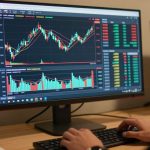
Alright, so you’ve got the basics down, and now it’s time to talk about looking at charts. Technical analysis is basically using past price movements to guess what might happen next. It sounds a bit like fortune-telling, but it’s more about spotting patterns and trends that have a history of repeating themselves. It’s a way to get a feel for the market’s mood without getting bogged down in all the economic news.
Identifying Trends with Chart Patterns
Charts are your best friend here. You’ll see lines and shapes that traders have named – things like ‘head and shoulders’ or ‘double tops’. These patterns can signal if a trend is likely to continue or reverse. For example, a ‘bull flag’ pattern often shows up when a price has been going up, pauses for a bit, and then looks ready to keep climbing. Learning to spot these can give you a heads-up on potential moves.
Utilizing Moving Averages for Entry and Exit Signals
Moving averages are like a smoothed-out version of the price. They help you see the general direction the price is heading, cutting out some of the daily noise. When a faster moving average crosses over a slower one, it can be a signal. For instance, if the 50-day moving average crosses above the 200-day moving average, some traders see that as a bullish sign, suggesting the price might go up. It’s a simple way to get entry or exit ideas.
Recognizing Support and Resistance Levels
Think of support as a floor and resistance as a ceiling for the price. Support is a price level where buying interest has historically been strong enough to stop prices from falling further. Resistance is where selling pressure has historically kicked in, preventing prices from rising higher. When price hits these levels, it often pauses or reverses. Watching how price reacts at these key areas can help you decide when to get in or out of a trade. Sometimes, if price breaks through a resistance level, that old resistance can become a new support level – traders call these ‘flip zones’.
Technical analysis isn’t about predicting the future with certainty. It’s about probabilities. You’re looking for setups where the odds are in your favor, based on how the market has behaved before. It’s a tool to help you make more informed decisions, not a crystal ball.
Here’s a quick look at how these concepts can play out:
- Uptrend: Price makes higher highs and higher lows. Support levels tend to hold, and resistance levels are broken.
- Downtrend: Price makes lower highs and lower lows. Resistance levels tend to hold, and support levels are broken.
- Consolidation: Price moves sideways within a range, often forming patterns that can precede a breakout in either direction.
Getting comfortable with forex technical analysis for beginners can really change how you see the markets. It gives you a framework to analyze price action and find potential trading opportunities.
Implementing Risk Management in Your Strategy
Alright, so you’ve got a strategy, you’re watching the charts, and you’re ready to jump in. But hold on a second. Before you even think about placing a trade, we need to talk about protecting your money. This isn’t about making a quick buck; it’s about staying in the game. Risk management is basically your safety net in the wild world of forex. It’s what stops one bad trade from wiping out your whole account.
The Importance of Stop-Loss Orders
Think of a stop-loss order as your emergency brake. You set it before you enter a trade, telling the broker, ‘If the price goes this far against me, just get me out.’ This is super important because it stops you from holding onto a losing trade hoping it’ll magically turn around. You absolutely must use stop-loss orders on every single trade. It’s the most basic way to control how much you could possibly lose. You can set these based on technical levels, like a support or resistance area, or just a fixed percentage of your account you’re comfortable losing.
Calculating Position Sizing for Capital Preservation
This is where things get a bit more math-y, but it’s not rocket science. Position sizing is all about figuring out how much of a currency pair to actually buy or sell. It’s not just about how much money you have; it’s about how much you’re willing to risk on that specific trade. A common rule of thumb is to never risk more than 1-2% of your total trading capital on any single trade. So, if you have $10,000 in your account, you’re looking at risking no more than $100-$200 per trade. This means if your stop-loss is 50 pips away, you’ll calculate a smaller trade size than if your stop-loss was only 10 pips away. This keeps your losses manageable, even if you have a string of bad trades. It’s all about preserving your capital.
Adhering to a Strict Risk-Reward Ratio
This ties directly into stop-losses and position sizing. The risk-reward ratio (R:R) compares the potential profit of a trade to its potential loss. A good R:R means you’re aiming to make more than you risk. For example, a 1:2 R:R means for every $1 you risk, you’re aiming to make $2. Many beginners get this wrong by taking trades where the potential reward is less than the risk, which is a losing game long-term. You want to aim for ratios of at least 1:1.5 or 1:2, meaning your winning trades are significantly larger than your losing ones. This allows you to be profitable even if you don’t win every trade.
Here’s a quick look at why a good R:R matters:
- Profitability: Even with a lower win rate, a good R:R can lead to overall profits.
- Discipline: It encourages you to wait for better trade setups where the potential reward justifies the risk.
- Consistency: It helps maintain a steady approach, preventing emotional decisions driven by the hope of a quick win.
Sticking to your risk management rules, like stop-losses and position sizing, is non-negotiable. It’s the backbone of a sustainable trading career. Without it, you’re just gambling, not trading.
Remember, protecting your capital is the number one priority. Making money comes second. If you can’t protect your capital, you won’t be around long enough to make any significant profits.
Developing a Disciplined Trading Plan
Look, trading forex without a plan is like trying to build a house without blueprints. You might get something up, but it’s probably not going to be sturdy, and it’s definitely not going to be what you intended. A trading plan is your roadmap. It’s the difference between reacting to the market and proactively guiding your trades. It’s where you lay out exactly what you’re doing, why you’re doing it, and how you’ll handle pretty much anything the market throws at you.
Setting Clear Trading Goals and Objectives
Before you even think about placing a trade, you need to know what you’re trying to achieve. Are you looking to make a little extra cash on the side, or is this your ticket to financial freedom? Be honest with yourself. Your goals will shape everything else, from how much risk you take to how often you trade.
- Define Your ‘Why’: What’s the main reason you’re trading forex? Is it to supplement income, build long-term wealth, or something else?
- Set Realistic Timeframes: When do you want to achieve these goals? A week? A year? Five years? Break down big goals into smaller, manageable steps.
- Quantify Your Targets: Instead of ‘make money,’ aim for ‘achieve a 10% return on capital within six months.’ Specific numbers are easier to track.
Sticking to Your Strategy Through Market Volatility
Markets are wild. Prices jump around, news hits, and suddenly your carefully laid plans feel like they’re made of tissue paper. This is where your strategy becomes your anchor. It’s not about predicting the unpredictable; it’s about having a set of rules that guide your actions when things get choppy.
- Entry Rules: When exactly do you get into a trade? What conditions must be met? (e.g., specific indicator readings, price action patterns).
- Exit Rules (Profit): When do you take your profits? Do you have a set target, or do you let winners run with a trailing stop?
- Exit Rules (Loss): This is huge. Where do you place your stop-loss? Never trade without a predetermined stop-loss.
A trading plan isn’t just a document; it’s a commitment. It’s the agreement you make with yourself to trade with logic, not impulse. When the market gets noisy, your plan is the quiet voice of reason that keeps you on track.
Avoiding Emotional Trading Decisions
Fear and greed are the twin enemies of any trader. Fear makes you exit winning trades too early or avoid good setups altogether. Greed makes you hold onto losing trades too long or over-leverage yourself. Your trading plan is designed to take your emotions out of the equation as much as possible.
- Pre-defined Risk: Knowing you’ve already decided how much you’re willing to lose on a trade removes the panic when a trade goes against you.
- Objective Criteria: Your plan should have clear, objective reasons for entering and exiting trades, based on analysis, not feelings.
- Regular Review: Looking back at your trades (win or lose) against your plan helps you identify emotional mistakes and correct them.
Advanced Concepts for Simple Forex Strategies
Alright, so you’ve got the basics down, you’re comfortable with charts, and risk management isn’t some scary monster anymore. That’s awesome! But the Forex market is always evolving, and sometimes, to really get an edge, you need to look at things a bit differently. This section is about peeking behind the curtain, so to speak, and understanding some of the more nuanced ideas that can help you spot opportunities others might miss.
Understanding Smart Money Concepts
Ever get the feeling that big players are moving the market? That’s kind of the idea behind ‘smart money’ concepts. It’s not about insider trading, but rather trying to figure out where the large institutions – banks, hedge funds, that sort of thing – are placing their big bets. They have access to more information and can move prices in ways retail traders can’t. Spotting their footprints can give you a clue about where the market might be headed. Think of it like watching where the experienced fishermen cast their nets; you might want to fish nearby.
Trading Flip Zones for Reversals
So, you know about support and resistance, right? Well, ‘flip zones’ are a bit like that, but with a twist. Imagine a resistance level that’s been holding strong, and then suddenly, the price breaks through it. That old resistance level can sometimes turn into a new support level. It’s like a door that was locked, and now it’s open, and people are walking through it in the other direction. Identifying these ‘flipped’ zones can give you a heads-up about potential trend changes or areas where a price might bounce back. It’s a way to see how market sentiment has shifted.
The Role of Confluence in Trade Confirmation
Confluence is basically when multiple trading signals line up. Instead of relying on just one indicator or pattern, you look for several different things to agree. For example, maybe a trend line, a moving average, and a Fibonacci level all point to the same price area. When these different technical tools all point to the same conclusion, it’s called confluence, and it makes your trade setup much stronger. It’s like getting multiple opinions from trusted friends before making a big decision; the more agreement, the more confident you can be. This can really help in choosing a consistent trading strategy.
When you start looking at these advanced concepts, remember they’re not magic bullets. They’re tools to add to your toolbox, meant to work alongside the strategies you already know. The goal is to build a more robust trading approach, not to replace everything you’ve learned.
Here’s a quick look at how different signals might come together:
- Trend Line Break: Price moves decisively above a long-standing resistance trend line.
- Moving Average Crossover: A shorter-term moving average crosses above a longer-term one.
- Support Level: The price finds a floor at a previously identified support zone.
- Fibonacci Retracement: The price pulls back to a key Fibonacci level (like 50% or 61.8%).
When all these happen around the same price point, that’s confluence, and it can be a powerful signal for a potential upward move.
Mastering Trading Psychology
Look, trading forex isn’t just about charts and numbers. It’s a real mental game. You’ve got to get your head in the right place if you want to stick around and actually make some money. Your emotions can be your biggest enemy, or your best friend, depending on how you handle them. Learning to control your feelings is just as important as understanding technical analysis.
Recognizing and Managing Fear in Trading
Fear is a big one. It pops up when a trade goes south or when you see a big potential loss looming. It can make you close a winning trade too early or avoid a good opportunity altogether. It’s totally normal to feel fear when there’s risk involved, but you can’t let it call the shots. Think of it like this:
- Acknowledge it: The first step is just noticing when fear is creeping in.
- Stick to the plan: Remind yourself of your strategy and why you entered the trade.
- Use your stop-loss: This is your safety net. Trust it to do its job.
Controlling Greed for Sustainable Profits
Greed is the flip side of fear. It’s that urge to make even more money, to overtrade, or to hold onto a winning trade for too long. It can lead to taking on way too much risk. Remember, consistent, steady gains usually win in the long run. Chasing huge, quick profits is a fast track to trouble.
Here’s a quick way to think about it:
- Define your profit targets: Know when you’re going to take your money off the table.
- Avoid overleveraging: Don’t bet the farm on one trade.
- Focus on the process: Good trading is about following your plan, not just the outcome of one trade.
Cultivating Patience and Discipline
Patience and discipline are like the bedrock of a good trading mindset. You can’t just jump into every single setup you see. You have to wait for the right opportunities, the ones that fit your strategy perfectly. And when you’re in a trade, you need the discipline to let it play out without messing with it too much.
Trading is a marathon, not a sprint. Trying to force trades or constantly fidgeting with your positions rarely ends well. It’s better to miss a few potential trades than to take bad ones out of impatience.
Wrapping It Up
So, we’ve gone over a few ways to approach the forex market without getting too bogged down in complicated stuff. Remember, trading isn’t just about picking the right currency pair; it’s also about keeping your cool and sticking to a plan. Don’t expect to become a pro overnight. It takes practice, and yeah, you’ll probably make some mistakes along the way. That’s totally normal. The key is to learn from those trades, manage your money wisely, and keep refining your strategy. Keep learning, stay disciplined, and you’ll be well on your way to trading with more confidence.
Frequently Asked Questions
What exactly is Forex trading and why is it popular?
Forex trading, or foreign exchange trading, is simply buying one currency while selling another. It’s super popular because the global currency market is huge, with trillions of dollars traded every day! This means there are tons of chances to make money from changes in currency values.
What’s the main goal of using a Forex strategy?
Think of a Forex strategy like a map for trading. It helps you figure out where to go in the market, what to do, and when. A good strategy guides you to make smart choices based on research and helps you manage the risks involved.
How do I know when to buy or sell a currency?
Traders often use tools like chart patterns and moving averages to spot trends. Chart patterns are like pictures on a graph that can show where the price might go. Moving averages are lines on a chart that help smooth out price changes and give signals for when to enter or exit a trade.
Why is managing risk so important in Forex?
Forex trading can be risky, so managing that risk is key to not losing all your money. This means using things like stop-loss orders to automatically sell if a trade goes bad, figuring out how much money to bet on each trade, and always aiming for trades where you could win more than you might lose.
What does ‘smart money’ mean in trading?
‘Smart money’ refers to big players in the market, like large banks or investment funds. They have a lot of money and information. Understanding what they might be doing can give you an edge, but remember, they aren’t always right, and markets can still be unpredictable.
How can I stop my emotions from messing up my trades?
It’s easy to get scared or greedy when trading. The best way to handle this is to be aware of your feelings and stick to your trading plan no matter what. Having clear rules for when to trade and when to stop, and practicing discipline, helps keep your emotions in check.