In the world of forex trading, staying informed about the latest news is essential. Traders rely on timely updates and thorough analysis to anticipate market trends and make wise decisions. Economic news plays a significant role in shaping market sentiment and influencing currency values. In this article, we’ll explore how to leverage news for forex trading success and stay ahead in this dynamic market.
Key Takeaways
- Economic indicators are key to understanding currency movements.
- Timely news updates can impact trading decisions significantly.
- Developing a strategy for trading news events can enhance profitability.
- Utilizing community insights can improve trading outcomes.
- Continuous learning is vital in adapting to market changes.
The Importance of News in Forex Trading
In the forex market, staying informed is super important. News events can cause currencies to fluctuate wildly, and traders need to be ready to react. It’s not just about knowing what happened, but also understanding why it happened and what the potential impact could be. Keeping up with the latest news is key for traders.
Understanding Economic Indicators
Economic indicators are basically scorecards for a country’s economy. They give traders a snapshot of how well a country is doing, and that can have a big impact on its currency. We’re talking about things like GDP (Gross Domestic Product), inflation rates, employment figures, and consumer confidence. A strong GDP usually means a stronger currency, while high inflation can weaken it. It’s like trying to read the weather – you’re looking for clues to predict what’s going to happen next. Understanding market expectations is key.
Market Sentiment and News Events
Market sentiment is all about how traders feel about the market. Are they optimistic, pessimistic, or somewhere in between? News events can really swing market sentiment, sometimes in a big way. Think about major political announcements, surprise economic data releases, or even natural disasters. These events can create uncertainty and fear, leading to rapid shifts in currency values. It’s like a roller coaster – one minute you’re up, the next you’re down. Traders use forex news analysis to see what the market is feeling like.
Impact of News on Currency Values
News can have a direct and immediate impact on currency values. When a major news event breaks, traders react quickly, buying or selling currencies based on their expectations. For example, if a country’s central bank announces an unexpected interest rate hike, its currency is likely to strengthen as investors flock to take advantage of the higher returns. Conversely, a negative economic report could cause a currency to weaken as traders sell off their holdings. It’s all about supply and demand – news affects the demand for a currency, which in turn affects its value.
Staying informed about global events and economic data is crucial for making smart trading decisions. It’s not enough to just react to the news; you need to understand the underlying factors that are driving market movements.
Timeliness and Speed in Forex Trading
Real-Time Updates and Market Movements
In Forex, getting information fast is super important. The market can change in seconds after news comes out. If you’re slow, you might miss a good trade or make a bad one. Think of it like this: you need to know what’s happening right away to make smart moves. It’s like catching a ball – you have to react fast.
Impact of News During Trading Sessions
News can really shake things up during trading. Big announcements, like interest rate changes or job reports, can cause prices to jump around a lot. Knowing when these announcements are coming and what they might do is key. It’s not just about knowing the news; it’s about guessing how it will affect different currencies. For example, if a central bank says something unexpected, it can affect many currencies at once. You can use a FXStreet Economic Calendar to keep track of these events.
Delayed Reaction to News
If you wait too long to react to news, you might miss out. By the time you figure out what’s going on, the price might have already moved. Speed is important, but you also need to be careful. Don’t rush into a trade without thinking. It’s a balancing act. You need to be quick, but you also need to be smart.
It’s important to remember that news trading isn’t just about reacting quickly; it’s about reacting intelligently. A well-thought-out plan, combined with timely execution, is the key to success.
Here’s a simple example of how news can impact a trading session:
| Time (EST) | Event | Expected Impact | Potential Action |
|---|---|---|---|
| 8:30 AM | US Employment Report | High | Monitor initial reaction, look for breakout trades |
| 10:00 AM | Fed Chair Speech | Medium | Watch for policy hints, adjust positions |
| 2:00 PM | FOMC Meeting Minutes | High | Analyze details, anticipate future rate hikes |
Strategies for Trading Economic News Events
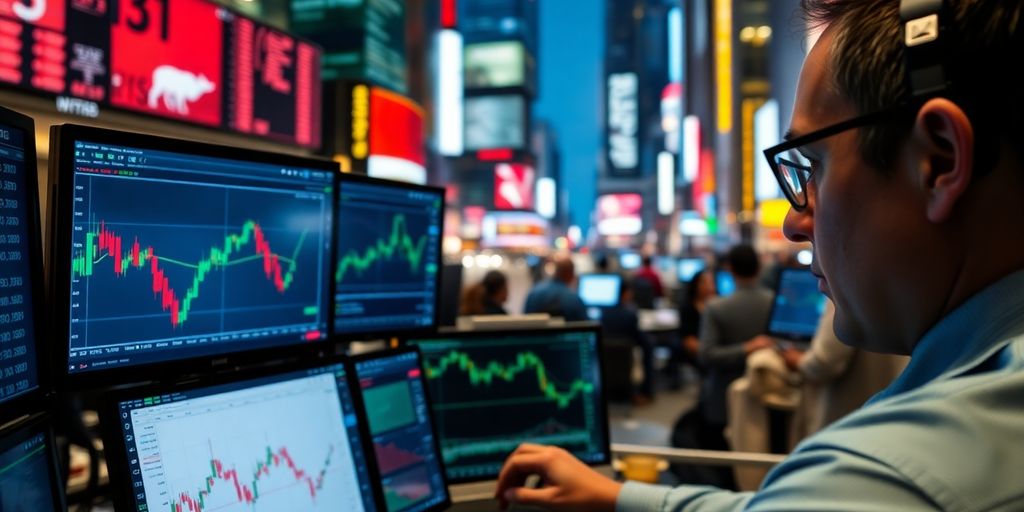
Trading around economic news can be exciting, but it’s also risky. You’ve got to have a plan. Some people like to jump in right when the news drops, while others prefer to wait and see how things shake out. Either way, knowing what you’re doing is important.
Scheduled News Trading
This is where you try to predict how the market will react to a specific news announcement. It’s like betting on a horse race – you do your research and then place your bet. Here’s a basic rundown:
- Keep an eye on the economic calendar to know when big announcements are coming.
- Think about what could happen if the news is good, bad, or just okay.
- Set up your trades in advance, so you’re ready to go no matter what happens.
I remember one time I was trading EUR/USD and the ECB was about to announce interest rates. I had a plan for if they raised rates, lowered them, or kept them the same. When the announcement came, I was ready to execute my trade immediately. It’s all about preparation.
Post-News Analysis
Don’t just trade and forget about it. Take some time to look back and see what happened. Did the market react the way you thought it would? If not, why? This is how you learn and get better over time. Here’s what to do:
- Check out how the market moved after the news came out.
- Compare what actually happened to what you expected.
- Figure out what you could do differently next time.
Risk Management Techniques
Trading news can be volatile, so you need to protect yourself. Here are a few things you can do:
- Use stop-loss orders to limit your losses if the market moves against you.
- Don’t put all your eggs in one basket – spread your trades around.
- Be careful with leverage – it can magnify your losses as well as your gains.
Here’s a simple table showing how risk management can help:
| Technique | Benefit |
|---|---|
| Stop-Loss Orders | Limits potential losses |
| Diversification | Reduces overall portfolio risk |
| Reduced Leverage | Minimizes the impact of adverse moves |
Future Trends in Forex News Consumption
Real-Time Sentiment Analysis
It’s wild to think about where things are going with forex news. Real-time sentiment analysis is becoming a huge deal. Forget just reading headlines; traders want to know how everyone else is reacting, almost like a hive mind. There are tools popping up that try to measure trader feelings the instant news drops. It’s like having a direct line to the market’s mood. You can use this to inform your trading decisions.
Integrated Trading Systems
Picture this: your news feed is hooked directly into your trading platform. That’s where we’re headed. The idea is to have systems that can automatically make moves based on news, following rules you set up beforehand. So, if a certain announcement comes out, your system could jump into a trade without you even lifting a finger. It’s all about speed and cutting out the middleman.
Community Intelligence
Crowdsourcing isn’t just for restaurant reviews anymore; it’s coming to forex. The idea is that the combined knowledge of many traders is better than one analyst’s opinion. Platforms are starting to add community analysis, with ways to rate how reliable different contributors are. It’s like having a built-in network of experts to bounce ideas off of. This can help you improve your market forecasting.
The future of forex news is all about speed, connection, and community. Traders who can keep up with these changes will have a big advantage. It’s not just about what you know, but how fast you know it and how well you can understand it in the context of the market.
Continuous Learning and Adaptation
Staying Updated on Market Trends
The forex market is always changing. What worked last year might not work today. That’s why it’s super important to stay on top of market forecasting. Read financial news, follow economic calendars, and pay attention to what analysts are saying. Don’t just passively consume information, though. Think about how it affects your trading strategy. I usually spend at least an hour each day just reading up on the latest happenings. It’s boring sometimes, but it pays off.
Adapting Strategies to Market Changes
Once you’re up-to-date on market trends, you need to be ready to change your approach. Rigidity is a recipe for disaster in forex trading. If the market shifts, your strategy needs to shift with it. This might mean tweaking your entry and exit points, adjusting your risk tolerance, or even completely overhauling your system. I remember one time when I was stubborn and refused to adapt. I ended up losing a bunch of money before I finally wised up. Learn from my mistakes!
Here are some ways to adapt:
- Backtest new strategies regularly.
- Keep a trading journal to track what works and what doesn’t.
- Be willing to cut your losses and move on.
Utilizing Educational Resources
There are tons of resources out there to help you improve your forex trading skills. Online courses, webinars, books, and even YouTube channels can provide valuable insights. The key is to find resources that are credible and relevant to your trading style. Don’t fall for get-rich-quick schemes or overly complicated systems. Start with the basics and gradually build your knowledge. Also, don’t be afraid to experiment and find what works best for you. There are many forex brokers that offer educational resources.
The forex market doesn’t care about your feelings. It only cares about supply and demand. The more you learn, the better equipped you’ll be to navigate the market and make informed decisions. Never stop learning, and always be willing to adapt.
Analyzing Market Reactions to News
Reviewing Historical Data
Looking back at how the market reacted to similar news in the past can give you a leg up. It’s like studying for a test – you wouldn’t go in without looking at old exams, right? I like to pull up charts and see how specific currency pairs moved after, say, the last three employment reports. Did they jump immediately? Did they take a few hours to really move? This kind of market intelligence system helps you anticipate future moves.
Identifying Patterns in Market Responses
Once you’ve got some historical data, start looking for patterns. Do certain currencies always react the same way to specific types of news? Maybe the Aussie dollar always dips after bad Chinese manufacturing data, or the Euro rallies on positive German economic figures. These patterns aren’t always perfect, but they can give you a good starting point. Here’s a quick example:
| News Event | Currency Pair | Typical Reaction |
|---|---|---|
| US Jobs Report (Good) | USD/JPY | USD strengthens |
| UK Inflation (High) | GBP/USD | GBP strengthens |
| Eurozone PMI (Low) | EUR/USD | EUR weakens |
Adjusting Trading Plans Based on Findings
All this analysis is useless if you don’t actually change your trading plan based on what you find. If you notice a pattern, try to incorporate it into your strategy. Maybe you set up a pending order to automatically trade when that news comes out. Or maybe you just know to be extra cautious when a certain report is released. The key is to use this knowledge to make smarter decisions. Don’t just trade the economic calendar blindly.
I remember one time I kept losing money on the same news event. I finally sat down and looked at the historical data, and I realized I was always trading in the wrong direction! Once I flipped my strategy, I started making money. It was a simple change, but it made a huge difference.
Effective Risk Management in Forex Trading
Trading forex can be exciting, but it’s super important to manage your risk. It’s like driving a car – you need to know how to brake! Let’s talk about some ways to keep your money safe while you’re trying to make more.
Setting Stop-Loss Orders
Stop-loss orders are your safety net. They automatically close a trade when the price hits a certain level, preventing big losses. Think of it as setting a limit to how much you’re willing to lose on a trade. It’s a simple tool, but it can save you from a lot of pain. It’s a good idea to understand risk management before you start trading.
Diversifying Trading Strategies
Don’t put all your eggs in one basket! Diversifying your trading strategies means spreading your investments across different currency pairs or even different asset classes. This way, if one trade goes south, it won’t wipe out your entire account. It’s like having a backup plan for your backup plan. Good forex news trading strategies include:
- Trading different currency pairs.
- Using different trading strategies (e.g., trend following, breakout trading).
- Investing in other assets like stocks or commodities.
Understanding Leverage and Margin
Leverage can be a double-edged sword. It lets you control a larger position with less capital, which can increase your profits. But it can also magnify your losses. Margin is the amount of money you need to open a leveraged position. It’s important to understand how leverage and margin work together so you don’t end up owing more money than you have. You can also employ strategies to understand the risk-reward ratio you are willing to take.
Managing risk isn’t about avoiding losses altogether; it’s about controlling them. It’s about making sure that one bad trade doesn’t ruin your entire trading career. It’s about being smart and disciplined, and always having a plan.
Wrapping It Up
So, there you have it. If you want to succeed in forex trading, you really need to keep your finger on the pulse of the market. Stay updated on the latest news, understand how it affects currency values, and don’t forget to manage your risks wisely. It’s a lot to juggle, but with some practice and a commitment to learning, you can definitely improve your trading game. Remember, the forex market is always changing, so staying informed is key. Keep learning, adapt your strategies, and you’ll be better prepared to make smart trades. Happy trading!
Frequently Asked Questions
What is the role of news in forex trading?
News plays a big part in forex trading because it can change how people feel about the market and the value of currencies. Traders use news to make better decisions.
How can I stay updated on economic news?
You can stay updated by following economic calendars, financial news websites, and using trading platforms that provide real-time news updates.
What is scheduled news trading?
Scheduled news trading is when traders prepare for specific news events that are expected to impact the market, and they set up their trades based on what they think will happen.
Why is speed important in forex trading?
Speed is important because the forex market reacts quickly to news. If you wait too long to make a decision, you might miss a good trading opportunity.
How can I manage risks in forex trading?
You can manage risks by setting stop-loss orders, diversifying your trades, and understanding how leverage works.
What should I do after a news event?
After a news event, it’s important to analyze what happened and how the market reacted. This helps you improve your trading strategies for the future.