Thinking about getting into forex trading in 2026? It’s a big market, and jumping in without a plan can be tough. This guide is all about helping beginners get started the right way. We’ll break down what you need to know, from the basics of the market to building your own trading plan. Consider this your roadmap to understanding forex trading for beginners full course material.
Key Takeaways
- Start with the basics: Understand what forex is, who trades, and why education is so important before you even think about placing a trade.
- Get hands-on with platforms: Learning to use trading software like MT4 and MT5 is a must. Practice makes perfect here.
- Develop a strategy: Don’t just guess. Figure out when to get in and out of trades, and understand how market hours affect things.
- Protect your money: Risk management is key. Know how to use stop-losses, size your trades correctly, and keep your capital safe.
- Choose your path wisely: Look for courses that fit your learning style, offer support, and ideally, provide some form of certification.
Understanding The Forex Market Landscape

So, you’re looking to get into forex trading. That’s cool. But before you even think about placing a trade, you really need to get a handle on what this whole forex market thing is about. It’s not just some abstract concept; it’s a massive, global marketplace where currencies are bought and sold. Understanding this landscape is your first, and arguably most important, step.
What is Forex Trading?
Forex, short for foreign exchange, is basically the business of trading one country’s currency for another. Think about it: when you travel, you exchange your home currency for the local one, right? That’s a tiny example of forex. On a much, much larger scale, banks, institutions, and individuals trade currencies 24 hours a day, five days a week. The goal is usually to profit from the fluctuations in exchange rates. It’s the biggest financial market in the world, with trillions of dollars changing hands daily. It’s pretty wild when you consider how much money is involved.
Why Forex Education Matters for Beginners
Jumping into forex without knowing what you’re doing is like trying to build a house without a blueprint. You might get lucky, but more likely, you’ll end up with a mess. The forex market can be volatile, and without proper training, beginners often lose money quickly. Education gives you the knowledge to understand how the market works, how to read charts, and most importantly, how to manage your risk. It’s not about getting rich overnight; it’s about building a skill set that can lead to consistent trading over time. You need to know the basics, like what a pip is or how currency pairs are quoted, before you can even think about advanced strategies. Learning the ropes properly is key to avoiding common mistakes.
Key Market Participants and Currency Pairs
Who’s actually trading in this market? You’ve got big players like central banks, commercial banks, investment firms, and hedge funds. Then there are corporations doing international business, and finally, individual retail traders like us. Each group has different motivations and trading styles. The currencies themselves are traded in pairs, like EUR/USD (Euro vs. US Dollar) or GBP/JPY (British Pound vs. Japanese Yen). Some pairs are traded way more often than others. The most common ones, like the EUR/USD, are called major pairs. They tend to be more liquid, meaning they’re easier to buy and sell without causing big price swings. Then you have minor and exotic pairs, which can be more volatile and harder to trade. Knowing which pairs you’re dealing with and why they move the way they do is a big part of understanding the market.
The sheer volume of daily transactions in the forex market means that prices can move very quickly. Understanding the factors that influence these movements, such as economic news, political events, and interest rate changes, is vital for any aspiring trader. Without this awareness, you’re essentially trading blind.
Here’s a quick look at some major currency pairs:
| Pair | Description |
|---|---|
| EUR/USD | Euro vs. US Dollar |
| GBP/USD | British Pound vs. US Dollar |
| USD/JPY | US Dollar vs. Japanese Yen |
| USD/CHF | US Dollar vs. Swiss Franc |
| AUD/USD | Australian Dollar vs. US Dollar |
Getting a solid grasp of these basics will set you up for success as you move on to more complex trading concepts. It’s all about building a strong foundation, and that starts with understanding the forex market itself. You can find resources that explain currency pairs and leverage in more detail.
Essential Components of A Forex Trading Course
So, you’re looking to get into Forex trading, huh? That’s cool. But before you even think about putting real money on the line, you need to know what makes a good trading course. It’s not just about watching a few videos and hoping for the best. A solid course is like a roadmap, showing you the way through the confusing world of currency markets.
Beginner-Friendly Foundational Modules
First off, a good course has to start from the absolute basics. Think of it like learning to walk before you can run. You need to get a handle on what Forex even is, how currency pairs work (like EUR/USD or GBP/JPY), and what terms like ‘pips’ and ‘lots’ actually mean. Without this groundwork, trying to understand more complex stuff is just going to be a headache. It should explain the market structure, why prices move, and the basic mechanics of trading. This foundational knowledge is non-negotiable for any beginner.
Mastering Trading Platforms: MT4 and MT5
Most people who trade Forex use either MetaTrader 4 (MT4) or MetaTrader 5 (MT5). These are the tools of the trade, so to speak. A proper course won’t just mention them; it’ll show you how to use them. This means hands-on practice, understanding how to place orders, set stop-losses, and read the charts directly on the platform. You don’t want to be fumbling around with the software when real money is involved. Getting comfortable with MT4 and MT5 is a big step toward feeling confident.
Live Market Analysis and Chart Reading Techniques
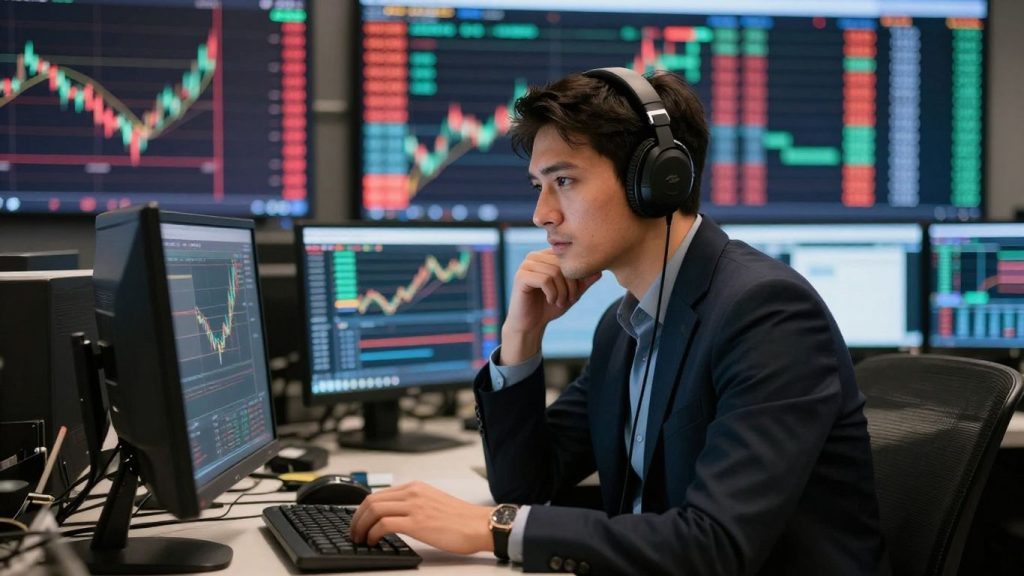
Reading charts might seem like looking at a bunch of squiggly lines, but it’s actually a skill. A good course will teach you how to interpret these charts. This involves understanding different types of charts (like candlestick charts), identifying patterns, and using technical indicators. But theory is only half the battle. The best courses show you how to do this with real market data. They’ll walk you through live examples, showing you how traders analyze the market and make decisions based on what they see. It’s about learning to spot opportunities and potential risks as they happen.
A well-structured Forex trading course provides the necessary tools and knowledge to approach the market with a plan, rather than just reacting to price movements. It bridges the gap between theoretical knowledge and practical application, which is vital for consistent trading.
Developing A Robust Trading Strategy
Alright, so you’ve got the basics down, you know what forex is, and you’re starting to get a feel for the platforms. That’s great! But now comes the really important part: figuring out how you’re actually going to trade. You can’t just jump in and hope for the best; you need a plan, a strategy. Think of it like trying to build something without instructions – it’s just not going to work out well.
Entry and Exit Strategy Development
This is where you decide when to get into a trade and, just as importantly, when to get out. It’s not just about picking a direction; it’s about having clear rules. Are you looking for specific chart patterns? Do you want to see a certain indicator signal? Having these defined points helps you avoid making impulsive decisions when the market is moving fast. It’s about discipline, plain and simple. You need to know what conditions must be met for you to enter a trade and what conditions will tell you it’s time to close it, whether that’s for a profit or to cut your losses.
Understanding Market Hours and Session Trading
The forex market is open 24 hours a day, five days a week, but that doesn’t mean it’s always active or that trading is equally good at any time. Different currency pairs are more active during certain sessions. For example, the London session and the New York session overlap for a few hours, and this is often when you see the most movement in major pairs like EUR/USD. Knowing these times can help you find better trading opportunities and avoid periods of low volatility where not much is happening. It’s about trading smarter, not just longer. You can explore fundamental forex trading strategies to see how different approaches fit into various market conditions.
Leverage and Its Impact on Trading
Leverage is a double-edged sword. It lets you control a larger position with a smaller amount of your own money, which can magnify your profits. Sounds great, right? But here’s the catch: it magnifies your losses just as much, if not more. If you’re not careful, a small move against your position can wipe out your account very quickly. It’s absolutely vital to understand how leverage works and to use it very cautiously, especially when you’re starting out. Many beginner traders get into trouble because they use too much leverage, thinking it’s a shortcut to big profits. It’s usually a shortcut to big losses instead.
Developing a solid trading strategy isn’t about finding a magic formula. It’s about creating a set of rules that you can follow consistently, regardless of market noise or your own emotions. This requires practice, patience, and a willingness to learn from both your wins and your losses. Without this structure, you’re essentially gambling, not trading.
Prioritizing Risk Management in Trading
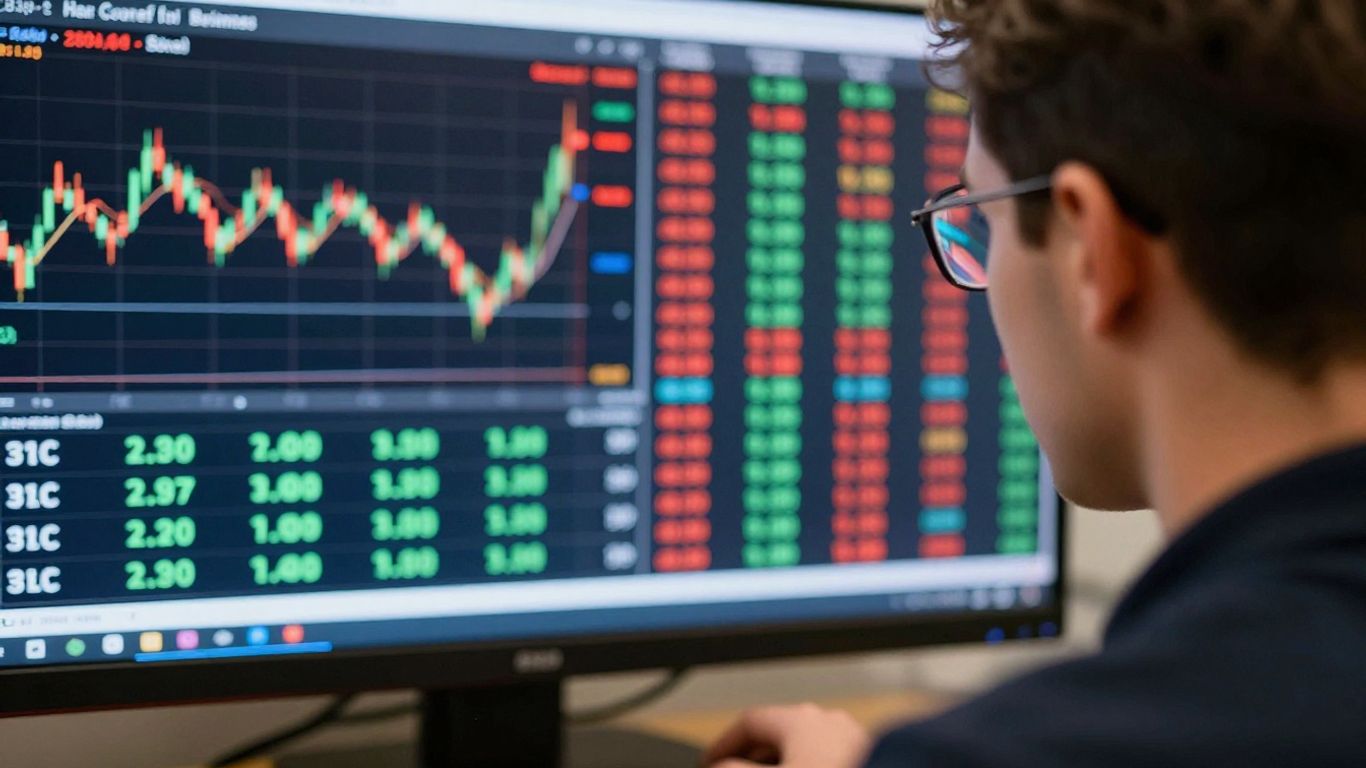
Look, trading forex can be exciting, but it’s also where a lot of beginners trip up. You can have the best strategy in the world, but if you don’t know how to protect your money, you’re just gambling. That’s why focusing on risk management isn’t just a good idea; it’s absolutely necessary for staying in the game. The goal isn’t just to make money, but to avoid losing it all.
The Importance of Stop-Loss Placement
A stop-loss order is like a safety net. It’s an instruction to your broker to close a trade automatically if the price moves against you by a certain amount. Without one, a small loss can quickly turn into a huge one, especially if you’re not watching the market every second.
- Define your risk per trade: Decide beforehand how much you’re willing to lose on any single trade, usually a small percentage of your total capital.
- Set the stop-loss level: Place your stop-loss order at a price that makes sense based on market structure, not just a random number. This often means looking at recent support or resistance levels.
- Never move your stop-loss further away: Once set, resist the urge to widen your stop-loss if the trade goes against you. This defeats its purpose.
Setting a stop-loss is a commitment to your trading plan. It removes emotion from the decision of when to exit a losing trade, which is often the hardest part for new traders.
Effective Position Sizing Strategies
Position sizing is all about figuring out how much of a currency pair to buy or sell. It’s directly tied to your stop-loss and your overall risk tolerance. If you’re trading with a small account, you can’t afford to risk the same dollar amount as someone with a large account. Forex trading carries significant risks.
Here’s a simple way to think about it:
- Determine your risk percentage: Let’s say you risk 1% of your account per trade.
- Calculate your stop-loss distance: How many pips away from your entry price is your stop-loss?
- Calculate your position size: Use a formula that takes your account size, risk percentage, and stop-loss distance to determine the correct lot size. Many online calculators can help with this.
For example, if you have a $10,000 account and risk 1% ($100), and your stop-loss is 50 pips away, your position size will be different than if your stop-loss was 100 pips away. Getting this right means a 50-pip loss will cost you $100 in both scenarios, protecting your capital.
Capital Protection Techniques for Traders
Beyond stop-losses and position sizing, there are other ways to keep your trading capital safe. It’s about building a trading system that prioritizes survival.
- Diversification (within reason): While forex is about currency pairs, don’t put all your eggs in one basket if you trade multiple pairs. Understand how they correlate.
- Avoid over-trading: Don’t feel like you need to be in a trade all the time. Sometimes the best trade is no trade at all.
- Regularly review your risk settings: As your account grows or shrinks, your position sizing needs to adjust. Don’t use fixed dollar amounts if your account balance changes.
Choosing The Right Forex Education Path
So, you’ve decided to jump into the world of Forex trading. That’s awesome! But before you start throwing money around, you need to figure out how you’re going to learn. It’s not like learning to ride a bike; there’s a lot more involved, and mistakes can get expensive fast. Picking the right educational path is super important, maybe even the most important step you’ll take.
Evaluating Online Forex Trading Courses
When you start looking around, you’ll see a ton of online courses. They all promise the moon, but not all of them are created equal. You need to look for a few key things. First off, does it start from the absolute basics? Like, explaining what a currency pair even is, or what a ‘pip’ means? If it jumps straight into complex charts, that’s probably not for you yet. Also, check if they actually teach you how to use the trading platforms, like MetaTrader 4 or 5. Just watching videos isn’t enough; you need hands-on practice. Look for courses that show real market examples and walk you through chart analysis. It’s one thing to read about trading, and another to see it happen live.
The Role of Mentorship and Community Support
Beyond just courses, think about getting some guidance. A good mentor can make a huge difference. They’ve been there, done that, and can help you avoid the common traps beginners fall into. It’s like having a guide when you’re hiking in unfamiliar territory. Community support is also a big plus. Being able to chat with other traders, ask questions, and share experiences can be really helpful. It makes the whole learning process less lonely and more interactive. Some platforms offer live trading rooms where you can watch professionals trade and explain their moves, which is pretty neat.
Certification and Its Value in Your Trading Journey
What about certification? Does it really matter? Well, it depends on what you’re looking for. Some courses offer certificates or badges upon completion. While these might not be official degrees, they can show that you’ve put in the work and completed a structured program. For some, it’s a nice way to track progress and have a tangible achievement. However, remember that in trading, real-world results and consistent profitability are what truly matter. Certification can be a good starting point, but it’s not the finish line. Focus on gaining practical skills and a solid understanding of risk management above all else.
Here’s a quick look at how some popular options stack up:
| Course Provider | Cost | Platform Training | Mentorship/Community | Certification | Best For |
|---|---|---|---|---|---|
| IMFA Global | Affordable | Yes | Yes | Yes | Full mentorship + certification |
| BabyPips | Free | No | No | No | Foundation step |
| IG Academy | Free | Yes | Limited | Basic | Broker-backed learning |
| Udemy | Low Cost | Some | Varies | Yes | Budget, self-paced learners |
| Asia Forex Mentor | Premium | Yes | Yes | Yes | Price action system traders |
| ForexSignals.com | Subscription | Yes | Yes (Live Room) | No | Live trading room access |
| Investopedia Academy | Mid Cost | Basic | No | Yes | Academic-style learners |
| Trading 212 | Mid Cost | Yes | No | No | App-based demo practice |
| London Academy of Trading | Premium | Yes | Yes | Diploma | Career-focused traders |
| FX Academy | Mid Cost | Basic | No | Badges | Free multi-level curriculum |
Choosing your education path is a big decision. Don’t just pick the first shiny course you see. Take your time, compare your options, and think about what kind of learner you are. Do you need someone to hold your hand, or are you good at figuring things out on your own? Your learning style and goals should guide your choice. It’s better to invest a little more time upfront finding the right fit than to waste money on a course that doesn’t work for you.
Navigating Common Beginner Pitfalls
Alright, let’s talk about the stuff that trips up most new traders. It’s easy to get excited about the Forex market, but jumping in without a solid plan or the right knowledge is like trying to build a house without a foundation. You’re just asking for trouble.
Mistakes Made Without Proper Training
When you don’t have a good course under your belt, you’re basically flying blind. You might pick up bits and pieces from random videos or forums, but it’s rarely a cohesive strategy. This often leads to:
- Impulsive trades: You see a price move and jump in without understanding why or what the potential outcome is.
- Ignoring risk: Not knowing how to set stop-losses or size your trades properly means one bad trade can wipe out a significant chunk of your capital.
- Chasing losses: Trying to win back money you just lost by taking bigger, riskier trades. This is a fast track to blowing up your account.
The Forex market is complex, and while it offers opportunities, it’s also a place where many beginners lose money. This isn’t because the market is rigged, but because they haven’t put in the work to understand its mechanics and their own psychology.
The Dangers of Emotional Trading
This is a big one. Emotions like fear and greed can completely derail even the best trading plans. Fear might make you exit a trade too early, missing out on profits, or hesitate to enter a good setup. Greed, on the other hand, can lead you to hold onto trades for too long, hoping for unrealistic gains, or to over-trade.
Here’s how emotions can mess things up:
- Fear: Causes you to miss opportunities or exit winning trades prematurely.
- Greed: Leads to over-trading, taking excessive risks, or holding losing trades too long.
- Hope: Makes you ignore warning signs and believe a losing trade will magically turn around.
- Revenge Trading: Trying to win back money lost on a previous trade, often with bigger stakes and less thought.
Setting Realistic Trading Expectations
Many people get into Forex thinking they’ll get rich quick. They see stories online and imagine making thousands overnight. That’s just not how it works for most people, especially beginners. It takes time, practice, and a lot of learning.
- Time Commitment: Becoming a consistently profitable trader takes months, if not years, of dedicated study and practice.
- Profit Potential: Expecting huge returns immediately is unrealistic. Focus on small, consistent gains and protecting your capital first.
- Learning Curve: There will be losing days and losing weeks. That’s part of the process. The goal is to learn from them and improve.
The most successful traders understand that Forex is a marathon, not a sprint. They focus on consistent execution of their strategy and continuous learning, rather than chasing quick riches.
Wrapping It Up
So, you’ve made it through the whole guide on getting started with forex trading in 2026. It might seem like a lot right now, with all the talk about currency pairs, platforms like MT4 and MT5, and managing your money. But remember, every trader started somewhere, usually with just as much confusion. The key is to keep learning and practicing. Don’t rush into trading real money without a solid plan and a good understanding of how to protect yourself from big losses. Take what you’ve learned here, pick a course that feels right for you, and start building those skills step by step. The forex market is huge, but with the right approach, you can find your place in it.
Frequently Asked Questions
Why is learning about forex trading so important for someone just starting out?
Think of the forex market like a giant global marketplace where countries trade their money. It’s huge, and lots of people lose money when they first start because they don’t understand the rules. A good course teaches you the basics, like what makes prices go up or down, so you don’t make costly mistakes right away. It’s like learning to ride a bike with training wheels before hitting the road.
What are the most important things a beginner’s forex course should teach?
A great course for beginners will start with the very basics, like what different currency pairs are and how the market works. It should also show you how to use trading software, like MT4 or MT5, and teach you how to read charts to understand what might happen next. Most importantly, it must teach you how to protect your money, which is called risk management.
What does ‘risk management’ mean in forex trading?
Risk management is all about making sure you don’t lose all your money. It involves setting limits on how much you’re willing to lose on a trade (like using a ‘stop-loss’) and deciding how much money to put into each trade. It’s like knowing when to stop playing a game so you don’t go broke.
Are there specific times when it’s better to trade forex?
Yes, the forex market is open 24 hours a day, five days a week, but different times are busier than others. These busy times are called ‘sessions,’ and they happen when major financial centers are open. Learning about these sessions helps you understand when the market is most active and when certain currency pairs might move more.
What’s the deal with ‘leverage’ in forex trading?
Leverage is like borrowing money from your broker to make bigger trades than you could with just your own money. It can make your profits much bigger, but it can also make your losses much bigger, very quickly. It’s a powerful tool, but you need to understand it really well and use it carefully, especially when you’re new.
Should I look for a course that gives me a certificate?
A certificate can show that you’ve completed a course and learned the material. Some courses offer globally recognized certifications, which can add credibility. However, what’s often more valuable than a certificate is the practical knowledge you gain, especially in risk management, and the support you get from mentors and a trading community.