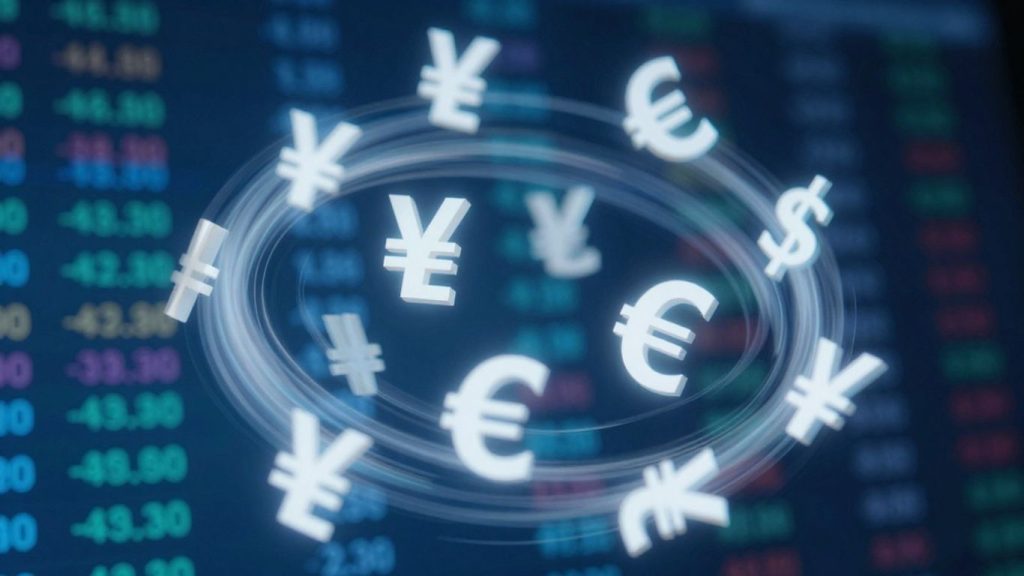
Staying on top of the forex currency trading news is pretty important if you want to do well. The market moves fast, and what happens today could change everything for tomorrow. We’re talking about stuff like economic reports, what central banks are up to, and even just general market feelings. All of this can shake up currency values. So, keeping an eye on this news isn’t just about knowing what’s going on; it’s about using that info to make smarter moves with your trades.
Key Takeaways
- Exchange rates change because of a country’s economic health and political situation. Good growth and low inflation usually make a currency stronger, while problems can make it weaker.
- Economic calendars help you track important events like inflation reports or trade balance changes that can affect currency prices.
- Major currency pairs involve the US dollar, while minor pairs don’t. Both offer different trading chances.
- Forex charts show how currency values move over time, and understanding them helps you analyze trends.
- Trading currencies involves risk, especially with borrowed money (leverage). Always test your strategies and manage your risks carefully.
Understanding Forex Currency Trading News
What Drives Exchange Rate Fluctuations
Exchange rates, the prices of one country’s money compared to another’s, don’t just change randomly. They’re influenced by a whole bunch of things happening in the world. Think about it: if a country’s economy is doing really well, with lots of jobs and low prices for everyday stuff, people tend to want that country’s currency more. This demand can push its value up against other currencies. On the flip side, if a country is having economic trouble, like high unemployment or prices going up too fast, its currency might lose value. It’s a constant dance based on how countries are performing economically.
The Impact of Economic Policy and Central Banks
Governments and their central banks have a big say in how currencies behave. When a central bank decides to change interest rates, for example, it can really shake things up. Higher interest rates can make a currency more attractive to investors looking for better returns, potentially increasing its value. Conversely, lower rates might make it less appealing. Central banks also manage the money supply, and sometimes they even step in directly to buy or sell currencies to influence their price. It’s a powerful tool they can use to try and steer the economy, and traders watch these moves very closely.
Leveraging Forex News for Strategic Decisions
Keeping up with news is pretty important if you’re trading currencies. You’ve got economic reports coming out all the time – things like inflation numbers, job figures, and trade balances. These reports can give you clues about a country’s economic health. When you see a report that’s much better or worse than what most people expected, it can cause the currency to move pretty quickly. It’s like getting an early heads-up. By paying attention to these announcements and understanding what they mean, you can try to make smarter trading choices, maybe getting into a trade before the big move happens or avoiding one that looks risky.
Key Components of Forex Market Analysis
You can’t just wing it in forex trading. A proper approach starts with knowing what moves the market and how to track it. Here’s what actually matters:
Utilizing the Economic Calendar Effectively
The economic calendar isn’t just a list of dates and times—you really need it to stay on top of key events. A big surprise in jobs numbers or a sudden rate decision can shake currency prices for hours or days. Here’s how to use the calendar to your advantage:
- Check for upcoming events that affect your currency pairs (like US non-farm payrolls or ECB meetings)
- Set alerts for high-impact events
- Prepare a plan (sometimes, sitting out the wild swings is the best move)
| Event Type | Typical Impact | Frequency |
|---|---|---|
| Interest Rate Decision | High | Monthly/Quarterly |
| Non-farm Payrolls | Very High | Monthly |
| Inflation Report (CPI) | Moderate-High | Monthly |
Staying aware of scheduled news releases is half the battle—a surprise is only a surprise if you’re not ready for it.
Interpreting Macroeconomic Events and Reports
At the end of the day, currencies respond to how economies perform. If a country reports strong economic growth, their currency usually strengthens. If central banks talk about raising or cutting rates, the market reacts fast. Watch for:
- GDP growth updates
- Inflation trends
- Central bank speeches and meeting minutes
- Employment reports
Don’t just glance at the numbers. Think about how they compare to past reports, and what they might mean for the next policy decision.
Comparing Actual vs. Forecasted Economic Data
One of the trickiest things is figuring out whether the market already expected today’s numbers.
- Sometimes even a small difference between the actual result and the forecast can trigger huge price movements.
When you see a release, ask:
- Was the result much better or worse than the forecast?
- Did the market react instantly, or did it take a while to move?
- How does this fit into the broader economic trend?
| Report | Previous | Forecast | Actual | Directional Surprise |
|---|---|---|---|---|
| Eurozone GDP Growth | 0.2% | 0.3% | 0.1% | Negative |
| US CPI (YoY) | 3.2% | 3.1% | 3.5% | Positive |
It’s not just the number, but the difference from what was expected, that really gets the market moving.
Navigating the Forex Landscape
Understanding the different types of currency pairs and market dynamics is key to trading forex. It’s not just about knowing which currency is stronger; it’s about grasping the relationships between them and how the market operates around the clock.
Understanding Major and Minor Currency Pairs
Currencies are always traded in pairs. You’ll hear a lot about "major" and "minor" pairs, and knowing the difference helps you focus your trading. Major pairs are the big players, involving the US dollar and another major world currency. Think EUR/USD, USD/JPY, or GBP/USD. These pairs usually have the most trading volume and tend to be more stable, though they can still move a lot.
Minor pairs, sometimes called "crosses," don’t include the US dollar. Examples are EUR/GBP or AUD/JPY. These can sometimes offer different trading opportunities because their movements might be influenced by different economic factors than the majors.
Here’s a quick look at the most common major pairs:
- EUR/USD: Euro versus US Dollar
- USD/JPY: US Dollar versus Japanese Yen
- GBP/USD: British Pound versus US Dollar
- AUD/USD: Australian Dollar versus US Dollar
- USD/CAD: US Dollar versus Canadian Dollar
- USD/CHF: US Dollar versus Swiss Franc
- NZD/USD: New Zealand Dollar versus US Dollar
The Role of Liquidity and Volatility
When you trade forex, you’ll often hear about "liquidity" and "volatility." Liquidity basically means how easy it is to buy or sell a currency pair without causing a big price change. The forex market is known for being very liquid, especially during certain trading sessions. This means you can usually get in and out of trades quickly.
Volatility, on the other hand, is about how much the price of a currency pair tends to move up and down. Higher volatility can mean more chances for profit, but it also means more risk. Understanding the typical volatility of a pair you’re trading is pretty important.
The spread, which is the difference between the buying and selling price of a currency pair, is directly affected by liquidity and volatility. When liquidity is low or volatility is high, spreads tend to widen, making trades more expensive.
Exploring 24-Hour Trading Opportunities
One of the most unique things about forex is that it’s open for trading 24 hours a day, five days a week. This is because it’s a global market, and as one financial center closes, another opens. The main trading sessions are:
- Tokyo Session: Starts the week off, often overlapping with Sydney.
- London Session: This is usually the busiest session, with a lot of trading activity.
- New York Session: Overlaps with London, creating even more volume.
This around-the-clock nature means you can trade whenever it suits your schedule, whether you’re an early bird or a night owl. It also means that news happening at any time can affect currency prices.
Essential Tools for Informed Trading
To trade forex effectively, you need the right gear. Think of it like a carpenter needing good saws and hammers; traders need specific tools to make sense of the market. Without them, you’re basically guessing, and that’s a fast way to lose money.
Mastering Forex Charts for Analysis
Charts are like the heartbeat of the forex market. They show you price movements over time, and there are different types, but most traders use candlestick charts. Each candlestick tells a story about a specific period – its open, high, low, and close price. Learning to read these patterns can give you clues about where the price might go next. It’s not magic, but it’s a way to see what buyers and sellers have been doing.
- Line Charts: Simple, showing just the closing price. Good for a quick overview.
- Bar Charts: Show open, high, low, and close. More detail than line charts.
- Candlestick Charts: The most popular. They show open, high, low, and close with a "body" and "wicks" that give a visual cue about price action.
The Significance of Bid and Ask Prices
When you look at any currency pair, you’ll see two prices: the bid and the ask. The bid price is what a buyer is willing to pay for a currency, and the ask price is what a seller is willing to accept. The difference between these two is called the spread. Brokers make money on this spread. A tighter spread means it costs you less to enter a trade, which is generally better. Spreads can get wider when the market is jumpy or when there isn’t much trading activity.
Understanding the bid-ask spread is key to knowing your entry and exit costs. It’s a direct cost of trading, and it matters more than you might think, especially if you trade frequently.
Choosing the Right Forex Broker
Your broker is your gateway to the forex market. They provide the platform where you can actually place trades. Picking the right one is a big deal. You want a broker that is regulated, has a reliable trading platform, offers the currency pairs you’re interested in, and has reasonable fees and spreads. Some brokers also offer educational resources or research tools, which can be helpful when you’re starting out.
- Regulation: Make sure they are licensed by a reputable financial authority.
- Platform: Is it easy to use? Is it stable?
- Costs: Look at spreads, commissions, and any other fees.
- Customer Support: Can you get help when you need it?
- Account Types: Do they offer accounts that fit your trading size and style?
Strategies for Success in Forex
So, you want to get good at trading currencies, huh? It’s not just about picking a currency and hoping for the best. You really need a plan, and that plan needs to be tested.
Testing Your Forex Trading Strategies
Before you put real money on the line, you absolutely have to test your ideas. Think of it like practicing a sport before a big game. You wouldn’t just show up and expect to win, right? The same goes for forex. You can use what’s called ‘paper trading’ or a demo account. This lets you trade with fake money in real market conditions. It’s a great way to see if your strategy actually works without losing your shirt. You can also look back at past market movements – sometimes called ‘bar replay’ – to see how your strategy would have performed historically. This helps you tweak things until they make sense.
Here’s a quick rundown on testing:
- Simulate Live Trading: Use a demo account to practice with virtual funds.
- Backtest Your Ideas: See how your strategy would have done in the past.
- Analyze Results: Figure out what worked and what didn’t.
- Refine Your Approach: Make changes based on your findings.
Adapting to Market Changes with Event-Driven Strategies
Markets don’t stand still. They change all the time, often because of big news events. That’s where ‘event-driven strategies’ come in. Instead of just sticking to one rigid plan, you adjust based on what’s happening. For example, if a country’s central bank announces a surprise interest rate change, that’s a big event. A good trader will have a plan for how to react to that news, rather than being caught off guard. You need to keep an eye on economic calendars and news feeds to spot these potential market movers. Being able to react quickly to economic data releases and political news is key.
Understanding how economic reports, like inflation numbers or employment figures, can affect currency values is a big part of this. When you see a report that’s different from what most people expected, the market can move fast. Having a strategy ready for these moments can make a difference.
Managing Risk in Leveraged Trading
Leverage is a double-edged sword. It lets you control a larger amount of money than you actually have, which can boost your profits. But, and this is a big ‘but’, it can also magnify your losses just as easily. If you’re trading with leverage, you need to be super careful. Setting stop-loss orders is a must – these automatically close your trade if it moves against you by a certain amount, limiting how much you can lose. You also need to decide how much of your total trading capital you’re willing to risk on any single trade. Most experienced traders suggest risking only a small percentage, like 1-2%, of your account on any one trade. It might seem small, but over time, it helps you stay in the game.
Staying Ahead with Real-Time Information
In forex trading, keeping up with fresh news and data really can make a world of difference. Things move fast — sometimes it feels like currency prices are racing ahead while you’re still reading yesterday’s updates. Here’s how staying current with market developments gives you an edge.
The Importance of Timely Forex Currency Trading News
Reacting quickly to breaking news keeps traders from being blindsided by sudden price swings. Markets often shift as soon as important numbers or central bank updates are released. If you get your trading news late, you’ll miss out on short windows of opportunity. Regular checks on a source for daily updates like market analysis and global trading news helps make sure you’re not the last to know.
A few advantages of staying in the loop:
- Spotting trading opportunities ahead of the crowd.
- Minimizing losses by reacting early to negative news.
- Having context for sharp market moves rather than guessing.
Analyzing Market Sentiment and News Impact
News headlines move the market, but it’s often about how traders "feel" about the news, not just the news itself. That’s market sentiment. Something as simple as a central bank hinting at higher interest rates can boost a currency, even if rates stay the same for months.
Here’s how traders measure and act on sentiment:
- Watch social media and major financial headlines for sudden mood changes.
- Check if technical charts back up what the news is saying.
- Compare reactions across different currencies — sometimes one currency gets all the attention.
| Event | Possible Short-Term Impact |
|---|---|
| Surprise interest rate hike | Currency usually jumps |
| Weakening economic report | Currency may fall quickly |
| Unexpected geopolitical news | Spikes in volatility |
Keeping an eye on sentiment, along with news, helps make better sense of those wild, unexplained moves that catch people off guard.
Integrating Technical and Fundamental Analysis
To stay truly prepared, traders blend news events (fundamentals) with price charts (technicals). If a jobs report is positive and the trend shows support, that’s a signal worth watching. But relying on news alone without a chart check can be risky, since old trends don’t always break on news.
Ways to combine both approaches:
- Start with the news. Does it change the big picture?
- Check the chart. Is the price in an uptrend or showing a reversal?
- Look for confirmation. Ideally, news and charts both point in the same direction for a higher probability trade.
Sticking to a routine of using timely news and double-checking technicals can give everyday traders a decent shot at catching moves early and protecting themselves from big surprises.
Wrapping It Up
So, keeping up with the fast-paced world of forex trading means staying informed. News, economic data, and even political shifts can move currency prices quickly. Using tools like economic calendars and real-time news feeds helps you see what’s happening and why. Remember, practice makes perfect, so test your strategies before putting real money on the line. The forex market offers chances, but it also has risks, so always trade smart and know your limits. Good luck out there.
Frequently Asked Questions
What exactly is Forex trading?
Forex, short for foreign exchange, is like a giant global marketplace where people buy and sell different countries’ money. Think of it as trading one currency for another, like swapping US dollars for Euros. It’s the biggest money market in the world, and it’s open almost all the time during the week.
What makes currency prices change?
Lots of things can make currency prices go up or down! A country’s economy is a big one – if a country is doing well, its money is usually worth more. Government decisions, like changing interest rates, also play a huge role. Plus, big world events and even what people *think* might happen can cause prices to shift.
How can I see what’s happening in the market?
You can use a tool called an ‘Economic Calendar’. It’s like a schedule that tells you when important news or reports about countries’ economies will be released. Watching these events and comparing what actually happens to what people expected can give you clues about where the market might go next.
What are ‘major’ and ‘minor’ currency pairs?
Major currency pairs are the most popular ones, usually involving the US dollar paired with another major currency, like the Euro (EURUSD) or Japanese Yen (USDJPY). Minor pairs don’t include the US dollar, like the Euro paired with the British Pound (EURGBP). They offer different trading chances.
What is ‘leverage’ in Forex trading?
Leverage is like borrowing money from your trading company to make bigger trades than you could with just your own money. It can help you make more profit if you’re right, but it also means you could lose more money if you’re wrong. It’s a powerful tool, but you need to be careful with it.
How do I know if my trading plan will work?
Before you risk real money, it’s smart to practice! Many trading platforms let you use ‘demo’ or ‘paper’ trading accounts. This lets you trade with fake money in real market conditions, so you can test your ideas and get better without losing anything.