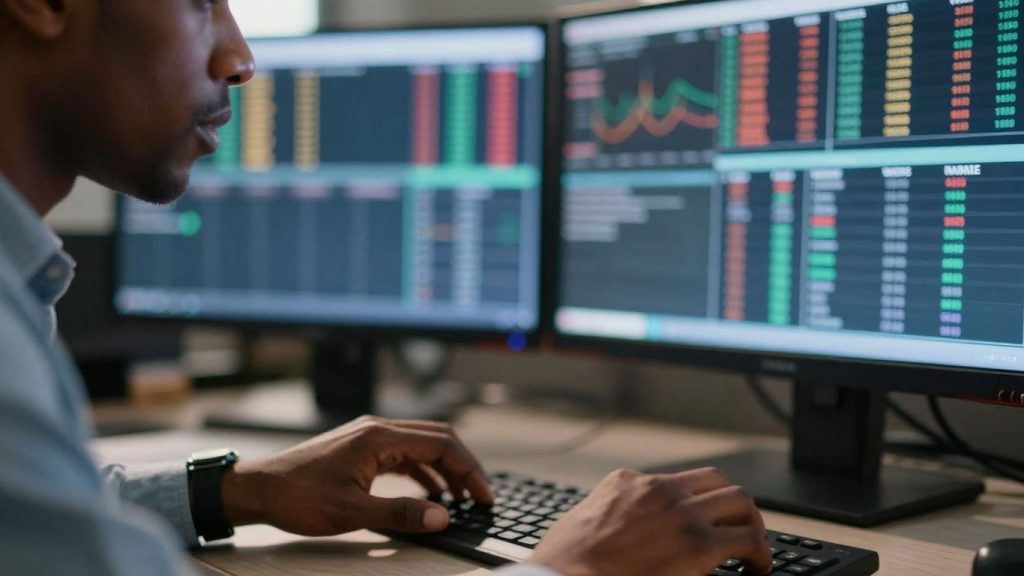
Thinking about diving into day trading? It can seem pretty intense, and honestly, losing real money while you’re still figuring things out is a rough way to learn. That’s exactly why day trading simulators are such a big deal. They’re basically a practice field, letting you try out different trading ideas and get a feel for the market without any risk. We’re going to check out some of the top day trading simulators available right now and see how they can help you get better.
Key Takeaways
- Day trading simulators let you practice trading with fake money, helping you learn the ropes without risking your own cash.
- When picking a simulator, think about what kind of trader you are. Some are better for chart watchers, others for social trading.
- Platforms like ProRealTime, Thinkorswim, and TradingView are good choices, each with its own strengths.
- Simulators offer tools for testing strategies, but remember they aren’t exactly like the real market – data might be delayed, and some features are limited.
- Using a simulator is a smart first step to build confidence and get comfortable before you start trading with real money.
1. ProRealTime
ProRealTime is a solid choice if you’re looking for a platform that just works without a lot of fuss. Its interface is pretty clean, which is nice because, let’s be honest, trading can get complicated fast. You don’t want your simulator adding to the confusion.
One of the best parts is that their web-based paper trading simulator is free. You can just jump in and start practicing without feeling pressured to open a real account right away. It lets you place trades right from the charts, which feels pretty natural. Plus, it comes with a good set of tools to help you figure out what the market’s doing.
Here’s a quick look at what you get:
- On-Chart Trading: Place and adjust trades directly on your charts. It makes things feel more connected to the action.
- Diverse Order Types: You can test out different orders, like market, limit, and even more complex ones like stop-loss or bracket orders. This helps you get a feel for how different order types work in practice.
- Level 2 Data Replay: This lets you look back at how market depth and liquidity changed over time. It’s helpful for seeing how order flow affects prices.
The goal is to find a simulator that feels as close to the real trading experience as possible, without risking any actual money. This means looking at how well it mimics market movements, order fills, and the general pace of trading.
They offer a couple of pricing tiers if you decide you want more features. The "Pro" plan is $79/month, and the "Premium" plan is $89/month. The Premium plan gives you access to more historical data and tick charts, which can be useful for really detailed analysis.
2. Thinkorswim
Thinkorswim, now part of Charles Schwab, is a really popular choice for traders who want to get serious about their practice. It’s known for having a ton of tools, which is great if you like to dig deep into charts and data. The platform offers a paper trading mode, often called ‘paperMoney’, that gives you virtual funds to play with. You can trade stocks, options, futures, forex, and even crypto on it.
It’s not just about buying and selling, though. Thinkorswim has over 400 technical indicators and drawing tools you can use to analyze the market. The options chain analysis is pretty advanced, too, letting you test out different strategies before you commit real money. Plus, they have a mobile app so you can practice on the go.
One thing to keep in mind is that while the core features are free for practice, you might need a brokerage account with Charles Schwab to get unlimited access. Sometimes they offer a 30-day guest pass if you don’t have an account yet, which is a good way to see if it fits your style. It can take a little while to get used to all the features, but for serious practice, it’s a solid option.
Thinkorswim’s strength lies in its depth of analysis tools, making it suitable for those who want to understand the ‘why’ behind market movements, not just the ‘what’.
Here’s a quick look at what makes it stand out:
- Extensive Charting Tools: Access to hundreds of indicators and drawing tools.
- Multi-Asset Support: Practice trading stocks, options, futures, forex, and crypto.
- Advanced Strategy Testing: Analyze options chains and test complex trading ideas.
- Mobile Accessibility: Practice trading from your smartphone or tablet.
3. TradingView
TradingView is a platform that many traders know for its charting tools, and it also has a paper trading feature. It’s a good place to get a feel for how the market moves without risking any actual money. You can set up alerts, customize charts with a bunch of indicators and drawing tools, and even connect with other traders on their social network.
The platform really shines when it comes to technical analysis, giving you a lot of options to look at price action. It’s pretty flexible, letting you set up your workspace just how you like it. You can save different layouts for different trading styles or markets you’re watching.
Here’s a quick look at some of the things you can do:
- Customizable Charts: Over 100 indicators and 15 chart types are available.
- Alerts: Set up notifications for specific price points or events.
- Social Features: Share ideas and follow other traders.
- Drawing Tools: Use more than 90 tools to mark up charts.
Some people find the order execution a bit slow sometimes, and customer support can be hit or miss. But for practicing chart reading and strategy development, it’s a solid choice.
While TradingView is great for charting and technical analysis, some users suggest pairing it with another simulator for a more complete day trading practice experience. It’s a powerful tool, but maybe not the only one you’ll need.
It’s free to use the paper trading feature, which is a big plus. You get real-time data, which is important for making realistic practice trades. You can also visualize trades and use tools like Level 2 data to see market depth, which helps in understanding how orders might affect prices.
4. Forex Tester Online
Forex Tester Online is a pretty solid choice if you’re looking to get a feel for the forex market without actually putting your own money on the line. It’s built on the back of a tool that’s been around for a while, so it’s got some serious history behind it. What’s cool is that it runs right in your web browser, so you don’t need to download a bunch of stuff, and it works on pretty much any device – your computer, your tablet, even your phone.
This simulator really tries to mimic what it’s like to trade in the real world. It uses actual historical data, which is a big deal because it means you’re practicing with something that actually happened. You can even speed things up, which is a nice change from just watching charts tick by slowly. They claim you can go up to 10 times faster than a regular demo account, which is pretty neat if you’re trying to get through a lot of practice trades quickly.
Here’s a quick look at what it offers:
- Extensive Historical Data: Access to data for over 50 different symbols, going back as far as 20 years. This includes major currency pairs, gold, Bitcoin, and even stock indexes.
- Advanced Backtesting: Features like news integration, the ability to jump to specific market points, and support for custom indicators mean you can really dig deep into testing strategies.
- Cross-Platform Compatibility: Use it on Windows, MacOS, Linux, Android, or iOS without any hassle.
They’ve packed this thing with features, and they’re always updating it. It’s designed to be a serious tool for anyone who wants to get good at day trading. They even have a beta program you can join to help them make it even better.
If you’re serious about learning the ins and outs of forex trading and want a realistic practice environment, Forex Tester Online is definitely worth checking out. It’s a good way to build confidence and refine your approach before you start trading with real cash.
5. TradeStation
TradeStation is a solid choice if you’re looking for a simulator that feels pretty close to the real deal. It’s designed for traders who are serious about practicing their skills without putting actual money on the line. Think of it as a sandbox where you can really test out your strategies and get a feel for how the market moves.
One of the standout features is how closely the simulator mimics the live trading environment. This means when you’re ready to trade with real money, the transition should be much smoother. You get unlimited virtual funds to play with, and it uses both historical and real-time data, which is great for seeing how your plans would have held up in the past and how they’re doing right now.
Here’s a quick look at what makes TradeStation stand out:
- Identical Interface: The order tickets and overall look and feel are the same as the live platform. This familiarity is a big plus.
- Unlimited Practice Capital: You won’t run out of virtual money, so you can keep practicing as long as you need.
- Performance Tracking: It automatically tracks your profit and loss, giving you clear feedback on your simulated trades.
- Strategy Development: If you’re into coding, TradeStation has its own language, EasyLanguage, which lets you build and test automated trading strategies.
TradeStation’s simulator is built for those who want a realistic practice experience. It’s not just about clicking buttons; it’s about understanding the mechanics of trading and refining your approach in a risk-free setting. The platform also offers tools for analyzing your performance, which is super important for figuring out what’s working and what’s not.
While it’s a powerful tool, some users find that it has a bit of a learning curve, especially if you’re new to trading platforms. But for those willing to put in the time, TradeStation offers a robust way to prepare for the live markets.
6. NinjaTrader
NinjaTrader is a pretty solid choice if you’re into futures and forex, and want a platform that feels almost identical to the real deal. It’s known for letting you switch between simulated and live trading pretty smoothly. This is a big plus because you get to practice things like order routing, setting stops, and targets in an environment that really mimics what you’d face with actual money on the line, especially if you’re day trading derivatives.
Here’s a quick look at what it offers for practice:
- One-click toggle: Easily switch between the simulated and live trading interfaces.
- Advanced order types: You can mess around with OCO (one-cancels-the-other) and bracket orders, which are pretty standard for serious traders.
- Real-time data: Get live futures and forex data, and you can tweak your charts however you like.
- Automated strategy testing: If you’re into coding your own trading bots, NinjaTrader lets you test them out using something called NinjaScript.
It’s free to use the simulator on both the web and desktop versions, which is nice. Some people find it a bit much to get used to at first because there are so many features, but that’s often the case with powerful tools. If you’re serious about futures or forex, it’s definitely worth checking out.
The platform’s strength lies in its ability to replicate the execution environment of live trading. This means the simulated trades you place, the orders you set, and the way the market reacts are designed to be as close to reality as possible. Practicing here helps build muscle memory for fast-paced trading scenarios.
7. GoCharting
GoCharting is a platform that offers some pretty advanced charting tools, and it can be used for simulating trades across different markets like stocks, forex, and crypto. It’s got a ton of chart types and over a hundred indicators, which is a lot to play with when you’re trying to figure out what the market might do next. You can trade a bunch of different financial instruments all in one spot, which is handy if you’re testing out various strategies.
The platform is designed to be user-friendly across computers, tablets, and phones, so practicing your trading skills is possible pretty much anywhere.
However, it’s worth noting that some users feel GoCharting is more of an auxiliary tool for analysis rather than a pure day trading simulator. While the charting is robust, the simulation aspect might not be as deep as dedicated simulator platforms.
Here’s a quick look at what users generally like and dislike:
- Pros:
- Lots of chart types and indicators available.
- Can trade various markets (stocks, forex, crypto) in one place.
- Works well on different devices.
- Good for detailed market analysis.
- Cons:
- Some users report issues with charts not updating correctly.
- Customer support can sometimes be slow.
While GoCharting provides strong analytical capabilities, its primary strength lies in its charting features. If your focus is on deep market analysis with a wide array of tools, it’s a solid choice. For pure simulation practice, you might want to compare it with other options that focus more heavily on the simulated trading experience itself.
8. TradeZella
TradeZella is a bit different from some of the other simulators out there. Instead of just focusing on placing trades, it really hones in on the journaling and analytics side of things. The idea is that by automatically recording your trades and then giving you a ton of reports, you can actually figure out what you’re doing right and, more importantly, what you’re doing wrong. It’s like having a super-detailed diary for your trading.
One of the cool things is that it can connect to multiple trading accounts, so you can see all your simulated activity in one place. They also have features for backtesting and replaying past market data, which is handy for testing out new strategies without risking real money. It’s a solid tool for traders who want to get serious about understanding their performance metrics.
Here’s a quick look at what it offers:
- Automated Trade Recording: No more manually typing in every single trade. TradeZella pulls the data for you.
- Extensive Analytics: Over 50 different reports to break down your trading habits and identify patterns.
- Strategy Testing: Use historical data to see how your trading ideas might have performed in the past.
- Webinars and Community: Access to educational content and a community of traders.
While the analytics are a big draw, some users have mentioned that customer support can be a bit slow. It’s something to keep in mind if you think you’ll need quick help.
If you’re looking to really dig into the numbers behind your trading and improve your strategy based on data, TradeZella is definitely worth checking out. It’s a good way to get a handle on your trading journal habits.
9. Interactive Brokers Trader Workstation
Interactive Brokers’ Trader Workstation (TWS) offers a robust platform for serious traders, and its simulated trading environment, often referred to as PaperTrader, is no exception. It’s designed to mirror the live trading experience as closely as possible, which is a big plus if you’re aiming to transition smoothly from practice to real money.
This platform is particularly well-suited for those who want to test complex strategies involving multiple asset classes. TWS supports stocks, options, futures, forex, and more, all within the same simulated account. You get access to a vast array of order types, including bracket orders and OCO (one-cancels-the-other) orders, which are pretty standard for active traders.
Here’s a quick look at what you can expect:
- Real-time Data: PaperTrader uses live market data, so your simulated trades reflect actual market conditions.
- Extensive Order Types: Practice with everything from simple market orders to more advanced conditional orders.
- Multi-Asset Support: Test strategies across stocks, options, futures, forex, and more.
- Advanced Charting Tools: Utilize a wide range of technical indicators and drawing tools to analyze price action.
Getting started with TWS PaperTrader requires opening an account with Interactive Brokers, though you don’t need to fund it to use the simulator. The interface can feel a bit overwhelming at first due to its sheer number of features, but that’s also its strength. It forces you to learn how to manage a professional-grade trading setup.
The learning curve for TWS is steep, but the payoff is a deep familiarity with a platform used by many professionals. It’s not just about placing trades; it’s about understanding the mechanics of a sophisticated trading system before risking actual capital.
10. Webull Paper Trading
Webull’s paper trading feature is a solid choice for anyone looking to get a feel for the stock market without risking actual cash. It’s pretty straightforward to use, which is a big plus when you’re just starting out or trying to get the hang of a new strategy. You get a virtual $1 million to play with, which is more than enough to test out pretty much anything you can think of. They also let you trade during extended hours, which is a nice touch since a lot of the action happens before and after the main market opens.
One of the best things about Webull’s simulator is how it mirrors the real trading experience. You get access to Level 2 data and a bunch of charting tools, over 50 of them, so you’re not just guessing. It feels pretty close to what you’d see on a live account. Plus, it works on both desktop and mobile, so you can practice whenever and wherever you have a moment. It’s a good way to get comfortable with how to place orders and manage your positions.
Here’s a quick rundown of what you get:
- Virtual Portfolio: Start with $1 million in fake money.
- Extended Hours Trading: Practice pre-market and after-hours trading.
- Real-time Data: Access Level 2 quotes and Time & Sales.
- Charting Tools: Over 50 indicators and drawing tools available.
- Cross-Platform: Use it on desktop and mobile.
The platform’s interface is clean and easy to navigate, making it less intimidating for newcomers. You can quickly set up watchlists, view charts, and execute simulated trades with just a few clicks or taps. It really simplifies the learning curve.
It’s a great way to get a feel for the market’s ups and downs and to see if day trading is really for you before you commit any of your hard-earned money.
11. MetaTrader 4
MetaTrader 4, often called MT4, is a really popular platform, especially if you’re into forex trading. Lots of people use it for practice because it feels pretty close to the real deal. It’s been around for a while, so it’s got a solid reputation.
One of the cool things about MT4 is how many brokers support it. This means you can usually find a demo account with your preferred broker that runs on MT4, making the transition to live trading smoother. You get access to historical data, which is great for testing out strategies you’ve been thinking about.
Here’s what you can expect:
- Charting Tools: MT4 has a decent set of charting tools. You can add indicators, draw trendlines, and set up different chart types. It’s not as fancy as some newer platforms, but it gets the job done for most basic analysis.
- Order Types: You can practice placing various orders, like market orders, limit orders, and stop orders. This helps you get a feel for how different order types work in different market conditions.
- Expert Advisors (EAs): MT4 is famous for its support of automated trading through Expert Advisors. You can test your own trading robots or ones you find elsewhere to see how they perform with virtual money.
While MT4 is a solid choice for forex practice, remember that its charting and analytical features might feel a bit dated compared to some of the more modern platforms available today. Still, its widespread adoption and EA capabilities make it a go-to for many.
The platform allows for extensive customization, letting you tailor your trading environment to your specific needs. You can set up custom indicators and scripts to automate parts of your analysis or trading process. This level of control is a big plus when you’re trying to refine your approach without risking actual cash.
12. MetaTrader 5
MetaTrader 5, often called MT5, is a pretty popular platform for trading, and its demo account lets you practice without using real money. It’s known for being a step up from its predecessor, MetaTrader 4, offering more markets and analytical tools. If you’re looking to get a feel for a platform that’s used by a lot of traders worldwide, MT5 is definitely worth checking out.
The platform provides a robust environment for simulating trades across various financial instruments. It’s got a lot of features that can help you get a better handle on how the markets move and how your strategies might perform.
Here are some of the things you can do with the MT5 demo account:
- Test trading strategies: You can try out different approaches to see what works and what doesn’t.
- Familiarize yourself with order types: MT5 supports a wide range of orders, from simple market orders to more complex ones like pending orders and stop-loss/take-profit levels.
- Practice risk management: Learn how to set stop-losses and take-profits to protect your virtual capital.
- Explore analytical tools: The platform comes with numerous built-in technical indicators and graphical objects to help you analyze price charts.
When you’re using MT5 for practice, you’ll notice it has a lot of options for placing trades. You can use hotkeys for quick execution, which is handy when the market is moving fast. The trade ticket is also quite detailed, letting you set specific parameters for your orders, including stops and limits right from the start. Plus, you can even trade directly on the charts, which makes things feel more intuitive.
The simulation environment in MT5 is designed to mirror the live trading experience as closely as possible, giving you a realistic feel for market dynamics and order execution. This helps build confidence before you commit real funds.
It also offers advanced market analysis tools. You can look at Level 2 data, which shows you the depth of the market, and Time & Sales, which tracks every executed trade. This kind of information can be really useful for understanding liquidity and price action. You can even replay historical market data to study how order flow affected prices in the past. For those who like to dig deep, MT5 lets you analyze metrics like VWAP and ATR, which can add another layer to your trading analysis.
13. Investopedia Simulator

Investopedia is a name many people recognize, especially if they’ve ever looked up a financial term or wanted to learn more about investing. They also have a simulator that lets you practice trading without actually putting your own money on the line. It’s a pretty straightforward platform, and since it’s from Investopedia, you know it’s built with education in mind.
It’s a great place to start if you’re completely new to the stock market. You get a virtual portfolio to play with, and you can test out different strategies to see how they might play out in real-time.
Here’s what you can expect:
- Virtual Cash: You start with a set amount of virtual money to make trades.
- Real-time Data: The simulator uses actual market data, so you’re practicing with conditions that are close to what you’d see in live trading.
- Educational Resources: Being Investopedia, there are plenty of articles and explanations to help you understand what you’re doing.
It’s a solid choice for beginners who want to get a feel for trading and learn the basics. You can practice making buy and sell orders, setting stop-losses, and generally get comfortable with the mechanics of a trading platform. It’s a good stepping stone before you consider moving to more complex simulators or live trading.
The simulator is designed to be accessible, meaning you don’t need a lot of technical know-how to get started. It focuses on the core actions of trading, making it less intimidating for newcomers.
If you’re looking to get your feet wet with stock trading, the Investopedia Simulator is definitely worth checking out.
14. Stock Trainer
Stock Trainer is a platform that aims to give you a really realistic feel for trading without actually putting your own money on the line. It’s built with the idea that practice makes perfect, and they’ve tried to pack in a lot of features to make that practice as close to the real deal as possible. Think of it as a sandbox where you can try out different strategies and see how they play out.
One of the standout features is its market replay engine. This lets you go back in time and trade through historical market sessions. It’s not just about watching charts; you can actually place orders, set stops and targets, and experience the flow of trading as if it were happening live. This is super helpful for getting a feel for how quickly things can change and how you react under pressure.
Here’s a look at some of the things you can do:
- Market Replay: Go back and trade historical data, experiencing different market conditions.
- Customizable Layouts: Set up your trading screens just the way you like them, saving different configurations for different strategies.
- Bookmarks: Save specific moments in your trading sessions to review later, helping you learn from your wins and losses.
- Level 2 Data and Time & Sales: Get a deeper look at market depth and order flow, which can be pretty important for certain trading styles.
- Advanced Order Types: Practice using various order types, including bracket orders, to manage your risk effectively.
The platform supports trading across multiple markets, including stocks, forex, and futures, giving you a broad range of practice opportunities. They also offer tools like hotkeys for quick order execution and on-chart trading, which are designed to mimic the speed and efficiency needed in live trading.
While no simulator can perfectly replicate the emotional aspect of trading with real money, Stock Trainer comes pretty close by focusing on realistic market mechanics and execution. It’s a solid choice for anyone looking to build confidence and test their strategies before stepping into the live markets.
15. Plus500 Demo Account
Plus500 offers a demo account that’s pretty straightforward for anyone looking to get a feel for trading without putting their actual cash on the line. It’s a good starting point, especially if you’re new to the whole trading scene and want to see how things work.
The demo account comes loaded with virtual funds, letting you practice with realistic market conditions. You can try out different trading strategies, get used to the platform’s layout, and learn how to place orders. It’s not just for stocks either; you can experiment with forex, commodities, and cryptocurrencies too, all within this risk-free environment.
Here’s a quick look at what you get:
- Virtual Funds: A substantial amount of virtual money to practice with, so you don’t have to worry about losing real cash.
- Real-time Market Data: The platform uses live market data, meaning your practice trades reflect actual market movements.
- Wide Range of Instruments: Access to a variety of financial instruments, allowing you to explore different markets.
- User-Friendly Interface: The platform is designed to be intuitive, making it easier for beginners to get started.
It’s a solid way to build some confidence before you decide to trade with real money. You can get a feel for the Plus500 trading platform and its features without any pressure.
Practicing with a demo account helps you understand the emotional side of trading. Seeing your virtual profits and losses can prepare you for the real psychological challenges you’ll face when actual money is involved. It’s a low-stakes way to learn how to manage your reactions to market swings.
16. FX Replay
FX Replay is a pretty solid choice if you’re looking to get a feel for the Forex market without actually putting your money on the line. It’s designed to mimic real trading conditions, which is a big deal when you’re trying to get your head around how things actually work.
What I like about it is the control you have. You can speed up or slow down past market movements, jump to specific times, or just replay entire sessions. This means you’re not just passively watching; you’re actively analyzing. It’s like having a time machine for trading.
Here are a few things that make it stand out:
- Realistic Market Simulation: It tries to replicate the actual feel of trading, helping you get used to the psychology and execution side of things.
- Speed and Control: You can manipulate time to your advantage, replaying key moments or fast-forwarding through slower periods.
- Built-in Trade Journaling: Every trade you make in the simulator gets logged automatically with all the important stats. This makes it super easy to go back and see what worked and what didn’t.
- User-Friendly Interface: It’s pretty straightforward to use, which is a relief when you’re already trying to learn a lot.
The platform automatically tracks things like your win rate, average risk-to-reward ratio, and even performance based on the time of day. This data is really useful for figuring out your strengths and weaknesses.
They offer a free starting point, which is great for just trying it out. If you get serious, they have paid plans with more features, like access to more historical data or tick charts for super-fine analysis. It’s a good way to compress months of real trading experience into a much shorter period of focused practice.
17. Tradingsim
Tradingsim is a platform that really focuses on making the practice of day trading feel as close to the real thing as possible. They’ve built this simulator with the idea that if you can practice with realistic conditions, you’ll build more confidence for when you actually put real money on the line. It’s designed to be user-friendly, which is a big plus, especially if you’re just starting out and don’t want to get bogged down by complicated software.
One of the standout features is its market replay engine. This lets you go back and trade through historical market sessions, kind of like watching a movie of the past and deciding what you would have done differently. It synchronizes everything – your charts, your tools – so it feels like a continuous trading day. This is super helpful for analyzing how specific events might have affected your trades or just for getting more reps in on different market conditions. You can find some of the top stock market simulators for 2026 on platforms like this.
However, it’s not all perfect. Tradingsim primarily sticks to U.S. stocks, so if you’re looking to practice with forex, crypto, or other global markets, you’ll need to look elsewhere. Also, the historical data only goes back about three years, which might limit testing strategies over very long or varied economic cycles. It also doesn’t simulate real-time market conditions, meaning you’re always working with past data, not what’s happening right now.
Here’s a quick look at what Tradingsim offers:
- Realistic Market Replay: Practice with historical data that mimics live trading conditions.
- User-Friendly Interface: Easy to navigate, making it accessible for all skill levels.
- Focus on Day Trading: Tools and data are geared towards intraday strategies.
- Educational Resources: Tutorials and articles to help improve your trading knowledge.
While Tradingsim aims for realism, remember that no simulator can perfectly replicate the emotional and psychological pressures of live trading. Use it as a tool to build technical skills and test strategies, but be aware of its limitations.
They also have an affiliate program if you’re interested in partnering with them. It seems like a solid option for day traders focused on U.S. equities who want a detailed replay system to refine their approach.
18. Goat Funded Trader
Goat Funded Trader isn’t your typical simulator; it’s more like a stepping stone designed to bridge the gap between practicing trades and actually getting paid to trade. Think of it as a prop firm that uses simulated accounts to test your skills. They provide you with a substantial amount of virtual capital to trade with, but you have to prove you can handle it responsibly.
This setup is pretty unique because it mimics the pressure of real trading without you having to risk your own money upfront. You’re given clear rules to follow, and if you meet their performance targets, you can potentially move on to trading with real, funded capital. It’s a way to show you have the discipline and strategy needed.
Here’s a bit about how it works:
- Tiered Simulated Accounts: You start with different levels of virtual capital, each with its own set of challenges and goals.
- Auditable Pass Criteria: The rules for passing are laid out clearly, so you know exactly what you need to achieve.
- Prop-Style Environment: It feels like a professional trading firm, pushing you to perform consistently.
The idea here is to get you used to trading with significant amounts of money and under performance-based rules. It’s about building a track record in a controlled, simulated environment before you step into the live markets with actual funds.
They offer different pricing plans, often with discounts, depending on the amount of simulated capital you want to start with. For example, you might see options like:
| Plan Name | Simulated Capital | Monthly Cost (Approx.) |
|---|---|---|
| Pro | Up to $200,000 | $79 |
| Premium | Up to $300,000 | $89 |
Keep in mind these prices can change, and they often have sales, so it’s worth checking their site directly for the most current deals. It’s a serious option if you’re looking to get into the funded trading world.
19. The Realistic Trading Simulator
When you’re looking to get serious about day trading, finding a simulator that feels as close to the real thing as possible is key. That’s where "The Realistic Trading Simulator" comes in. It’s designed to mimic live market conditions, giving you a genuine feel for how trades play out without risking your actual cash. This platform focuses on providing an environment that mirrors the fast-paced nature of day trading.
What sets this simulator apart is its attention to detail. It doesn’t just show you price movements; it tries to replicate the order execution, the spread, and even the slippage you might encounter in a live account. This level of detail is super important for developing solid trading habits. You can practice placing different types of orders, managing your risk, and sticking to your trading plan, all within a safe, virtual space.
Here’s a quick look at what makes it stand out:
- Advanced Market Replay: Go back in time and trade historical data as if it were happening live. This lets you test strategies under various market conditions.
- Multi-Market Support: Practice trading stocks, forex, futures, and even cryptocurrencies, depending on the simulator’s capabilities.
- Detailed Analytics: Get in-depth reports on your trading performance, highlighting your wins, losses, and areas for improvement.
It’s built for traders who want to move beyond basic paper trading and experience something more akin to actual trading. You can test out strategies, get a feel for different market scenarios, and build confidence before you ever put real money on the line. It’s a solid step up from simpler simulators and a great way to prepare for the real trading floor. If you’re looking for a platform that truly simulates the trading experience, this is definitely one to check out. You can explore different trading styles and see what works best for you, all without the pressure of financial loss. It’s a smart way to get ready for the markets, and you can even connect it to your preferred broker for a more integrated experience, much like how some traders use moomoo for practice.
The goal is to bridge the gap between theoretical knowledge and practical application. By simulating the pressures and nuances of live trading, users can refine their decision-making processes and build resilience. This approach helps in understanding how emotional responses can impact trading outcomes, a factor often missing in less sophisticated simulators.
20. Practice Trading Without Money
So, you want to get into day trading but the thought of losing your hard-earned cash makes your palms sweat? Totally understandable. That’s where practicing without money, often called paper trading or using a simulator, comes in. It’s like test-driving a car before you buy it, but for the stock market.
This risk-free approach lets you get a feel for how things work without any real financial consequence. You can experiment with different assets, test out strategies you’ve read about, and get used to the mechanics of placing trades. It’s a sandbox for your trading ideas.
Here’s what you can really do with these simulators:
- Explore different markets: Want to see how forex moves? Or maybe crypto? You can try them all out with virtual money.
- Test your strategies: Got a new trading system? See how it holds up under different market conditions before you risk real capital.
- Build confidence: Making successful trades, even virtual ones, can give you a psychological boost. It helps you get comfortable with the process.
- Understand trading hours: Get a sense of when different markets are most active and when the action happens.
It’s not just about making fake profits, though. The real value is in learning the process and building good habits. You can practice things like:
- Setting stop-losses and take-profits.
- Managing your position sizes.
- Sticking to your trading plan, even when things get a bit wild (virtually, of course).
While simulators are great for learning the ropes, remember they don’t perfectly replicate the real market. Things like slippage (the difference between your expected price and the actual execution price) and the emotional impact of real losses are hard to simulate. So, while virtual wins are nice, they don’t always translate directly to real-world profits. Be aware of this gap.
When you’re ready to move from practice to real money, start small. Don’t jump in with your life savings. Use a small amount that you’re comfortable losing. This helps you experience the real emotional stakes involved. Gradually increase your trading size as you gain confidence and prove to yourself that you can stick to your plan. Keep a trading journal, just like you probably did with your simulator, to track your trades and learn from both virtual and real-money mistakes. The simulator is your training ground, but the real market is where you prove your skills.
21. Can You Make a Profit Day Trading With a Simulator?
So, you’ve been practicing with a day trading simulator, racking up virtual wins, and now you’re wondering: can this actually translate into real money? It’s a fair question, and the short answer is yes, but with some big caveats. Simulators are fantastic for learning the mechanics and testing strategies, but they don’t automatically make you a profitable trader.
Think about it like this: a flight simulator can teach you how to fly a plane, how to handle turbulence, and how to land. You can get really good at it in the simulator. But when you’re actually in a real plane, with passengers, real weather, and the actual consequences of a mistake, it’s a different ballgame. The pressure is on.
Here’s why simulators, while invaluable, aren’t a direct ticket to profit:
- Emotional Disconnect: The biggest difference is the lack of real money at stake. Losing virtual cash doesn’t sting. Real losses, however, can trigger fear, panic, or revenge trading, leading you to abandon your well-tested strategies.
- Execution Differences: Simulators often smooth over the messy realities of live trading. Things like slippage (when your order fills at a different price than you expected), partial fills, and even the small costs of commissions can eat into profits that look good on paper.
- Data Lag or Simplification: Some simulators might use slightly delayed data or simplify certain market conditions, which can give you an unrealistic edge.
To bridge this gap, you need to actively stress-test your simulated performance. Try injecting random slippage into your practice sessions or forcing yourself to accept small, unavoidable losses to build emotional resilience. It’s about simulating the stress of trading, not just the mechanics.
The transition from virtual success to real-world profitability hinges on your ability to replicate your simulated process under genuine pressure, accounting for all market frictions like fees and slippage. Without this deliberate stress testing, simulated gains often evaporate when real capital is on the line.
Ultimately, a simulator is a tool to build a foundation. It helps you cut down on those early, costly mistakes and develop good execution habits. But turning those virtual wins into actual, fee-adjusted income requires rigorous testing, disciplined scaling, and sticking to your rules when real money is on the line. It’s a journey that demands more than just practice; it requires a readiness to face the market’s true challenges. You can use simulators to build a path toward live profitability, but they do not guarantee it. For a more realistic practice environment, consider platforms that accurately model real trading conditions like commissions and slippage, as these are crucial for new traders. These realistic simulations help prepare you for actual market challenges.
22. How to Practice Day Trading
So, you’re looking to get into day trading, huh? It’s a wild ride, for sure, and jumping in with real money right away can feel like trying to learn to swim during a hurricane. That’s exactly why practicing with a simulator is such a smart move. Think of it as your personal training ground, a place to get your feet wet without the fear of losing your shirt.
Using a simulator lets you get a feel for how the market actually moves. You can try out different strategies, see what happens when you buy or sell at certain times, and learn to read charts. It’s all about building that muscle memory for trading. The goal is to make mistakes now, when they don’t cost you anything.
Here’s a breakdown of how to make the most of your practice sessions:
- Learn the Basics: Get comfortable with the trading platform itself. Understand how to place orders, set stop-losses, and take profits. It’s like learning the controls before you start the game.
- Test Your Strategies: Got an idea for a trading strategy? Now’s the time to put it to the test. See if it works in different market conditions. You might find that a strategy you thought was brilliant on paper doesn’t hold up when you actually try it.
- Practice Risk Management: This is huge. Learn to control how much you’re willing to lose on any single trade. Simulators let you practice setting those stop-loss orders and sticking to them, which is way harder when real money is on the line.
- Review and Refine: After each trading session, take some time to look back at your trades. What did you do well? Where did you mess up? Use the simulator’s tools to analyze your performance and tweak your approach.
While simulators are fantastic for learning the mechanics and testing ideas, remember they don’t perfectly replicate the emotional pressure of real trading. The feeling of losing actual money is a powerful teacher that a simulator can only hint at. It’s important to acknowledge this difference as you progress.
Many platforms offer virtual trading accounts, which are essentially simulators. You get a virtual cash balance and can trade stocks, options, or forex just like you would with real money. It’s a great way to build confidence and develop a trading plan before you commit any capital. You can even explore different types of trading, like forex, using these tools. Practice trading without money is the first step for many successful traders.
23. Understanding Day Trading Simulators
So, you’re thinking about diving into day trading. It’s a world that can seem pretty exciting, but also a bit intimidating, right? Before you even think about putting your own hard-earned cash on the line, it’s a really smart move to get familiar with day trading simulators. Think of these platforms as your personal training ground, a place where you can learn the ins and outs of the market without the stress of losing money.
Basically, a day trading simulator, often called a paper trading or demo account, is software that lets you trade using virtual money. You get access to market data, charts, and trading tools, much like you would with a real brokerage account. It’s like a flight simulator for aspiring traders – you get to practice with the controls, learn how to react to different situations, and build your skills in a safe space.
Here’s a quick rundown of why they’re so useful:
- Learn Without Risk: You can make mistakes, try out different strategies, and learn from them without any financial consequences. This takes away a lot of the fear that can hold new traders back.
- Build Familiarity: Simulators help you get comfortable with the trading platform itself. You’ll learn how to place orders, set stop-losses, and manage your trades.
- Test Your Strategies: Got a trading idea? A simulator lets you see how it might perform in real market conditions before you commit real capital.
- Develop Discipline: By practicing consistently, you can start to build the discipline needed for successful trading, like sticking to your plan and managing your emotions.
While simulators are incredibly helpful for learning the mechanics and testing strategies, it’s important to remember they can’t perfectly replicate the emotional pressure of trading with real money. Fear, greed, and excitement play a big role in live trading, and that’s something you’ll only truly experience when real capital is at stake. Use the simulator to build your technical skills and confidence, but be aware of this key difference.
Many simulators use real market data, though sometimes it might be slightly delayed. This is usually fine for learning and strategy testing. The goal is to get as close to a real trading experience as possible, allowing you to practice execution and see how your decisions play out over time. It’s a vital step for anyone serious about becoming a day trader.
24. How We Chose the Best Day Trading Simulators

Picking the right day trading simulator can feel a bit like choosing a training partner for a sport. You want someone who pushes you, gives you good practice, and helps you work on the specific moves you need. It’s not a one-size-fits-all deal; what works for one person might not be the best for another. So, before we even started looking, we thought about what people really need from these simulators.
We looked at a few main things to narrow down the list:
- Realism: Does it feel like you’re actually trading in the real market, or is it too simple? We wanted platforms that use live data and create believable trading situations.
- Ease of Use: You shouldn’t need a manual just to figure out how to place a trade. A clean, simple interface makes a big difference, especially when you’re learning.
- Tools: What kind of charting tools does it have? How many indicators can you use? What types of orders can you place? More tools generally mean better practice.
- Availability: Can you use it on your computer, tablet, or phone? Being able to trade from different devices is a plus.
- What Others Say: We spent a good chunk of time reading reviews from actual users on sites like TrustPilot and app stores. Hearing from people who use these platforms every day was super important.
We tried to find simulators that give you a realistic training environment. While it’s not exactly the same as trading with real money – the emotional part is different – it’s the closest you can get to experiencing live market conditions without any financial risk. This allows for focused learning and strategy refinement.
We also considered cost, but honestly, a good tool that helps you make better trades is worth the investment. Ultimately, we aimed to find simulators that offer a solid, practical way to learn and improve your trading skills before you put any real cash on the line.
25. Key Features to Evaluate and more
When you’re picking out a day trading simulator, it’s easy to get lost in all the options. But really, you want to focus on a few things that actually matter for your practice. Think about what you’ll be doing most often. Are you mostly looking at charts and trying to spot patterns? Or are you more focused on testing out different ways to enter and exit trades?
The best simulators let you test your strategies against historical data, showing you how they might have performed. This is a big one because it’s the closest you can get to real trading without actually putting money on the line. You want to see if your ideas actually work before you commit.
Here are some features that are pretty useful:
- Charting Tools: Look for simulators that offer a good variety of chart types (like candlesticks and bars) and customizable timeframes. The more options, the better you can visualize market movements.
- Technical Indicators: A solid selection of common indicators like Moving Averages, RSI, and MACD is important. Some platforms even let you build your own, which is handy if you have a specific strategy in mind.
- Order Types: You should be able to practice with different order types, such as market, limit, and stop-loss orders. Some advanced simulators even support bracket orders (OCO) or order triggers order (OTO).
- Strategy Testing: This is where you can really dig in. Can you set up your trading rules and run them on past market data? This helps you see if your strategy is sound.
- Performance Analytics: After you make trades, you need to see how you did. Look for detailed reports on your profit and loss, win/loss ratios, and how efficient your trades were. Tracking your progress over time helps build discipline.
- Replay Functionality: Being able to replay past market sessions, including pre-market and after-hours data, is super helpful. You can analyze multiple symbols and timeframes simultaneously, controlling the speed to catch important moments.
- Execution Tools: Features like hotkeys for quick order placement, advanced trade tickets for precise control, and on-chart trading can make your simulated experience much smoother and more realistic.
Some simulators offer Level 2 data and Time & Sales replay. This lets you study market depth and order flow, giving you a better sense of how prices move based on actual buy and sell orders. It’s like getting a peek behind the curtain of the market.
Don’t forget about the community aspect, either. Some platforms have social features where you can see what other traders are doing or even follow experienced users. It’s not for everyone, but it can be a good way to pick up new ideas or see different approaches to the market.
Wrapping It Up
So, you’ve seen how day trading simulators can really help you get a feel for the market without putting your own cash on the line. They’re like a practice field, letting you try out different moves and see what works before you step into the real game. Remember, these tools are great for learning the basics, testing out strategies, and just getting comfortable with how everything works. While they aren’t a perfect copy of live trading – that real money pressure is something else – they’re definitely the next best thing. Use them to build that trading muscle memory and gain some confidence. When you feel ready, you can take those skills and try them out with real money, but always remember to start small and keep learning.
Frequently Asked Questions
What exactly is a day trading simulator?
A day trading simulator is like a practice game for trading stocks. It gives you fake money to buy and sell with, so you can try out different strategies and learn how the market works without losing any real cash. It’s a safe way to get the hang of things before you trade for real.
Why should I use a day trading simulator?
Using a simulator is super helpful because it lets you learn without the stress of losing money. You can make mistakes, test out new ideas, and get really good at making trades. It’s like practicing for a sports game before the real match – you build skills and confidence.
Can I really make money using a simulator?
You can’t make real money with a simulator because you’re using fake money. However, by practicing a lot and learning what works, you can get much better at trading. This practice can help you make better decisions when you start trading with real money later on.
How long do I need to practice with a simulator?
There’s no set time for how long you should practice. It really depends on how quickly you learn. Some people feel ready after a few weeks, while others might practice for a few months. Keep practicing until you feel comfortable and understand the market and your trading plan.
Are there any downsides to using a simulator?
While simulators are great, they don’t perfectly copy real trading. You don’t feel the real emotions of winning or losing money, which can be a big part of trading. Also, sometimes the market data in a simulator might not be exactly the same as real-time data, so your strategies might act a little differently when you trade for real.
What are the best simulators for beginners?
Many simulators are good for beginners! Platforms like TradingView, Webull’s paper trading, and Investopedia’s simulator are often recommended because they are user-friendly and offer good tools to start learning the basics of trading without getting too complicated.