So, you’re looking to get into trading, huh? It can feel like a lot to take in at first, with all the charts and terms. Finding the right place to learn is key, especially when you’re just starting out. We’ve looked at a bunch of options to help you figure out which trading course might be the best fit for beginners in 2026. Think of this as a guide to help you make a good choice without getting too overwhelmed.
Key Takeaways
- GTF Options Course focuses on options trading, explaining premium calculations and when to buy or sell. It’s noted as mandatory alongside their ‘Trading in the Zone’ courses.
- moomoo offers commission-free trading, real-time data, and educational tools, making it a good starting point for beginners wanting to trade stocks, ETFs, and options.
- Goat Funded Trader provides simulated trading with large capital amounts and a path to funding, helping beginners practice with less personal risk.
- Interactive Brokers and Robinhood are mentioned as platforms that simplify account setup and order entry, letting new traders learn basic order types before moving to more complex tools.
- Platforms often include risk controls like stop rules and calculators to help beginners avoid big mistakes, with paper trading accounts being a good way to practice without losing money.
1. GTF Options Course

So, you’re looking to get into options trading, huh? The GTF Options Course is pitched as a way to help you become a full-time trader, aiming to make money consistently from the stock market. It seems like they’ve put together a program that covers a good chunk of what you need to know.
What’s inside, you ask? Well, they say it includes topics like why you should even bother with options, figuring out when to buy versus when to sell, understanding how different risks connect, and looking at both single and multi-leg strategies. They also mention ‘options strategies’ which sounds pretty important.
Here’s a quick rundown of what you get:
- Lifetime mentorship support – that’s a big one, getting help whenever you need it.
- Access to a private Telegram group. Probably a good place to chat with others and get quick answers.
- One year of access to their ‘Options 2.0’ program, which they describe as an advanced course for existing GTF members.
- Notes and checklists to help you keep track of things.
They also mention that after the course finishes, you get access to the recordings for three months. That’s handy if you need to go back and rewatch something.
The course is designed for people who want to learn options trading seriously. It’s meant to help traders manage risk better, make some income, and spot chances in the market. They do suggest that if you’re totally new, checking out their free ‘Trading in the Zone – Elementary Course’ first might give you a stronger foundation before jumping into options.
As for the price, it looks like it’s listed around ₹25,000 plus GST, though sometimes it’s shown as ₹35,000 plus GST. The course itself is advertised as a 15-day program with available batches. You can join this course directly, but they do recommend the elementary course for a smoother start.
2. moomoo
Moomoo is a trading platform that tries to make things easier for beginners. It’s got a lot of tools, but they’ve tried to keep the layout pretty straightforward. If you’re looking to trade stocks, ETFs, and options without paying extra fees for each trade in the US, China, and Hong Kong markets, this could be a good spot to start. They also give you free real-time market data, which is pretty handy.
Here’s a quick look at what they offer:
- Commission-free trading: For stocks, ETFs, and options.
- Free real-time Level 2 market data: Helps you see more of the order book.
- Charting tools: Comes with technical indicators and drawing features.
- News and earnings info: Keep up with company events.
- Paper trading: Practice without using real money.
- Stock screeners and heat maps: Tools to help find potential trades.
Moomoo aims to give you the data and tools you need to learn and practice trading without breaking the bank on fees.
Sometimes, platforms can feel overwhelming with all the charts and numbers. Moomoo tries to balance having useful features with a design that doesn’t scare off newcomers. It’s like having a toolbox with a lot of different wrenches, but they’re all organized so you can find the one you need without too much fuss.
3. Goat Funded Trader
So, you’ve been practicing, maybe with some paper trading, and you’re feeling pretty good about your skills. But now you’re looking at your bank account and thinking, ‘How do I actually trade with real money without risking my rent?’ That’s where a place like Goat Funded Trader comes in. They’re not exactly a traditional trading course, but more like a stepping stone from practice to actually trading with bigger amounts of money.
Think of it as a way to get a funded account. You go through a challenge, which is basically a simulated trading test. If you pass, they give you capital to trade with. It’s a pretty neat way to get into trading with more money than you might have saved up yourself, and it helps you learn to manage risk with someone else’s cash, which is a whole different ballgame.
Here’s a bit of what they offer:
- Simulated Capital: You can practice with virtual accounts that go up to a pretty big amount, like $800,000. This lets you get a feel for trading larger positions.
- No Time Limits: Unlike some other challenges, they don’t usually put a strict time limit on you to pass. This means you can take your time and trade when you feel comfortable, not when some clock is ticking down.
- Profit Splits: When you do make money, they have a profit-sharing system. You can get a good chunk of the profits, sometimes up to 100 percent, which is a nice incentive.
- Fast Payouts: They aim for quick payouts, even offering a guarantee. If they’re late, there’s a penalty, which shows they’re serious about getting you your earnings.
The whole idea is to bridge the gap between just playing around with fake money and actually trading with a significant amount. It forces you to be disciplined because you’re working towards a goal with real consequences, even if the initial capital isn’t yours. It’s a practical way to prove you can trade consistently before you start putting down your own serious cash.
They also often have discounts for signing up, so it can be a more affordable way to get started with a funded account. It’s a good option if you’re past the absolute beginner stage and ready to take on more responsibility with your trading.
4. Interactive Brokers
Interactive Brokers, often just called IBKR, is a big name in the trading world, and for good reason. They’ve got a reputation for being a bit more professional-grade, which might sound intimidating, but they actually have a version called IBKR Lite that’s pretty good for folks just starting out. It offers commission-free trades on stocks and ETFs, which is a nice way to keep costs down when you’re learning the ropes.
One of the standout things about IBKR is their platform, Trader Workstation (TWS). It’s packed with tools and order types that can seem a bit much at first, but it’s really powerful once you get the hang of it. For beginners, though, the IBKR Lite platform is probably more straightforward. They also have a paper trading simulator, which is a must-have for practicing without risking real money. It’s a solid choice if you think you might want to get into more complex trading down the line.
Here’s a quick look at what they offer for beginners:
- Commission-free trading on IBKR Lite for stocks and ETFs.
- Low margin rates, which can be helpful if you decide to use margin later on.
- Extensive educational resources, including webinars and research tools to help you learn.
- Paper trading simulator to practice your strategies.
- No minimum deposit required to open an account.
While IBKR might seem like it’s for the pros, their Lite version makes it accessible for beginners. The key is to use their learning resources and paper trading to get comfortable before putting real money on the line. It’s a platform that can grow with you as your trading skills develop.
5. Robinhood
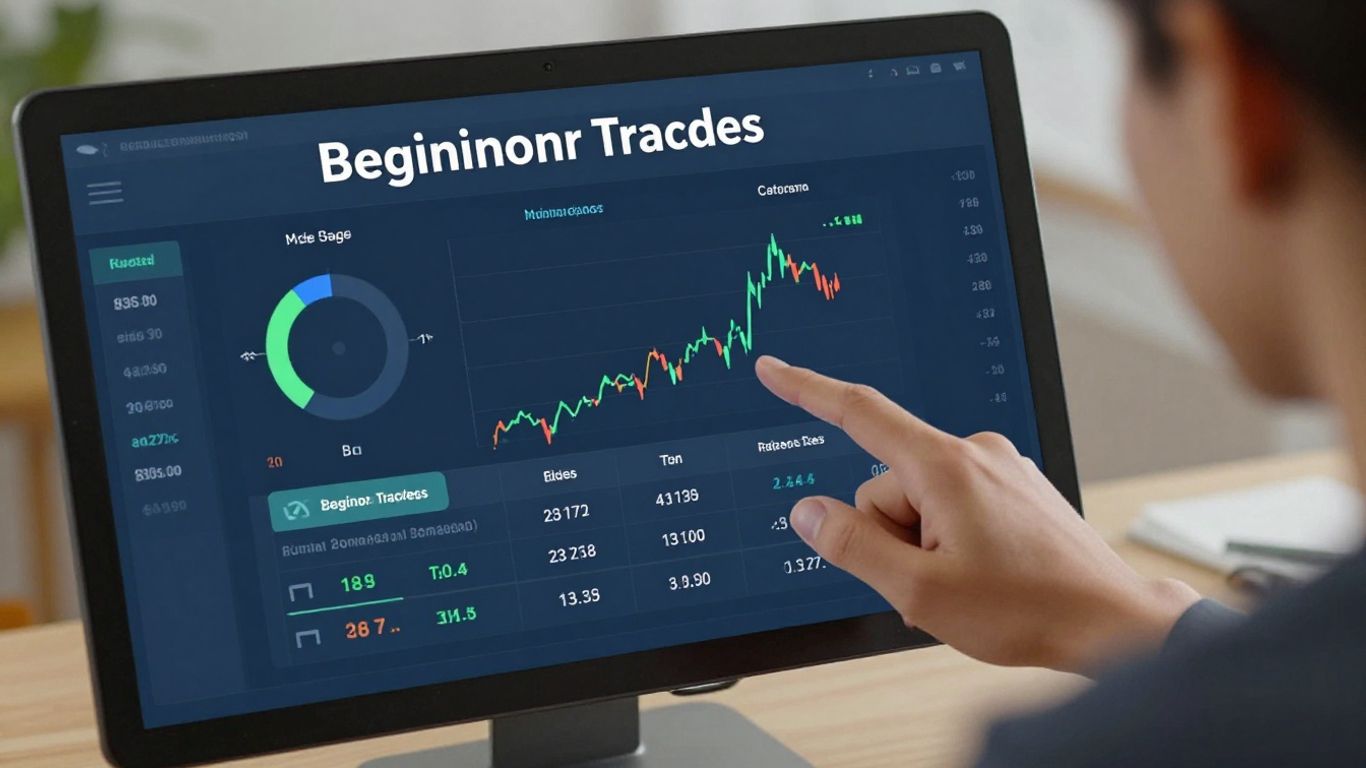
Robinhood has become a pretty well-known name, especially for folks just getting their feet wet in the stock market. It’s got this reputation for being super simple to use, which is a big deal when you’re starting out and don’t want to get bogged down by complicated software. The app is really clean, and you can buy and sell stocks, ETFs, and even options without paying any commission fees. That’s a huge plus when you’re just trying to get a feel for trading and don’t want fees eating into your small gains.
One of the things that makes Robinhood stand out is its straightforward approach to trading. You don’t need to jump through a million hoops to get started. You can open an account, deposit some cash, and start trading pretty quickly. They also offer extended trading hours, which can be helpful if you want to react to news that comes out before the market officially opens or after it closes. It’s a good way to get a feel for day trading on Robinhood.
Here’s a quick look at some of the things Robinhood offers:
- Commission-free trading: No fees on stocks, ETFs, and options.
- User-friendly interface: Easy to navigate, especially on mobile.
- Extended trading hours: Access from 8 a.m. to 8 p.m. EST.
- Fractional shares: Buy parts of expensive stocks.
- Basic educational content: Articles and tutorials to help beginners.
While Robinhood is great for getting started, it’s important to remember that it’s designed for simpler trading. If you plan on doing more complex strategies or need advanced charting tools, you might find yourself wanting more down the line. It’s a solid first step, though, especially if you’re just trying to understand the basics without a lot of upfront cost or confusion.
6. Trading in the Zone Live
Trading in the Zone Live is a course that really gets into the nitty-gritty of technical analysis. It’s not just about looking at charts; it’s about understanding what they’re telling you. You’ll learn about things like sector correlation, which is pretty interesting when you think about how different markets move together. They also cover position sizing and risk management, which are super important if you don’t want to lose your shirt.
One of the main things this course focuses on is supply and demand zones. It breaks down how to spot these areas on charts and use them to figure out potential entry and exit points. You also get a deep dive into wholesale and retail price action, which helps you see the market from different perspectives. The instructors aim to give you a solid foundation in reading charts and making informed decisions.
Here’s a look at what you can expect:
- Pure Technical Analysis: Focuses solely on chart patterns and indicators.
- Sector Correlation: Understanding how different market sectors influence each other.
- Position Sizing & Risk Management: Learning how to manage your capital effectively.
- Supply & Demand Zones: Identifying key areas where prices might reverse.
- Wholesale/Retail Price Action: Analyzing price movements from different market participant viewpoints.
It’s worth noting that if you’re planning on taking the GTF Options course, completing either Trading in the Zone Live or Trading in the Zone Elementary is a requirement. This suggests that the foundational knowledge from these courses is considered necessary before diving into options trading. Mentors like Arun and Sooraj are crucial for serious traders, offering support that goes beyond standard courses. Their guidance includes live market discussions and advice on risk and capital management, forming the backbone of successful trading strategies. Their guidance is a big plus.
Sometimes, learning trading feels like trying to assemble furniture without instructions. You’ve got all the pieces, but putting them together in a way that makes sense is another story. This course tries to provide those instructions, focusing on practical application rather than just theory. It’s about building a repeatable process for your trading.
7. Trading in the Zone Elementary
This course is basically the starting point for a lot of people looking to get into trading, especially if they plan on taking the GTF Options course later on. It’s designed to give you a solid foundation, kind of like learning your ABCs before you start writing essays. They say it’s mandatory if you want to do the GTF Options course, so that tells you something about its importance.
What you get in this elementary course is a good intro to the basics. It covers things like:
- Why trading is even a thing and what the benefits are.
- Understanding how different parts of the market relate to each other.
- Figuring out how much of something to buy or sell.
- Managing the risks involved, which is super important.
- The difference between wholesale and retail prices.
- Looking at demand and supply.
- Doing a deep dive into charts.
It’s all about getting you comfortable with the core ideas so you’re not completely lost when you move on to more complex stuff. They even suggest watching this free course before jumping into the paid options one, which is a nice touch. It helps build stronger basics, and honestly, who doesn’t like free learning?
The goal here is to make sure you’re not just guessing when you trade. It’s about building a repeatable process that makes sense, even when the market is doing crazy things. This course aims to get you thinking more clearly about your trades.
If you’re new to this whole trading world, this is where you’ll want to start. It’s like getting your driver’s permit before you try to race cars. They really want you to have a good grasp of market dynamics before you get too deep into specific strategies. You can check out more about achieving that state of mind for trading here.
It’s pretty straightforward, really. They break down the initial concepts so you can start to see the patterns and understand what’s happening on your screen without feeling overwhelmed. It sets the stage for everything else.
8. ETNA
ETNA is a platform that really leans into automated trading. They’ve noticed that a lot of successful day traders, like 90% according to their 2025 reports, use these automated features. So, if you’re thinking about scaling up a trading strategy that works consistently, ETNA’s programmable tools and open API are pretty central to that idea.
Many beginners start out with apps or spreadsheets because they seem easy to use at first. It’s fine for getting the basics, but it can slow down how fast you actually learn. You end up practicing in bits and pieces, not really controlling your risk well, and it’s hard to see a clear path to managing bigger amounts of money. Platforms like Goat Funded Trader, for example, offer simulated trading with large virtual accounts, a way to move from challenges to actual funding, and quick payouts. This speeds up the learning process while keeping things clear and measurable.
What do beginners actually need from the interface?
- Clear order entry: Making sure you can place trades without a lot of confusion.
- Tutorial guidance: Help built right into the platform so you can focus on the market.
- Easy account setup: Getting started quickly without a lot of hassle.
When you’re just starting, it’s easy to get overwhelmed. The goal is to find a platform that makes the basic stuff simple, so you can actually learn about trading without getting bogged down in technical details. It’s like learning to drive; you want a car that’s easy to handle before you try a race car.
ETNA’s focus on automation might be a bit more advanced for someone brand new, but it’s definitely something to consider as you get more comfortable and want to build more systematic approaches to your trading.
9. Match-Trader
Match-Trader is a platform that aims to simplify the trading experience, especially for those just starting out. It’s designed to be straightforward, cutting down on a lot of the complexity you might find elsewhere. Think of it as a place where you can get your feet wet without feeling completely overwhelmed by all the buttons and charts.
One of the things they focus on is making sure you can actually trade without a ton of hassle. They talk about having flexible rules, which can be a big deal when you’re learning. Some trading programs can be really strict, with tight deadlines or rules about how often you have to trade. Match-Trader seems to offer a bit more breathing room, letting you learn at your own pace.
Here’s what stands out:
- User-Friendly Interface: It’s built to be easy to understand. Less confusion means more focus on actual trading decisions.
- Flexible Trading Programs: They offer different ways to get started, including evaluation challenges that don’t always have super strict time limits. This is good for beginners who need time to get comfortable.
- Profit Splits: Some of their setups offer pretty good profit splits, meaning you get to keep a larger chunk of the money you make. This can be motivating when you’re starting out.
When you’re picking a trading platform, it’s easy to get distracted by flashy ads or what everyone else is using. But honestly, what looks good on the outside doesn’t always work well when you’re actually trying to make trades. You need something that feels right for how you trade and helps you learn without adding extra stress.
It’s really about finding a tool that fits your learning style. If a platform makes you spend more time figuring out how to use it than actually watching the market, it’s probably not the right one for you. The goal is to make trading feel more accessible, not like you’re trying to solve a puzzle just to place an order.
Wrapping It Up
So, we’ve looked at a bunch of trading courses out there for folks just starting out in 2026. It’s a lot to take in, I know. But remember, the best course for you isn’t just about fancy features or big promises. It’s about finding something that clicks with how you learn and what you want to achieve. Whether you’re aiming to trade full-time or just add a little extra income, picking the right starting point makes a big difference. Don’t rush the decision. Take your time, maybe try out some of the demo accounts we talked about, and find the course that feels like the right fit to get you going on your trading journey.
Frequently Asked Questions
What is the GTF Options Course about?
The GTF Options Course is all about teaching you how to trade options like a pro. You’ll learn how options prices are figured out, using things called ‘Greeks.’ It helps you know if an option is a good deal or too pricey, and when it’s smart to buy or sell.
Why is understanding volatility and time decay important in options trading?
Many people lose money in options because they forget about how much the price can jump around (volatility) and how time makes options worth less (time decay). This course gives you clear rules to help you decide the best times to get into and out of trades, so you don’t make those common mistakes.
What kind of trading platforms are good for beginners?
For beginners, platforms like moomoo and Robinhood are often recommended because they’re easy to use and offer helpful tools for learning. Interactive Brokers is also a solid choice, especially if you want to get into more advanced trading later on. They make it simpler to start trading without getting overwhelmed.
What is ‘paper trading’ and why should I use it?
Paper trading is like practicing with fake money in a real stock market. It lets you try out different trading ideas and get used to a platform without risking your own cash. It’s super important for beginners to get comfortable with how things work before they start trading with real money.
What are ‘funded trader’ programs like Goat Funded Trader?
Funded trader programs, like Goat Funded Trader, let you trade with a bigger amount of money than you might have yourself. You usually have to pass a test or challenge first. If you do well, they give you more money to trade with, and you share the profits. It’s a way to trade bigger without risking as much of your own money.
Do I get notes and a certificate after finishing a course?
Yes, typically after completing a course, you’ll get access to study notes that you can keep, often for good. You’ll also usually receive a certificate to show you’ve finished the training, which can be downloaded from their website or app.