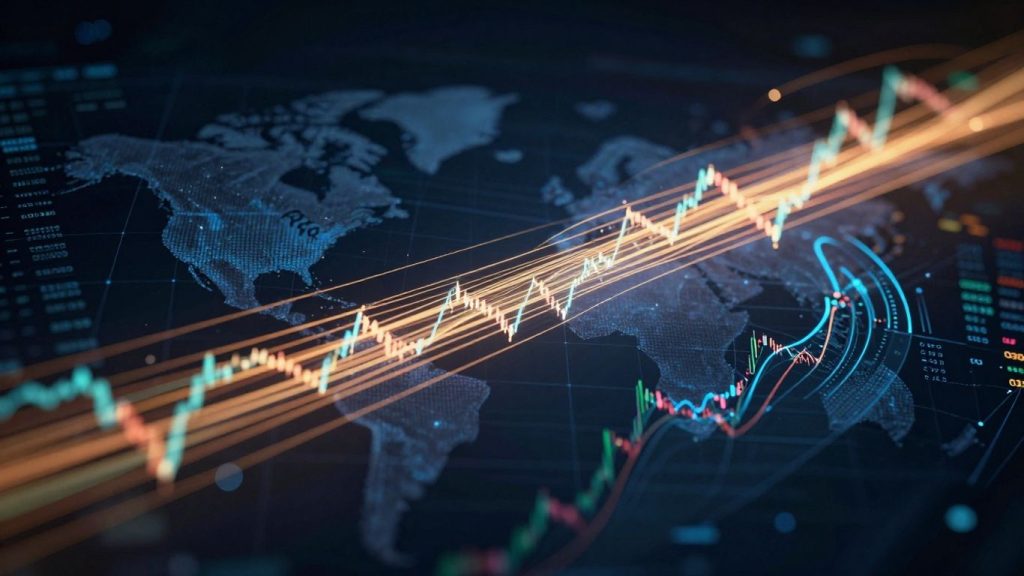
Thinking about using AI for forex trading? It’s a hot topic, and for good reason. AI promises to make trading smarter and maybe even easier. This guide will break down what you need to know about ai forex trading, from the basics to how you can actually use it to improve your trading game. We’ll cover how AI works in the markets, how to build your own strategies, and what to watch out for. Let’s get started on making ai forex trading work for you.
Key Takeaways
- AI in forex trading helps analyze markets and make trading decisions, but it’s not a magic bullet.
- Understanding how AI works, like machine learning and algorithms, is key to using it effectively.
- You can combine AI tools with your own trading knowledge for better results.
- AI has limits, and managing risk is still very important in ai forex trading.
- The future of trading likely involves humans working with AI, not just AI alone.
Understanding AI Forex Trading Fundamentals

Forex trading has always been a fast-paced game, but adding artificial intelligence into the mix? That’s a whole new ballgame. We’re talking about systems that can process information way faster than any human ever could. It’s not just about faster trades; it’s about smarter trades, too. The landscape of AI in forex is changing how we even think about the markets.
The Evolving Landscape Of Ai Forex Trading
Remember when trading was mostly about gut feelings and watching charts all day? Those days are fading. AI is stepping in, not to replace traders entirely, but to give them some serious tools. Think of it like upgrading from a flip phone to a smartphone – suddenly, you can do so much more. This technology is constantly getting better, learning from every trade and market movement. It’s a big shift from how things used to be done, and it’s happening right now.
Key Components Of Ai Driven Forex Strategies
So, what actually makes up an AI trading strategy? It’s not just one thing. You’ve got the data, which is like the fuel. Then there are the algorithms, the brains of the operation, figuring out what the data means. And finally, there’s the execution part, actually placing the trades. It’s a whole system working together.
Here’s a quick breakdown:
- Data Ingestion: Gathering all sorts of market information – prices, news, economic reports.
- Pattern Recognition: AI looks for trends and anomalies that humans might miss.
- Decision Making: Based on patterns, the AI decides whether to buy, sell, or hold.
- Execution: Placing the trade automatically or signaling a human trader.
The goal is to use AI to sift through the noise and find opportunities, but it’s not a magic bullet. Human oversight is still pretty important, especially when unexpected events pop up.
Navigating The Ai Forex Trading Ecosystem
Jumping into AI forex trading can feel a bit overwhelming at first. There are so many platforms, tools, and strategies out there. It’s like walking into a giant tech store – you need to know what you’re looking for. Understanding the different types of AI, like machine learning or deep learning, is a good start. Knowing how these systems learn and adapt is key to using them effectively. You can find some great resources on how to leverage AI in trading to get a better grasp of the landscape.
It’s important to remember that not all AI is created equal. Some systems are designed for specific tasks, while others are more general. Picking the right tools for your trading style is a big part of the process. It takes time to figure out what works best for you and your goals in the market.
Leveraging Artificial Intelligence In Forex Markets
Harnessing AI For Predictive Analysis In Forex
AI is changing how we look at forex markets. Instead of just looking at charts, AI can sift through massive amounts of data to find patterns that humans might miss. Think about news events, economic reports, and even social media chatter – AI can process all of it way faster than any person could. This helps in making more informed guesses about where prices might go next.
The goal isn’t to predict the future perfectly, but to get a better sense of probabilities. AI models can be trained on historical data to identify conditions that often lead to certain price movements. This can give traders an edge.
Here’s a look at what AI brings to the table for analysis:
- Pattern Recognition: AI algorithms are great at spotting recurring chart patterns or correlations between different currency pairs and economic indicators.
- Sentiment Analysis: By scanning news articles and social media, AI can gauge market mood, which often influences currency prices.
- Anomaly Detection: AI can flag unusual market behavior that might signal a trading opportunity or a risk.
AI doesn’t replace the need for a trader’s judgment, but it provides a much more powerful set of tools for understanding market dynamics. It’s like having a super-powered assistant that can do the heavy lifting of data crunching.
Ai Powered Algorithmic Trading For Forex
Algorithmic trading, or ‘algo trading’, uses computer programs to execute trades based on pre-set instructions. When you add AI into the mix, these algorithms get smarter. They can adapt to changing market conditions, unlike older, fixed algorithms.
AI-powered algos can:
- React faster: They can place trades the moment a specific condition is met, often before a human trader could even react.
- Manage multiple strategies: An AI can oversee several trading strategies at once, adjusting them as needed.
- Backtest and optimize: AI can test strategies against historical data to see how they would have performed and suggest improvements.
This approach takes a lot of the emotion out of trading. Decisions are based on data and logic, not fear or greed. However, building and managing these systems requires a good understanding of both AI and the forex market.
The Role Of Machine Learning In Ai Forex Trading
Machine learning (ML) is a big part of AI in forex trading. ML algorithms learn from data without being explicitly programmed for every single scenario. They get better over time as they process more information.
Think of it like this:
- Training: An ML model is fed historical forex data, including price movements, economic news, and other relevant factors.
- Learning: The model identifies patterns and relationships within this data.
- Prediction/Action: Based on what it learned, the model can then make predictions about future price movements or even execute trades directly.
ML models can be used for various tasks:
- Forecasting: Predicting short-term price changes.
- Risk Assessment: Estimating the likelihood of a trade going wrong.
- Parameter Optimization: Fine-tuning the settings of trading algorithms.
The key benefit is that ML models can adapt to the ever-changing nature of the forex market. What worked yesterday might not work today, and ML helps systems adjust accordingly. It’s a continuous process of learning and refinement.
Developing Your Ai Forex Trading Strategy
Building a successful AI forex trading strategy isn’t just about plugging into the latest algorithms. It requires a thoughtful approach, blending data analysis with a clear understanding of market dynamics. Think of it less like a set-it-and-forget-it system and more like a partnership between human insight and machine processing power. The goal is to create a robust framework that can adapt to changing market conditions.
Data Driven Insights For Ai Forex Trading
AI thrives on data. The more relevant and clean the data you feed it, the better its outputs will be. This means going beyond just price charts. You’ll want to consider a variety of data sources:
- Economic Indicators: GDP, inflation rates, employment figures, and central bank interest rate decisions can all move currency markets significantly.
- News and Sentiment Analysis: AI can process news feeds and social media to gauge market sentiment, which often precedes price movements.
- Order Flow Data: Understanding where the big money is moving can provide valuable clues about potential future price action.
- Historical Price Data: This is the bedrock for identifying patterns and training models.
Collecting and cleaning this data is a big job, but it’s the foundation upon which your AI strategy will be built. You might even consider using specialized tools or services that aggregate and prepare this information for you. Developing a good forex trading app often starts with how it handles data forex trading app development.
Integrating Ai With Discretionary Trading
Many traders worry that AI will completely replace human judgment. However, a more practical approach for most is to integrate AI as a powerful assistant to their existing discretionary trading methods. AI can sift through vast amounts of information, identify potential opportunities, and flag risks far faster than any human could. This frees up the trader to focus on the bigger picture, applying their experience and intuition to the AI’s suggestions.
Consider AI as a sophisticated filter. It can highlight trades that meet specific criteria, but the final decision to enter or exit a position often benefits from a human’s contextual understanding. This hybrid model allows traders to benefit from AI’s analytical power without losing the nuanced decision-making that comes from years of market experience.
The market isn’t always rational. While AI can spot statistical probabilities, human traders can interpret geopolitical events, unexpected news, or shifts in market psychology that might not be immediately apparent in the data alone. This blend of analytical power and human interpretation is where true trading edge can be found.
Optimizing Ai Forex Trading Models
Once you have an AI model in place, the work isn’t over. Markets evolve, and so must your strategy. Continuous optimization is key. This involves:
- Performance Monitoring: Regularly track how your AI model is performing against predefined metrics. Are the profit targets being met? Are the risk parameters being respected?
- Backtesting and Forward Testing: Test your model on historical data (backtesting) and then on live, but not actively traded, data (forward testing) to see how it handles current market conditions.
- Parameter Tuning: Adjusting the settings and parameters of your AI model based on performance feedback. This might involve tweaking learning rates, feature selection, or decision thresholds.
- Model Retraining: Periodically retraining your AI model with new data to keep it up-to-date with the latest market behavior.
This iterative process of testing, analyzing, and refining is what separates a static, potentially outdated system from a dynamic, adaptable AI trading strategy. It’s about staying ahead of the curve and ensuring your AI continues to provide an edge.
Risk Management In Ai Forex Trading
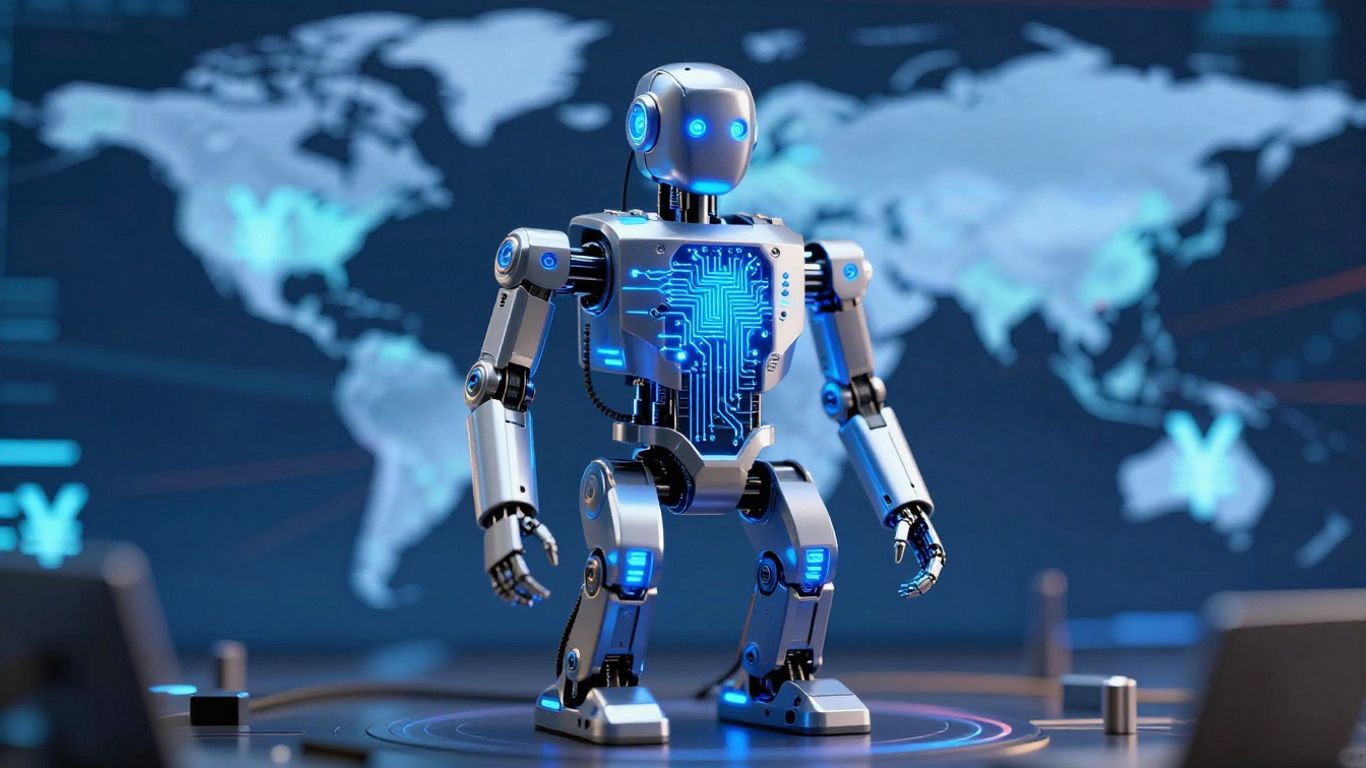
Even with the smartest AI tools, managing risk in forex trading is still super important. It’s not just about making profits; it’s about protecting your capital so you can keep trading. AI can help spot potential problems, but it doesn’t eliminate the need for a solid risk plan.
Mitigating Risks With Ai Forex Trading Tools
AI can be a real game-changer when it comes to managing risk. Think of it as having an extra pair of eyes that never sleep. These systems can constantly monitor market conditions, looking for signs of trouble that a human might miss, especially during fast-moving market events. They can help by:
- Automated Stop-Loss and Take-Profit Orders: AI can dynamically adjust these levels based on real-time volatility and predicted price movements, rather than relying on static settings.
- Position Sizing Analysis: AI algorithms can calculate optimal position sizes based on your account balance, risk tolerance, and the specific trade’s risk/reward ratio, preventing over-exposure.
- Correlation Analysis: AI can identify how different currency pairs are moving together, helping you avoid taking on too much correlated risk unintentionally.
- Anomaly Detection: Spotting unusual trading patterns or unexpected news impacts that could signal a shift in market sentiment or a potential risk event.
The goal is to use AI to create a more robust safety net around your trades. This proactive approach can significantly reduce the impact of unexpected market swings.
Understanding Ai Forex Trading Limitations
While AI is powerful, it’s not magic. It’s built on historical data, and the past doesn’t always predict the future. Markets can be influenced by unpredictable events, like sudden geopolitical shifts or major economic policy changes, which AI might not fully grasp. Sometimes, the AI might just be wrong, or the data it’s trained on might have hidden biases. It’s like relying on a weather forecast; it’s usually right, but sometimes a surprise storm pops up. You still need to be aware that the AI is a tool, not a foolproof system. For instance, understanding the costs involved in trading, like spreads and commissions, is something AI can help with, but you need to be aware of them too. Algorithmic trading, a close cousin to AI trading, also has its own set of challenges and limitations that traders must understand.
Markets are complex systems, and AI models are simplifications of that complexity. They excel at identifying patterns within the data they are fed, but they lack true understanding of the ‘why’ behind market movements. Human oversight remains vital for interpreting context and making judgment calls when AI signals are ambiguous or counter-intuitive.
Ethical Considerations In Ai Forex Trading
Using AI in forex trading brings up some ethical questions. For starters, there’s the issue of fairness. If some traders have access to more sophisticated AI tools, does that give them an unfair advantage? Then there’s transparency. Are the AI algorithms being used completely open about how they make decisions, or are they ‘black boxes’? This lack of clarity can be a problem. We also need to think about accountability. If an AI makes a bad trade that loses a lot of money, who is responsible? The developer? The trader who used it? It’s a murky area. Finally, there’s the potential for AI to be used in ways that could destabilize markets, though this is more of a concern with very large-scale institutional use. It’s important to use these tools responsibly and ethically.
The Future Of Ai Forex Trading
So, what’s next for AI in the world of Forex? It’s not about robots taking over completely, at least not anytime soon. Think more like a super-smart assistant. The big picture is moving towards a hybrid approach, where AI and human traders work together. This isn’t just a guess; the algorithmic trading market is projected to reach $44.34 billion by 2030, showing a clear trend towards automation and AI integration [52fa].
Emerging Trends In Ai Forex Trading
We’re seeing AI get better at spotting patterns that humans might miss. It can sift through tons of data, looking for subtle connections. This helps in making more informed decisions. Also, AI is getting more accessible, meaning smaller firms and even serious individual traders can start using these tools. The focus is shifting from just automated execution to AI that can actually help in the decision-making process itself.
The Human Element In Ai Forex Trading
This is where it gets interesting. While AI can crunch numbers and find probabilities, it doesn’t have intuition or understand market sentiment driven by, say, a sudden political event. The most successful traders in the future will likely be those who can effectively combine AI’s analytical power with their own experience and gut feeling. It’s like having a chess grandmaster working with a supercomputer – the computer finds all the moves, but the grandmaster knows which ones are truly strategic. Humans are still needed to interpret the AI’s findings and apply them to the messy reality of the markets.
Building A Successful Ai Forex Trading Career
If you’re looking to make a career out of this, it’s not just about learning to code or understand algorithms. It’s about developing a well-rounded skill set. Here’s what you should focus on:
- Data Interpretation: Learning to understand what the AI is telling you and why.
- Risk Management: AI can help, but you still need a solid plan to protect your capital.
- Psychology: Staying calm and disciplined, especially when markets get volatile, is still key.
- Adaptability: The AI landscape changes fast, so continuous learning is a must.
The idea that you can just hand over your trading account to an AI and expect it to make money on its own is a bit of a myth. Real success comes from a partnership, where AI handles the heavy data lifting, and humans provide the context, judgment, and strategic direction. It’s about working smarter, not just letting the machine do all the work.
Getting good at this means more than just knowing how to trade; it’s about building a sustainable career. This involves understanding the costs involved, like commissions and slippage, which can eat into profits if you’re not careful. It also means developing a disciplined approach, perhaps by keeping a detailed trading journal to track not just wins and losses, but also the decisions that led to them. The goal is to build a solid foundation, much like learning to invest in financial markets with confidence.
Wrapping It Up
So, we’ve gone through a lot, right? From understanding the basics of trading to figuring out how AI can actually help without taking over everything. It’s not about finding some magic button, but more about using these new tools smartly. Think of it like having a really good assistant who can crunch numbers and spot patterns, but you’re still the one making the final call. Markets are always changing, and that’s the exciting part. Keep learning, stay curious, and remember that success in trading, especially with AI involved, comes from a mix of good strategy, discipline, and knowing when to trust your gut. Don’t be afraid to experiment, but always trade smart.
Frequently Asked Questions
What is AI Forex trading in simple terms?
AI Forex trading means using computer programs that can learn and make trading decisions in the currency market. These programs look at lots of data, find patterns, and help traders decide when to buy or sell currencies.
Can beginners use AI for Forex trading?
Yes, beginners can use AI tools for Forex trading. Many platforms are designed to be user-friendly, so you don’t need to be a tech expert. However, it’s important to learn the basics of Forex and understand how the AI tool makes decisions.
How does AI help manage risks in Forex trading?
AI can help manage risks by quickly analyzing data and spotting possible problems before they happen. It can set stop-loss orders, limit trade sizes, and avoid trades that look too risky, making it easier to protect your money.
Are there any downsides to using AI for Forex trading?
Yes, there are some downsides. AI isn’t perfect and can make mistakes if the data changes suddenly or if something unexpected happens in the market. Also, some AI systems can be expensive or hard to understand without proper training.
Do I still need to use my own judgment when trading with AI?
Absolutely! AI can give you helpful information and suggestions, but it’s important to use your own thinking too. Markets can change because of news or events that AI might not catch, so human judgment is still very important.
Is AI Forex trading safe and legal?
AI Forex trading is legal in most countries, but you should always check the rules where you live. Like all trading, there are risks, and you can lose money. Make sure to choose trusted platforms and never invest more than you can afford to lose.