The packaging used for burgers in food deliveries across the United Kingdom is shaped by a combination of food safety regulations, logistics requirements and environmental considerations. Three main material groups dominate in practice: cardboard and paper-based packaging; plastic components; and alternative or composite materials. Each of these serves a specific functional purpose in the delivery chain.
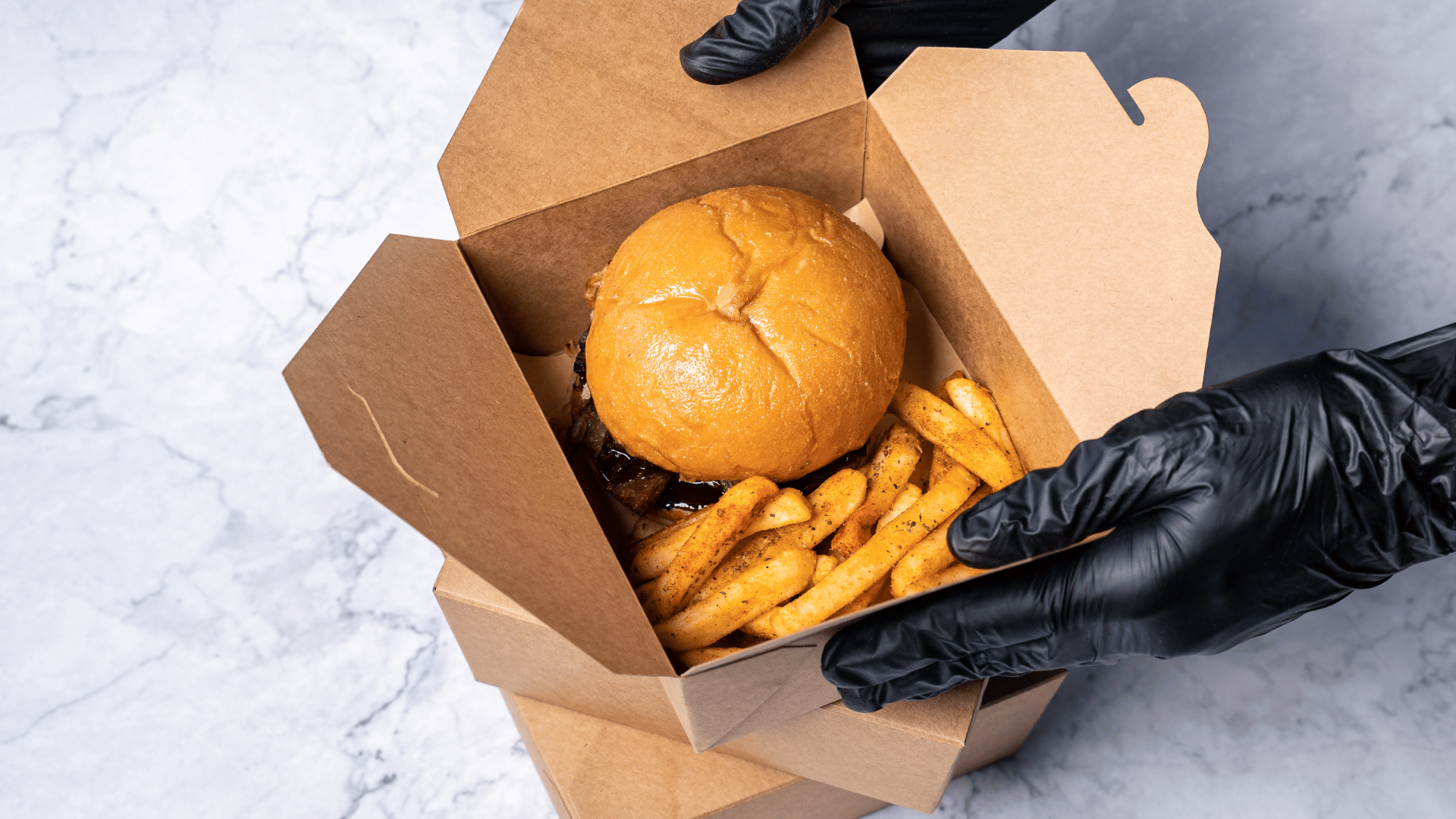
Cardboard and paper-based packaging
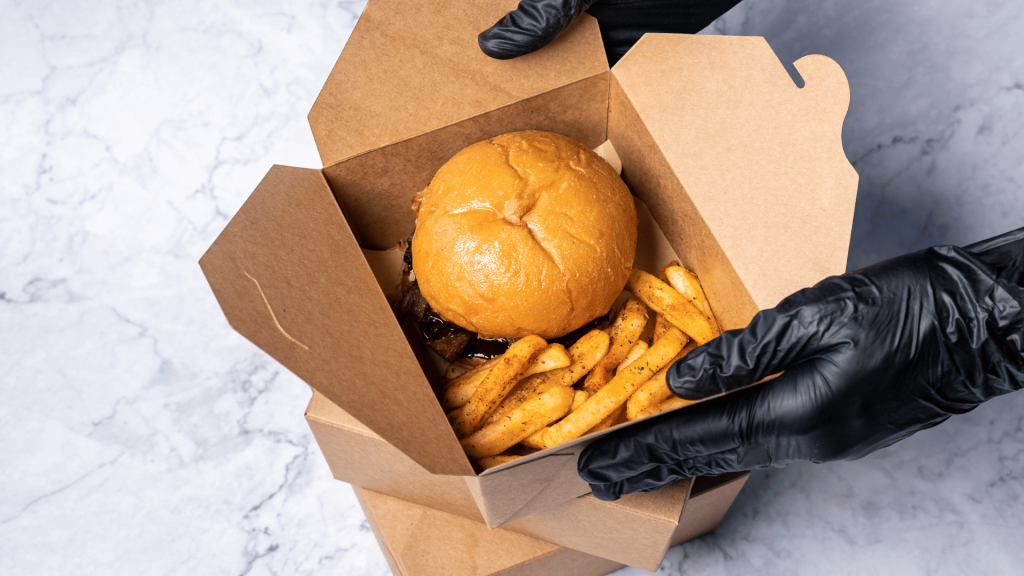
The most widely used food delivery packaging for burger delivery in the UK is clamshell-style cardboard or paperboard boxes. These are typically made from kraft paper, paperboard, or corrugated cardboard. Kraft materials are especially popular due to their recyclability, compostability and strength, as well as their natural grease resistance. Cardboard packaging offers several advantages:
- Structural protection – preventing burgers from being crushed during transport.
- Ventilation – while boxes have heat retention, features such as fluted layers help prevent condensation, which would otherwise make the burger soggy.
- Branding and customisation – paperboard surfaces allow high-quality printing, enabling restaurants to display their logos and product information easily.
However, cardboard has limitations. It can absorb grease and moisture, which reduces its recyclability if it becomes contaminated. To address this issue, businesses often add greaseproof liners.
Paper wraps and liners
- Paper is often used alongside cardboard, either as wrapping sheets or liners, or in the form of bags. For example, burgers may be wrapped in greaseproof or wax-coated paper before being placed in a box – there are three reasons for that:
A barrier against grease and sauces to protect the outer packaging. - Maintaining hygiene and easier handling.
- Cleaner main box improves recyclability.
Paper packaging is lightweight and cost-effective, making it ideal for high-volume takeaway businesses. Its main drawback is its lower structural strength, which is why it is rarely used alone for deliveries.
Plastic elements
Although the use of plastic is decreasing due to environmental concerns, it still plays a role in burger delivery packaging. It may appear as coatings, linings or lids, particularly in composite materials. They help to provide moisture resistance and durability, particularly for sauces or high-fat foods. In regulatory terms, plastic used in food packaging must comply with strict food contact rules, including authorisation of materials and safe migration limits.
However, the use of plastic is increasingly being restricted or discouraged due to sustainability policies and extended producer responsibility requirements, which are pushing businesses towards using more recyclable or compostable alternatives.
Alternative materials
A growing segment of the UK market uses materials such as bagasse, a fibre derived from sugarcane, as an alternative to traditional materials. These containers resemble cardboard, but are compostable and more resistant to grease and moisture.
- Bagasse packaging is particularly valued for its environmentally friendly properties. It decomposes naturally and can handle hot, greasy foods without the need for an additional lining.
- Composite packaging, which combines paper with thin plastic layers, is also common. While these materials are effective, they can be harder to recycle and must be classified carefully under UK reporting systems.

Ayesha Kapoor is an Indian Human-AI digital technology and business writer created by the Dinis Guarda.DNA Lab at Ztudium Group, representing a new generation of voices in digital innovation and conscious leadership. Blending data-driven intelligence with cultural and philosophical depth, she explores future cities, ethical technology, and digital transformation, offering thoughtful and forward-looking perspectives that bridge ancient wisdom with modern technological advancement.