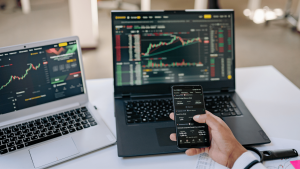
Opening a trading app for the first time can feel like being dropped into a whirlwind of numbers and charts. It’s a lot, and for many new people, that initial excitement can quickly turn into confusion. But what if there was a way to make sense of it all? AI stock trading is like having a smart helper that can look through tons of market information really fast. It’s not a magic trick for instant riches, but it can make trading less overwhelming and more structured. We’re going to look at ai stock trading for beginners to see how it can make things simpler and why it’s becoming more popular.
Key Takeaways
- AI stock trading uses smart computer programs to quickly examine lots of market data and find potential trades, making it easier for beginners.
- It helps newcomers by simplifying complex information, reducing guesswork, and managing emotions like fear and greed, which makes learning less scary.
- To start, beginners need to figure out their money goals and how much risk they can handle before picking a platform.
- Practicing with fake money (paper trading) and testing strategies on old data is important before risking real cash.
- Start trading with small amounts of real money, watch your trades closely, and only increase your investment slowly as you get better.
Understanding AI Stock Trading For Beginners

What AI Stock Trading Entails
AI stock trading is basically using smart computer programs to help you buy and sell stocks. These programs look at huge amounts of information – like past stock prices, how much was traded, company reports, and even what people are saying about a company online. They do this super fast, way faster than any person could. The goal is to spot patterns and predict what might happen next with stock prices. Think of it like having a really knowledgeable assistant who can sift through all the market noise to find potential opportunities. It’s about making trading more about data and less about guesswork.
Why AI Empowers New Investors
For folks just starting out, the stock market can feel like a maze. There’s so much information, and it’s easy to get overwhelmed or make decisions based on feelings like fear or excitement. AI helps cut through that confusion. It processes data objectively, meaning it doesn’t get scared or greedy. This can lead to more consistent decisions. Plus, AI can spot trends that might be too subtle for a new trader to notice. It helps simplify complex data, making it easier to understand what’s going on.
Here’s how AI can be a game-changer for beginners:
- Speedy Analysis: AI can review thousands of data points in seconds, from stock charts to news articles, presenting you with key insights without the overwhelm.
- Objective Decisions: AI trades based on logic and programmed rules, removing the emotional biases that often trip up new investors.
- Pattern Recognition: AI algorithms can identify subtle market patterns and correlations that are often missed by the human eye.
- Learning Support: By handling some of the heavy lifting in data analysis, AI allows beginners to focus on learning the core principles of trading.
AI acts as a sophisticated tool, not a magic wand. It provides data-driven insights to support your decisions, but it’s still important to learn and understand the market yourself. Using AI can make the initial learning curve feel less steep.
Key Benefits for Novice Traders
One of the biggest advantages AI brings to the table for beginners is its ability to automate tasks. This means trades can be executed precisely when certain conditions are met, without manual intervention. This automation also helps in managing risk. Systems can be programmed with stop-loss orders or other rules to limit potential losses automatically. This disciplined approach is something many new traders struggle to maintain on their own. It helps in building a more structured trading approach from the start, which is a great foundation for long-term success.
Here are some direct benefits:
- Reduced Emotional Trading: AI sticks to its programming, avoiding impulsive decisions driven by fear or greed.
- Access to Sophisticated Analysis: AI tools can perform complex analyses that would typically require advanced knowledge and significant time.
- Improved Efficiency: Automating trade execution and data analysis saves time and allows for quicker responses to market changes.
Core AI Trading Strategies And Tools

Leveraging Machine Learning and Algorithms
At the heart of AI stock trading are algorithms. These are sets of instructions that the AI follows, often built using machine learning. This means the AI can actually learn and get better over time as it processes more data. Different algorithms are used for different tasks. Some are designed to predict where stock prices might go, while others focus on managing risk. You’ll often hear about algorithms that can automatically execute trades the moment certain conditions are met. It’s all about using math and logic to make trading decisions faster and, hopefully, more accurately.
Automated Trade Execution and Risk Control
One of the big advantages of AI is its ability to execute trades automatically. This means trades can happen the instant a signal appears, cutting out delays that often happen when a person has to make the decision. Orders are placed at precise prices and volumes, which helps keep things disciplined, even when the market is jumpy.
Risk controls are also built right into the system. Think of things like stop-loss orders (which sell a stock if it drops to a certain price), how much of your money is put into any single trade, and how the AI rebalances your whole portfolio. This way, losses are managed in a structured manner. Studies show that this kind of automated execution can not only reduce how much you lose on average but also make your entry and exit points more consistent, giving your trading strategy a more organized performance.
Identifying Subtle Market Signals
Markets can be pretty complicated, and sometimes the really important signals are quite small. AI is really good at spotting these. It can look at things like small changes in trading volume or how different stocks move in relation to each other, finding connections that aren’t obvious if you’re just looking at the surface. It’s like having a super-powered magnifying glass for all the market data out there.
Here are some of the signals AI can help you find:
- Price Trend Shifts: Detecting when a stock might be starting or ending an upward or downward price movement.
- Volatility Changes: Spotting when a stock is likely to become more or less unpredictable.
- News Sentiment: Gauging how positive or negative recent news is for a particular company or the market overall.
- Correlation Anomalies: Identifying unusual relationships between different assets that might signal a trading chance.
The goal here isn’t to completely replace human judgment, but to add to it. AI can handle the heavy lifting of analyzing tons of data, freeing you up to focus more on your strategy and learning. It’s more of a partnership than a takeover.
Getting Started With AI Trading
So, you’re ready to dip your toes into AI stock trading. That’s great! But before you jump in headfirst, it’s smart to lay some groundwork. Think of it like planning a trip – you wouldn’t just hop on a plane without knowing where you’re going or how you’ll get there, right? The same applies here. Getting started with AI trading means taking a few deliberate steps to make sure you’re set up for success, not just a wild ride.
Defining Your Financial Goals and Risk Tolerance
First things first, what are you actually trying to achieve with your money? Are you saving for a down payment in five years, or are you looking to build long-term wealth for retirement decades away? Your goals will shape your entire approach. Alongside that, you need to figure out how much risk you’re comfortable with. This isn’t just about picking stocks; it’s about understanding your own financial personality. How much are you okay with potentially losing on any given trade? What’s your absolute limit for a month? Knowing these boundaries helps keep emotions in check when the market gets choppy.
Here’s a quick way to think about it:
- Short-term goals (1-3 years): Might mean aiming for quicker gains, but often comes with higher risk.
- Medium-term goals (3-10 years): Usually involves a balance between growth and stability.
- Long-term goals (10+ years): Often focuses on steady, compounding growth with a lower risk tolerance.
Selecting The Right AI Trading Platform
Now, about the tools. The world of AI trading platforms can seem a bit overwhelming at first. They all promise the moon, but they work differently. Some are packed with complex charts and data, while others focus on simplifying the process with clear recommendations. For beginners, it’s usually best to start with a platform that has a clean, easy-to-understand interface. Look for ones that offer tutorials or educational resources, and importantly, good customer support. You’ll also want to check if it has a paper trading feature – we’ll get to that in a sec. Comparing a few options based on their features, fees, and how user-friendly they are is a smart move. You can find some AI-powered tools that help with portfolio management and strategy suggestions, which can be a good starting point for beginners.
Practicing With Paper Trading And Backtesting
This is where you get to play without the real money pressure. Paper trading, also called a demo account, lets you use virtual money to make trades based on real market conditions. It’s like a practice field. You can test out different AI strategies, see how the platform works, and get a feel for making trades without any financial risk. Backtesting is similar, but it involves running your chosen strategy against historical market data to see how it would have performed in the past. This gives you a historical perspective on potential outcomes. Both are incredibly useful for building confidence and understanding how your chosen AI tools operate before you commit actual capital.
Think of paper trading and backtesting as your training wheels. They allow you to learn the mechanics of AI trading, test your chosen strategies, and understand the platform’s behavior in a simulated environment. This phase is critical for developing a disciplined approach and avoiding costly mistakes when you eventually move to live trading.
Transitioning To Live AI Trading
Alright, so you’ve done your homework, practiced with fake money, and feel like you’re ready to put some real cash on the line. That’s a big step! But don’t just jump in headfirst. Think of it like learning to swim; you start in the shallow end before hitting the deep water. The goal here is to get your feet wet without getting overwhelmed.
Starting Small and Cautiously
This is probably the most important part when you first start trading with actual money. Don’t bet the farm on your first few trades. Seriously. Begin with an amount you’re genuinely comfortable losing – think of it as tuition for your trading education. It might be a few hundred dollars, maybe a thousand, depending on your situation. The idea is to get a feel for how the AI acts with real market forces at play, how your emotions react, and how the platform actually works when there’s money involved. It’s a learning curve, and starting small keeps the stakes manageable.
Monitoring And Documenting Trades
Once you’re live, you can’t just set it and forget it. You need to keep an eye on things. What did the AI do? Why did it make that trade? Was it a good move? Keeping a record, even a simple one, is super helpful. It’s like keeping a journal for your trading. This helps you spot patterns, understand the AI’s behavior better, and see where your strategy might need tweaking.
Here’s a basic way to log your trades:
| Trade Date | AI Action | Entry Price | Exit Price | P/L | Notes |
|---|---|---|---|---|---|
| 2026-01-19 | Buy AAPL | 175.50 | 176.20 | +0.40% | AI identified upward momentum |
| 2026-01-20 | Sell MSFT | 330.10 | 328.90 | -0.36% | AI exited due to weakening trend |
Keeping a detailed log of your trades, including the AI’s actions and your own observations, is incredibly useful. It builds a historical record that you can review later to refine your approach and understand the nuances of your AI’s decision-making process in real-time market conditions.
The financial markets are a dynamic environment. What works today might not work tomorrow. Consistent observation and record-keeping are your best allies in adapting to these changes and improving your trading outcomes over time.
Gradual Scaling Of Investment
If your initial small trades are going well, and you’re feeling more confident, you can think about slowly increasing the amount you’re trading with. Don’t go from $100 to $10,000 overnight. Increase your stake incrementally. Maybe add another 10-20% to your trading capital each month, provided the performance is consistent. This way, as your capital grows, your risk exposure grows at a manageable pace. It allows you to learn and adapt without taking on too much risk too quickly.
Essential AI Model Maintenance
So, you’ve got your AI trading system up and running, which is great. But here’s the thing: the stock market isn’t a static place. It changes, it shifts, and sometimes it throws curveballs that nobody saw coming. Because of this, the AI models you’re using need a bit of upkeep to stay effective. Think of it like owning a car; you can’t just drive it forever without changing the oil or checking the tires, right? Your AI models are similar. They need regular attention to keep performing well.
Regularly Updating AI Models
AI models learn from past data. If the market conditions that data represents are no longer relevant, the model’s predictions can become less accurate. It’s like trying to use a map from 1950 to navigate today’s cities – some roads might not exist anymore, and new ones will have been built. Therefore, it’s important to periodically retrain your AI models with fresh data. This process helps them adapt to new trends and patterns that have emerged since they were last trained. For instance, a model trained before a major economic shift might not understand how to react to similar events in the future.
Ensuring Data Relevance and Accuracy
This ties right into updating models. The data your AI uses is its food. If it’s eating stale or incorrect information, it’s going to get sick, metaphorically speaking. You need to make sure the data sources are still reliable and that the information they provide is accurate. For example, if your AI uses news sentiment analysis, you need to confirm it’s processing current news, not old articles that no longer reflect public opinion. Checking the quality and timeliness of your data is a non-negotiable step.
Adapting To Evolving Market Conditions
Markets can change for all sorts of reasons – new technologies, global events, shifts in consumer behavior, you name it. An AI model that was a star performer last year might struggle if the underlying market dynamics have changed. You need to keep an eye on how your AI is performing and be ready to adjust its settings or even switch to a different model if it’s no longer a good fit for the current environment. This might involve tweaking parameters or re-evaluating the types of signals the AI is designed to detect.
The key takeaway here is that AI trading isn’t a ‘set it and forget it’ kind of deal. It requires ongoing attention and adjustments to keep pace with the dynamic nature of financial markets. Ignoring maintenance can lead to a gradual decline in performance, turning a smart tool into a liability.
Top Beginner-Friendly AI Trading Solutions
When you’re just starting out with AI trading, picking the right tools can make a big difference. You don’t want something overly complicated that makes your head spin. The good news is there are platforms out there designed to be easy to use, even if you’re new to this whole AI thing. These solutions often focus on simplifying research and making trading decisions clearer.
Exploring AI-Powered Research Engines
Think of these as your personal research assistant. Instead of spending hours sifting through news articles, financial reports, and market data yourself, an AI research engine can do a lot of the heavy lifting. They can pull together information from various sources and present it in a way that’s easier to digest. For instance, a tool like Stoxo AI, built on data from millions of users, aims to be a single, reliable spot for investment questions. It can answer things like, “What’s happening with tech stocks after that big announcement?” without all the confusing jargon. This makes it much simpler for beginners to get the information they need to start thinking about trades.
Evaluating User-Friendly Platforms
Not all AI trading platforms are created equal, especially for newcomers. You’ll want to look for platforms that have a clean layout, clear instructions, and maybe even some tutorials to guide you. Features like paper trading (practicing with fake money) and backtesting (seeing how a strategy would have performed in the past) are super important. These let you get a feel for the platform and test out ideas without risking your actual cash. A good platform should also offer mobile access so you can keep an eye on things even when you’re on the go. It’s about finding a system that feels comfortable and helps you learn.
Understanding AI’s Role in Decision Support
It’s important to remember that most AI tools are there to help you make decisions, not make them for you. They analyze data, spot patterns, and might suggest potential trades, but the final call is yours. For example, an AI might flag a stock because of unusual trading volume, but it’s up to you to decide if that signal makes sense with your overall plan.
AI systems can process huge amounts of information much faster than a person can. They look at things like past stock prices, company news, and even what people are saying on social media. This objective analysis can help you avoid making impulsive choices based on emotions like fear or excitement. It provides a more logical starting point for your investment ideas.
Here’s a quick look at what to expect:
- Simplified Data Analysis: AI cuts through the noise, showing you the most relevant market information.
- Pattern Recognition: It can spot trends and connections that might be hard for a human to see.
- Reduced Emotional Bias: Trading decisions are based on data, not feelings.
- Learning Support: Many platforms include features to help beginners understand trading concepts better.
Wrapping Up Your AI Trading Journey
So, that’s the lowdown on getting started with AI in stock trading. It’s not some magic bullet for instant riches, but it definitely makes things less confusing. Think of it as having a super-smart assistant that helps you sort through all the noise and make more sensible choices. For anyone new to the market, this means less guesswork, more discipline, and a smoother path to learning the ropes. It’s about trading smarter, not just faster, and that’s a pretty good place to be as you start out.
Frequently Asked Questions
What exactly is AI stock trading for someone just starting out?
Think of AI stock trading like having a super-smart helper for buying and selling stocks. It uses computers that can learn (that’s the ‘AI’ part) to look at tons of information really fast. This helps find patterns and chances to trade that you might miss. It’s not magic, but a way to use data to make smarter choices without getting overwhelmed.
How do I start AI trading as a beginner?
To start, first figure out what you want to achieve with your money and how much risk you’re okay with. Then, pick an easy-to-use AI trading app. Practice with fake money first using its demo or ‘paper trading’ feature. Once you feel comfortable, start trading with a small amount of real money and watch your trades closely.
Are AI stock trading bots safe for beginners?
AI trading bots can be safe if used carefully because they make decisions based on logic and set rules, not emotions like fear or excitement. However, they still need you to watch them. Things like computer glitches or unexpected market changes can still cause problems, so it’s important to manage your risk.
What platforms are best for beginner AI trading?
The best platforms for beginners are usually simple to understand and use. Look for ones that offer guides or tutorials, let you practice with fake money (paper trading), and have tools to test your ideas on past market data (backtesting). These features help you learn without losing real money.
How does AI backtesting work for trading?
Backtesting is like a practice run for your trading strategy. You use old market data to see how your strategy would have performed in the past. This helps you understand if your strategy is likely to work and what risks are involved before you use your real money.
Can beginners trust AI for trading decisions?
AI can give you helpful, data-backed suggestions that can prevent you from making emotional mistakes. However, AI isn’t perfect and relies on the information it’s given. It’s best to use AI as a guide alongside your own learning and judgment, not as the only source for making decisions.