Thinking about jumping into day trading? It’s a world that moves fast, and honestly, it can be a bit overwhelming at first. Lots of people talk about making quick money, but it’s not quite as simple as just picking stocks. You really need to know what you’re doing. This article is going to break down some of the main day trading strategies out there, along with some solid advice on how to actually make it work without losing your shirt. We’ll cover the basics and then get into some more involved stuff, all aimed at helping you trade smarter.
Key Takeaways
- Day trading strategies vary widely, from quick scalping to riding momentum or betting on breakouts.
- Understanding market trends and news is key for many day trading strategies.
- Discipline is non-negotiable; always stick to your trading plan and manage emotions.
- Risk management is vital – know how much you’re willing to lose on any single trade.
- Realistic profit expectations and continuous self-reflection are important for long-term success.
Understanding Core Day Trading Strategies
Day trading is all about making quick moves in the market. You buy and sell within the same day, hoping to catch small price changes for a profit. It’s not about holding onto something for weeks or months; it’s about what happens in a few hours or even minutes. This means you need to be quick and have a plan. There are a few main ways people go about this, each with its own style and risk. The market moves fast, and trying to guess its every twitch is tough. The key is to have a strategy that fits how you like to trade and what you can handle. It’s not about being right all the time, but about making smart decisions when opportunities pop up.
Scalping: Capturing Micro Profits with Speed
Scalping is like being a super-fast shopper. You’re looking for tiny price differences, making lots of trades throughout the day to grab small wins. Think of it as picking up pennies off the sidewalk – you do it many times to make a decent amount. Scalpers usually watch charts that show price changes over just a few minutes, sometimes even seconds. They need to be really focused and quick with their decisions. The goal is to get in and out of a trade very fast, often within seconds or a couple of minutes.
Here’s a quick look at how scalping generally works:
- Identify a small price move: Look for stocks or assets that are showing a very small, predictable price movement.
- Enter the trade: Get into the position quickly as soon as you see the opportunity.
- Exit with a small profit: Close the trade as soon as you hit your tiny profit target, which might only be a few cents.
- Repeat: Do this over and over again throughout the trading day.
This strategy requires a lot of concentration and a trading setup that allows for fast order execution. It’s not for everyone, as the constant action can be tiring. Many traders favor trading during peak volatility, specifically the first hour after market open, to find these quick opportunities. Trading during peak volatility can be a good time for scalpers.
Momentum Trading: Riding the Wave of Market Trends
Momentum trading is about catching a trend while it’s happening. You’re looking for stocks that are already moving strongly in one direction, either up or down, and you jump on board. The idea is that the trend will continue for a while, allowing you to profit from the ongoing price movement. You’re not trying to predict the top or bottom; you’re just trying to ride the middle part of the move.
Key aspects of momentum trading include:
- Identifying strong trends: Use technical indicators like moving averages or volume to spot stocks with clear upward or downward momentum.
- Entry points: Get into the trade when the momentum appears to be building or continuing.
- Exit strategy: Exit the trade when the momentum starts to fade or reverse, often using stop-loss orders to protect profits.
- News and events: Momentum can often be fueled by news releases or significant market events, so staying informed is helpful.
This approach requires you to be comfortable with fast-moving markets and to have a good sense of when a trend might be losing steam. It’s about being agile and reacting to what the market is showing you.
Breakout Strategies: Capitalizing on Price Surges
Breakout strategies focus on moments when a stock’s price moves beyond a certain level, like a resistance or support line. Traders watch for these price levels, and when the price breaks through, it often signals the start of a new, strong move in that direction. It’s like a dam breaking – once the water gets through, it can flow very quickly.
Here’s a breakdown of breakout trading:
- Identify consolidation: Look for periods where a stock’s price is trading within a narrow range, forming a pattern like a triangle or a rectangle.
- Watch for the breakout: Be ready to enter a trade when the price decisively moves above resistance (for a bullish breakout) or below support (for a bearish breakout).
- Volume confirmation: A breakout accompanied by high trading volume is often seen as more reliable.
- Set targets and stops: Plan your exit points based on how far you expect the price to move after the breakout, and set a stop-loss to limit potential losses if the breakout fails.
Breakout strategies can offer significant profit potential because they aim to capture the initial surge of a new price trend. However, they also come with the risk of ‘false breakouts,’ where the price briefly moves beyond the level before reversing. Careful analysis and risk management are key to success with this method.
These three strategies—scalping, momentum trading, and breakout trading—form the backbone of many day trading approaches. Each has its own demands and rewards, and finding the one that best suits your personality and risk tolerance is a big part of becoming a successful day trader.
The Psychology of Consistent Profitability
Look, making money day trading isn’t just about picking the right stocks or knowing when to buy and sell. Honestly, a huge part of it is what’s going on between your ears. You can have the best strategy in the world, but if your head’s not in the right place, you’re probably going to lose money. It’s like trying to build a house on shaky ground; it’s just not going to last.
Overcoming Cognitive Biases in Trading
Our brains are wired in funny ways, and sometimes those wiring patterns mess with our trading. Take confirmation bias, for example. You might really like a stock, so you only look for news that says it’s going to go up, ignoring anything that suggests otherwise. Or maybe you’ve got loss aversion – you hate losing money so much that you’ll hold onto a losing trade way too long, hoping it’ll bounce back, only to lose even more. It’s a real problem. Then there’s recency bias, where you give way too much importance to what just happened, like a big news event, and forget about the bigger picture. Recognizing these mental traps is the first step to avoiding them.
Maintaining Discipline Amidst Market Volatility
Markets are wild, right? Prices jump around, and it can feel like a rollercoaster. When things get choppy, it’s easy to panic or get overly excited. That’s where discipline comes in. It means sticking to your trading plan, even when your gut is screaming at you to do something else. You need clear rules for when to get into a trade and, just as importantly, when to get out, whether you’re making money or losing it. This plan acts like your anchor.
Here’s a simple way to think about it:
- Define your entry points: Know exactly what conditions need to be met before you buy.
- Set your exit points: Decide beforehand your profit target and your stop-loss level.
- Stick to the plan: Don’t let emotions sway you from your pre-determined actions.
The Role of Fear and Greed in Trading Decisions
Fear and greed are probably the two biggest emotions traders deal with. Fear can make you miss out on good opportunities because you’re too scared to lose money. Greed, on the other hand, can make you hold onto a winning trade for too long, hoping for just a little bit more, and then watch it all disappear. It’s a constant battle to keep these emotions in check. A solid risk management strategy, like knowing your reward-to-risk ratios, can really help here. It gives you a logical framework to fall back on when your emotions start running high. Remember, securing a small, consistent profit is always better than chasing a huge win and risking a big loss. It’s about playing the long game, not just trying to hit a home run every time.
Developing a Robust Trading Plan
Alright, so you’ve got a handle on some strategies, maybe you’re even starting to see some green on your screen. That’s cool. But here’s the thing: without a solid plan, all that effort can go sideways fast. Think of it like trying to build a house without blueprints – it’s just not going to end well. Your trading plan is your blueprint. It’s the roadmap that tells you where you’re going and how you’re going to get there, especially when things get bumpy.
Defining Entry and Exit Rules
This is where you get specific. When exactly are you getting into a trade? And more importantly, when are you getting out? These aren’t gut feelings; they’re based on your strategy. Maybe you only enter a trade when a certain indicator crosses a line, or when a stock breaks through a resistance level. Your exit rules are just as important. This includes knowing when to take profits and, crucially, when to cut your losses. Don’t just hope a losing trade will turn around; have a plan for when it doesn’t.
Here’s a quick look at how you might set these up:
- Entry Triggers: What specific market conditions or chart patterns signal it’s time to buy or sell?
- Profit Targets: At what price level will you take your gains? This should be realistic, not some wild dream.
- Stop-Loss Levels: At what price will you exit a losing trade to prevent bigger damage?
Sticking to your pre-defined entry and exit points is key. It stops you from making impulsive decisions based on fear or greed when the market is moving quickly.
Establishing Risk Tolerance and Stop-Loss Orders
How much are you actually willing to lose on any single trade? This isn’t about how much you can afford to lose, but how much you’re comfortable losing without it messing with your head. This is your risk tolerance. Once you know that, you set your stop-loss orders. A stop-loss is an automatic order to sell a security when it reaches a certain price. It’s your safety net. If a trade goes against you, the stop-loss kicks in and gets you out before the loss gets too big. It’s like having an emergency brake.
- Maximum Loss Per Trade: Typically a small percentage of your total trading capital (e.g., 1-2%).
- Daily Loss Limit: A cap on how much you’ll lose in a single day. If you hit it, you stop trading for the day.
Setting Realistic Profit Targets
Okay, so you know when to get in and when to get out if things go south. Now, what about when things go right? You need to know when to take your profits. Trying to squeeze every last penny out of a winning trade can often lead to giving back all your gains. Set a target price based on your strategy and market analysis. It should be achievable, not some astronomical number. Remember, consistent small wins add up much faster than chasing one big, risky score.
Mastering Risk Management Techniques
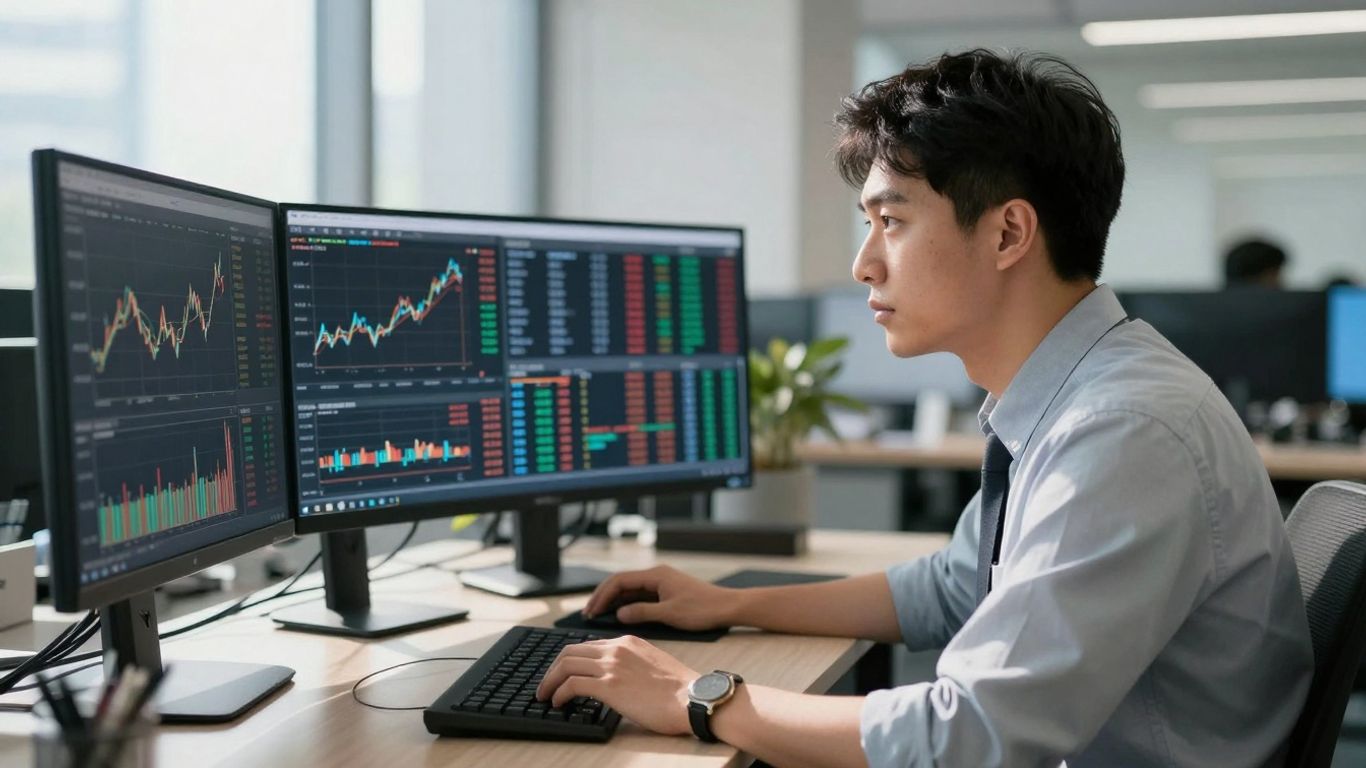
Look, trading can be exciting, but if you’re not careful, it can also be a fast way to lose money. That’s where risk management comes in. It’s not about avoiding losses altogether – that’s impossible. It’s about controlling them so they don’t sink your whole account. Think of it as putting up guardrails on a winding road. You still want to drive, but you want to do it safely.
The Importance of Position Sizing
This is probably the most talked-about risk control method, and for good reason. It’s all about deciding how much of your total trading capital you’re going to risk on any single trade. A common rule of thumb is to risk no more than 1-2% of your account on any one trade. So, if you have a $10,000 account, you’re looking at risking $100 to $200 per trade, maximum. This stops one bad trade from wiping you out.
Here’s a quick look at how that plays out:
| Account Size | Max Risk Per Trade (1%) | Max Risk Per Trade (2%) |
|---|---|---|
| $5,000 | $50 | $100 |
| $10,000 | $100 | $200 |
| $25,000 | $250 | $500 |
Calculating Reward-to-Risk Ratios
This is about comparing how much you stand to gain versus how much you’re willing to lose on a trade. A good reward-to-risk ratio means your potential profit is significantly larger than your potential loss. For example, a 2:1 ratio means you aim to make $2 for every $1 you risk. This helps ensure that even if you have losing trades, your winning trades can more than make up for them.
- Aim for ratios of 2:1 or higher. This gives you a buffer.
- Don’t chase trades with poor ratios. It’s often not worth the risk.
- Consider it before entering any trade. Know your numbers.
Protecting Capital During Losing Streaks
Losing streaks happen. It’s a part of trading. The key is not letting them derail you completely. This is where having a daily loss limit comes in handy. Decide beforehand the maximum amount you’re willing to lose in a single day. If you hit that limit, you stop trading for the day. No exceptions. Go for a walk, do something else. Come back tomorrow with a clear head. This prevents emotional trading, like trying to ‘get even’ after a bad day, which usually just leads to bigger losses.
A well-defined exit strategy, whether it’s a stop-loss order or a daily loss limit, is your best friend in this game. It’s not about being pessimistic; it’s about being prepared for the inevitable ups and downs of the market.
Leveraging Technology and Tools
In today’s fast-paced markets, having the right technology isn’t just helpful; it’s pretty much a requirement for day trading. Think of it like a carpenter needing good tools to build something solid. You need reliable gear to execute your trades effectively and stay on top of what the market’s doing. Your trading platform is your command center, so pick one that fits how you trade.
Essential Trading Platforms and Software
Choosing a trading platform is a big deal. You want something that’s quick, easy to use, and doesn’t cost an arm and a leg. Many platforms offer different features, so it’s worth looking around. Some are better for beginners, while others have advanced charting tools for more experienced traders. Look for platforms that offer fast order execution, because in day trading, every second counts. Many traders find that the best online trading platforms for day trading are those that offer low costs and good research tools.
Utilizing Real-Time Data and Analysis
Markets move fast, and you need to keep up. Real-time data feeds are non-negotiable. This means seeing stock prices, news, and charts as they happen, not with a delay. Beyond just raw data, you’ll want tools that help you analyze it. This could be charting software with various indicators, news scanners that alert you to market-moving events, or even backtesting software to see how a strategy would have performed in the past. Combining historical analysis with forward testing, also known as paper trading, can help you validate your ideas before risking real money.
Ensuring Reliable Internet and Backup Systems
This might sound basic, but it’s super important. A shaky internet connection can cost you money. Imagine being in the middle of a trade and suddenly getting disconnected – not a good feeling. You need a stable, high-speed internet connection. It’s also smart to have a backup, like a mobile hotspot or a secondary internet provider. Power outages can also happen, so consider a UPS (uninterruptible power supply) for your computer and modem. You don’t want a simple technical glitch to derail your trading day.
Technology is a double-edged sword. While it provides access to information and execution speed, relying too heavily on automated signals or complex software without understanding the underlying principles can be detrimental. Always remember that the tools are there to support your strategy, not replace your own judgment and decision-making.
Optimizing Your Trading Schedule

When you’re day trading, your schedule matters. It’s not just about when you can trade, but when you should trade for the best results. Think of it like this: you wouldn’t try to catch a specific fish when the tide is completely wrong, right? Same idea applies here.
Identifying Peak Performance Trading Windows
Not all hours of the trading day are created equal. Markets have different energy levels, so to speak. Some periods are just naturally more active, meaning more opportunities and potentially bigger moves. For many, the opening hour of the market is a whirlwind of activity. News from overnight and pre-market trading often causes sharp price swings. This can be a goldmine if you’re quick and have a plan. Later in the day, things might calm down, but sometimes a different kind of opportunity pops up. You need to figure out when you are at your sharpest, too. Are you a morning person, or do you hit your stride after lunch? Matching your personal energy levels with the market’s activity is key.
Here’s a general idea of how market activity can look:
| Market Session | Typical Activity Level |
|---|---|
| Opening Hour | Very High |
| Mid-day | Moderate to Low |
| Closing Hour | High |
Adapting to Market Volatility Fluctuations
Market volatility isn’t constant. It ebbs and flows. Sometimes, a major news event or economic report can send prices jumping all over the place. Other times, it’s a slow crawl. Your schedule needs to be flexible enough to handle this. If you’re a scalper, you might thrive in high-volatility periods. If you prefer trend trading, you might want to wait for clearer trends to emerge after the initial chaos dies down. Being able to adjust your strategy based on the day’s volatility is a sign of a seasoned trader. You can’t just stick to one rigid plan if the market isn’t cooperating.
It’s easy to get caught up in the idea that you need to be glued to the screen all day. But that’s often counterproductive. Trading when the market isn’t offering clear setups can lead to forcing trades, which usually ends badly. Sometimes, the best action is no action.
The Significance of Pre-Market Analysis
Before the market even opens its doors, a lot of the groundwork for the day’s trading can be laid. This isn’t about predicting the future, but about understanding the landscape. You’ll want to look at what happened overnight in other markets, check for any major economic news scheduled for release, and see how specific stocks are trading in the pre-market session. Are there any big movers? Any stocks gapping up or down significantly? This information helps you form an initial watchlist and anticipate potential opportunities or risks. It’s like a weather forecast for traders – it doesn’t guarantee what will happen, but it gives you a heads-up.
- Review overnight market news and global indices.
- Scan for stocks with significant pre-market price changes.
- Check the economic calendar for upcoming data releases.
- Identify any major company-specific news that might affect stock prices.
Continuous Improvement Through Journaling
Look, nobody gets it right every single time. Even the pros mess up. The real difference-maker isn’t avoiding mistakes, it’s what you do after you make them. That’s where keeping a trading journal comes in. It’s not just about jotting down wins and losses; it’s about dissecting why things happened the way they did. Think of it as your personal trading diary, but way more useful.
Recording Trade Rationale and Outcomes
Every time you enter or exit a trade, you need to write it down. Seriously, all of it. What was the setup? What indicator or price action told you to get in? What was your target? And just as importantly, what was your stop-loss level? Don’t forget to note your emotional state at the time – were you feeling confident, anxious, or maybe a bit too eager? After the trade closes, record the actual outcome, the profit or loss, and how it compared to your initial plan.
Here’s a quick look at what a trade log entry might include:
- Date & Time: When the trade happened.
- Symbol: The stock or asset traded.
- Entry Price: Where you bought or sold.
- Exit Price: Where you closed the position.
- Reason for Entry: Your trading strategy and signals.
- Reason for Exit: Did you hit your target, stop-loss, or exit for another reason?
- Profit/Loss: The actual monetary gain or loss.
- Emotional State: How you felt during the trade.
- Notes: Any other observations.
Identifying Recurring Patterns and Mistakes
Once you’ve got a decent number of trades logged, start looking for trends. Are you consistently entering trades too early? Are you cutting winners short and letting losers run too long? Maybe you have a blind spot for a particular type of setup that always seems to go against you. Your journal will highlight these habits, both good and bad, in black and white. It’s like having a mirror held up to your trading self.
Reviewing your journal regularly, maybe once a week, is non-negotiable. It’s during these review sessions that the real learning happens. You start to see the forest for the trees, connecting the dots between your actions and the results.
Transforming Errors into Learning Opportunities
This is the payoff. When you spot a pattern of mistakes, don’t just sigh and move on. Figure out why you’re making that mistake. Is it a lack of understanding of a particular indicator? Is it a discipline issue? Once you pinpoint the root cause, you can actively work on fixing it. Maybe you need to spend more time studying a specific chart pattern, or perhaps you need to practice sticking to your stop-loss orders more rigorously. The goal is to turn every losing trade into a lesson that makes your next trade better. It’s a slow process, but it’s the most reliable way to build consistency and improve your bottom line over time.
Wrapping It Up
So, we’ve gone over a bunch of stuff about day trading. It’s not some get-rich-quick scheme, that’s for sure. You need a plan, you need to know how much you’re willing to lose on any given trade, and you definitely need to keep your emotions in check. Markets change, and you’ll have to change with them. Keep learning, keep practicing, and don’t be afraid to step away when things get tough. It takes time and effort, but building a solid approach can really make a difference in the long run.
Frequently Asked Questions
What exactly is day trading?
Day trading is like playing a fast-paced game in the stock market. You buy and sell stocks all within the same day, trying to make a little bit of money from small price changes. It’s not about holding onto things for a long time, but about quick moves and profits.
Are there different ways to day trade?
Yes, absolutely! Think of it like different sports. Some traders are like sprinters, making lots of tiny trades really fast to grab small wins (that’s called scalping). Others like to jump on a trend when a stock starts moving up or down and ride that wave for a bit (that’s momentum trading). And some wait for a stock to break through a certain price level before jumping in (that’s breakout trading).
Why is managing emotions so important in day trading?
The market can be like a rollercoaster, with big ups and downs. If you let feelings like fear or excitement take over, you might make bad choices, like selling when you shouldn’t or buying too late. Staying calm and sticking to your plan, even when things get wild, is super important to avoid losing money.
What’s a trading plan, and why do I need one?
A trading plan is basically your rulebook for trading. It tells you exactly when to buy a stock, when to sell it, and how much money you’re willing to risk on any single trade. Having this plan helps you make smart decisions and stops you from trading on impulse.
How can I avoid losing too much money?
This is all about risk management. It means deciding beforehand how much of your money you’re okay with losing on any trade, maybe just a small percentage. It also means setting a ‘stop-loss’ order, which automatically sells your stock if it drops to a certain price, cutting your losses before they get too big.
What are some tools day traders use?
Day traders use special computer programs called trading platforms to see stock prices in real-time and make trades quickly. They also rely on fast internet and sometimes backup power so they don’t miss out on any action. Good tools help them make quicker, smarter decisions.