Thinking about trading online but don’t know where to start? It can feel like a lot, with all the talk about markets and strategies. The good news is, you don’t need to spend a fortune to get the hang of it. There are plenty of free online trading courses out there that can teach you the basics and get you on your way. This guide will point you toward some of those resources and help you understand what you need to know to begin your trading journey without breaking the bank.
Key Takeaways
- You can learn trading basics without paying for expensive courses; a free trading course online is a great starting point.
- Understanding core trading concepts, like order types and leverage, is important before you start.
- Different markets like Forex, stocks, and crypto have unique features you should learn about.
- Developing a clear trading plan, including goals and risk management, is key to staying on track.
- Continuous learning and staying updated with market news are vital for long-term success in trading.
1. Foundations Of Stock Market Trading
Getting started in the stock market can feel like stepping into a whole new world, and honestly, it can be a bit overwhelming at first. You see all these charts and numbers, and it’s easy to wonder where to even begin. The most important thing is to build a solid base of knowledge before you even think about putting real money on the line. Think of it like learning to cook; you wouldn’t try to make a soufflé on your first day, right? You start with the basics, like how to boil water and chop an onion. The stock market is similar. You need to grasp the core concepts first.
Here’s a breakdown of what you’ll typically cover when you’re just starting out:
- What are stocks? Understanding that you’re buying a tiny piece of ownership in a company.
- Market types: Learning the difference between exchanges like the NYSE and Nasdaq, and what they represent.
- Order types: Knowing the difference between a market order (buy/sell at the current price) and a limit order (buy/sell at a specific price or better).
- Basic terminology: Getting familiar with terms like ‘bid’, ‘ask’, ‘volume’, and ‘dividend’.
Many courses offer free previews of their initial modules, which is a great way to sample educational content without any commitment. It’s a smart move to see if the teaching style clicks with you. You’ll also want to get a feel for how to read basic stock charts, even if it’s just understanding what the up and down movements mean. Don’t worry about complex patterns yet; just focus on the general direction and what influences it.
Starting with the fundamentals means you’re building on a stable platform. Rushing into advanced strategies without this groundwork is like trying to build a house on sand. You’ll likely make costly mistakes and get discouraged quickly. Patience and a methodical approach are your best friends here.
2. Intro To Forex & Currency Pairs
So, you’ve got the basics of the stock market down, and now you’re curious about what else is out there. Let’s talk about Forex, or the foreign exchange market. It’s basically where countries’ currencies are traded against each other. Think of it as the biggest financial market on the planet, and it’s open 24 hours a day, five days a week. Pretty wild, right?
When you trade Forex, you’re not buying a piece of a company like with stocks. Instead, you’re looking at currency pairs, like EUR/USD (Euro versus US Dollar) or GBP/JPY (British Pound versus Japanese Yen). You’re essentially betting on whether one currency will strengthen or weaken against the other. Because so much money flows through this market, it’s usually very liquid, meaning you can often get in and out of trades without too much trouble.
Here’s a quick rundown of what makes Forex tick:
- Currency Pairs: Always traded in pairs (e.g., AUD/CAD).
- Pips: The smallest unit of price movement in a currency pair.
- Leverage: You can control a larger amount of currency with a smaller amount of your own money, which amplifies both potential profits and losses.
- Economic Factors: Interest rates, inflation, political stability, and economic reports from countries heavily influence currency values.
The sheer volume of trading in the Forex market means prices can move quickly, offering opportunities but also demanding careful attention.
Understanding the economic calendar is a big part of Forex trading. Knowing when key reports like inflation data or central bank interest rate decisions are due can give you a heads-up on potential market moves. It’s not just about watching charts; it’s about understanding the global economic forces at play.
Learning about Forex involves getting comfortable with terms like ‘major’, ‘minor’, and ‘exotic’ currency pairs, and understanding how global events can impact exchange rates. It’s a market that requires you to keep an eye on international news and economic trends.
3. Crypto 101: From Wallets To Exchanges

Alright, let’s talk about crypto. It’s definitely the new kid on the block in the trading world, and it’s made quite a stir. Trading cryptocurrencies, like Bitcoin or Ethereum, means buying and selling these digital coins. What’s really different here is how much the prices can jump around. This means there’s a chance for big wins, but also a real possibility of big losses. It’s a market that moves fast and is still pretty new, so you’ll need to do your homework and be okay with taking on some risk. It’s not for the easily spooked, but for some, the potential payoff is worth the gamble.
Getting started with crypto trading involves a few key steps. You can’t just buy Bitcoin like you buy a stock on a regular exchange. First, you need a place to store your digital coins – that’s where wallets come in. Then, you need a place to actually buy and sell them, which are the exchanges.
Here’s a basic rundown:
- Wallets: Think of these as your digital bank accounts for crypto. They hold your private keys, which are like the password to your funds. There are different types, like software wallets (apps on your phone or computer) and hardware wallets (physical devices that look like USB drives). Choosing the right wallet is super important for keeping your crypto safe.
- Exchanges: These are the marketplaces where you can trade one cryptocurrency for another, or for traditional money like USD. Popular ones include Binance, Coinbase, and Kraken. Each has its own fees, security measures, and the types of coins you can trade.
- Blockchain Basics: Understanding what blockchain is helps you grasp how crypto works. It’s the technology behind most cryptocurrencies, a public, decentralized ledger that records transactions.
It’s a good idea to get a feel for how these things work before you put real money in. Many platforms let you explore their features and even take introductory courses. You can explore cryptocurrency courses on Coursera and begin your learning journey for free. They often let you preview the first module without paying, so you can see if it’s a good fit.
The crypto market can be exciting because it’s so different from traditional markets. It’s decentralized, meaning no single bank or government controls it. This can lead to rapid price changes and unique trading opportunities, but it also means you’re solely responsible for securing your assets and understanding the risks involved. Always start small and only invest what you can afford to lose.
Remember, this market is still developing, and regulations can change. Staying informed is key.
4. Technical Analysis Mastery
So, you want to get good at reading charts? That’s basically what technical analysis is all about. Instead of looking at a company’s financials or big economic news, you’re just watching the price action itself. It’s about spotting patterns and trends on the charts to make educated guesses about where the price might go next. Think of it like looking at weather patterns to predict if it’s going to rain. You’re not certain, but you can see the signs.
There are a few key things you’ll want to get comfortable with. First up, candlestick patterns. These little guys can tell you a lot about what buyers and sellers are doing. Then there’s support and resistance – these are like price ceilings and floors where the market has a tendency to pause or reverse. Drawing trend lines is also a big one, showing you the general direction the price is heading. You’ll also want to pay attention to volume, which is just the amount of trading happening. More volume can sometimes mean a move is more serious.
Here are some common tools you’ll see used:
- Candlestick Patterns: Recognizing shapes like doji, hammers, and engulfing patterns.
- Support & Resistance Levels: Horizontal price zones where buying or selling pressure has historically been strong.
- Trend Lines: Diagonal lines connecting price highs or lows to show the direction of a trend.
- Moving Averages: Lines that smooth out price data to show the average price over a specific period.
- Volume: The number of shares or contracts traded during a specific time.
Some traders really like to keep things simple, focusing just on the price and maybe a few basic indicators. They believe that too many fancy tools can just confuse things. The idea is to react to what the market is doing right now, rather than trying to guess too far ahead. It’s a way to approach trading that relies on observing market behavior directly. You can find some great resources on day trading courses that cover technical analysis in detail.
You’re not trying to predict the future with perfect accuracy. Instead, you’re looking for probabilities and making educated guesses based on the information available. It’s about finding setups where the odds are in your favor.
5. Risk Management & Position Sizing
Okay, so you’ve got a trading idea, maybe you’ve even spotted a pattern on the charts. That’s great, but before you jump in, we absolutely have to talk about keeping your money safe. This is where risk management and position sizing come into play. Think of it like this: you wouldn’t drive a car without seatbelts, right? Trading without a plan to manage risk is pretty much the same thing – asking for trouble.
The core idea is to never risk more than you can comfortably afford to lose on any single trade. This sounds simple, but it’s surprisingly hard to stick to when emotions get involved. We’re talking about setting limits before you even enter a trade. This usually involves two main things:
- Stop-Loss Orders: This is an automatic command to sell your position if the price moves against you by a certain amount. It’s your safety net. You decide beforehand how much you’re willing to lose, and the stop-loss takes care of the rest if things go south.
- Position Sizing: This is about figuring out how much of your capital to put into a single trade. It’s not just about picking a stock; it’s about deciding the dollar amount. A common approach is to risk only a small percentage of your total trading capital on any one trade, say 1% or 2%. This means even if you have a string of losing trades, you won’t wipe out your account.
Here’s a quick way to think about position sizing:
- Determine your risk per trade: Decide on a percentage of your account you’re willing to lose (e.g., 1%).
- Set your stop-loss level: Figure out the price point where you’ll exit the trade if it goes wrong.
- Calculate position size: Based on the distance between your entry price and stop-loss, calculate how many shares or contracts you can trade while only risking your predetermined percentage.
For example, if you have a $10,000 account and decide to risk 1% ($100) per trade, and your stop-loss is $2 away from your entry price, you can buy 50 shares ($100 / $2 = 50). This way, if your stop-loss is hit, you lose exactly $100, which is 1% of your account. It takes some practice, but it’s a game-changer for long-term survival in the markets. You can find some great resources on futures trading that cover risk management in detail.
It’s easy to get excited about potential profits, but a solid risk management plan is what keeps you in the game long enough to see those profits materialize. Without it, even the best trading strategies can lead to ruin.
Learning to manage your risk properly is just as important as learning how to analyze charts or understand market trends. It’s the foundation upon which successful trading careers are built. Don’t skip this part; your future trading self will thank you.
6. Swing Trading Playbook
Swing trading is a strategy that tries to capture price movements over a few days to a few weeks. It’s not day trading, where you get in and out of positions within the same day, and it’s definitely not long-term investing. Think of it as finding the sweet spot in between. The goal here is to catch a significant portion of a trend, whether it’s going up or down, before it reverses.
This approach requires patience and a good eye for chart patterns. You’re essentially looking for those bigger swings that happen over a slightly longer timeframe than a quick scalp. It’s about identifying a potential move and holding onto it until the momentum starts to fade.
Here’s a look at what goes into a swing trading playbook:
- Identifying Trends: Learning to spot the direction the market is likely heading is key. This involves looking at price action, support and resistance levels, and sometimes using indicators like moving averages to confirm the trend.
- Entry and Exit Points: Figuring out the best time to get into a trade and, just as importantly, when to get out is critical. This often involves waiting for a pullback within a trend or a breakout from a consolidation pattern.
- Risk Management: Since you’re holding trades for longer than a day trader, managing your risk is super important. This means setting stop-loss orders to limit potential losses if the trade goes against you.
- Trade Management: Once you’re in a trade, you need to know how to manage it. This might involve moving your stop-loss up as the price moves in your favor to lock in profits, or deciding when to take partial profits.
Swing trading can be a good fit for people who can’t watch the markets all day but still want to be actively involved. It balances the quick action of day trading with the longer-term view of investing.
The core idea is to ride a wave of price movement for a few days or weeks. You’re not trying to predict every tiny fluctuation, but rather to catch the bigger, more predictable moves that occur between significant turning points in the market. It’s about being selective and waiting for setups that offer a good risk-to-reward ratio.
7. Algorithmic Trading & Quantitative Finance
Algorithmic trading, often called algo trading, is where computers execute trades based on pre-set instructions. It’s about using code to make trading decisions, which can be super fast and take advantage of tiny price differences. This area blends finance with computer science, and it’s becoming a bigger deal every year. If you’re thinking about the future of trading, this is definitely something to look into.
The core idea is to automate the trading process, removing human emotion and potential errors.
What you’ll typically learn in these courses includes:
- Programming Languages: Usually Python, as it’s popular for finance. You’ll learn how to use it to build trading bots.
- Backtesting: This is how you test your trading strategies on historical data to see if they would have worked. It’s a big part of developing a reliable algo.
- API Integration: Connecting your trading algorithms to actual brokerage accounts or data feeds so they can place trades automatically.
- Quantitative Analysis: Using mathematical and statistical methods to analyze financial markets and develop trading models.
Here’s a quick look at what a course might cover:
| Module Topic | Key Concepts |
|---|---|
| Python for Finance | Data structures, libraries (Pandas, NumPy) |
| Strategy Development | Identifying patterns, rule-based systems |
| Backtesting Frameworks | Performance metrics, avoiding overfitting |
| Execution & APIs | Order types, broker connections, latency |
| Machine Learning (Intro) | Basic models for prediction, sentiment analysis |
These courses can get pretty technical, so having some background in programming or finance helps, but many start with the basics. You’ll often find them offered as specializations or part of broader quantitative finance programs. Exploring quantitative finance courses can give you a solid grounding in these advanced techniques. It’s a challenging but potentially rewarding path for those who enjoy problem-solving and data analysis.
8. Trading Psychology And Risk Management
Even the most solid trading strategy can fall apart if your head isn’t in the right place. This section is all about the mental game and protecting your capital. It’s easy to get caught up in the excitement of a winning streak or the panic of a losing one, but learning to stay level-headed is key. Think of it like this: you wouldn’t drive a car without brakes, right? Risk management is your trading car’s brakes.
Here’s a breakdown of what to focus on:
- Discipline: Sticking to your trading plan, even when emotions are screaming at you to do otherwise. This means following your entry and exit rules without deviation.
- Emotional Control: Recognizing when fear or greed is influencing your decisions and actively working to counteract it. Don’t let a bad trade turn into a series of bad trades because you’re trying to ‘get even’.
- Developing a Trading Plan: This isn’t just about what to trade, but how and when. It includes your strategy, risk parameters, and even your daily routine.
The golden rule in trading is to never risk more than you can afford to lose. It sounds simple, but it’s the bedrock of sustainable trading. This often translates into practical steps like setting stop-loss orders and carefully sizing your positions.
When you’re trading, you’re not just betting on price movements; you’re managing probabilities. Your emotional state can drastically alter your perception of those probabilities, leading you to make decisions that are statistically unfavorable. Learning to detach your emotions from your trading actions is a skill that takes practice, but it’s one of the most important ones you can develop.
Let’s look at some practical risk management steps:
- Define Risk Per Trade: Decide on a small percentage of your total trading capital (e.g., 1-2%) that you’re willing to lose on any single trade. This prevents one bad trade from wiping out a significant portion of your account.
- Use Stop-Loss Orders: Always place a stop-loss order. This is an automatic instruction to sell your position if the price moves against you to a predetermined level, limiting your potential loss.
- Position Sizing: Adjust the size of your trade based on your stop-loss distance. This ensures that your defined risk per trade (from step 1) is maintained, regardless of how far your stop-loss is placed.
9. Options Trading
Options trading can seem a bit intimidating at first, but it’s a really interesting part of the financial markets. Basically, an options contract gives you the right, but not the obligation, to buy or sell an asset at a specific price before a certain date. Think of it like putting a down payment on a potential future purchase – you’ve secured the price, but you don’t have to go through with it if things change.
This flexibility is what makes options so powerful for both hedging and speculating. You can use them to protect your existing investments from big price swings, or you can bet on which way you think the market is going to move.
Here are some key things you’ll learn about in options trading courses:
- Calls vs. Puts: Understanding the difference between the right to buy (call) and the right to sell (put).
- Strike Price & Expiration Date: These are the two main terms that define an options contract. The strike price is the agreed-upon price for the asset, and the expiration date is when the contract runs out.
- Option Premiums: This is the price you pay to buy the option contract. It’s influenced by things like the underlying asset’s price, how much time is left, and how much the price is expected to move (volatility).
- Basic Strategies: Learning simple ways to use options, like buying calls or puts, or more complex ones like spreads.
Learning options trading involves understanding contracts that give you the choice, not the requirement, to trade an asset at a set price by a deadline. It’s a tool for managing risk or making educated guesses about market direction, and it requires careful study of contract terms and market behavior.
Many free courses will walk you through these concepts step-by-step, often using examples to show how different scenarios play out. You’ll also learn about the "Greeks" – metrics like Delta, Gamma, Theta, and Vega – which help measure an option’s sensitivity to various market factors. It’s a lot to take in, but breaking it down into these components makes it much more manageable.
10. Derivatives (Futures & Options)
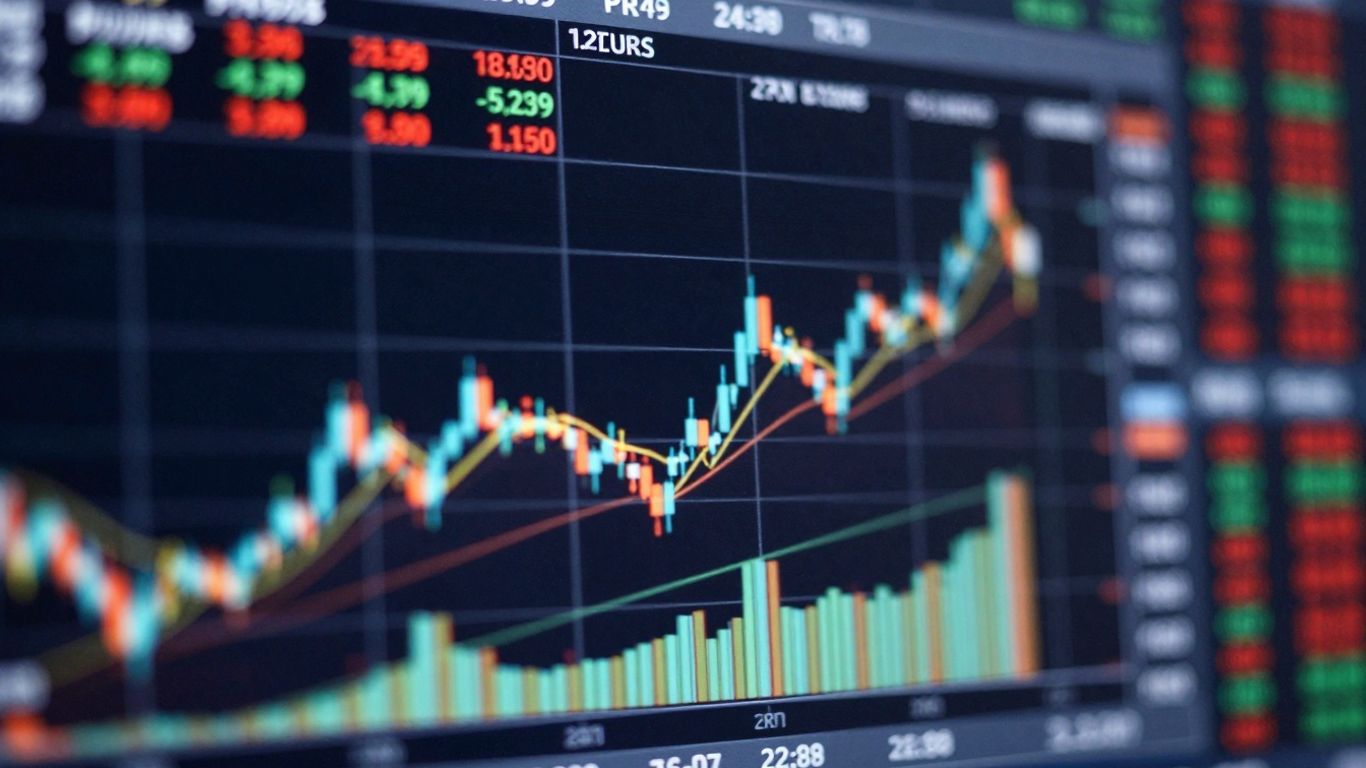
Alright, let’s talk about derivatives, specifically futures and options. These are a bit more advanced than just buying stocks, and they involve contracts that derive their value from an underlying asset, like a stock, index, or commodity. Understanding the mechanics of these contracts is key before you even think about trading them.
Futures contracts are agreements to buy or sell an asset at a specific price on a future date. Options give you the right, but not the obligation, to buy (call option) or sell (put option) an asset at a certain price before a set expiration date. They can be used for speculation or for hedging your existing positions. It’s a complex area, and many courses will cover topics like:
- Understanding option ‘Greeks’ (Delta, Gamma, Theta, Vega)
- Margin requirements for futures trading
- Different option strategies like spreads, straddles, and strangles
- How to use derivatives to hedge risk
When you’re looking at courses, see if they explain how to manage the risks associated with these products. Because you can control a large amount of an asset with a relatively small amount of money, the potential for both profit and loss can be magnified. It’s definitely not a place to jump in without some solid preparation.
The world of derivatives can seem intimidating at first. It’s like learning a new language with its own set of rules and vocabulary. Taking the time to grasp the basics, like what an option contract actually is and how futures work, will save you a lot of headaches down the line. Don’t rush this part; patience is a virtue here.
Many platforms offer free trials or introductory modules for options trading, which can be a good way to get a feel for the subject matter. Exploring resources on futures markets can also provide a good starting point for understanding these complex instruments. You can find some great educational materials on financial futures markets.
Here’s a quick look at what you might encounter:
| Derivative Type | Basic Function |
|---|---|
| Futures | Obligation to buy/sell at a future date |
| Call Option | Right to buy an asset before expiration |
| Put Option | Right to sell an asset before expiration |
| Spread | Combining multiple options to limit risk/reward |
Remember, these instruments are powerful tools, and like any powerful tool, they require respect and knowledge to use effectively. Make sure any course you choose covers risk management thoroughly.
Wrapping Up Your Trading Education Journey
So, you’ve looked through a bunch of free online trading courses for 2026. It’s a lot to take in, I know. But remember, getting started doesn’t have to cost a fortune. These free resources are a great way to build a solid base, whether you’re just curious or aiming for something bigger. Think of it like learning to cook – you start with simple recipes before trying to make a fancy meal. The key is to pick a course that fits what you want to learn, check out who’s teaching it, and maybe see what other students say. Trading is a skill that takes practice and patience. Keep learning, stick to your plan, and don’t be afraid to try things out. The next smart move in the market might just be a lesson away.
Frequently Asked Questions
Do I really need to go to college for finance to trade stocks?
Nope! You can totally learn how to trade without a fancy degree. Most courses start with the easy stuff and then get more complex. All you really need is to be curious and willing to put in the work. It’s like learning a new video game; you start with the tutorial and then move on to harder levels.
How much time should I set aside each week for learning?
It’s better to be steady than to cram. Try to set aside about 3 to 5 hours each week for studying. Plus, it’s a good idea to spend another hour or two actually practicing what you learn, maybe using a pretend trading account.
Are there any surprise costs I should know about?
Good courses will tell you all the costs upfront. Just be aware that some places might offer extra things like special data or one-on-one help that cost extra. Always check what’s included and what’s not.
Can I get a certificate that bosses will like?
Yes, you can! Some courses are connected to official groups, and getting a certificate from them can look good on your resume when you’re looking for a job in finance.
What’s the best way to remember what I learn in a trading course?
To really make the lessons stick, try doing a few things. Watch the videos, take notes, test yourself with quizzes, and maybe even talk about the strategies with other students. It’s like studying for a test – the more you practice, the better you’ll do.
What’s the difference between swing trading and day trading?
Day trading means you buy and sell stocks within the same day, trying to catch small price changes. Swing trading is a bit more relaxed; you hold onto stocks for a few days or weeks to catch bigger price moves. Both need different strategies and focus.