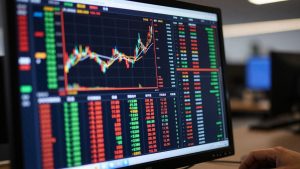
Thinking about jumping into the stock market? It can feel a bit overwhelming at first, right? Like, where do you even begin without risking your hard-earned cash? Well, that’s where a stocks trading simulator comes in. It’s basically a practice ground, a way to get your feet wet and figure things out before you put real money on the line. We’ll walk you through what these stock trading simulations are all about and how to use them to get better at trading.
Key Takeaways
- A stocks trading simulator lets you practice buying and selling stocks with fake money, so you don’t lose anything if you make mistakes.
- There are different kinds of simulators, like stock market games for fun and virtual trading platforms that mimic real trading.
- Using a simulator helps you learn how the market works, try out different trading ideas, and get used to trading tools without any risk.
- You can test out various investment strategies and see how they perform before you use them with actual money.
- Simulators are a good bridge from learning about trading to actually doing it with real money, helping you build confidence and manage risk.
Understanding Stock Trading Simulations
Thinking about getting into the stock market can feel a bit like staring at a giant, confusing map, right? You want to explore, maybe find some treasure, but you’re worried about getting lost and losing your way – or worse, your money. That’s precisely where stock trading simulations come into play. They’re like a practice run, a safe space to get your bearings before you commit to the real journey.
What Is A Stock Trading Simulator?
A stock trading simulator, often called "paper trading," is essentially a digital playground where you can buy and sell stocks, ETFs, and sometimes other financial products using virtual money. You get a set amount of fake cash, and you operate within a system that mirrors real market conditions. It’s a way to learn the ropes without any actual financial risk. Think of it like playing a video game version of a sport to understand the rules and practice your moves before stepping onto the real field.
The Core Purpose Of Virtual Trading
The main goal of these simulators is to bridge the gap between learning about trading and actually doing it. They provide a realistic environment to:
- Learn Market Mechanics: Understand how stock prices move, what influences them, and how trades are executed.
- Test Strategies: Try out different investment ideas or trading techniques to see how they might perform.
- Develop Discipline: Practice making decisions under simulated pressure and learn to stick to a plan.
- Gain Familiarity: Get comfortable with trading platforms and tools without the stress of losing real money.
Simulators allow you to experiment with your trading ideas. You can see if a strategy that looks good on paper actually holds up when you put it into practice, even if it’s just with pretend money. This helps you figure out what works for you before you risk your own cash.
Bridging The Gap Between Theory And Reality
Reading books or watching videos about trading is one thing, but actually doing it is another. Simulators help close that gap. They take the theoretical knowledge you’ve gained and let you apply it. You’ll encounter situations that mimic real market volatility, learn to manage your virtual portfolio, and start to build the confidence needed for live trading. It’s about turning abstract concepts into practical experience, making the transition to real-money trading much smoother and less intimidating.
Exploring Different Types Of Simulators
So, you’ve decided to give stock trading simulations a whirl. That’s a smart move! But not all simulators are built the same, and they definitely don’t all feel the same. Think of them like different types of gyms – some are for casual workouts, others are for serious athletes training for the Olympics. You need to pick the one that fits what you’re trying to achieve.
Stock Market Games For Competitive Fun
These are often more about the thrill of the competition and just having a good time. You might join a league with friends or other users, manage a virtual portfolio, and see how your simulated investments stack up against theirs. They’re a pretty good way to make learning about the market feel less like homework and more like a game. It’s a low-pressure way to get a feel for buying and selling without any real risk.
Virtual Trading Platforms For Realistic Practice
These platforms try their best to make the experience feel as close to actual trading as possible. They usually give you more detailed tools, real-time data, and a wider selection of order types, much like what you’d find if you had a real brokerage account. These are great for practicing specific trading techniques or testing out a new strategy you’ve been thinking about. You can really get a feel for how different market conditions might affect your decisions.
Brokerage Simulators For Platform Familiarization
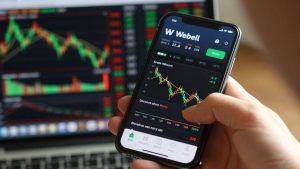
Lots of online brokers actually offer their own simulators as part of their main platform. These are super useful if you’re thinking about using a particular broker down the line. They let you get used to their trading interface, their charting tools, and how to place different kinds of orders before you ever put real money on the line. It’s like test-driving a car before you buy it.
The main goal of any simulator is to give you a realistic environment to learn and practice. Even though the money isn’t real, the market movements and the decisions you have to make should feel as close to the actual trading experience as possible. This helps you build good habits and a solid foundation for when you’re ready to trade with real cash.
When you’re looking at different simulators, think about what you want to get out of it. Are you just trying to have some fun and learn the basics? Or are you looking to seriously test out complex strategies and get a feel for a specific trading platform? Your goals will help you figure out which type of simulator is the best fit for you.
Key Features Of Effective Simulators
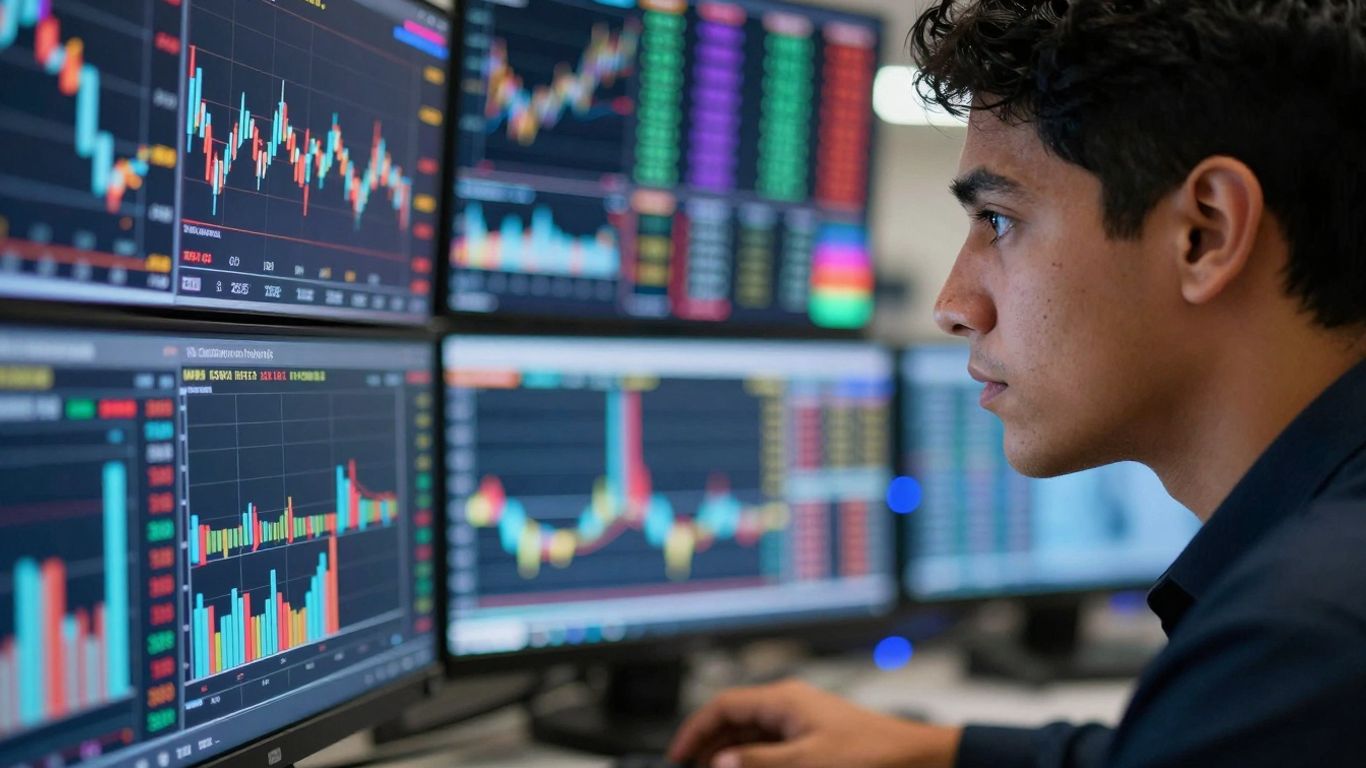
When you’re picking out a stock trading simulator, it’s not just about the virtual money. You want something that feels real, something that actually helps you get better. Think of it like picking a gym – you wouldn’t join one with broken equipment and no trainers, right? The same goes for trading practice.
Real-Time Data And Market Accuracy
This is a big one. If the simulator isn’t using up-to-date market prices, you’re not really learning how the market works. You need to see prices move like they do in real life, with all the little ups and downs. A simulator that uses delayed or inaccurate data is basically useless for serious practice. It’s like trying to learn to drive in a car with a faulty speedometer. You need to see how news events or economic reports actually affect prices, and that requires live or very close to live data. This accuracy helps you understand bid-ask spreads and how quickly orders get filled, which are important details in actual trading.
Diverse Range Of Tradable Assets
Don’t limit yourself. The stock market is huge, and so are other markets like forex or commodities. A good simulator lets you play around with different types of assets. Maybe you’ll discover you’re great at trading currency pairs, or perhaps options strategies are more your speed. Trying out various markets can really broaden your perspective and show you where your strengths lie. Look for platforms that let you explore:
- Stocks across different industries and sizes
- Exchange-Traded Funds (ETFs) for broad market exposure
- Major currency pairs in the forex market
- Futures contracts for commodities like gold or oil
- Basic options strategies to understand their mechanics
Support For Various Order Types
Markets aren’t just about buying low and selling high. There are different ways to enter and exit trades, like stop-loss orders to limit losses or limit orders to buy/sell at a specific price. An effective simulator should let you practice with these. If you only ever use simple market orders, you’re missing out on learning how to manage risk more precisely. Understanding how different order types work can make a big difference when real money is involved. You can test these out on platforms like Interactive Brokers.
Integrated Research And Analysis Tools
Just trading isn’t enough. You need to understand why you’re making a trade. The best simulators come with tools that help you research companies, check economic calendars, and analyze charts. This way, you’re not just guessing; you’re making informed decisions. It’s like having a built-in library and research assistant. You can practice connecting world events to chart movements, which is a skill that takes time to develop.
The biggest mistake people make in simulators is treating virtual money like Monopoly money. If you’re using a $100,000 virtual account but plan to trade with only $1,000 in real life, you’re not practicing realistically. Your risk management and position sizing need to reflect your actual trading capital and comfort level.
Developing Essential Trading Skills
Trading isn’t just about picking stocks; it’s a mental game. Simulations are your training ground to build the mental toughness needed to succeed. You can practice making decisions, sticking to a plan, and handling the ups and downs without the real-world financial sting.
Mastering Trading Discipline And Patience
Discipline is what separates those who consistently make money from those who just gamble. In a simulator, you can practice setting firm rules for yourself and actually stick to them. This means not chasing a stock that’s already shot up, or selling something in a panic just because it dipped a little. You learn to wait for the right setups and to exit trades when your plan says to, win or lose. It’s about building a repeatable process, not just making random trades.
- Set clear entry and exit rules before each trade.
- Practice using stop-loss orders to limit potential losses.
- Resist the urge to overtrade or chase quick profits.
Simulators let you test your ability to follow a trading plan even when your emotions are telling you to do something else. This practice builds the mental muscle needed for real trading.
Strategic Risk Management Techniques
Knowing how much to risk on any single trade is super important. A simulator lets you play around with different position sizes and see how they affect your overall account. You can figure out what level of risk feels comfortable for you and what actually works without losing your shirt. It’s about finding a balance between making money and not risking too much.
Here’s a look at how risk can impact your account:
| Risk Per Trade | Potential Loss on $10,000 Account |
|---|---|
| 0.5% | $50 |
| 1% | $100 |
| 2% | $200 |
Adapting To Market Volatility
Markets are rarely calm. They jump around, sometimes wildly. Trading simulations expose you to these wild swings in a safe space. You can see how prices react to news, how quickly things can change, and practice making decisions when the market is moving fast. This experience helps you get comfortable with uncertainty and react more calmly when real money is on the line.
Building Confidence Through Practice
Confidence in trading comes from knowing you can execute your plan and handle the outcomes. Every successful trade you make in a simulator, every time you stick to your rules during a losing streak, builds that confidence. It’s like practicing a sport; the more you do it, the better you get and the more sure you are of your abilities. This proven ability to execute is what separates hopeful beginners from actual traders.
Choosing The Right Simulator For Your Goals
So, you’ve decided to jump into the world of stock trading simulations. That’s a smart move! But with so many options out there, picking the right one can feel a bit like trying to find a needle in a haystack. It’s not just about picking the first platform you see; you need to think about what you actually want to get out of it. A good simulator should feel like a real training ground, not just a game.
Aligning Simulator Features With Your Objectives
When you’re browsing through different simulators, keep an eye out for a few key things. The best ones will try to mirror actual trading conditions as closely as possible. This means looking at:
- Real-time or near real-time data: If the prices you see are way behind, you’re not really learning how to react to the market as it’s actually moving. This is super important for developing quick decision-making skills.
- A wide range of tradable assets: Can you practice with stocks, ETFs, options, or even cryptocurrencies? Having more options means you can get a feel for different types of investments and diversify your practice.
- Order types: Does the simulator support basic orders like market, limit, and stop orders? Understanding how and when to use these is pretty fundamental to trading.
- Research tools: Does it offer a stock screener or access to company financial data? Being able to do some research before you place a trade is a big part of the whole process.
- Performance tracking: You absolutely need to see how you’re doing! Look for detailed reports that show your portfolio’s performance, your gains, and your losses. This is how you learn what’s working and what’s not.
Evaluating User Interface And Experience
Not all simulators are created equal, and they definitely don’t all feel the same. Some are more like games, focusing on competition and fun, while others are built to feel like a real trading platform you might use with actual money. Think about your goals. Are you trying to get a feel for a specific broker’s platform, like the one offered by Fidelity? Or are you just looking to practice basic buying and selling? Some platforms are better for beginners, offering lots of educational content, while others are geared towards more experienced traders who want to test complex strategies.
The mechanics that make a simulator truthful or misleading are more revealing than you expect. Your job is to push the environment and see how it reacts, not just to play around. The goal is to find weaknesses in your approach before they cost you real money.
Considering Educational Resources Offered
Some simulators are pretty bare-bones, just giving you a price feed and a place to click buy or sell. Others, though, come packed with extra learning materials. This could be anything from video tutorials and articles explaining trading concepts to webinars with experienced traders. If you’re new to this, a simulator that includes educational content can be a huge help. It’s like having a teacher built right into your practice tool. You can learn about different order types, how to read charts, and even basic strategies, all while you’re getting hands-on experience. This combination of learning and doing can really speed up your progress and build your confidence before you ever put real cash on the line.
Maximizing Your Learning With Simulations
Systematic Strategy Testing and Refinement
Think of your trading simulator as a personal laboratory. It’s where you can really put your trading ideas to the test without the scary part of losing actual money. You’ve got a strategy, right? Maybe it’s something you read about or something you’ve cooked up yourself. Now, instead of jumping into the live market and hoping for the best, you can run it through the simulator. This means setting up specific rules for when you’ll buy, when you’ll sell, and how much risk you’re willing to take on each trade. The goal here isn’t just to see if you make money, but to see if your strategy works consistently over many different market conditions. You might find that your strategy works great on a calm day but falls apart when things get choppy. That’s good information! It tells you where you need to tweak things, maybe adjust your entry points or add a tighter stop-loss. It’s a process of trial and error, but a very controlled one.
Tracking Performance For Continuous Improvement
So, you’ve been trading in the simulator. You’ve made some trades, maybe even some winning ones. But are you actually learning? That’s where tracking your performance comes in. It’s not enough to just look at your final virtual balance. You need to dig deeper. Keep a detailed record of every trade: why you entered it, what your target was, why you exited, and what the outcome was. This kind of data is gold.
Here’s a quick look at what to track:
- Trade Entry/Exit Reasons: What was your logic for getting in and out?
- Profit/Loss per Trade: The basic numbers, of course.
- Win/Loss Ratio: How often are you right?
- Average Win vs. Average Loss: Are your winners bigger than your losers?
- Time in Trade: How long did you hold positions?
- Market Conditions: Was it trending, ranging, or volatile?
Looking at this information over time helps you spot patterns. Maybe you notice you consistently lose money on trades you enter after a big news event, or perhaps your best trades happen in the first hour of the trading day. This insight lets you refine your strategy and focus on what actually works for you.
Learning From Mistakes Without Financial Loss
This is, honestly, the biggest perk of using a simulator. We all make mistakes when we trade. It’s just part of the game. The difference between a beginner and a seasoned trader often comes down to how they handle those mistakes. In the real market, a bad trade can cost you real money, and that can lead to emotional decisions on the next trade, creating a nasty cycle.
The simulator lets you experience the sting of a bad trade, the frustration of a missed opportunity, or the panic of a sudden downturn, all without emptying your bank account. This emotional practice is just as important as the technical practice. You learn to recognize those feelings and develop coping mechanisms before they impact your actual capital.
So, when you make a mistake in the simulator, don’t just brush it off. Ask yourself: What went wrong? Was it a lack of planning, a moment of impulsiveness, or a misunderstanding of the market? Use that mistake as a lesson. Document it, understand it, and then adjust your approach for the next simulated trade. It’s like having a coach who points out every flaw in your technique, but you get to fix it before the big game.
Ready to Trade?
So, you’ve learned all about how stock trading simulators can be your personal training ground. They let you try things out, make mistakes, and learn without losing any real money. It’s a smart way to get comfortable with how the market moves and test out different trading ideas. Don’t just jump into the real market hoping for the best. Use these practice tools to build your confidence and figure out what works for you. When you’re ready, you’ll have a much better idea of how to handle things with actual cash on the line. Happy practicing!
Frequently Asked Questions
What exactly is a stock trading simulator?
Think of a stock trading simulator like a video game for the stock market. It lets you practice buying and selling stocks using fake money. You get to see how your choices would play out in the real market without risking any of your own cash. It’s a safe way to learn the ropes.
Why should I use a simulator instead of just reading about stocks?
Reading about stocks is helpful, but a simulator lets you actually do it! You can try out different strategies, see how the market moves, and learn from your mistakes – all without losing real money. It’s like practicing a sport before a big game; you get hands-on experience.
Are there different kinds of simulators?
Yes, there are! Some are like fun games where you compete with others to pick the best stocks. Others are more serious and try to copy what real trading platforms are like, giving you tools to practice actively buying and selling.
What’s the main goal of using a simulator?
The main goal is to learn and get better at trading without any risk. You can test out your ideas, understand how market news affects prices, and get comfortable with trading tools. It helps you build confidence and learn how to manage your money wisely.
How do I pick the best simulator for me?
Consider what you want to learn. If you want to have fun and compete, a game might be good. If you want to practice real trading, look for one that uses real market prices and has tools like a real trading platform. Make sure it feels right for you.
Can simulators help me avoid losing money when I trade for real?
While no simulator can guarantee you won’t lose money with real trading, they significantly boost your chances. By practicing and learning from mistakes in a simulator, you develop better skills and discipline, which are crucial for making smarter decisions when real money is involved.