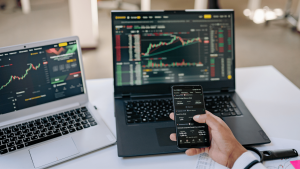
Thinking about getting into Forex trading? It can seem like a lot, especially with all the talk about trends and charts. But honestly, finding a good way to trade, a real forex profitable strategy, isn’t as complicated as some make it out to be. We’re going to break down some solid ideas to help you trade smarter, not just harder. It’s about understanding the basics, knowing when to get in and out, and keeping your money safe. Let’s get started.
Key Takeaways
- Learn the basic concepts of the Forex market and how currency pairs work.
- Discover practical trading methods and how to pick good times to buy and sell.
- Understand how to use charts and economic news to make trading choices.
- Focus on managing your money to protect what you have and grow it.
- Develop a clear plan and stick to it, even when the market gets wild.
Mastering Forex Trading Fundamentals
Before you can even think about making a profit in the Forex market, you need to get a handle on the basics. It’s like trying to build a house without a solid foundation – it’s just not going to work out well. So, let’s break down what you absolutely need to know.
Understanding Forex Market Trends
The Forex market is always moving, and understanding these movements is key. Trends are basically the general direction the price of a currency pair is heading. You’ve got uptrends, downtrends, and sideways or ranging markets. Spotting these trends early can give you a big advantage. It’s not just about looking at a chart for a few minutes; it’s about observing the bigger picture over time. Think of it like watching the weather – you can see if it’s generally getting warmer or colder, not just what the temperature is right this second.
- Uptrend: Characterized by higher highs and higher lows. Prices are generally moving upwards.
- Downtrend: Characterized by lower highs and lower lows. Prices are generally moving downwards.
- Ranging Market: Prices move within a defined horizontal channel, bouncing between support and resistance levels.
The Forex market is a 24-hour operation, meaning trends can develop and change at any time. Staying informed and adaptable is part of the game.
Basic Forex Trading Concepts
There are a few core ideas you’ll bump into constantly. First off, currency pairs. Currencies are always traded in pairs, like EUR/USD or GBP/JPY. The first currency is the base currency, and the second is the quote currency. When you trade, you’re essentially betting on whether the base currency will strengthen or weaken against the quote currency. You’ll also hear about pips, which are the smallest price movements a currency pair can make. Understanding these basic terms is like learning the alphabet before you can read a book. You can find more information on basic forex trading concepts.
Here’s a quick rundown of some common terms:
- Pip: The smallest unit of price change for a currency pair.
- Spread: The difference between the buy (ask) price and the sell (bid) price.
- Lot Size: The standard quantity of currency traded (e.g., standard lot, mini lot, micro lot).
- Leverage: Borrowed capital from your broker to increase your trading position size.
Key Currency Pairs Explained
Not all currency pairs are created equal, and some are traded way more than others. These are called the major currency pairs. They involve the US dollar paired with another major world currency. Trading these is usually easier because they have high liquidity, meaning you can buy or sell them quickly without drastically affecting the price. The spread is often tighter too, which is good for your bottom line.
Here are some of the most commonly traded pairs:
| Pair | Description |
|---|---|
| EUR/USD | Euro vs. US Dollar |
| GBP/USD | British Pound vs. US Dollar |
| USD/JPY | US Dollar vs. Japanese Yen |
| USD/CHF | US Dollar vs. Swiss Franc |
| AUD/USD | Australian Dollar vs. US Dollar |
| USD/CAD | US Dollar vs. Canadian Dollar |
| NZD/USD | New Zealand Dollar vs. US Dollar |
Getting comfortable with these pairs is a good starting point before you explore the more exotic ones.
Unveiling Proven Forex Profitable Strategy Techniques
Alright, so you’ve got the basics down. Now, let’s talk about actually making some money in the Forex market. It’s not just about knowing what a pip is; it’s about having a plan, a solid method that you can stick to. We’re going to look at some ways traders actually go about this.
Actionable Trading Methodologies
This is where the rubber meets the road. Forget the vague ideas; we need concrete steps. Think of it like following a recipe – if you miss a step, the whole thing can go wrong. Here are a few approaches traders use:
- Trend Following: This is pretty straightforward. You identify a trend – is the price generally going up, down, or sideways? – and you trade in that direction. If the market’s climbing, you buy. If it’s falling, you sell. The trick is to catch the trend early and get out before it reverses.
- Mean Reversion: This strategy bets on prices returning to their average. The idea is that extreme moves don’t last forever. So, if a currency pair suddenly spikes up or drops down way past its usual range, a mean reversion trader might bet on it coming back to its average price.
- Breakout Trading: This involves waiting for a currency pair’s price to move beyond a certain established range or level (like support or resistance) and then jumping in, expecting the price to continue moving in that new direction.
The key is to pick a methodology that fits your personality and stick with it.
Identifying Entry and Exit Points
Knowing when to get into a trade and when to get out is probably the hardest part. Mess this up, and even the best strategy can lose money. It’s all about precision.
- Support and Resistance Levels: These are price levels where a currency pair has historically had trouble moving past. Support is a floor, resistance is a ceiling. Traders often look to enter trades when prices bounce off these levels or break through them.
- Moving Averages: These are lines on a chart that show the average price of a currency pair over a specific period. Crossovers between different moving averages (like a short-term one crossing a long-term one) can signal potential entry or exit points.
- Candlestick Patterns: These are specific formations of price bars on a chart that can suggest a potential change in direction. Things like "doji" or "engulfing" patterns can give clues.
Getting your entry and exit points right is like threading a needle. You need a steady hand and a clear view of what you’re trying to achieve. A small mistake here can mean the difference between a win and a loss.
Scalping vs. Swing Trading Strategies
These are two popular ways to approach the market, differing mainly in how long you hold a trade.
| Strategy | Holding Period | Typical Profit per Trade | Frequency of Trades | Market Focus |
|---|---|---|---|---|
| Scalping | Seconds to Minutes | Small (a few pips) | Very High | Capturing tiny price movements |
| Swing Trading | Hours to Days | Moderate (tens of pips) | Moderate | Profiting from price swings over days |
Scalping is for the trader who likes constant action. You’re in and out of the market super fast, aiming for small, consistent wins that add up. It requires intense focus and quick decision-making. Swing trading, on the other hand, is more relaxed. You’re looking to capture bigger price moves that happen over a few days or even weeks. This means fewer trades, but each one has the potential for a larger profit. It’s about identifying those larger market swings and riding them.
Leveraging Technical and Fundamental Analysis

Alright, so you’ve got the basics down. Now, let’s talk about how to actually figure out when to get into a trade and, just as importantly, when to get out. This is where technical and fundamental analysis come into play. Think of them as your two eyes – you need both to see the whole picture.
Decoding Chart Patterns and Indicators
Charts might look like a bunch of squiggly lines at first, but they’re actually telling a story. Traders look for specific shapes, called patterns, that tend to repeat. Things like "head and shoulders" or "double tops" can signal a potential change in direction. Then there are indicators – these are mathematical calculations based on price and volume. Moving averages, RSI, and MACD are popular ones. They can help confirm trends or show if a currency pair is overbought or oversold.
Here’s a quick look at some common indicators:
| Indicator | What it Shows |
|---|---|
| Moving Average | Average price over a set period; smooths out price action. |
| RSI (Relative Strength Index) | Momentum; indicates overbought/oversold conditions. |
| MACD (Moving Average Convergence Divergence) | Trend and momentum; shows relationship between two moving averages. |
Learning to read these tools takes practice, but it’s key to making informed decisions.
Utilizing Economic Factors for Profit
This is the "fundamental" side of things. It’s all about what’s happening in the real world that affects currency values. Think about interest rates set by central banks – big news! Inflation numbers, unemployment reports, and even political stability in a country can move markets. If a country’s economy is doing well, its currency usually gets stronger. You’ll want to keep an eye on economic calendars to know when these reports are coming out.
Staying updated on global economic news isn’t just about knowing what happened; it’s about anticipating what might happen next and how that could affect currency prices. It’s like trying to predict the weather before you plan a picnic.
Reading Forex Charts Like A Pro
Putting it all together means looking at charts with both technical patterns and an awareness of economic news. You’re not just looking at one indicator or one news event. You’re trying to see how they connect. For example, if a chart pattern suggests a currency might go up, but a major economic report is expected to be negative, you might want to hold off or adjust your trade. It’s about building a case for a trade based on multiple pieces of evidence.
- Identify the overall trend: Is the market generally moving up, down, or sideways?
- Look for support and resistance levels: These are price points where the market has historically had trouble breaking through.
- Consider volume: High volume can indicate stronger conviction behind a price move.
- Check economic news: Are there any major reports due that could impact the currency pair?
It’s a bit like being a detective, piecing together clues to figure out the most likely outcome.
Implementing Robust Risk Management
Alright, so you’ve got a strategy, you’re watching the charts, and you’re feeling pretty good about things. But here’s the thing: the Forex market can be wild. One minute you’re up, the next you’re down. That’s where managing your risk comes in. It’s not about avoiding losses entirely – that’s impossible – it’s about making sure those losses don’t wipe you out.
Safeguarding Your Capital
Think of your capital as your trading fuel. You don’t want to burn through it too fast. A good way to protect it is by never risking too much on a single trade. Most experienced traders suggest risking only 1-2% of your total trading account on any one trade. It sounds small, but over time, it adds up to keeping you in the game.
Here’s a simple way to think about it:
- Know your account size: Let’s say you have $10,000.
- Determine your risk percentage: You decide to risk 1% per trade.
- Calculate your maximum loss per trade: That’s $100 ($10,000 * 0.01).
- Set your stop-loss: Based on your strategy and the currency pair’s volatility, you’ll place a stop-loss order that, if hit, results in a $100 loss.
This approach means you can have a string of losing trades and still be trading.
Maximizing Potential Gains
While protecting your money is key, you also want to make sure you’re not leaving profits on the table. This is where things like setting take-profit levels come into play. You’ve got your entry point, your stop-loss, and now your take-profit. It’s like having a plan for both the worst and the best-case scenarios.
- Define your target: Based on your analysis, what’s a realistic profit target for this trade?
- Use trailing stops: As a trade moves in your favor, you can adjust your stop-loss upwards. This locks in some profit while still allowing the trade to run if it keeps going up.
- Consider partial exits: You might close half your position at your first profit target and let the other half run with a trailing stop.
It’s about letting your winners run while cutting your losers short. Simple, right? Well, easier said than done, but that’s the goal.
Controlling Trading Risks Effectively
Controlling risk isn’t just about setting stop-losses. It’s a mindset. It’s about understanding that every trade has a potential downside, and being prepared for it. This means:
- Position Sizing: This is directly tied to your stop-loss. If you risk $100 per trade, and your stop-loss is 50 pips away, you know exactly how many lots you can trade. If your stop-loss is 100 pips away, you trade fewer lots to keep the potential loss at $100.
- Diversification (Carefully): While Forex is often about trading one pair at a time, don’t put all your eggs in one basket if you’re trading multiple pairs. Understand how they might move together or against each other.
- Avoiding Over-Leverage: Leverage can magnify profits, but it magnifies losses just as much, if not more. Use it wisely, and understand exactly how much you’re borrowing.
The market doesn’t care about your feelings or your intentions. It only reacts to price action and the forces driving it. Your risk management plan is your shield against the unpredictable nature of this environment. Without it, you’re essentially trading blindfolded, hoping for the best but preparing for the worst.
So, before you even think about placing a trade, have your risk management plan firmly in place. It’s the bedrock of any successful trading career.
Cultivating a Winning Trading Psychology
Overcoming Emotional Pitfalls
Trading in the Forex market can feel like a rollercoaster. One minute you’re up, the next you’re down. It’s easy to let emotions like fear and greed take over. Fear might make you exit a trade too early, missing out on bigger profits. Greed, on the other hand, can lead you to hold onto a losing trade for too long, hoping it will turn around. Recognizing these emotional traps is the first step to avoiding them. It’s about building a mental toughness that lets you stick to your plan, even when things get shaky.
Maintaining Discipline in Volatility
Markets don’t always move in straight lines. They can be wild, especially during big news events. This is where discipline really matters. It means following your trading rules, no matter what. Did you set a stop-loss? Stick to it. Did your strategy say to enter a trade? Do it, even if you feel a bit nervous. It’s like sticking to a diet; you have to resist the temptation to cheat, especially when the going gets tough.
Here are some ways to stay disciplined:
- Have a clear trading plan: Know exactly when you’ll enter and exit trades.
- Use risk management tools: Stop-losses and take-profits help take emotion out of the equation.
- Review your trades: Look back at what worked and what didn’t, and learn from it.
- Take breaks: If you’re feeling overwhelmed, step away from the screen.
Making Confident Trading Decisions
Confidence in trading doesn’t come from winning every trade. It comes from knowing you’ve done your homework and are following a solid plan. When you’ve analyzed the charts, considered the news, and set your risk parameters, you can enter a trade with a higher level of certainty. This confidence helps you avoid second-guessing yourself and allows you to execute your strategy without hesitation. It’s about trusting your process.
The biggest enemy of a trader is often not the market itself, but their own mind. Learning to control your thoughts and reactions is just as important as understanding chart patterns or economic news. It’s a continuous process of self-awareness and self-control that separates consistent traders from those who struggle.
Developing Your Personalized Trading Plan

Alright, so you’ve been learning about all the different ways to trade Forex, from understanding trends to managing your money and even getting your head in the game psychologically. That’s a lot, right? But here’s the thing: all that knowledge is just a toolbox. You still need a blueprint to build something solid. That’s where your personalized trading plan comes in. It’s not just a suggestion; it’s your roadmap to actually making this work.
Building A Solid Forex Trading Blueprint
Think of this plan as the foundation of your trading house. Without it, you’re just building on sand. It needs to be clear, written down, and something you can actually follow when the market starts doing its crazy dance. What pairs are you going to focus on? What times of day are you going to trade? What’s your go-to strategy when things look promising? These aren’t just random questions; they’re the building blocks of a plan that makes sense for you.
Here’s a basic structure to get you started:
- Trading Goals: What do you want to achieve? Be specific. Is it a certain percentage gain per month, or a fixed amount of profit? Maybe it’s just about consistently sticking to your strategy for a quarter.
- Market Focus: Which currency pairs will you trade? Trying to watch everything at once is a recipe for disaster. Pick a few that you understand well.
- Strategy Selection: Which of the strategies we’ve talked about (or one you’ve developed) will you use? How will you know when to get in and out?
- Risk Management Rules: This is huge. How much will you risk per trade? What’s your stop-loss level? What’s your take-profit target?
- Trading Schedule: When will you actually sit down and trade? Consistency is key.
Adapting Strategies to Market Conditions
Markets aren’t static, and neither should your plan be. What works like a charm in a trending market might fall apart when things get choppy and sideways. You need to be able to recognize these shifts and adjust your approach. This doesn’t mean throwing your whole plan out the window every five minutes. It means having a few different tools in your belt and knowing when to use them.
For example, if you notice a currency pair is moving in a clear direction for a while, you might lean more into trend-following strategies. But if it’s just bouncing between two levels, you might switch to something that looks for those range-bound opportunities, or maybe just sit out until a clearer trend emerges.
The market will always test your plan. The real skill isn’t just having a plan, but having the discipline to stick to it when it’s hard, and the wisdom to know when a small tweak is needed versus a complete overhaul.
Learning from Real-Life Trading Examples
Reading about strategies is one thing, but seeing them in action is another. Look at how other traders have applied these concepts. What worked for them? What mistakes did they make? You can learn a ton from case studies or even just by reviewing your own past trades.
Keep a trading journal. Seriously, write down everything: the trade setup, why you entered, your stop and target, what happened, and how you felt. This is gold. It’s how you spot patterns in your own behavior and in the market. Over time, this journal becomes your personal teacher, showing you exactly where you’re succeeding and where you need to improve. It’s the best way to refine that blueprint and make it truly yours.
Ready to Trade Smarter?
So, we’ve gone over some solid ways to approach the Forex market. It’s not about magic tricks or getting rich overnight. It’s about having a plan, sticking to it, and managing your money wisely. Remember, practice makes perfect, and learning never really stops in trading. Keep at it, stay disciplined, and you’ll be well on your way to making more consistent profits. Good luck out there!
Frequently Asked Questions
What exactly is Forex trading?
Forex trading is like swapping money from one country to another. Imagine you’re on vacation and need Euros instead of Dollars. In Forex, people buy and sell these different currencies hoping the price will change so they can make a profit. It’s a huge global market where currencies are traded all the time.
Do I need a lot of money to start trading Forex?
You don’t necessarily need a fortune to begin. Many brokers allow you to start with a small amount of money. However, it’s super important to only trade with money you can afford to lose, because trading can be risky.
What’s the difference between a trend and a pattern in Forex?
A trend is like the general direction the price of a currency is moving – is it going up, down, or sideways? A pattern is a specific shape that appears on a price chart, like a ‘head and shoulders’ or a ‘double top’. Traders look at these patterns because they sometimes suggest what the trend might do next.
What does ‘risk management’ mean in trading?
Risk management is all about protecting your money. It means having rules, like deciding how much you’re willing to lose on a single trade or using tools called ‘stop-loss orders’ to automatically close a trade if it starts losing too much money. It’s like wearing a seatbelt when you drive – it’s a safety measure.
Why is trading psychology important?
Trading psychology is about your feelings and how they affect your decisions. If you get too excited when you win or too scared when you lose, you might make bad choices. Being calm, patient, and sticking to your plan, even when things get wild, is key to being a successful trader.
What’s the best Forex strategy for beginners?
There isn’t one single ‘best’ strategy for everyone. For beginners, it’s often recommended to start with simpler strategies that focus on clear trends and strong risk management. Learning the basics and practicing with a demo account (fake money) is a great first step before using real money.